
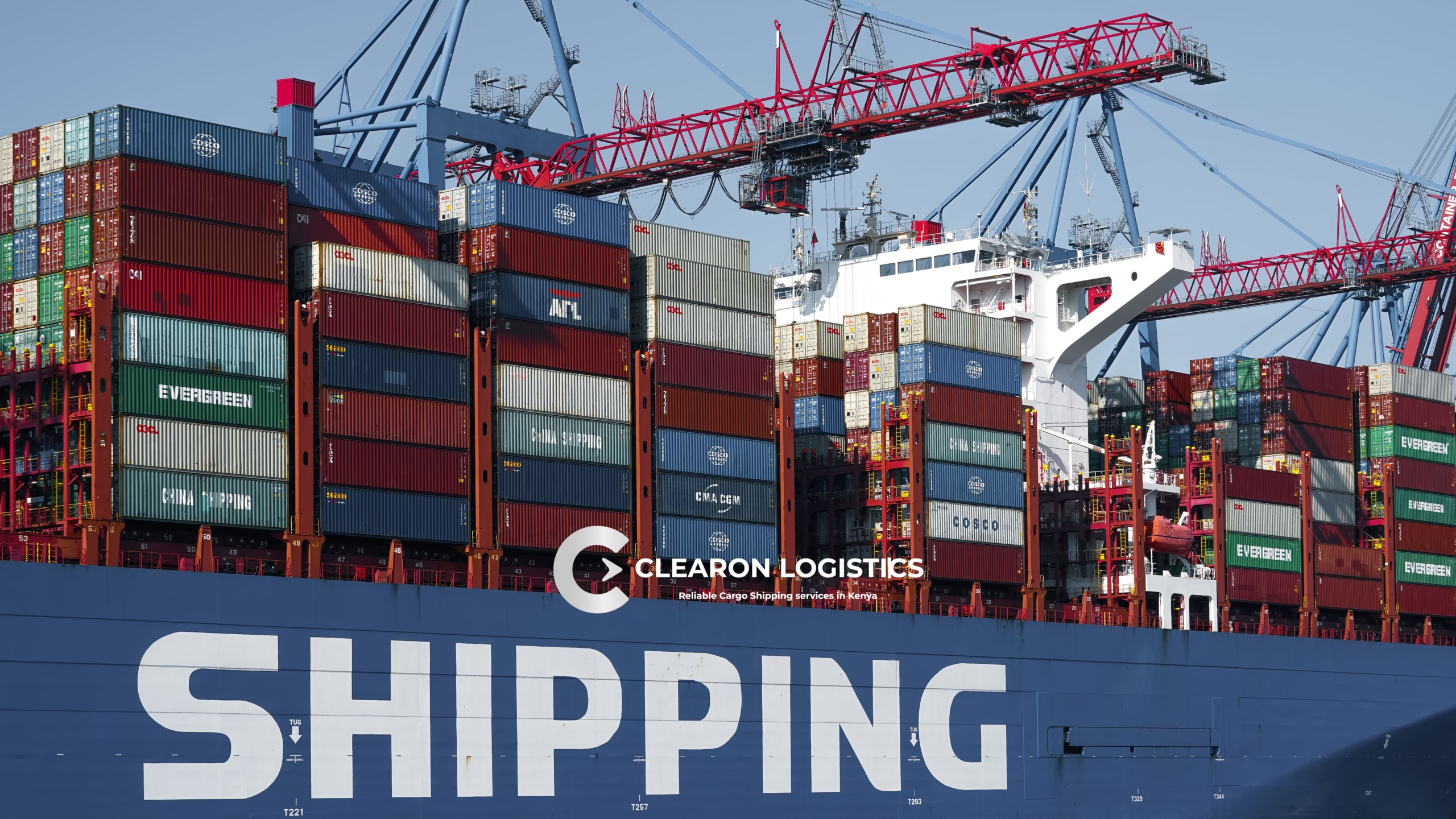
One of the most frustrating and expensive surprises for importers is receiving a bill for demurrage charges.
Many businesses carefully budget for product costs, shipping fees, customs duties, and transportation expenses, only to discover additional charges accumulating after their cargo arrives in Kenya.
For importers using sea freight, understanding demurrage is essential. These charges can quickly erode profit margins, increase landed costs, and create unnecessary financial pressure.
The good news is that most demurrage charges are avoidable with proper planning, efficient customs clearance, and effective logistics coordination.
At Clearon Logistics, we help businesses and individuals manage the import process more efficiently to minimize avoidable delays and unnecessary costs.
In this guide, we’ll explain what demurrage charges are, why they occur, how they are calculated, and what importers can do to avoid them.
What Are Demurrage Charges?
Demurrage charges are fees imposed when a shipping container remains at the port or terminal beyond the allocated free period provided by the shipping line or terminal operator.
When a container arrives at the port, importers are given a specific number of free days to complete customs clearance and arrange collection.
If the container remains at the terminal after the free period expires, demurrage charges begin to accumulate.
Simply put, demurrage is a penalty for delays in moving a container out of the port.
Why Demurrage Exists
Ports and terminals are designed to keep cargo moving efficiently.
Shipping lines and terminal operators need space available for incoming cargo.
Demurrage charges encourage importers to:
- Clear cargo promptly
- Complete documentation on time
- Arrange transportation efficiently
- Avoid unnecessary congestion at the port
Without such systems, container terminals would quickly become overcrowded.
How Demurrage Charges Work
The process is generally straightforward.
Step 1: Container Arrives
The shipment arrives at the port and is discharged from the vessel.
Step 2: Free Days Begin
A free storage period is provided.
This period varies depending on:
- Shipping line policies
- Port regulations
- Cargo arrangements
Step 3: Customs Clearance Takes Place
During this period, the importer or clearing agent must:
- Process documentation
- Complete customs procedures
- Obtain cargo release
Step 4: Container Collection
The container should be collected before the free period expires.
Step 5: Demurrage Begins
If the container remains at the terminal beyond the allowed free period, daily demurrage charges may apply.
Demurrage vs Storage Charges
Many importers confuse demurrage and storage charges.
Although they are related, they are not the same.
Demurrage Charges
Typically associated with the container remaining at the terminal beyond the free period. It is paid to the shipping line e.g MEARSK, OOCL, ONE , MSC etc.
Storage Charges
Usually associated with cargo occupying space at the terminal or warehouse. It is paid to the port authority e.g KPA
In some situations, importers may incur both charges simultaneously.
This is why delays can become expensive very quickly.
Common Causes of Demurrage Charges in Kenya
Most demurrage charges result from avoidable delays.
Understanding the common causes can help importers reduce risk.
Delayed Customs Clearance
One of the leading causes of demurrage is slow customs processing.
Delays may result from:
- Missing documents
- Incorrect declarations
- Classification issues
- Customs queries
The longer customs clearance takes, the greater the risk of exceeding the free period.
Documentation Errors
Small paperwork mistakes can create significant delays.
Examples include:
- Incorrect invoices
- Missing packing lists
- Inconsistent shipment details
- Missing permits / certificates
These issues often require corrections before cargo can be released.
Delayed Duty and Tax Payments
Cargo cannot be released until applicable customs charges are settled.
When payments are delayed, containers remain at the terminal and demurrage continues accumulating.
Transport Arrangements Not Ready
Some importers complete customs clearance but fail to arrange transportation promptly.
As a result, containers remain at the terminal longer than necessary.
Cargo Verification and Inspection
Customs inspections may sometimes extend clearance timelines.
While inspections are a normal part of customs procedures, they can contribute to delays if importers are unprepared.
Example of How Demurrage Can Affect Costs
Consider a business importing a container of electronics from China.
The shipment arrives at the port of Mombasa and receives a free period for clearance and collection.
However:
- Documentation discrepancies delay customs processing
- Additional clarification is requested e.g missing import permits
- Clearance takes longer than expected
By the time cargo is released, the free period has expired.
The importer now faces:
- Demurrage charges
- Potential storage charges
- Additional operational costs
The final landed cost becomes significantly higher than originally planned.
Why Demurrage Is a Serious Business Risk
Many businesses focus on shipping costs while overlooking delay-related expenses.
Demurrage can have several consequences.
Reduced Profit Margins
Unexpected charges increase total import costs.
Cash Flow Pressure
Additional payments may strain working capital.
Inventory Delays
Products may arrive later than expected.
Supply Chain Disruption
Businesses relying on timely inventory replenishment may experience operational challenges.
Industries Most Affected by Demurrage
Certain industries are particularly vulnerable to delay-related costs.
Retail Businesses
Retailers often depend on inventory arriving before specific sales periods.
Construction Companies
Construction projects frequently rely on imported materials arriving on schedule.
Manufacturers
Manufacturing operations may experience disruptions if imported components are delayed.
E-Commerce Businesses
Online sellers often need consistent inventory availability to maintain customer satisfaction.
How to Avoid Demurrage Charges
The most effective strategy is prevention.
Prepare Documentation Early
Before cargo arrives, ensure all required documents are accurate and complete.
Key documents include:
- Commercial invoices
- Packing lists
- Bills of lading
- Supporting certificates/permits
Plan Customs Clearance in Advance
Do not wait until cargo arrives to begin preparations.
Advance planning often results in faster processing.
Verify Product Classification
Accurate HS code classification reduces the likelihood of customs queries and delays.
Budget for Customs Charges
Ensure funds are available for:
- Import duty
- VAT
- IDF
- RDL
Delayed payments often lead directly to cargo delays.
Arrange Transportation Early
Transport planning should begin before cargo release.
Waiting until the last minute can create avoidable delays.
Work With an Experienced Clearing Agent
Professional customs coordination can help identify and resolve issues before they become costly problems.
How Clearon Logistics Helps Importers Avoid Demurrage
At Clearon Logistics, we understand how expensive delays can be.
Our approach focuses on proactive planning and efficient coordination.
Documentation Review
We help clients identify potential issues before cargo arrives.
Customs Clearance Support
Our team works to facilitate efficient customs processing.
Freight Coordination
Integrated logistics support improves shipment visibility and planning.
Cargo Release Management
We help clients move through the clearance process efficiently.
Final Delivery Coordination
Timely transportation arrangements help reduce delay-related risks.
Why Businesses Choose Clearon Logistics
Importers across Kenya trust Clearon Logistics because we focus on helping clients reduce uncertainty and improve logistics efficiency.
Our clients benefit from:
Better Planning
Preparation helps reduce avoidable delays.
Improved Visibility
Clear communication supports informed decision-making.
Professional Support
Experience helps navigate complex customs procedures.
End-to-End Logistics Solutions
From freight forwarding to customs clearance and final delivery.
Final Thoughts
Demurrage charges are one of the most common avoidable costs associated with sea freight imports.
While these charges are designed to encourage efficient cargo movement, they can quickly become expensive when customs clearance, documentation, or transportation arrangements are delayed.
Understanding how demurrage works is an important part of successful importing.
Businesses that plan ahead, prepare documentation properly, and work with experienced logistics partners are far less likely to incur unnecessary charges.
At Clearon Logistics, we help importers streamline customs clearance, improve cargo coordination, and reduce the risk of costly delays. Get in touch with us today!











Leave a Reply