
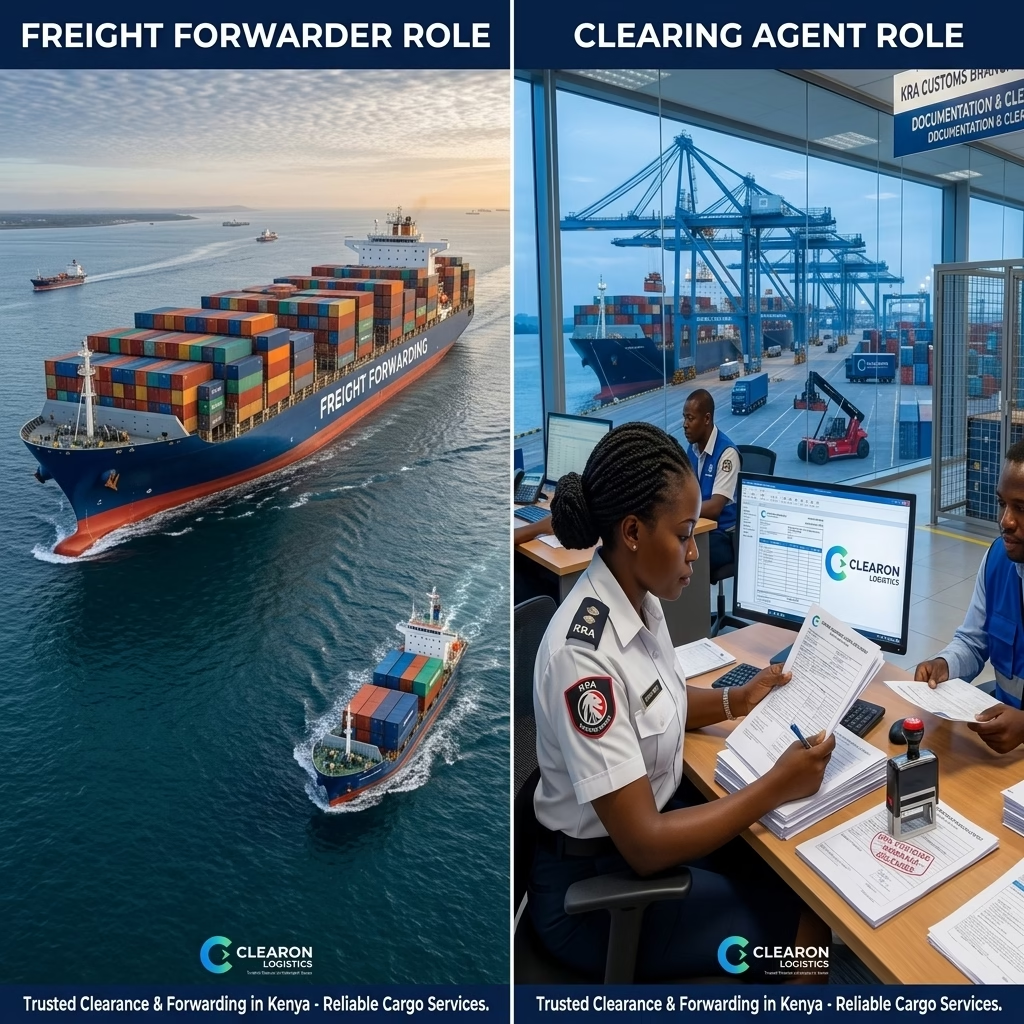
Freight forwarder vs clearing agent is a distinction most first-time importers get wrong, often because the companies offering the services use both terms almost interchangeably. Getting it wrong can leave you paying two separate providers for work you thought was already covered, or discovering a gap in your supply chain right when your cargo reaches Mombasa.
Table of Contents
Here’s the plain version, straight from how KRA itself defines the two roles.
The Core Difference, In One Line
A freight forwarder arranges for your goods to be transported from one country to another. A clearing agent makes sure your goods are cleared through customs. One moves the cargo. The other gets it legally released once it arrives.
What a Freight Forwarder Actually Does
A freight forwarder is a multi-function operator who manages the physical movement of your cargo from the seller’s location to Kenya. Their job is logistics, not customs law. Typically this covers:
- Booking space with shipping lines or airlines
- Coordinating pickup from the supplier or factory
- Consolidating cargo where useful (grouping smaller shipments together)
- Managing the route and mode of transport (sea, air, or a combination)
- Arranging insurance for the cargo in transit
- Tracking the shipment and handling documentation related to transport itself
Freight forwarders often have a global or regional presence, since their job is to manage movement across multiple countries, not to specialise in one country’s customs rules.
What a Clearing Agent Actually Does
A clearing agent (also called a customs broker) is licensed specifically to get your goods through Kenyan customs. This is a regulated role — in Kenya, only a KRA-licensed clearing agent can lodge customs declarations on your behalf through the iCMS platform. Their responsibilities include:
- Preparing and lodging customs declarations with KRA
- Ensuring correct HS code classification and duty calculation
- Coordinating with regulatory agencies (KEBS, KEPHIS, Pharmacy and Poisons Board, etc.) for any required permits
- Managing inspections and resolving queries raised by customs officers
- Paying duty on your behalf and securing release of your cargo
- Handling documentation specific to Kenyan import law
Because they deal directly and constantly with local customs authorities, clearing agents are inherently more localised than freight forwarders — their expertise is Kenya-specific, not global.
Why the Confusion Happens
In practice, many logistics companies — including established ones in Kenya — offer both services under one roof, precisely because importers find it painful to coordinate two separate providers. When a single company handles freight forwarding and customs clearance, the distinction between the two roles becomes almost invisible to the client, even though they remain functionally different jobs internally.
This is convenient, but it’s also where the confusion sets in: importers assume “my forwarder is handling everything,” when in fact clearance may be handled by a separate licensed agent working under the same company, or — worse — not handled at all until someone asks.
What Happens If You Only Hire One
- A freight forwarder without a clearing agent: Your cargo arrives in Kenya, but nobody is authorised to lodge the customs declaration or pay duty on your behalf. You’ll need to engage a licensed clearing agent separately — often under time pressure, once your cargo is already sitting at the port accruing storage charges.
- A clearing agent without a freight forwarder: Your cargo has no one managing its actual movement from origin. This works fine if you’re only responsible for the Kenyan leg (for example, if your supplier ships DDP or you’re picking up an already-arrived shipment), but it leaves a gap if you need someone coordinating pickup and transport from the country of origin.
Can You Import Without Either?
Technically, KRA confirms you can import goods yourself without a licensed clearing agent. In practice, very few importers do this successfully — customs declarations, duty calculation, and regulatory permits require specific knowledge that most first-time or occasional importers simply don’t have, and mistakes are costly. Self-clearing is really only practical for people with genuine customs expertise or very simple, low-risk shipments.
Freight Forwarder vs Clearing Agent Kenya: Which One Do You Actually Need?
| Your situation | What you need |
|---|---|
| Sourcing goods overseas and need them shipped to Kenya | Freight forwarder (for transport) + clearing agent (for customs) |
| Goods already arriving on a supplier-arranged shipment (e.g. DDP) | Clearing agent only, potentially |
| First-time importer unsure of the process | A provider offering both, under one point of contact |
| Regular commercial importer with high shipment volume | Worth evaluating a dedicated relationship with each, or a combined provider you trust |
One Point of Contact, Fewer Gaps
For most importers — especially first-timers — the simplest and lowest-risk approach is working with a provider that handles both freight forwarding and customs clearance under one relationship. It removes the coordination gap between “my cargo left the origin port” and “my cargo is legally released in Kenya,” and means one team is accountable for the whole journey rather than two separate companies each pointing at the other when something goes wrong.
At Clearon Logistics, we handle both sides under one roof — international freight and fully licensed customs clearance — precisely so you’re not left coordinating two providers or discovering a gap once your cargo has already arrived. We get involved early, often before your goods have even shipped, so we can flag permit or inspection requirements while there’s still time to act on them. Every client gets a clear, honest cost breakdown and regular updates from a real person on our team — not a portal, not a call queue.
Not sure whether you need a forwarder, a clearing agent, or both? Talk to Clearon Logistics about your specific shipment.
Further Reading
- KRA — Customs Agents Roles (official definition)
- KRA — Become a Customs Agent
- Related on our blog: Why Clearon Logistics Is the Most Trusted Clearing Agent in Kenya
- Related on our blog: Best Clearing Agent in Kenya: How to Choose the Right Partner
- Our service: Clearing and Forwarding Services in Kenya
Frequently Asked Questions
Can one company be both a freight forwarder and a clearing agent? Yes, and many are — it simplifies coordination and gives you a single point of contact for the entire shipment, from origin to release in Kenya.
Do I legally need a clearing agent to import into Kenya? Not strictly — KRA confirms you can self-clear — but in practice the regulatory and documentation knowledge required makes a licensed clearing agent worthwhile for almost all importers.
Is a clearing agent the same as a customs broker? Yes, “clearing agent” and “customs broker” refer to the same role in Kenya’s import/export context.
If my supplier ships DDP (Delivered Duty Paid), do I still need a clearing agent? Under DDP, the seller’s forwarder typically handles clearance on the seller’s side, so you may not need to arrange your own — but it’s worth confirming exactly what’s covered before assuming.
Leave a Reply