
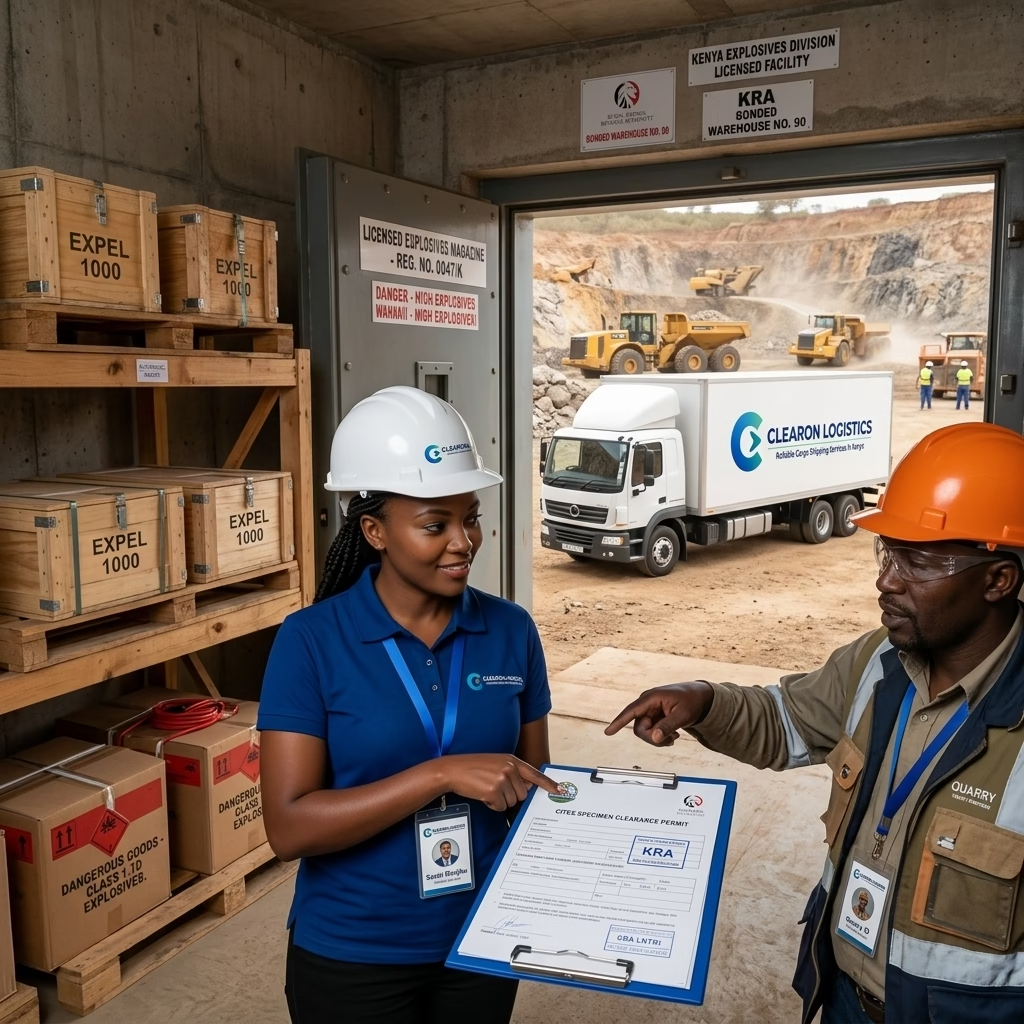
Importing explosives into Kenya — blasting materials for mining and quarrying operations specifically — runs under one of the country’s oldest pieces of active legislation, the Explosives Act, Chapter 115, dating back to 1929. That’s genuinely notable in itself, but what matters more right now is that this entire framework is in the process of being rewritten, with a Draft Explosives Bill 2026 and accompanying fee regulations currently under development — and industry stakeholders have already raised real concerns about how the new version is shaping up.
Table of Contents
What the Current Act Covers
The Explosives Act consolidates and governs the manufacture, storage, sale, transport, importation, exportation, and use of explosives in Kenya — a comprehensive scope covering the entire lifecycle of explosive materials, not just the point of import. Notably, the Act carves out specific exemptions: explosives imported, stored, or transported by Kenya’s armed forces or other lawfully constituted armed services fall outside its scope, as does underground use or storage of explosives at a mine, which is instead governed separately under mining safety legislation. For commercial mining and quarrying operations above ground, though, the standard Explosives Act licensing framework applies in full.
The Licensing and Permit Distinction
Kenya’s explosives framework distinguishes between licences and permits, and this distinction has practical operational significance:
- Licences authorise longer-term activities — establishing, erecting, or maintaining an explosives magazine (storage facility), for instance, requires a licence, and operating one without a valid licence is a serious offence
- Permits cover day-to-day activities — transportation, receipt, or use of blasting materials — issued on a more routine, operational basis, such as the specific permit to use blasting materials required under Section 11(1)(b) of the Act
This two-tier structure means a mining or quarrying operation typically needs to secure the underlying licence for its facility and operations first, before individual permits covering routine blasting activity become relevant.
Where the Mining Sector Fits In
Explosives regulation sits under the State Department for Mining, alongside the broader Mining Act framework covered elsewhere on our blog — reflecting how directly this category serves Kenya’s mining and quarrying industries specifically, rather than being a general commercial or consumer product category. The Kenya Mining Cadastre Portal maintains resources and processes specifically related to explosives licensing, integrating this compliance area with the broader digital mining rights infrastructure covered in our gemstone export guide.
What’s Changing Under the Draft 2026 Bill
This is genuinely current: Kenya’s State Department for Mining has published a Draft Explosives Bill, 2026, alongside a Draft Regulatory Impact Statement and proposed Explosives (Fees) Regulations, 2026 — a comprehensive modernisation of a law that has remained largely structurally unchanged since 1929. As of the most recent public documentation, this remains in draft and consultation stage, not yet enacted — meaning current operators and prospective importers of explosives for mining use are, for now, still operating under the existing Cap 115 framework, but should expect meaningful changes once the new Bill is finalised.
Why the Mining Industry Has Pushed Back
The Kenya Chamber of Mines has been directly critical of specific provisions in the draft reform process. Two concerns stand out:
- Steep new penalties: under proposed Sections 14 and 15, operating an explosives magazine without a valid licence could attract a fine of up to KSh 50 million or imprisonment of up to 10 years, or both — a dramatic escalation industry stakeholders have specifically flagged as disproportionate to existing safeguards already in place under Cap 115
- Permit issuance requiring committee sittings: the Chamber has raised concern that requiring a Committee to formally sit before issuing routine permits — as opposed to licences — would be impractical given how frequently operational permits (transportation, use, receipt) are needed on a day-to-day basis, potentially creating real operational bottlenecks for legitimate, ongoing mining activity
What This Means If You’re in Mining or Quarrying
- Current operations remain governed by Cap 115 as it stands today — don’t assume the draft Bill’s provisions already apply
- Watch the draft Bill’s progress closely, particularly the penalty structure and permit-issuance mechanics, given the specific concerns already raised by industry representatives
- Factor potential fee changes into longer-term planning, given the parallel development of new Explosives (Fees) Regulations alongside the Bill itself
- Maintain scrupulous licence and permit compliance now, since the direction of travel — steeper penalties, more structured process — suggests enforcement is unlikely to become more lenient under the reformed framework
Navigating a Law in Active Transition
Few regulatory frameworks on our blog date back as far as the current Explosives Act, and few are undergoing as significant a rewrite right now. For mining and quarrying operators relying on imported explosives, understanding both where the current law stands and where the draft reform is heading matters for anything beyond immediate, short-term operational planning.
At Clearon Logistics, while explosives licensing itself sits with the State Department for Mining and requires direct engagement with that authority, we help mining and quarrying businesses coordinate the broader customs and logistics side of their operations, including tracking regulatory developments like this one that could affect their compliance obligations going forward.
Operating in Kenya’s mining or quarrying sector and relying on imported explosives? Talk to Clearon Logistics about coordinating your broader import and logistics compliance.
Frequently Asked Questions
Is Kenya’s Explosives Act currently being replaced? A Draft Explosives Bill 2026 has been published and is in consultation stage, but as of the most recent public documentation, it hasn’t been enacted — current operations remain governed by the existing Explosives Act, Cap 115.
What’s the difference between an explosives licence and a permit in Kenya? Licences cover longer-term authorisations like operating an explosives magazine; permits cover day-to-day operational activities like transportation, receipt, or use of blasting materials.
Why has the Kenya Chamber of Mines opposed parts of the draft reform? Primarily over proposed penalties of up to KSh 50 million or 10 years imprisonment for unlicensed explosives magazine operation, and concern that requiring committee sittings for routine permit issuance would create operational bottlenecks.
Does underground explosives use at a mine fall under the Explosives Act? No — underground storage and use of explosives at a mine is specifically excluded from the Explosives Act and instead governed under separate mining safety legislation.
Further Reading
- State Department for Mining, Kenya (external, dofollow)
- Kenya Mining Cadastre Portal (external, dofollow)
- Related on our blog: Exporting Gemstones from Kenya: 4 Facts on Tsavorite and Licensing
- Related on our blog: Importing Firearms into Kenya: 4 Facts on the Licensing Process
- Our service: Clearing and Forwarding Services in Kenya











Leave a Reply