
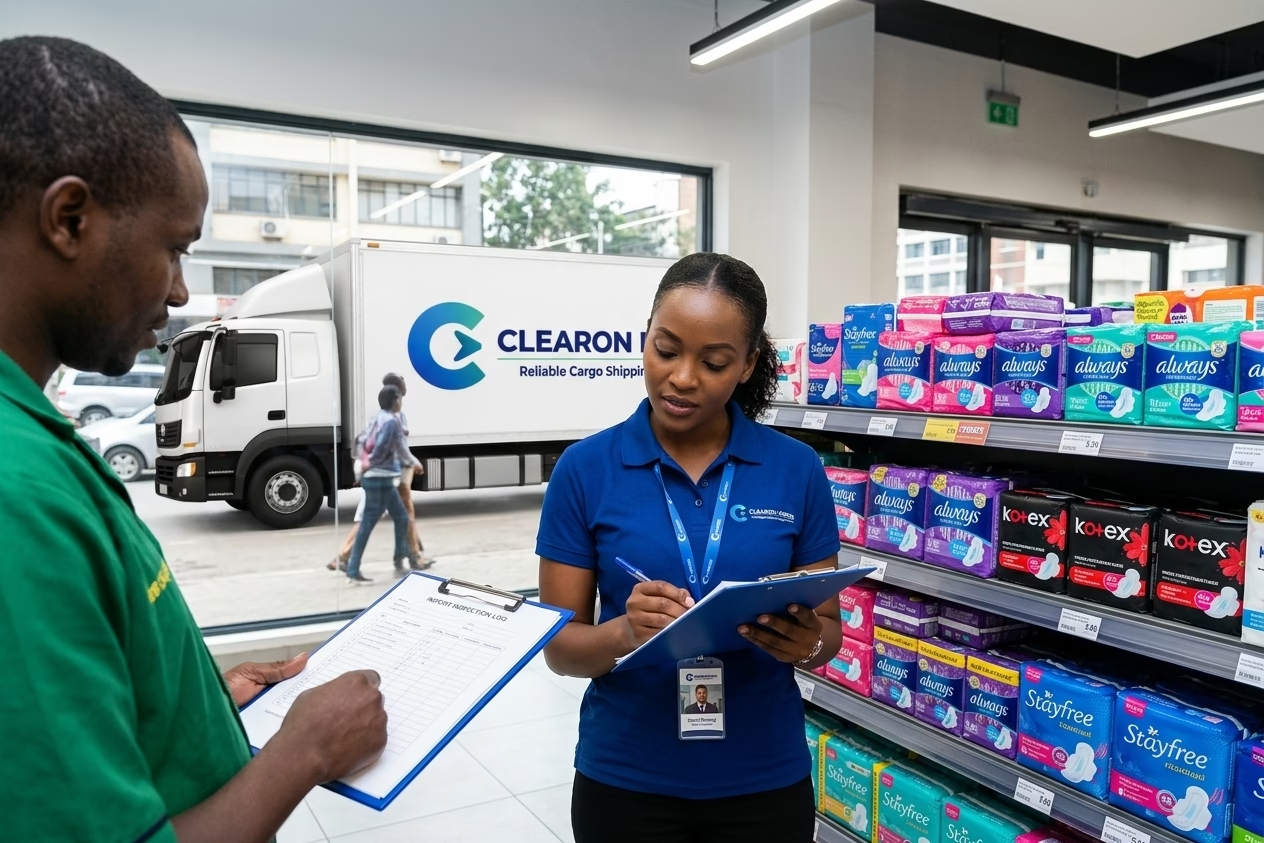
Importing sanitary pads into Kenya touches one of the country’s proudest, and most incomplete, policy stories. In 2004, Kenya became the first country in the world to remove VAT on sanitary pads — a genuine global first. Yet more than two decades later, a 2026 report found Kenyan families still spend between 2.17% and 3.14% of monthly income on menstrual hygiene products, and roughly 65% of Kenyan women report being unable to consistently afford them. The gap between “tax-free” and “actually affordable” is exactly where import compliance in this category gets interesting.
Table of Contents
A Genuine World-First Policy — With Real Follow-Through
Kenya’s menstrual product tax policy has genuinely evolved over two decades, not stayed static after one headline announcement:
- 2004 — VAT removed from sanitary pads and tampons entirely, following sustained lobbying from social entrepreneurs, rights groups, and health advocates
- 2011 — Import duties on finished sanitary products reduced, alongside a new annual national budget allocation (initially around $3 million) to fund free sanitary pad distribution in schools
- 2016 — Duties removed specifically on the raw materials needed to manufacture sanitary products domestically
- 2017 — An amendment to the Kenyan Education Act legally mandated that schools provide “free, sufficient, and quality” sanitary pads to every registered girl student
This is a genuinely more sustained policy commitment than most countries have managed on this issue — Kenya’s 2004 move alone predates similar reforms in Australia (2019), the UK (2021), and many other markets by well over a decade.
Why “VAT-Free” Hasn’t Meant “Cheap”
Despite this policy history, a World Bank-linked analysis found the tax reforms have had “minimal effect” on the retail price of imported sanitary products specifically — a genuinely important, somewhat uncomfortable finding for a policy area with this much positive global attention. The explanation researchers point to is straightforward: removing VAT addresses only one layer of cost, while several other charges and market dynamics continue pushing prices up regardless of VAT status.
The Hidden Import Charges Still in Place
This is the detail most directly relevant to importers, and it’s the central finding of a 2026 report from NAYA Kenya and UNFPA, titled “The Price of Dignity”: even with VAT exemption in place, the Miscellaneous Fees and Levies Act, 2016 still imposes standard import-related charges on many raw materials and machinery used in manufacturing sanitary products — specifically the Import Declaration Fee (IDF) at 2.5%, the Railway Development Levy (RDL) at 2%, and a Merchant Shipping Superintendent (MSS) Levy. These charges apply regardless of the VAT exemption on the finished product, meaning manufacturers importing raw materials still absorb real, compounding cost before a single pad is even produced — cost that ultimately passes through to the retail price despite the headline “tax-free” status. The report’s modelling suggests comprehensive reform could reduce large-scale manufacturing costs from roughly Sh52 to Sh38 per unit.
The 2024 Eco-Tax Scare
Kenya’s progress on this issue hasn’t been consistently forward-moving either. In 2024, the government proposed introducing a new eco-tax specifically on sanitary pads — a proposal that triggered significant public protest, particularly given that an estimated 65% of Kenyan women were already reporting affordability difficulties. President Ruto ultimately withdrew the tax proposal amid escalating protests, though political observers at the time cautioned the reprieve might prove temporary given parliamentary interest in the measure as a debt-reduction tool. This episode is a useful reminder that even a two-decade-old, globally celebrated tax policy isn’t permanently settled — it remains subject to genuine political and fiscal pressure.
A New Push in 2026: Zero-Rating, Not Just Exemption
This is genuinely current: at the Kenya Menstrual Economy Conference (KMEC) 2026, bringing together senior government officials, health economists, civil society leaders, and manufacturers, the government outlined a roadmap to strip VAT and associated import levies from the raw materials used in pad construction specifically. Separately, the NAYA Kenya/UNFPA report’s core policy recommendation is shifting menstrual products from VAT-exempt to VAT zero-rated — a technical distinction with real financial consequences: under exemption, manufacturers cannot reclaim VAT paid on their own inputs; under zero-rating, they can, while consumers continue paying no VAT either way. This is the same exempt-versus-zero-rated distinction covered in our book import VAT guide — a technical classification that looks identical to the end consumer but meaningfully changes manufacturer economics.
What This Means for Importers Right Now
- If you’re importing finished sanitary products, VAT exemption already applies, but standard import levies (IDF, RDL, MSS levy) still apply on top — this isn’t a fully charge-free category despite its VAT-free status
- If you’re importing raw materials for domestic pad manufacturing, the same standard levies currently apply, though the KMEC 2026 roadmap signals these may be removed specifically for this input category
- Watch for the zero-rating reform, since a shift from exempt to zero-rated status would allow manufacturers to reclaim input VAT — a genuine cost reduction opportunity if and when implemented
- Standard KEBS and product certification requirements still apply regardless of the tax treatment, since VAT and duty status don’t substitute for quality and safety compliance
A Policy Success Story Still Being Finished
Kenya’s menstrual product tax policy is a genuine, sustained, two-decade achievement — but the 2026 reporting makes clear it’s also an unfinished one, with real remaining cost layers still affecting affordability despite the headline VAT exemption. For importers and manufacturers in this space, understanding exactly which charges still apply, and tracking the current push toward more comprehensive reform, matters for both compliance and pricing strategy.
At Clearon Logistics, we help importers and manufacturers in the menstrual hygiene product space understand their current, complete cost picture — VAT exemption alongside the import levies that still apply — so pricing and sourcing decisions reflect the genuine landed cost, not just the headline tax status.
Importing sanitary pads or manufacturing raw materials into Kenya? Talk to Clearon Logistics for an accurate cost breakdown before you order.
Frequently Asked Questions
Is VAT charged on imported sanitary pads in Kenya? No — Kenya removed VAT on sanitary pads in 2004, the first country in the world to do so, and this exemption remains in place.
If VAT is removed, why do sanitary pads still cost so much in Kenya? Standard import charges — the Import Declaration Fee, Railway Development Levy, and Maritime Shipping Levy — still apply to raw materials and machinery used in manufacturing, adding real cost despite the VAT exemption on the finished product.
What’s the difference between VAT-exempt and VAT zero-rated for sanitary product manufacturers? Under exemption, manufacturers can’t reclaim VAT paid on their own inputs; under zero-rating, they can, while consumers pay no VAT either way — a 2026 policy recommendation proposes shifting menstrual products from exempt to zero-rated status specifically to address this gap.
Did Kenya ever come close to taxing sanitary pads again after 2004? Yes — a proposed eco-tax on sanitary pads in 2024 triggered significant public protest and was withdrawn by President Ruto, though observers noted the reprieve could prove temporary given ongoing fiscal pressure.
Further Reading
- Network for Adolescent and Youth of Africa (NAYA) Kenya (external, dofollow)
- UNFPA Kenya (external, dofollow)
- Related on our blog: Importing Books into Kenya: 4 Facts on the VAT Exemption
- Related on our blog: How to Calculate Your Landed Cost in Kenya
- Our service: Clearing and Forwarding Services in Kenya




Leave a Reply