
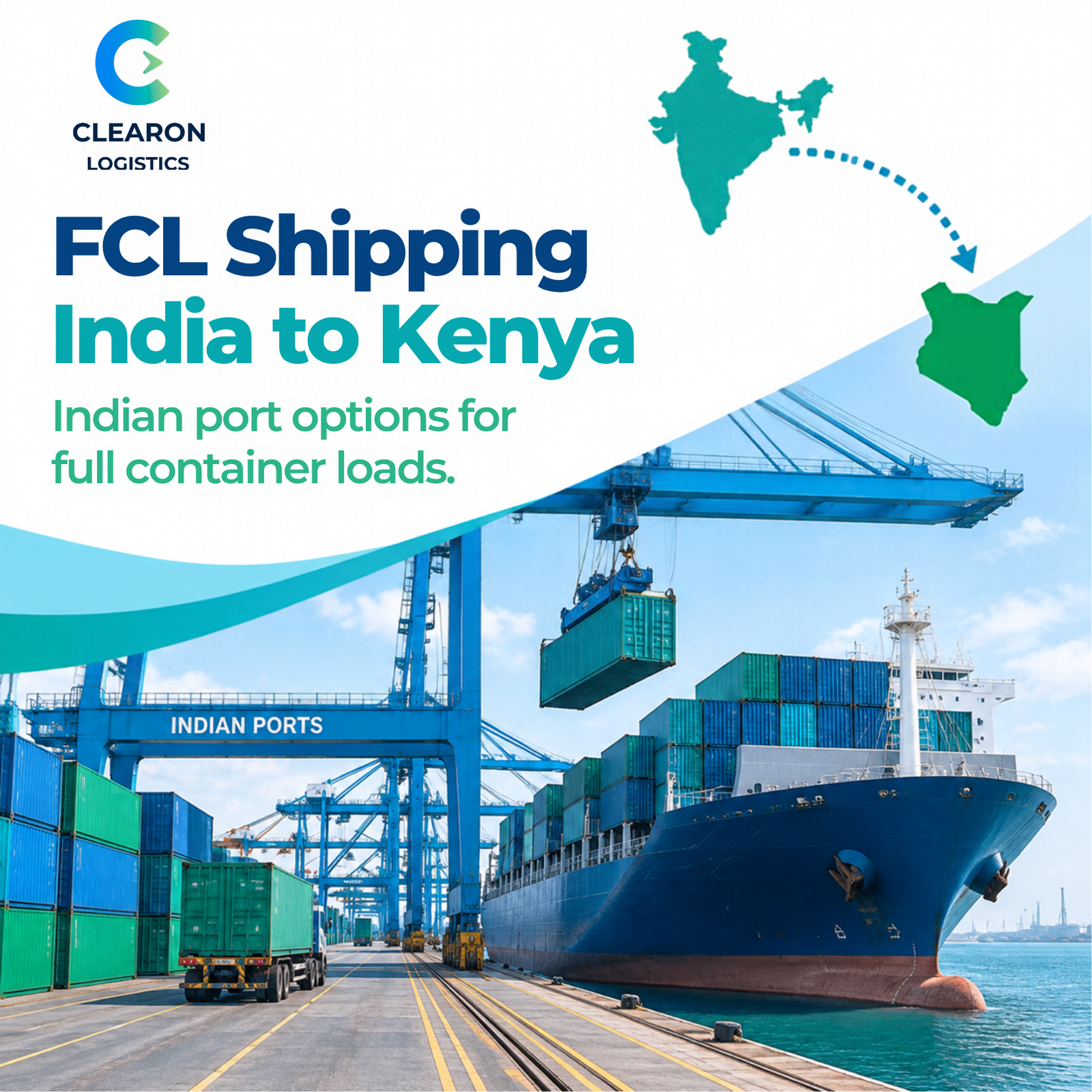
FCL shipping from India to Kenya starts with a decision many importers leave to their supplier: which Indian port the container sails from. The right port depends on where the goods are made, how the container reaches the port, and how the sailing connects to Mombasa. Getting it right saves inland haulage cost and avoids days of avoidable delay.
Table of Contents
Let the Supplier’s Location Choose the Port
Trucking or railing a container a long way to a distant port adds cost and time. The sensible port is usually the one nearest your supplier with a good sailing to Mombasa. If you are combining goods from several suppliers, choose the port that suits most of them. Tell us your supplier’s city and state and we’ll confirm the best option.
The Main Gateways
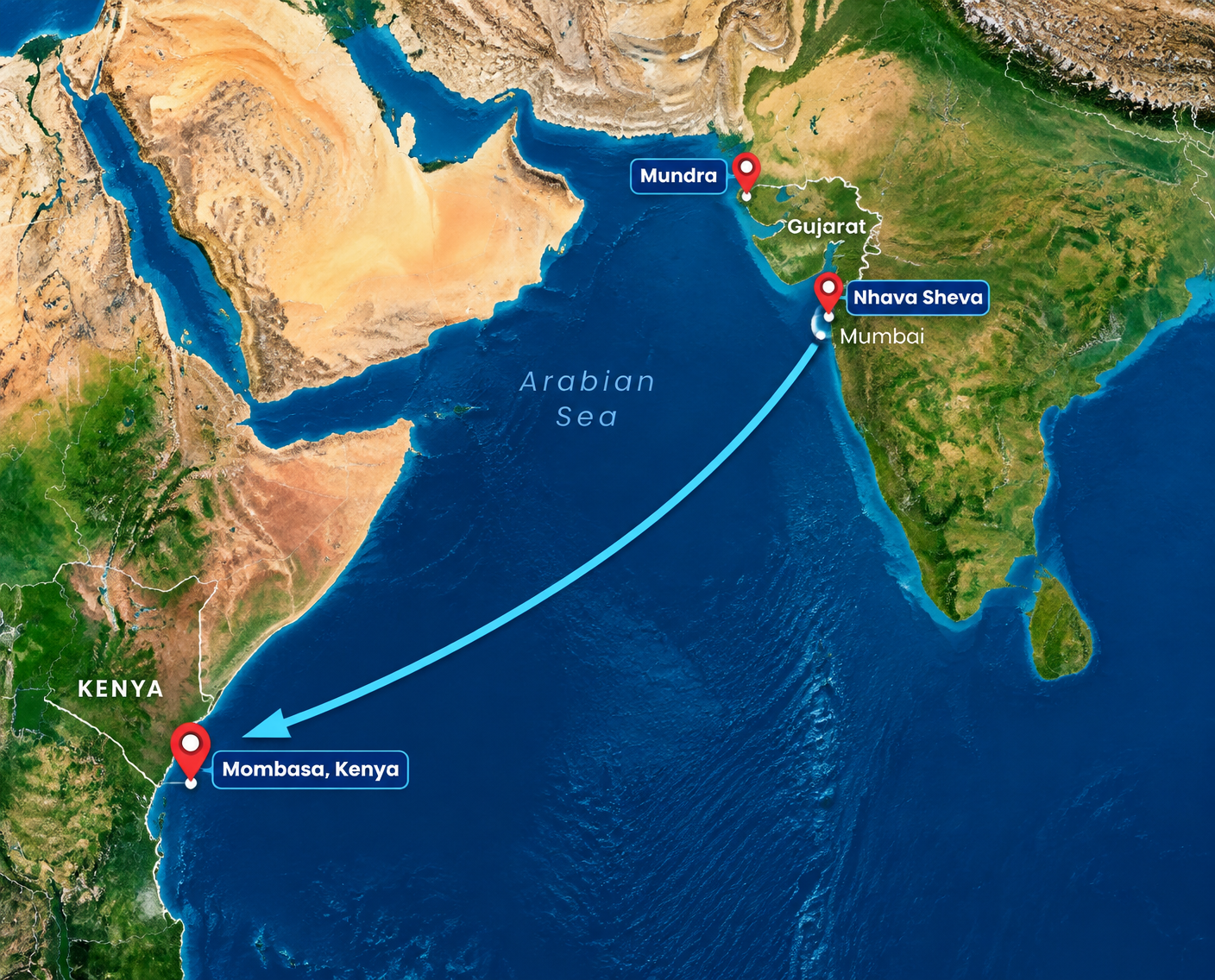
- Nhava Sheva (JNPT), near Mumbai, serves Maharashtra and surrounding regions and is one of India’s busiest container ports.
- Mundra, Gujarat, serves Gujarat and also draws cargo from northern and central India, with strong connections to East Africa.
- Chennai, in Tamil Nadu, serves southern India, a region commonly associated with automotive and engineering production.
- Kochi, Tuticorin and Kolkata handle some cargo, particularly for southern and eastern origins.
Regional specialisations overlap, so confirm your own supplier’s best port rather than assuming.
Transit Time: Plan on Ranges
Direct services between Indian west-coast ports and Mombasa have been quoted at roughly 14 to 20 days including handling. Transhipment adds time. Ask us for current sailings and cut-off dates, and add buffer for port congestion in peak season.
Inland Haulage and Inland Container Depots
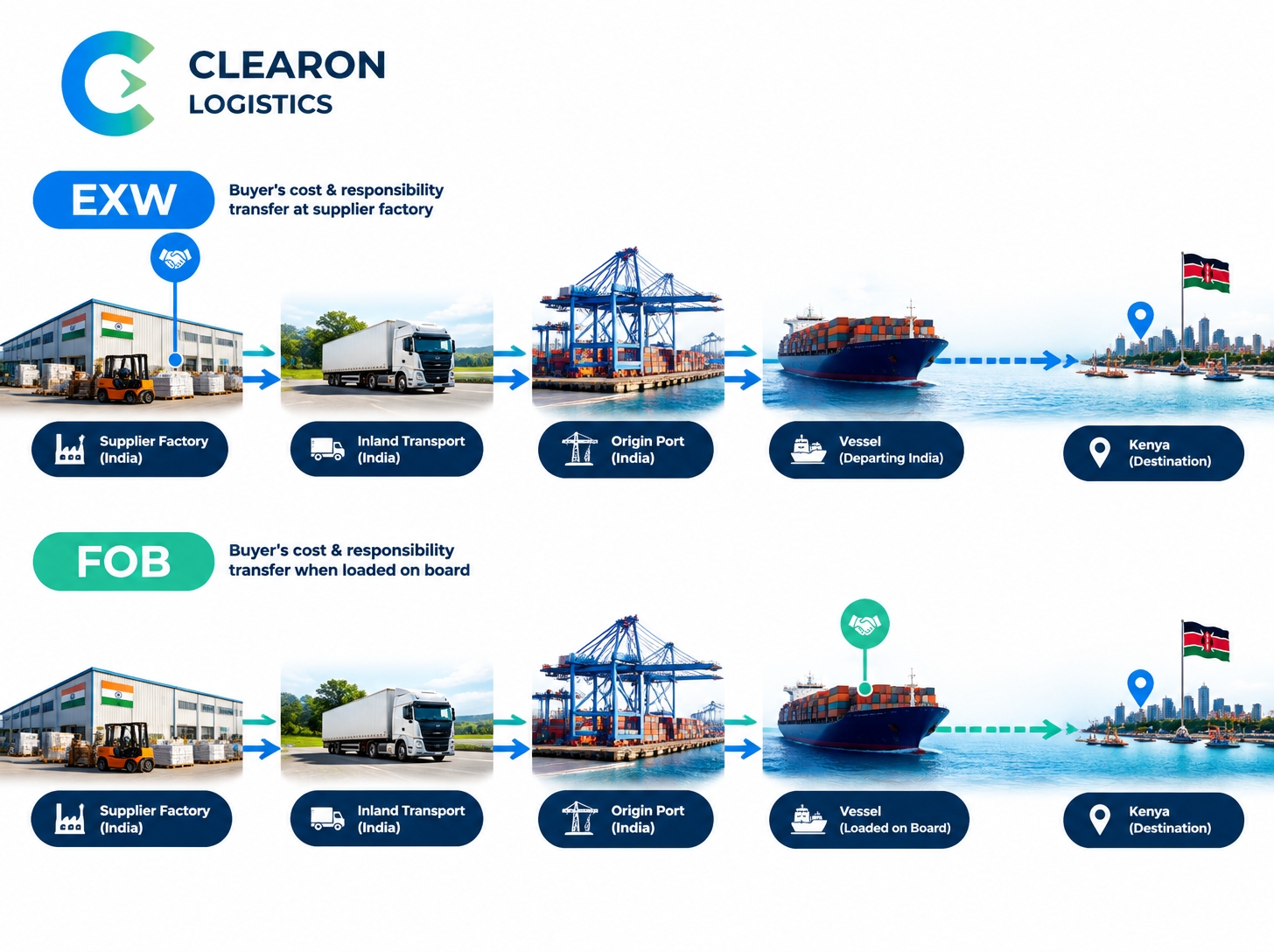
Many Indian factories are far from the coast, so containers often travel to the port by road or rail, sometimes via an inland container depot. Ask your supplier who arranges and pays for inland haulage and the Indian customs formalities, because this is where responsibility is most often unclear.
Choosing the Container
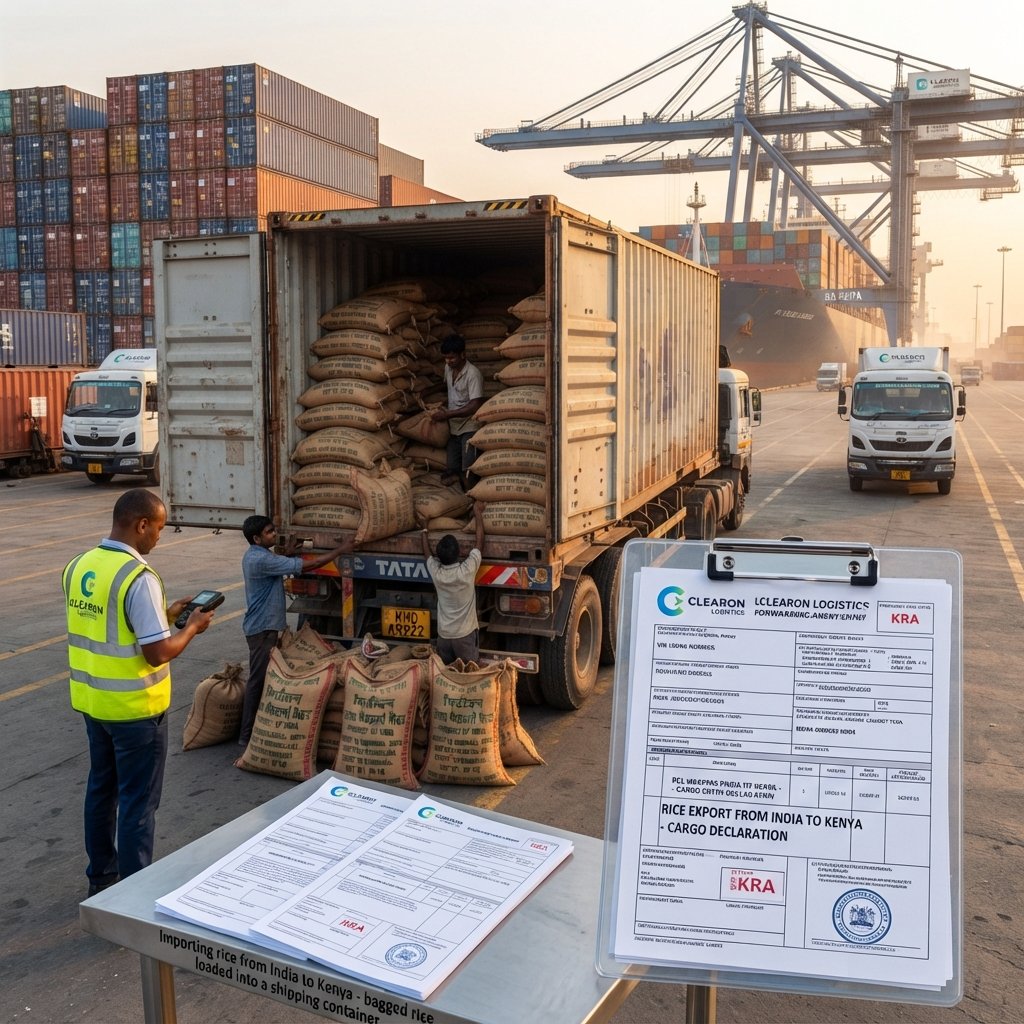
Containers come mainly as 20ft, 40ft and 40ft high-cube, offering very roughly 30, 60 and 70 cubic metres of usable space. Dense goods such as steel, tiles and machinery usually reach weight limits before the box is full, while lighter goods fill the volume. Stay within legal weight limits in India and Kenya; see our axle load guide.
Before Loading: Get These Right
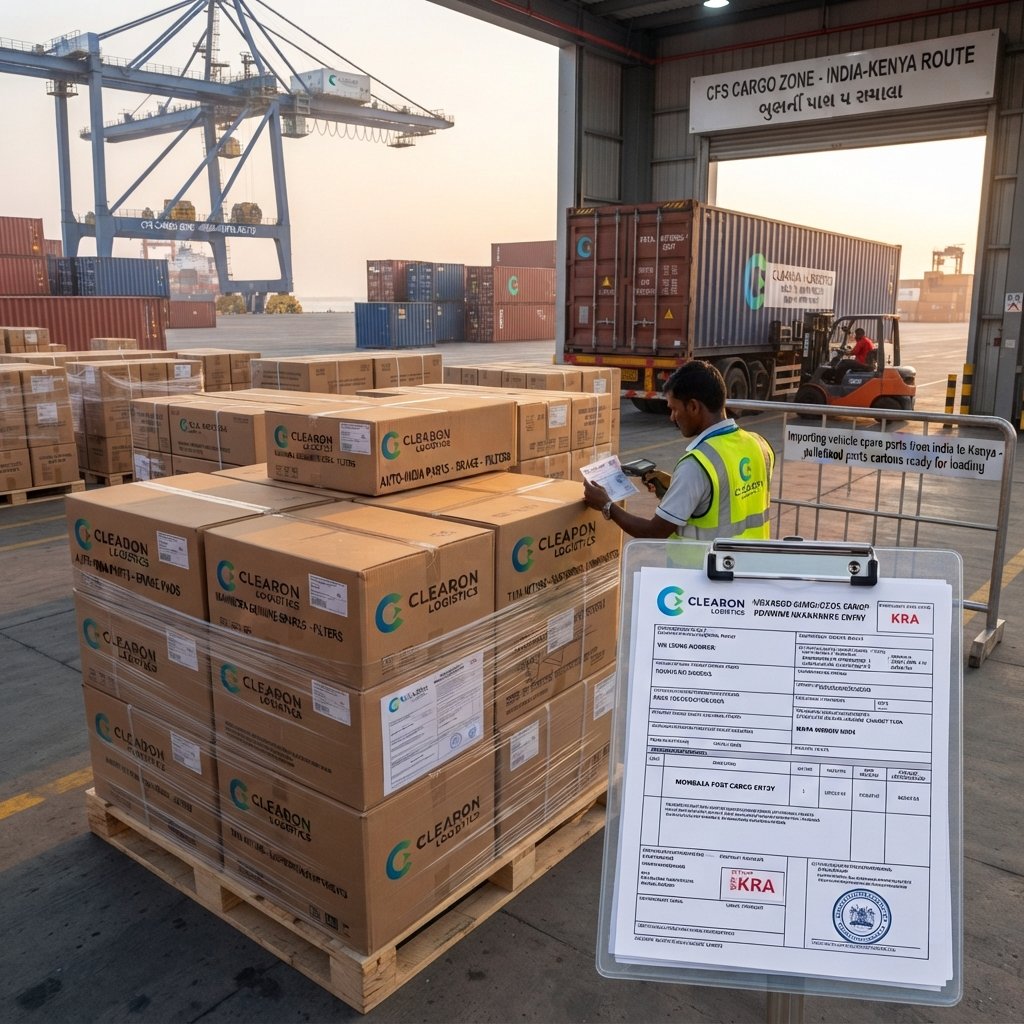
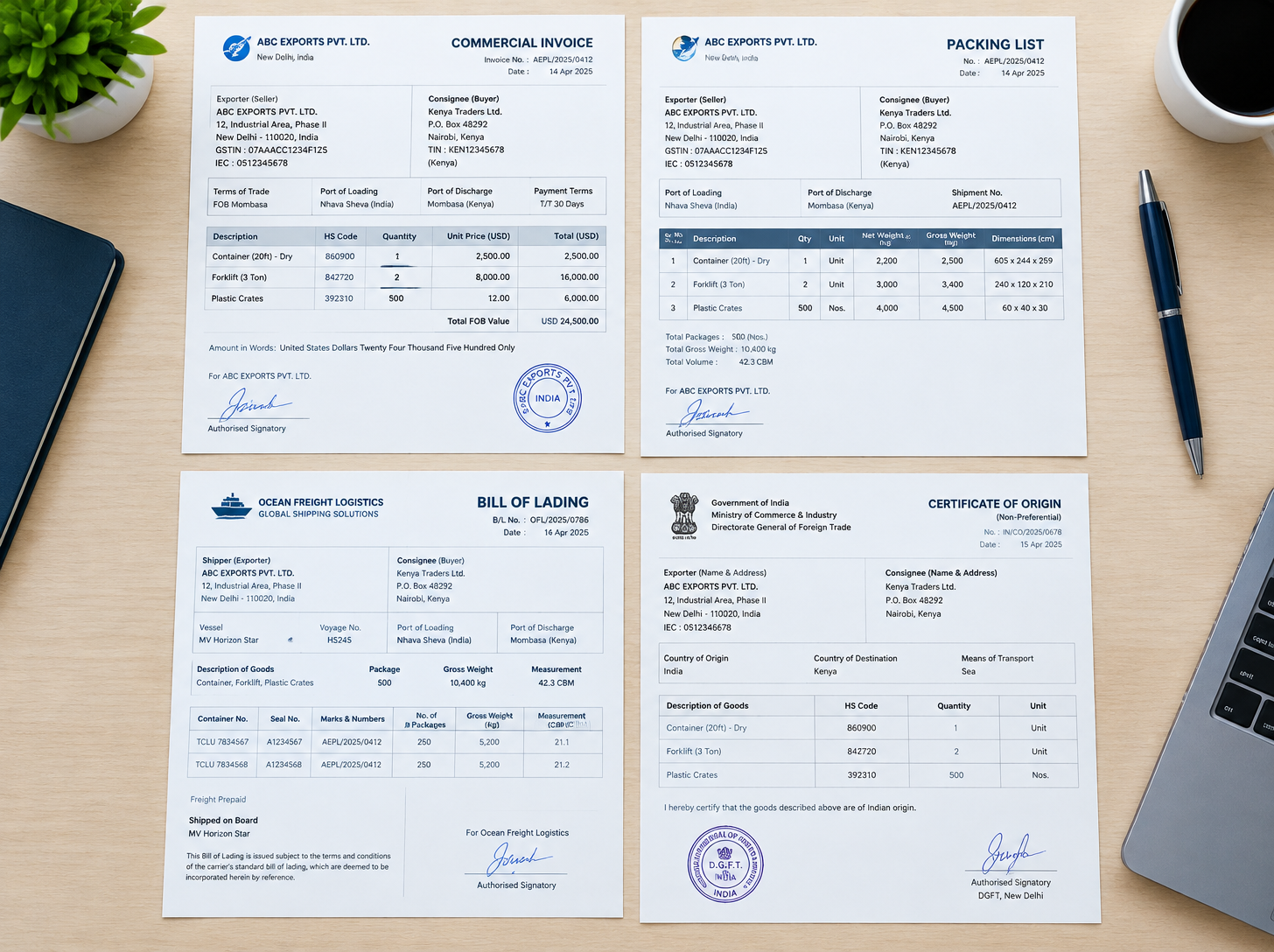
The Advance Cargo Declaration reference must be on the Bill of Lading before loading, or the container can be refused. You also need a Certificate of Origin, an export declaration document, a Certificate of Conformity for regulated products and ISPM 15-compliant wood packaging. Our supplier documents checklist lists what to ask for.
Arrival in Mombasa
Containers need a nominated container freight station and prompt clearance, because storage charges start quickly. See our guide to what happens from arrival to delivery and clearing at Mombasa Port.
Planning a full container from India? Request an FCL quote from Clearon Logistics and tell us your supplier’s location, and we’ll confirm port and sailing options.
Frequently Asked Questions
Which Indian port should I use for FCL to Kenya? Usually the port nearest your supplier with a good sailing to Mombasa, unless you are consolidating suppliers, in which case pick the port that suits most of them.
How long does FCL take from India to Mombasa? Direct services have been quoted at about 14 days port to port, with wider guidance of 20 to 25 days depending on routing and handling.
What must be done before the container is loaded? Obtain the ACD reference, prepare the Certificate of Origin and export declaration document, complete certification where required, and use compliant packaging.
Who arranges inland haulage in India? It depends on the delivery term and the supplier. Confirm this before you agree the order.
Further Reading
- Kenya Revenue Authority: Advance Cargo Declaration platform (external, dofollow)
- Kenya Ports Authority (external, dofollow)
- Related on our blog: Shipping from India to Kenya: FCL, LCL and Air Compared
- Related on our blog: LCL Shipping from India to Kenya
- Related on our blog: Clearing Agent at Mombasa Port
- Our service: China to Kenya Shipping Service


Leave a Reply