EXW vs FOB from India to Kenya is one of the first choices you make when buying from an Indian supplier, and it quietly decides who pays for what before your cargo leaves India. Misread the term on your quote and you can face surprise charges, or a shipment that stalls at the Indian port. We handle both EXW and FOB from India, so here is the difference in plain language, based on Incoterms 2020.
Table of Contents
What EXW and FOB Mean
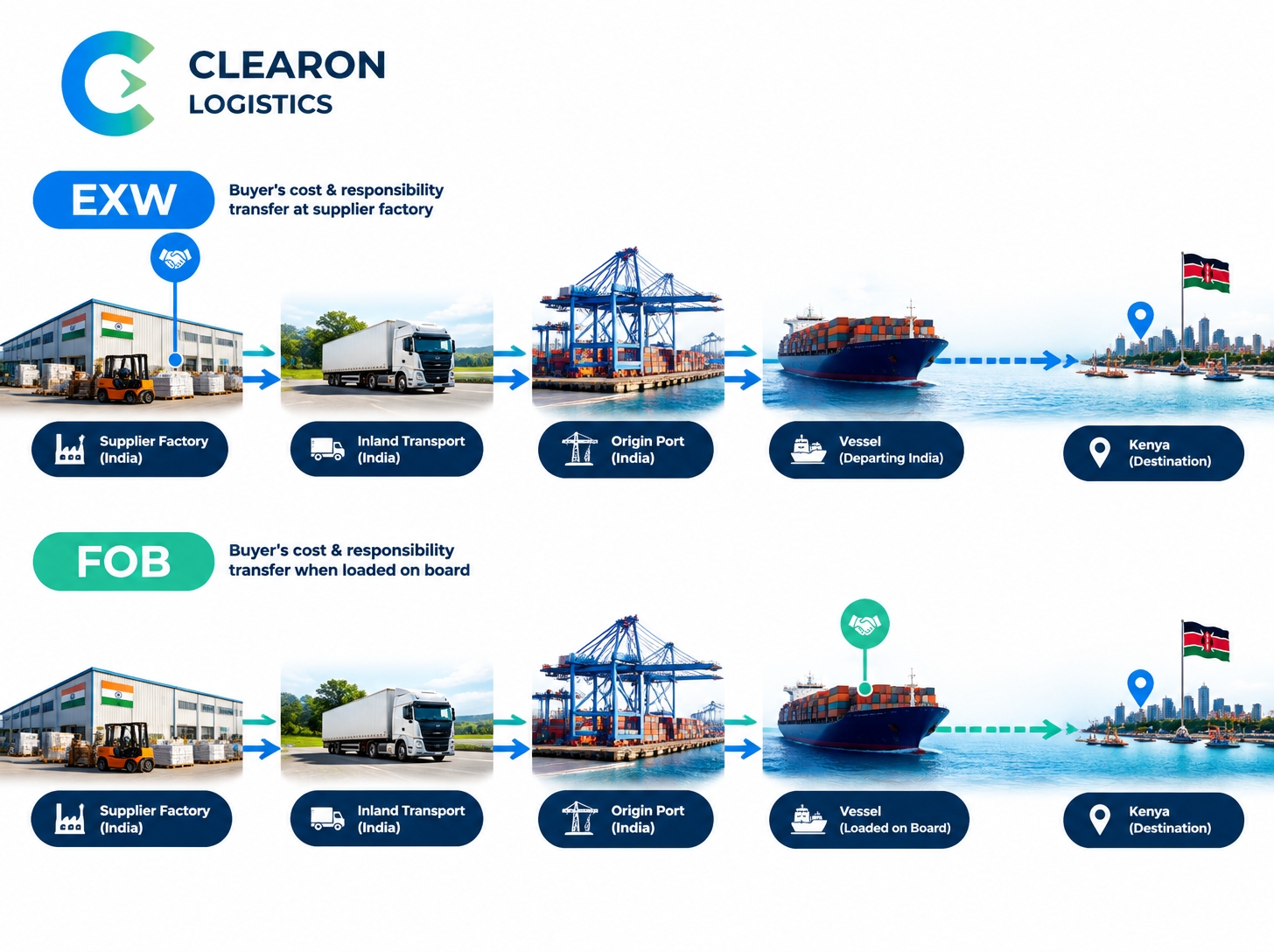
EXW (Ex Works): the supplier makes the goods available at their own premises. From that point you carry the cost and risk: loading, inland transport in India, export formalities, port charges, the freight and everything after.
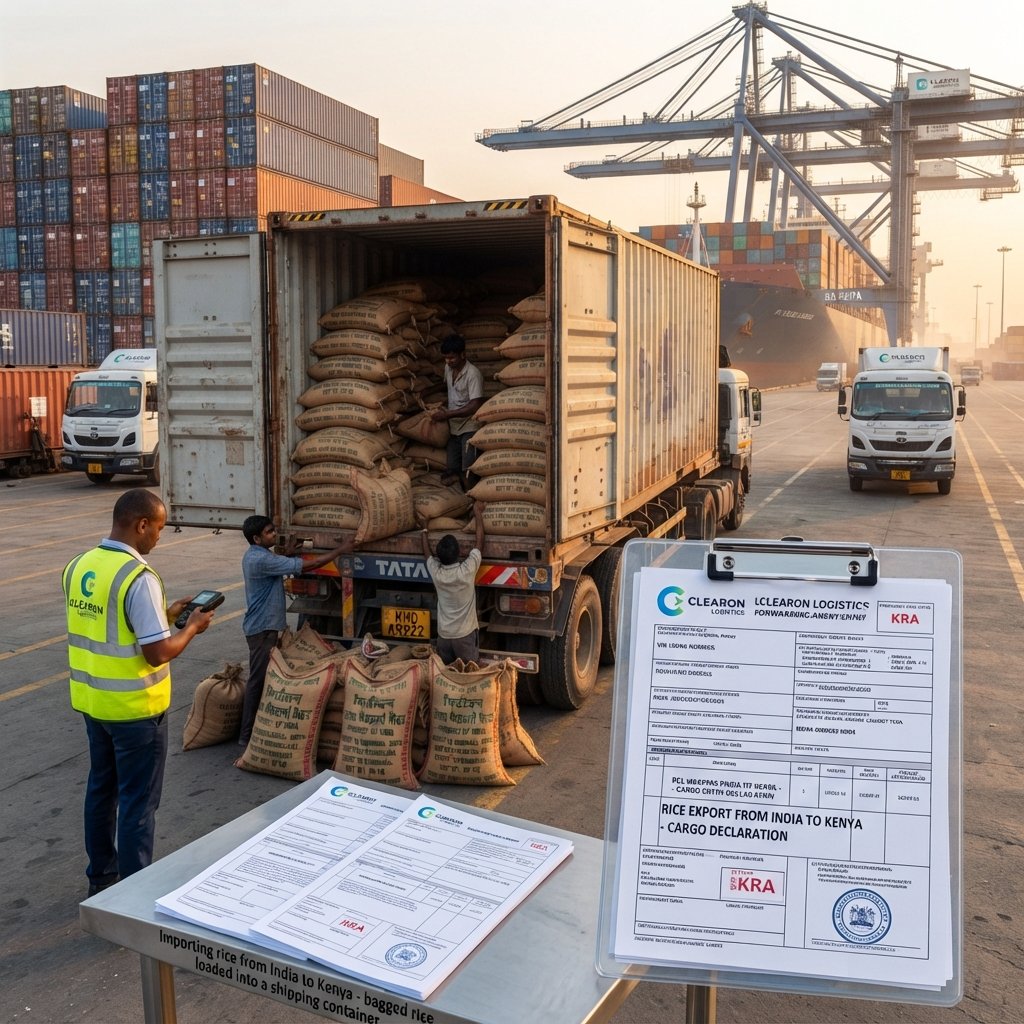
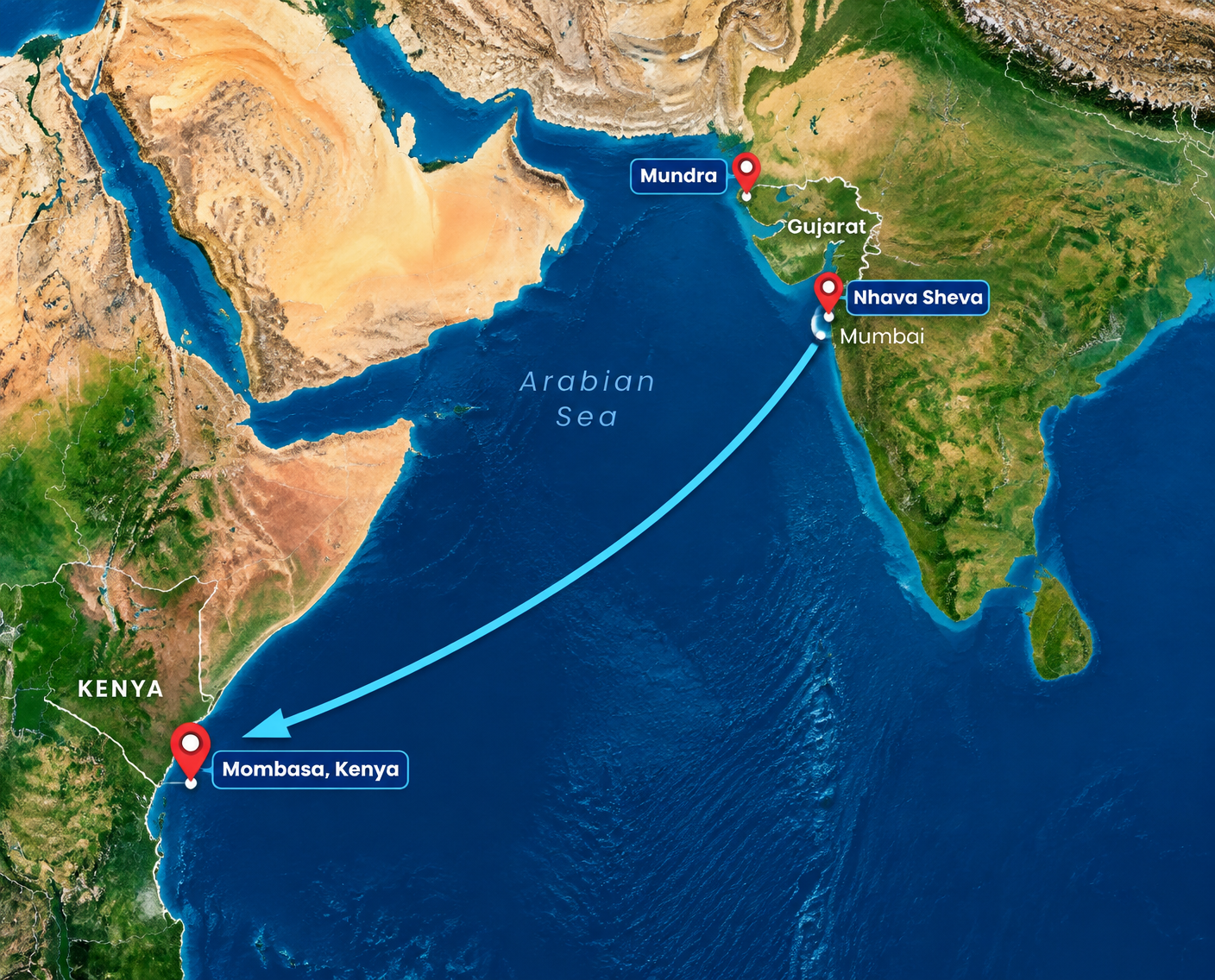
FOB (Free On Board): the supplier delivers the goods on board the vessel at the named Indian port, such as Nhava Sheva or Mundra. The supplier handles transport to the port, export clearance and loading. You take over once the cargo is on the ship.
FOB is a sea term only. The rules are published by the International Chamber of Commerce.
EXW vs FOB from India to Kenya: Side by Side
- Inland transport in India: yours under EXW, the supplier’s under FOB.
- Loading at origin: yours under EXW, the supplier’s under FOB.
- Export clearance: yours in principle under EXW, the supplier’s under FOB.
- Quote: EXW looks cheaper but leaves more items to add. FOB costs more but covers more.
- Control: EXW gives you the most control over the freight chain, FOB a little less.
The Practical Catch with EXW from India
Under Incoterms 2020, EXW leaves export clearance to the buyer. In practice, Indian export clearance needs a shipping bill filed under the exporter’s Importer-Exporter Code (IEC), so the supplier’s cooperation on paperwork is usually still needed. A supplier who quotes EXW but refuses to provide export documents can leave your cargo stuck.
Agree in writing who handles the shipping bill before you pay. Tell us what your supplier has agreed and we’ll confirm how we would handle it. Our guide to Indian export documents lists what to ask for.
When EXW Makes Sense
- You want to control the whole freight chain and compare forwarder quotes yourself.
- You are collecting from several suppliers and need to consolidate.
- The supplier’s FOB price looks high next to the EXW price plus origin charges.
The trade-off is more moving parts to manage, and more places for charges to hide.
When FOB Makes Sense
- Your supplier is an experienced exporter who already moves goods to the port.
- You want a clearer split between origin costs and freight and Kenya costs.
- You are a first-time importer and want fewer origin steps to manage.
The trade-off is that you rely on the supplier to deliver to the right port on time, and the FOB price may include a margin on origin services.
A Note on Air Freight
FOB is a sea term. If a supplier quotes FOB for an air shipment, check what they actually mean. Send us the quote and we’ll tell you what it covers. See our India freight guide for FCL, LCL and air compared.
Comparing Two Supplier Quotes
Quotes on different terms are not comparable until you add the same items to each:
- Product price at the stated term
- Origin costs not covered by that term: collection, export clearance, port handling, loading
- Freight to Mombasa
- Local marine insurance from a Kenya-licensed insurer, required from 1 July 2026
- Kenyan charges: duty, IDF at 2.5% of CIF, RDL at 2%, VAT at 16%, and clearing fees
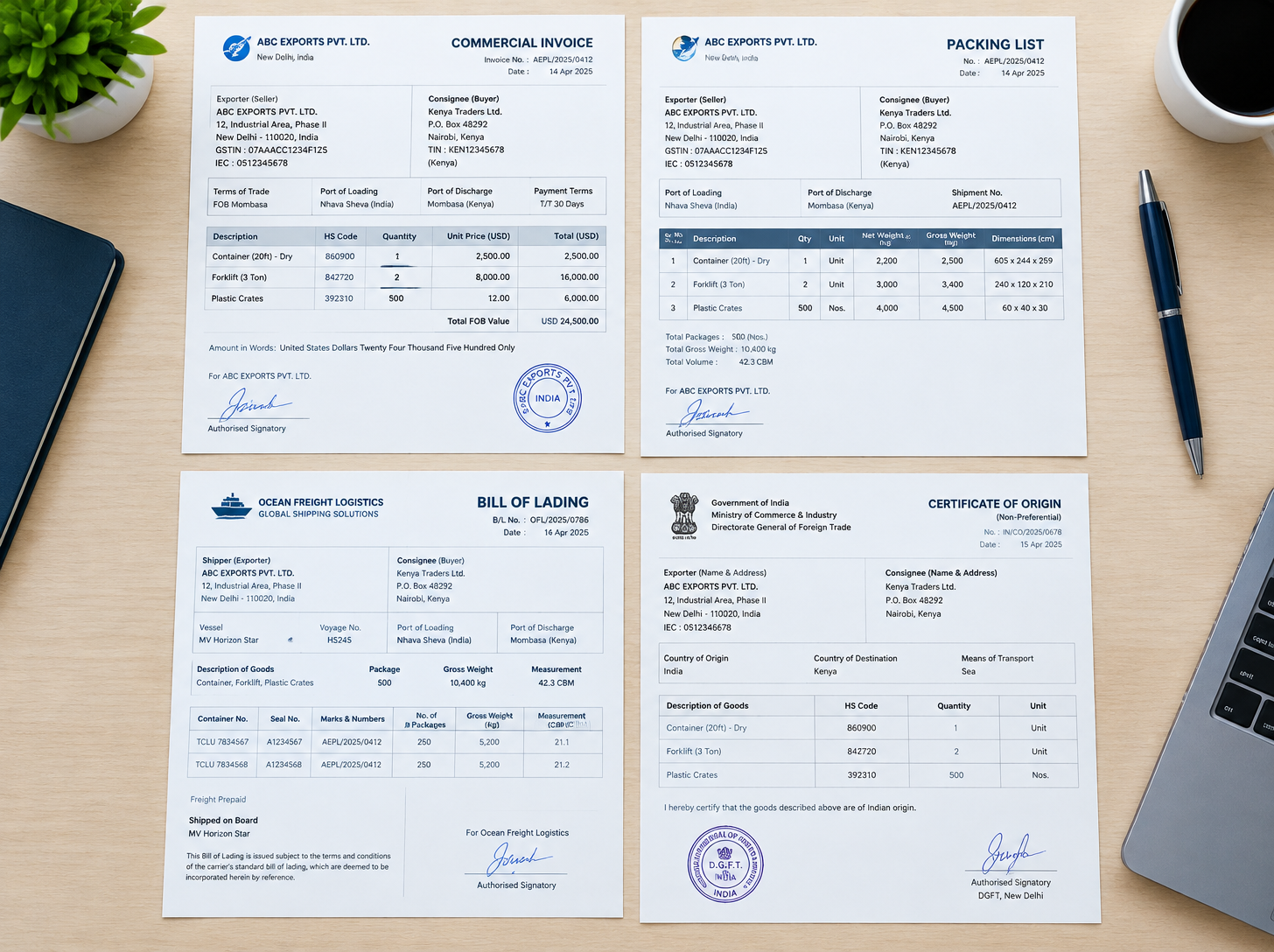
Also make sure your supplier prepares a correct invoice, packing list and Certificate of Origin, which is mandatory for every Kenyan import from 1 October 2025. For a wider view of sourcing, read India vs China importing to Kenya. The same two terms apply to our China freight service.
What We Need to Quote Your Shipment
- What the product is, and its HS code if you know it
- Your supplier’s location in India (city and state), which decides the port or airport
- Cargo size: cartons or pallets, total cubic metres (CBM) and gross weight in kg
- The delivery term on your supplier’s quotation (EXW or FOB), the named place and the supplier’s contact
- Your target arrival date, and any permits or certificates your product needs
Not sure what your supplier’s quote really covers? Send us the quote and your supplier’s location and we’ll explain it before you pay.
Frequently Asked Questions
Which is cheaper, EXW or FOB? EXW usually has the lower headline price, but you pay the origin costs separately. Compare the total cost to Mombasa.
Does Clearon handle both EXW and FOB from India? Yes, we handle both terms.
Who files the shipping bill in India? The Indian exporter, using their IEC, normally files it, directly or through a customs broker. On EXW terms, confirm how this will be done before you pay.
Which Indian ports do you ship from? Nhava Sheva, Mundra, Mumbai and other ports, plus Ahmedabad for air freight. Tell us your supplier’s location and we’ll confirm the routing.
Further Reading
- ICC: Incoterms 2020 rules (external, dofollow)
- DGFT, India: Importer-Exporter Code (external, dofollow)
- Related on our blog: Shipping from India to Kenya: FCL, LCL and Air Compared
- Related on our blog: FCL Shipping from India to Kenya: Choosing the Right Indian Port
- Related on our blog: India vs China Importing to Kenya
- Related on our blog: Indian Export Documents for Kenyan Importers
- Our service: China to Kenya Shipping Service


Leave a Reply