
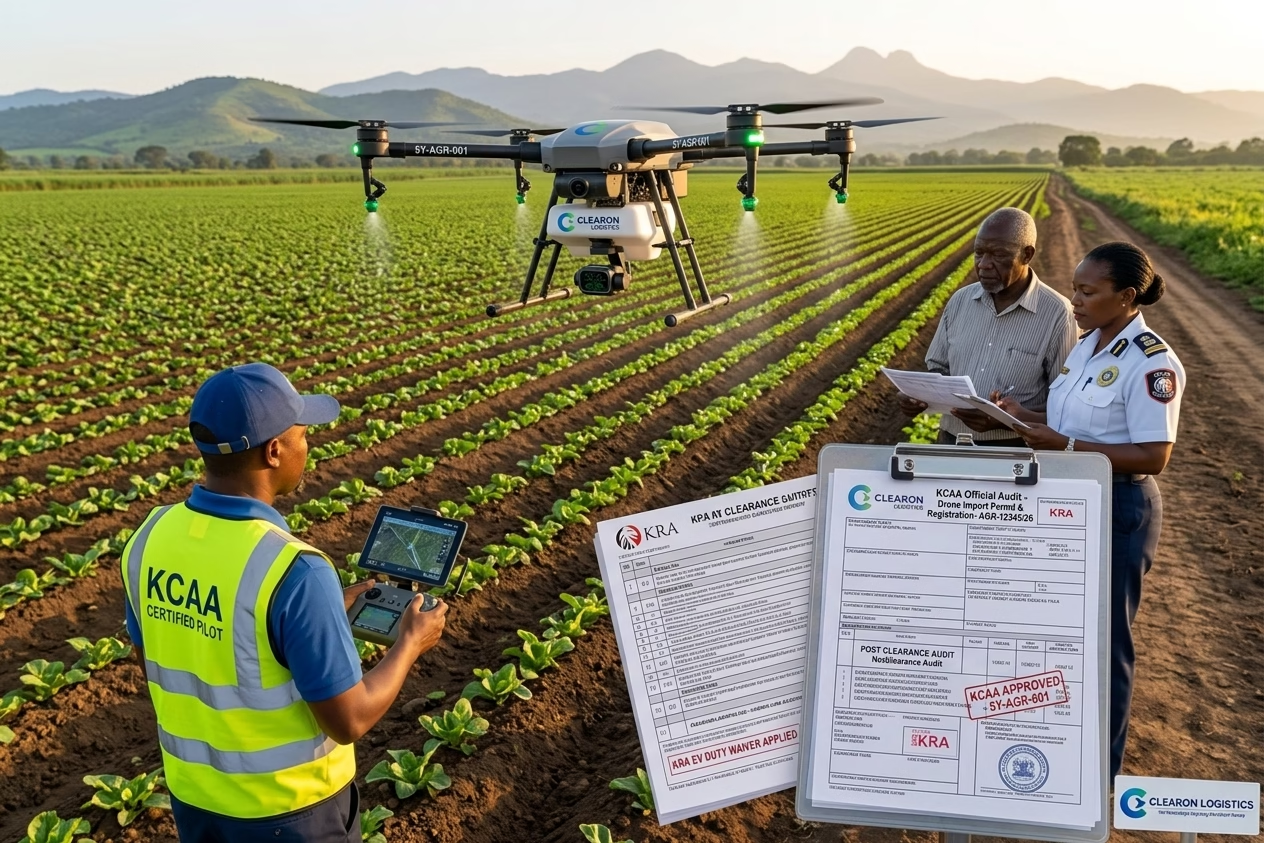
Importing drones into Kenya without the right authorisation isn’t a grey area — it’s one of the more strictly enforced categories in Kenyan import law, and Kenyan customs officials at JKIA have a documented history of seizing undeclared drones and holding them indefinitely. Whether you’re a farmer looking at crop-monitoring drones, a photographer bringing in a new rig, or a business importing units for resale, the Kenya Civil Aviation Authority stands between you and legal drone ownership at every step.
Table of Contents
Why Drones Get Aviation-Level Scrutiny
Drones fall under Kenya’s Civil Aviation (Unmanned Aircraft Systems) Regulations, 2020 — meaning they’re regulated as aircraft, not as ordinary consumer electronics. This is a deliberate framing: Kenya treats airspace security, surveillance capability, and safety around aviation infrastructure as serious enough concerns that importing a drone triggers the same category of oversight as importing an aircraft component, just scaled to the device’s size and capability.
The Import Permit: Your First Gate
Before a drone or its components can legally enter Kenya, the importer needs an import permit from the KCAA. This isn’t a rubber-stamp process — it involves the Authority conducting a review in collaboration with relevant government agencies before approval is granted. Bring a drone in without this permit, and the consequence is direct: confiscation at the point of entry, with a documented history of drones being held indefinitely at JKIA when this step is skipped.
Security Clearance Is Part of the Process
This is the detail that distinguishes drone imports from almost every other product category covered elsewhere on our blog: before issuing an import permit, the KCAA obtains security clearance and approval from the Ministry of Defence. This reflects Kenya’s underlying concern about surveillance and airspace security capability — a drone is treated, at the point of import, as a device with genuine security implications, not simply a piece of consumer technology. Building this into your import timeline matters, since a security clearance step involving another government ministry entirely is not something that resolves quickly if left until the last minute.
Temporary Permits for Visitors
If you’re a foreign visitor or tourist planning to bring a drone into Kenya temporarily — for a specific shoot, event, or short-term project — the KCAA issues a temporary import permit, generally valid for up to 30 days and renewable once. This is worth arranging before you travel, not on arrival, since foreign visitors bringing drones into Kenya without prior KCAA approval risk detention of the equipment at the airport or border. It’s also worth noting explicitly: Kenya does not participate in the international carnet system, so — much like the general temporary importation framework covered elsewhere on our blog — an ATA Carnet won’t substitute for the correct Kenyan permit here either.
Registration Comes After Import
Once a drone is legally in Kenya, the owner or operator must register it with KCAA and obtain a registration certificate — a requirement that applies to any person or corporation wishing to operate a drone, regardless of category or intended use. For drones already present in Kenya at the time the regulations took effect, a six-month window was given for registration; for a newly imported drone, registration follows the import permit as the next required step, not an optional formality.
Reselling or Distributing Drones Needs Its Own Authorisation
If you’re importing drones for commercial resale rather than personal or operational use, there’s an additional layer: drone resellers and distributors must obtain a distributor/reseller certificate from the KCAA, separate from the import permit itself. A business importing drone stock to sell on to Kenyan customers needs to confirm this certificate is in place — importing units under a standard import permit without the distributor authorisation is a gap worth closing before, not after, stock arrives.
Commercial Drone Operation Requires Even More
If the drone is intended for commercial use — reward, hire, or business operations rather than personal use — the operator additionally needs a Remote Aircraft Operators Certificate, which must be applied for at least 90 days before the intended operation date and is valid for 12 months. Applicants need to demonstrate a Kenya-registered business, qualified staff, proper operational and maintenance arrangements, and — again — Ministry of Defence security clearance. This is a substantially more involved process than importing a single drone for personal or agricultural use, and the 90-day lead time alone makes it a poor fit for last-minute planning.
Getting Drone Imports Right From the Start
Between the import permit, security clearance, registration, and — depending on intended use — distributor or commercial operator authorisation, drone imports carry more layered compliance than almost any other product category short of firearms. Given the documented risk of confiscation for non-compliance, and the multi-agency approval process involved, this is a category where planning several months ahead, not weeks, is the realistic timeline.
At Clearon Logistics, we help drone importers — whether bringing in a single agricultural unit or a commercial distribution shipment — understand exactly which KCAA authorisations apply to their specific situation, and build the necessary lead time into the shipment plan from the start.
Planning to import a drone into Kenya? Talk to Clearon Logistics well ahead of your shipment to confirm KCAA permit requirements.
Frequently Asked Questions
Can I bring a drone into Kenya without a KCAA permit if it’s just for personal use? No — an import permit is required regardless of intended use, and drones brought in without one have been confiscated at points of entry like JKIA, sometimes held indefinitely.
Does Kenya accept an ATA Carnet for temporarily importing a drone? No — Kenya does not participate in the international carnet system. Foreign visitors need a KCAA temporary import permit instead, generally valid for up to 30 days.
How long does the drone import approval process take? It varies, but given the Ministry of Defence security clearance step involved, and — for commercial operations — a required 90-day minimum lead time for the Remote Aircraft Operators Certificate, this is not a process to leave until shortly before you need the drone.
Do I need a separate authorisation to resell drones commercially in Kenya? Yes — drone resellers and distributors need a distributor/reseller certificate from the KCAA, separate from the standard import permit required for bringing the units into the country.
Further Reading
- Kenya Civil Aviation Authority (KCAA) (external, dofollow)
- Civil Aviation (Unmanned Aircraft Systems) Regulations, 2020 (external, dofollow)
- Related on our blog: Prohibited and Restricted Goods Kenya: The Essential 2026 Import Checklist
- Related on our blog: Temporary Importation into Kenya: 4 Essential Facts About the Bond System
- Our service: Clearing and Forwarding Services in Kenya







Leave a Reply