
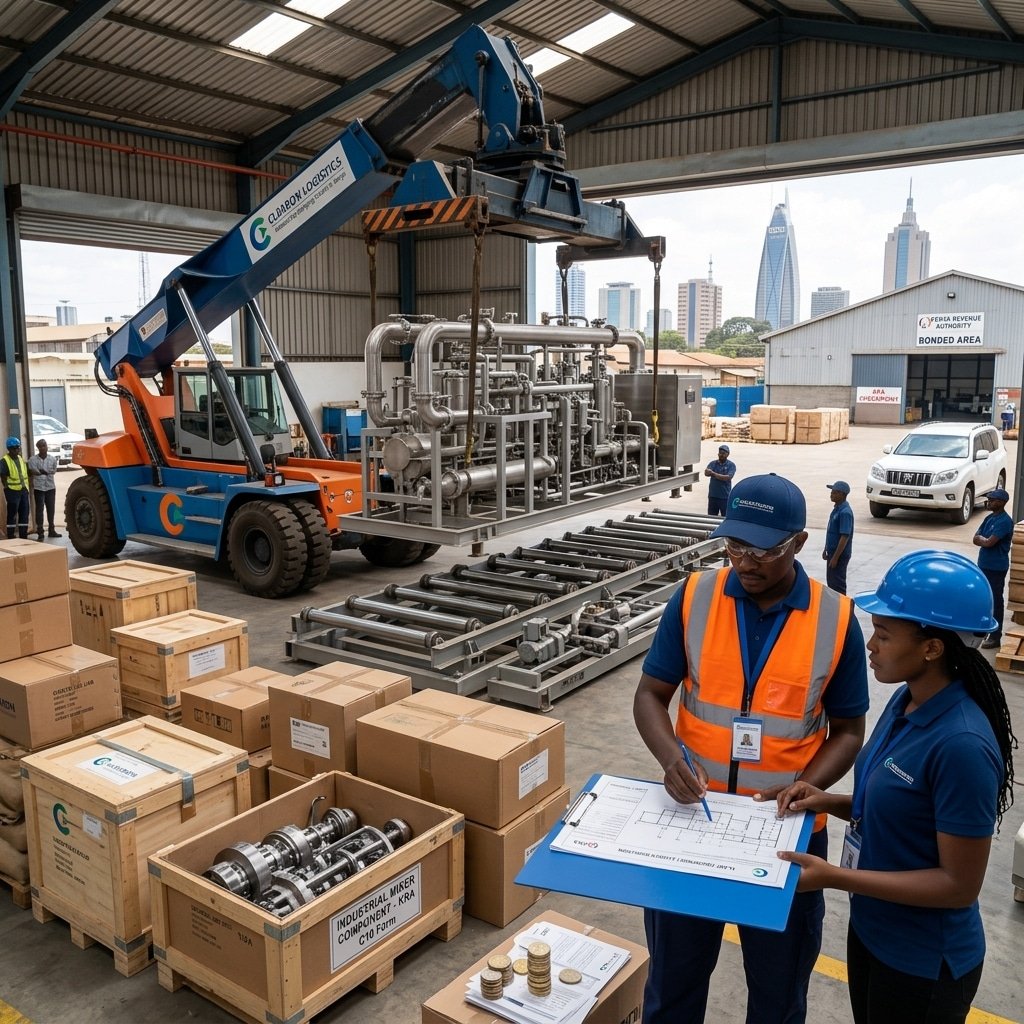
A clearing agent for industrial machinery is one of the highest-stakes hires a commercial importer makes, because a machine stuck at the port is a production line standing idle. Machinery shipments combine high value, technical classification, certification questions, heavy-lift logistics and, very often, a hard commissioning date. If you’re importing plant and equipment for a factory, processing line or workshop, here is what a specialist agent should be doing for you, and what to ask before you commit.
Table of Contents
Why Machinery Imports Are Won or Lost Before Shipping
The costly mistakes in machinery imports are almost never made at the port. They’re made earlier: a vague description on the invoice, a missing model or serial number, a certificate that doesn’t match the consignment, or a manufacturer-incentive scheme that should have been arranged before the equipment shipped. An agent who only engages once your container is discharged can’t fix any of this. Ask for pre-shipment involvement, particularly on any single consignment worth more than a few million shillings.
Classification and Duty: Get the HS Code Right
Kenya applies the EAC Common External Tariff, which runs in four bands: 0%, 10%, 25% and 35%. Many capital goods sit in the lower bands, but this is not automatic, and the EAC’s annual gazette, including changes effective from 1 July 2026, can alter treatment for specific products. On top of duty, expect the Import Declaration Fee (currently 2.5% of CIF), the Railway Development Levy (2%) and VAT at 16% unless an exemption applies. Machines frequently arrive with accessories, tooling and control systems that classify differently from the main unit, so itemised invoices matter. Our guides to HS code classification and calculating landed cost show how these pieces stack.
The Certification Stack
Many categories of machinery fall under KEBS pre-export verification, producing a Certificate of Conformity before shipment. KEBS has also published exemption routes, summarised by JETRO in 2024, for machinery imported by manufacturers for their own use, subject to conditions and an application fee. Where a machine contains motors or electrical components, EPRA registration and KEBS requirements may apply as well. Because these rules change, confirm the current position for your specific machine before you order rather than assuming last year’s treatment still holds.
Manufacturers Have Extra Options, If They Plan Early
If you’re setting up or expanding manufacturing, schemes such as Manufacture Under Bond, duty remission and special economic zone incentives can materially lower your capital cost, but they generally need to be in place before the equipment is imported, not after duty has been paid. Read our guides on machinery import incentives and SEZ versus EPZ before you place the order, then have your agent confirm how the scheme you choose affects documentation and clearance.
The Documentation Pack for a Machinery Shipment
A clean machinery file typically includes:
- Commercial invoice with full descriptions, model and serial numbers, and unit values
- Packing list with dimensions and gross weights for every piece
- Bill of Lading or Airway Bill, and the Advance Cargo Declaration reference for containerised sea cargo
- Certificate of Origin and the export declaration document now required for imports
- Certificate of Conformity, or the KEBS exemption letter where one applies
- Technical datasheets or catalogues, which help settle classification arguments quickly
- Evidence of valid local marine cargo insurance
- For second-hand equipment, a condition report and a defensible valuation, as covered in our used machinery guide
Heavy Lifts, Breakbulk and Inland Delivery
Oversized machinery often moves as breakbulk or on flat-rack equipment, and needs lifting plans, special transport and route clearance. These are logistics decisions your agent should make with you before the vessel sails, not once the cargo is on the quay. See our guide to bulk and breakbulk cargo and the axle load rules that govern the road leg to site.
Working With Clearon Logistics on Machinery Imports
We treat machinery clearance as a project, not a transaction: classification confirmed before shipping, certification route agreed early, documentation reconciled against the packing list, and delivery planned around your commissioning schedule. Every quote is itemised, so you can see government charges, our fee and third-party costs separately.
Importing industrial machinery into Kenya? Talk to Clearon Logistics before the equipment ships, and we’ll map the compliance route for your specific machine.
Frequently Asked Questions
Is industrial machinery duty-free in Kenya? Not automatically. Many capital goods sit in the lower EAC tariff bands and some qualify for incentive schemes, but treatment depends on the specific HS code and on schemes arranged before import. Always confirm at HS level.
Do I need a Certificate of Conformity for machinery? Often yes, under KEBS pre-export verification, though exemption routes exist for certain manufacturer own-use imports. Confirm which applies to your machine before shipping.
Can a clearing agent help before my machine has shipped? Yes, and that’s when they add most value: confirming classification, certification, documentation and incentive-scheme options while errors are still cheap to fix.
Why do machinery shipments get delayed? Most often because of vague invoice descriptions, missing serial numbers, certificate mismatches, or heavy-lift and transport arrangements made too late.
Further Reading
- Kenya Bureau of Standards (KEBS) (external, dofollow)
- Kenya Revenue Authority (external, dofollow)
- Related on our blog: Importing Machinery into Kenya: Manufacture Under Bond and Incentives
- Related on our blog: Importing Used Machinery into Kenya
- Related on our blog: Clearing Agent for Bulk and Breakbulk Cargo
- Our service: Clearing and Forwarding Services in Kenya


Leave a Reply