
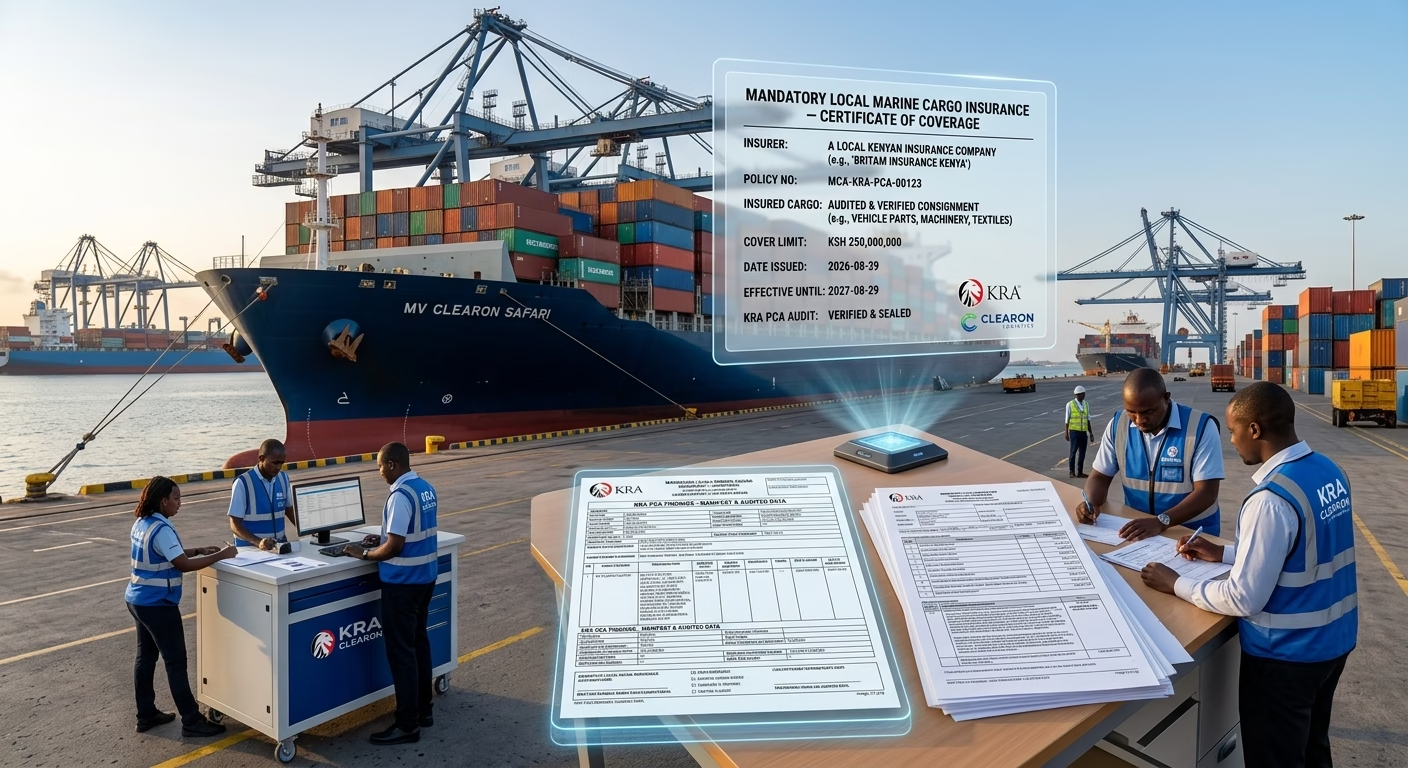
Marine cargo insurance in Kenya went from a commercial choice to a legal requirement almost overnight. Since 1 July 2026, every import into Kenya must be covered by a marine cargo insurance policy issued by a locally licensed insurer before customs clearance can be completed. For decades, importers routinely arranged this cover through overseas insurers as part of their shipping agreements — that option is now off the table.
If your supply chain has always handled insurance overseas as a default, this is a change worth understanding before your next shipment, not after it’s held at clearance.
Table of Contents
What Changed on 1 July 2026
Following amendments to Kenya’s Marine Insurance Act and Insurance Act, the government moved to fully enforce a requirement that had existed on paper for years but was inconsistently applied: all marine cargo insurance for imports into Kenya must now be issued by an insurer licensed in Kenya. Cover arranged through foreign or unregistered insurers is no longer accepted for customs clearance purposes. The requirement is implemented jointly by the Kenya Revenue Authority (KRA) and the Insurance Regulatory Authority (IRA).
Why the Government Made This Change
The rationale is straightforward: for years, an estimated majority of marine cargo insurance premiums on Kenya’s imports flowed to foreign insurers, leaving Kenyan insurance companies handling only a small share of a market tied to goods worth trillions of shillings annually. The new requirement is designed to retain that premium income within the domestic insurance and reinsurance sector, rather than exporting it alongside the goods themselves.
How the New System Works
A national Digital Marine Cargo Insurance (DMCI) platform, developed in collaboration with the Kenya International Freight and Warehousing Association (KIFWA) and a group of licensed insurers, now automates the process. In practice:
- Once an Import Declaration Form (IDF) is created, the platform automatically generates an insurance quotation based on the HS code and details of the cargo
- The importer pays the premium through the platform (linked to M-Pesa, banking channels, and eCitizen)
- A Digital Marine Cargo Insurance Certificate is issued instantly and verified electronically
- The certificate integrates directly with KRA’s Integrated Customs Management System (iCMS), so clearance can proceed without manual paperwork
This replaces a process that used to be handled separately, often as part of a shipping agreement negotiated well before goods ever reached Kenya, with something now built directly into the customs clearance sequence itself — alongside other recent additions like the now-mandatory Certificate of Origin requirement.
Watch Out for Double-Paying
One of the more practical risks in this transition, flagged specifically by the Shippers Council of Eastern Africa, is importers ending up paying for cargo insurance twice — once through an existing supplier or Incoterm arrangement that still includes overseas cover, and again through the new mandatory local system. The Shippers Council has specifically recommended reviewing Incoterm choices, suggesting arrangements like Cost and Freight (CFR) — where the buyer arranges insurance separately, rather than the seller bundling it in — to avoid this overlap. If your supplier contracts were negotiated before July 2026, it’s worth checking exactly what they still include.
Which Shipments Are Affected
The mandatory local cover applies to commercial imports. Marine cargo insurance policies covering personal effects, goods, and items brought in by returning residents or passengers relocating to Kenya are generally treated differently under the underlying legislation — but for standard commercial shipments, local cover is now the rule, not the exception.
What This Means for Your Supply Chain
For most importers, the practical adjustment is smaller than it sounds — the platform automates much of what used to require manual negotiation. But it does mean:
- Reviewing existing supplier contracts and Incoterms to avoid paying for insurance twice
- Budgeting the local premium into your landed cost calculations going forward
- Understanding that insurance is now effectively part of the customs clearance sequence, not a separate arrangement handled entirely on the seller’s side
This is precisely the kind of regulatory shift that’s easy to miss if nobody on your side is actively tracking it — and expensive to discover only once your cargo is sitting at the port waiting on a certificate nobody arranged.
At Clearon Logistics, keeping up with changes like this is part of how we manage a shipment from before it even leaves origin — flagging what’s changed, confirming your Incoterms don’t leave you exposed to double costs, and giving you a clear, honest breakdown of what the local premium actually adds to your landed cost, rather than letting it show up as a surprise at clearance.
Not sure whether your next shipment is properly covered under the new rules? Talk to Clearon Logistics before you finalise your shipping terms.
Frequently Asked Questions
Do I still need marine cargo insurance if my supplier ships DDP or includes insurance in the quote? You need to confirm whether their included cover is issued by a Kenya-licensed insurer. If it isn’t, you may need to arrange separate local cover, and it’s worth reviewing your Incoterms to avoid paying for both.
Does this apply to personal shipments, like a returning resident’s household goods? Generally, personal effects and goods brought in by returning residents or relocating passengers are treated differently under the underlying legislation, distinct from standard commercial import cargo.
How is the insurance premium calculated under the new system? The Digital Marine Cargo Insurance platform generates a quotation automatically based on the HS code and details of your cargo, rather than manual negotiation with an insurer.
What happens if I try to clear cargo without local marine insurance? Since the requirement is now integrated into KRA’s customs clearance system, clearance is not expected to proceed without a valid Digital Marine Cargo Insurance Certificate on file.
Further Reading
- Insurance Regulatory Authority of Kenya (IRA) (external, dofollow)
- Shippers Council of Eastern Africa (external, dofollow)
- Related on our blog: Certificate of Origin Kenya Imports: Urgent 2026 Rule Change
- Related on our blog: How Much Does Customs Clearance Cost in Kenya?
- Our service: Clearing and Forwarding Services in Kenya




Leave a Reply