
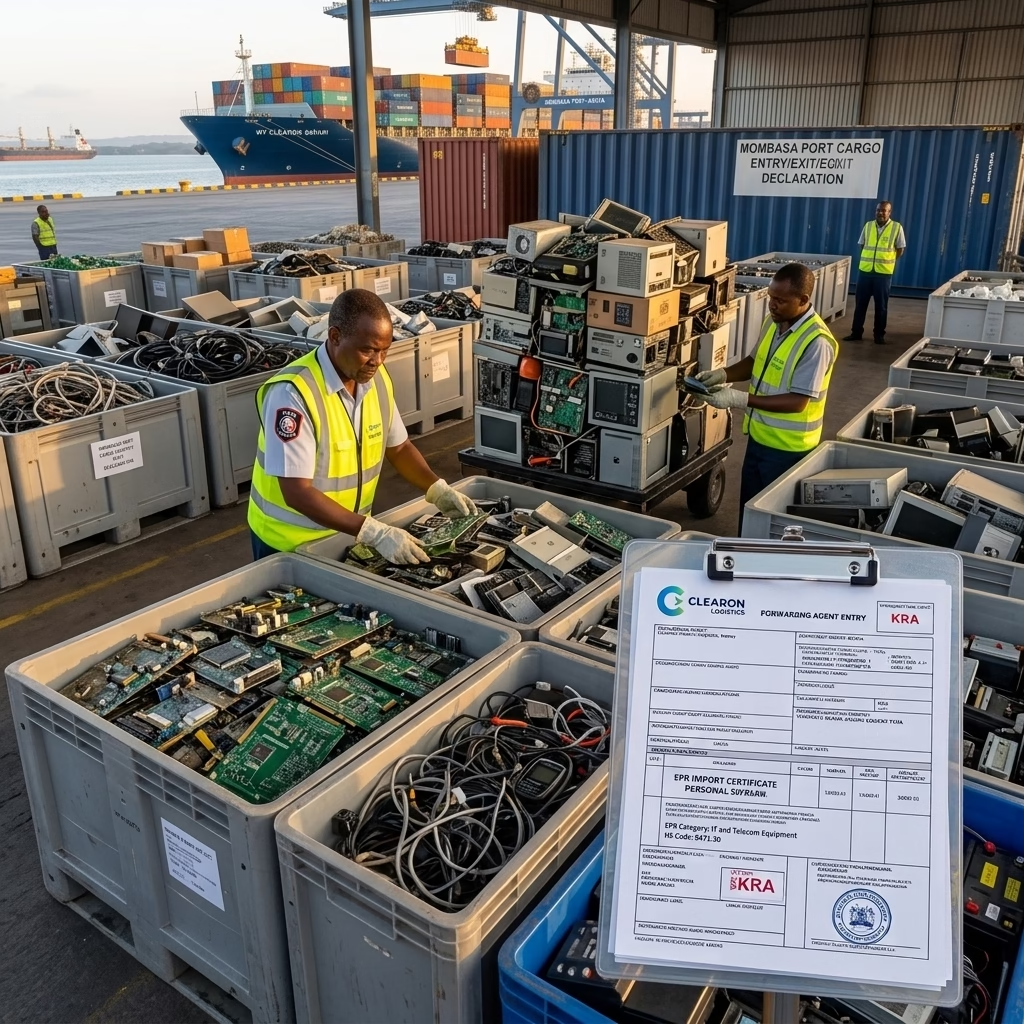
The EPR Import Certificate Kenya now requires from nearly every importer is one of the newer compliance layers many businesses haven’t fully adjusted to yet. Since 14 March 2026, the National Environment Management Authority (NEMA) has required all importers of specified products to obtain an Extended Producer Responsibility (EPR) Import Certificate before their goods can clear — a requirement that reaches far beyond electronics into packaging, chemicals, and everyday consumer goods.
Table of Contents
What the EPR Import Certificate Actually Is
Extended Producer Responsibility is a “polluter pays” framework that makes manufacturers, importers, and brand owners responsible for the full life cycle of the products they place on the Kenyan market — including what happens to those products, and their packaging, once they’re discarded. It’s established under the Sustainable Waste Management Act 2022 and implemented through the Sustainable Waste Management (Extended Producer Responsibility) Regulations 2024.
What Changed on 14 March 2026
Before this date, EPR compliance existed in the regulations but wasn’t consistently enforced as a precondition for clearance. NEMA’s directive changed that directly: all importers of specified products must now obtain the EPR Import Certificate, lodged through the National Electronic Single Window System (NESWIS), operated by the Kenya Trade Network Agency (KenTrade), before their goods can be cleared. The certificate is now integrated with other border regulatory agency systems, meaning it functions as a standard checkpoint in the clearance sequence, not a separate side process.
Who This Applies To
This is broader than most importers initially assume. EPR fees and certification apply to producers — defined to include manufacturers, importers, brand owners, and retailers — across a wide range of categories:
- Packaging materials — plastics, aluminium, composite materials, paper, corrugated packaging, glass, cardboard, and cartons
- Hazardous product packaging — industrial chemicals, oils and lubricants, pharmaceuticals, agrochemicals, veterinary products, cosmetics, paints, solvents, and treated wood
- Electrical and electronic equipment — including items containing mercury (switches, thermostats), batteries and accumulators
- End-of-life vehicles — automobiles, aircraft, and locomotives
If your imports include any packaged consumer goods, electronics, or chemical-adjacent products, there’s a strong chance this applies to you, even if you’ve never thought of your business as an “electronics importer” specifically — much like the way many importers are only now catching up with the mandatory Certificate of Origin requirement or the general list of restricted goods that need a permit.
How to Get the Certificate
The certificate is obtained through NESWIS, the same national single-window platform KenTrade uses for other trade documentation, which was specifically designed to streamline the process by integrating EPR compliance with existing border regulatory workflows rather than requiring a separate manual application. In practice, this means the certificate should be arranged as part of your standard pre-shipment documentation preparation, alongside your other permits — not as an afterthought once your goods have already arrived.
What It Costs
EPR fees are charged per item across the applicable product and packaging categories, funding the collection, transportation, recovery, recycling, and environmentally sound management of the resulting waste. The fee structure has itself been under review — NEMA ordered a reassessment of the collection framework in mid-2026 after finding the prior structure didn’t fully comply with the 2024 regulations — so the exact rate applicable to your goods is worth confirming close to your shipment date rather than assuming last year’s figure still applies.
Penalties for Non-Compliance
Under the broader e-waste and EPR regulatory push, proposed penalties for unauthorised dumping or importing without proper registration include fines and potential forfeiture of goods — a real risk for importers who assume this requirement doesn’t apply to them without checking first.
Getting Ahead of a Moving Regulatory Target
EPR compliance in Kenya is still evolving — fee structures under review, e-waste-specific regulations still being finalised, and enforcement mechanisms tightening steadily since the March 2026 directive. For an importer, the safest approach isn’t trying to track every NEMA notice yourself — it’s confirming, before every shipment, whether your specific goods trigger an EPR obligation and what the current certificate and fee requirements actually are.
At Clearon Logistics, this is exactly the kind of compliance check we build into our pre-shipment advisory process — confirming whether your goods need an EPR Import Certificate before you order, not after your container is sitting at the port waiting on a document nobody flagged. We keep clients updated as these requirements shift, and give a clear breakdown of what any additional fee actually adds to your landed cost.
Not sure if your next shipment needs an EPR Import Certificate? Talk to Clearon Logistics before you place the order.
Frequently Asked Questions
Does the EPR Import Certificate only apply to electronics importers? No — it applies broadly across packaging materials, hazardous product packaging, electronics, batteries, and end-of-life vehicles. Many importers of ordinary packaged consumer goods are affected without realising it.
Where do I apply for an EPR Import Certificate? Through the National Electronic Single Window System (NESWIS), operated by the Kenya Trade Network Agency (KenTrade), integrated with other border regulatory agency systems.
What happens if I import without one? Non-compliance can result in fines and, in some cases, forfeiture of goods, alongside the practical risk of your shipment being held at clearance.
Is the EPR fee a one-time cost or ongoing? It’s charged per item across applicable categories, so it applies to each relevant shipment rather than being a single upfront registration cost — and the fee structure itself has been under regulatory review, so it’s worth confirming current rates before each shipment.
Further Reading
- National Environment Management Authority (NEMA) (external, dofollow)
- Kenya Trade Network Agency (KenTrade) — NESWIS (external, dofollow)
- Related on our blog: Prohibited and Restricted Goods Kenya: The Essential 2026 Import Checklist
- Related on our blog: Certificate of Origin Kenya Imports: Urgent 2026 Rule Change
- Our service: Clearing and Forwarding Services in Kenya


Leave a Reply