
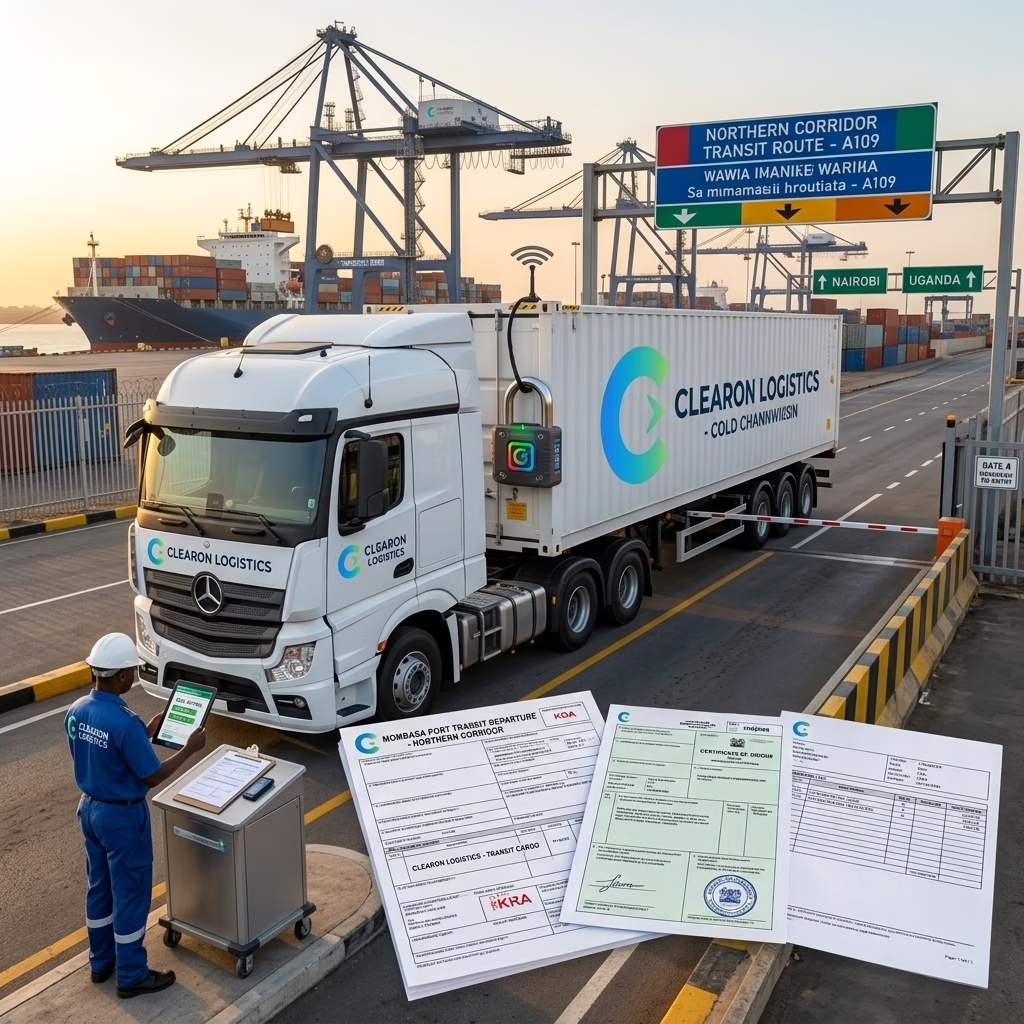
Transit cargo through Kenya moves through Mombasa Port every day on its way to markets that don’t touch the sea at all — Uganda, Rwanda, Burundi, South Sudan, and the DRC all rely on the Northern Corridor as their primary route to global trade. If you’re an importer based in any of these countries, understanding how Kenya’s transit system actually works is the difference between a shipment that reaches Kampala or Kigali in days, and one that sits in limbo at a border post.
Table of Contents
Why Mombasa Matters Beyond Kenya’s Borders
Mombasa Port is the primary gateway not just for Kenya, but for a landlocked hinterland stretching across the Northern and Central Corridors — serving Uganda, Rwanda, Burundi, South Sudan, and the DRC. For importers in these countries, “clearing customs” isn’t a single national process; it’s a regional one, coordinated across multiple revenue authorities under a shared framework.
The Single Customs Territory (SCT)
The Single Customs Territory is the East African Community’s answer to the old, slow way of doing this — where cargo was cleared at every border crossing along the route. Under SCT:
- Goods can be cleared at the destination country rather than repeatedly at every border
- One-Stop Border Posts (OSBPs) significantly cut crossing times
- A single customs declaration covers the entire transit journey, not a fresh one at each stage
- The whole movement is tracked electronically along the way
This shift alone has transformed transit times on the Northern Corridor. What used to take an 18-day ordeal of paperwork and border friction from Mombasa to Kampala now typically moves in around four days; Mombasa to Kigali has dropped from roughly three weeks to five or six days.
What You Actually Need for a Transit Shipment
For a valid transit movement through Kenya, your file generally needs:
- A Regional Customs Transit Guarantee (RCTG) — a bond executed in the destination country and accepted by KRA for the Kenyan leg of the journey
- The destination-country entry declaration, lodged in advance
- A KRA road manifest (commonly referred to as a C2), issued for the transit movement
- A clearing agent with an active RCTG bond in ASYCUDA, the customs processing system used across the region
Missing any one of these can hold your cargo at the border even if everything else about the shipment is in order.
RECTS: The Electronic Seal System
The Regional Electronic Cargo Tracking System (RECTS) fits an electronic seal to every transit truck at the point of loading, tracking it in real time via satellite from monitoring centres in Nairobi, Kampala, and Kigali. If the seal is tampered with or the vehicle deviates from its expected route, Rapid Response Units are positioned along the corridor to intervene. Before this system existed, transporters relied on multiple competing private tracking vendors, at significant per-trip cost, with far less oversight and a documented history of cargo diversion. RECTS is now free to transporters and covers Single Customs Territory cargo and general transit shipments together.
One practical note: cargo cleared entirely under the SCT regime is generally exempted from RECTS e-seal arming, except where a specific consignment is flagged through risk assessment — worth confirming with your clearing agent for your specific shipment type.
Where Your Cargo Gets Cleared Now
Following a joint KPA-KRA agreement aimed at decongesting Mombasa, transit cargo destined for Uganda, Rwanda, South Sudan, and the DRC is now set to be routed to the Naivasha Inland Container Depot for clearance, rather than handled entirely at the coast — a similar inland-clearance shift to the one already reshaping domestic imports through ICD Nairobi. This is a meaningful operational detail for anyone still assuming their cargo clears at Mombasa itself.
Common Pitfalls for Transit Cargo
- Assuming your Kenyan clearing agent’s documentation covers you at the destination. The RCTG bond and destination entry declaration both need to be properly coordinated with your home country’s revenue authority, not just KRA
- Not confirming Naivasha ICD routing in advance, and assuming clearance still happens directly at Mombasa
- Underestimating documentation lead time at the origin end — a missing or delayed destination declaration can hold cargo at Mombasa even when the Kenyan side is fully in order
- Working with an agent unfamiliar with cross-border transit specifically, as opposed to standard Kenyan import clearance — these are related but distinct processes with different documentation and different points of failure
Why Regional Importers Need a Kenya-Side Partner Who Understands Transit
For an importer based in Kampala, Kigali, Juba, or Goma, the Kenyan leg of your supply chain is happening somewhere you can’t easily oversee directly. That’s exactly where the value of a clearing agent who genuinely walks with you through the process — rather than one who only engages once something’s already gone wrong at the border — matters most.
At Clearon Logistics, we manage the Kenyan side of transit shipments with the same transparency and proactive communication we apply to any import: confirming your documentation is correctly coordinated before cargo ships, giving you a clear cost breakdown at every stage, and keeping you updated throughout the corridor journey — not just once your goods finally cross the border.
Importing into Uganda, Rwanda, South Sudan, or the DRC via Mombasa? Talk to Clearon Logistics about managing your Kenyan-leg documentation properly from the start.
Frequently Asked Questions
Does transit cargo through Kenya still need to be cleared at every border crossing? No — under the Single Customs Territory framework, a single customs declaration generally covers the full transit journey, and One-Stop Border Posts significantly reduce crossing time compared to the old system.
Where does transit cargo for Uganda, Rwanda, South Sudan, and the DRC actually get cleared now? Following recent KPA-KRA measures to decongest Mombasa, this cargo is routed to the Naivasha Inland Container Depot for clearance rather than handled directly at the port.
What is RECTS and do I need to worry about it? It’s the Regional Electronic Cargo Tracking System, which fits an electronic seal to transit trucks for real-time tracking. Cargo cleared under the Single Customs Territory regime is generally exempt from e-seal arming unless flagged through risk assessment.
Can my clearing agent in Kenya handle the whole transit process, including the destination country’s requirements? The Kenyan-side documentation (RCTG bond, road manifest) needs to be coordinated with the destination country’s entry declaration, so it’s important to confirm your agent understands cross-border transit specifically, not just standard Kenyan import clearance.
Further Reading
- Kenya Revenue Authority — Customs & Border Control (external, dofollow)
- TradeMark Africa — Northern Corridor trade facilitation (external, dofollow)
- Related on our blog: How to Choose the Right Clearing and Forwarding Agent in Kenya
- Related on our blog: Certificate of Origin Kenya Imports: Urgent 2026 Rule Change
- Our service: Clearing and Forwarding Services in Kenya
Leave a Reply