
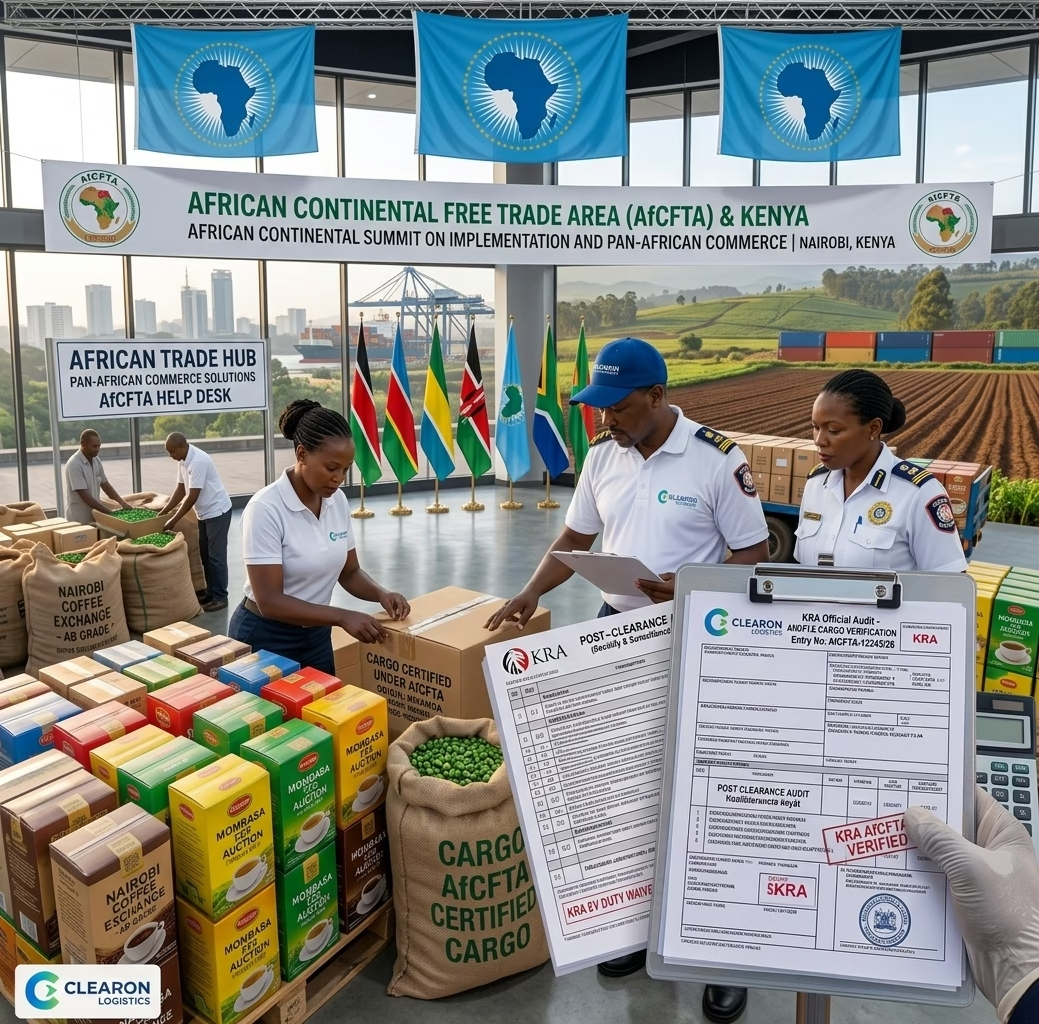
AfCFTA and Kenya represent one of the more consequential, and least understood, trade developments most Kenyan businesses have barely engaged with yet. Unlike COMESA and EAC, which cover Kenya’s immediate regional neighbourhood, the African Continental Free Trade Area is a genuinely different scale of ambition — a single market spanning all 54 African Union member states and roughly 1.4 billion people. Kenya isn’t just a participant in this; President William Ruto currently chairs the African Union’s own committee overseeing its implementation.
Table of Contents
What AfCFTA Actually Is
Signed in Kigali in 2018 and formally entering into force on 1 January 2021, the African Continental Free Trade Area creates a single free trade area across the entire African Union membership — a scope that exceeds any other free trade agreement in the world by country count. The World Bank estimates full implementation could increase intra-African trade by roughly 52% by 2035, positioning it as one of the most significant policy-driven economic transformations the continent has attempted. As of recent reporting, the agreement has been ratified by 50 countries — a pace described by the AfCFTA Secretariat as exceptionally strong for a trade framework of this scale and complexity.
Kenya’s Leadership Role Isn’t Symbolic
This is worth understanding clearly: Kenya isn’t a passive participant here. President Ruto chairs the AU Heads of State and Government Committee on Implementation of the AfCFTA, inaugurated in February 2026 to provide strategic political leadership specifically aimed at accelerating the transition from negotiation to full implementation. Kenya’s own Ministry of Trade and Industry leads domestic implementation, working alongside other government agencies under a dedicated Kenya National AfCFTA Implementation Strategy (2022-2027), with a stated goal of consolidating, diversifying, and expanding exports to African markets while pushing the manufacturing sector toward 5% real value-added growth annually. Kenya was also one of just seven countries — alongside Egypt, Ghana, Cameroon, Mauritius, Rwanda, and Tanzania — selected to pilot the agreement’s practical rollout.
The Guided Trade Initiative: Testing Before Full Rollout
Rather than waiting for every technical negotiation to conclude before any trade happened, AfCFTA launched the Guided Trade Initiative (GTI) in October 2022, allowing specific country pairs with compatible tariff offers and rules of origin frameworks to begin duty-free or reduced-duty trade immediately. Kenya exported its first consignment under AfCFTA to Ghana on 5 October 2022, following the gazettement of EAC Provisional Schedules of Tariff Concessions that September. Shipments have since moved under the GTI framework between Kenya and Ghana, and South Africa and Ghana, among other pairings — genuine, functioning trade, even if volumes so far remain modest relative to Africa’s total trade. The significance, as trade analysts have noted, has been more demonstrative than commercial to date: proving the mechanism works, and building the administrative experience needed for broader rollout, rather than yet representing a transformative trade volume shift.
Getting an AfCFTA Certificate of Origin
Kenya Revenue Authority’s Customs & Border Control Department is specifically responsible for issuing preferential proofs of origin under AfCFTA, including procuring a dedicated batch of AfCFTA certificates of origin for this purpose. Exporters who’ve been trading with African markets outside the AfCFTA framework can apply to have their trade brought under the agreement’s preferential terms — a process KRA has actively been facilitating for interested exporters, similar in structure to how Certificate of Origin requirements work across Kenya’s other trade agreements, but specifically tied to AfCFTA’s own rules of origin framework.
The Real Barriers Slowing Things Down
Academic and policy analysis of Kenya’s AfCFTA implementation has been candid about the genuine obstacles still limiting how much benefit Kenyan traders are currently capturing:
- Non-tariff barriers that persist even where tariff concessions exist on paper
- Complex rules of origin that can be genuinely difficult for smaller exporters to navigate and document correctly
- Poor transport and logistics infrastructure across parts of the continent, limiting how efficiently goods can actually move even where trade terms are favourable
- Limited internet access in some trading regions, complicating the digital documentation increasingly central to modern trade facilitation
- Political instability in some potential trading partner countries
- Difficulty accessing finance, particularly for small and medium enterprises trying to scale into new African markets
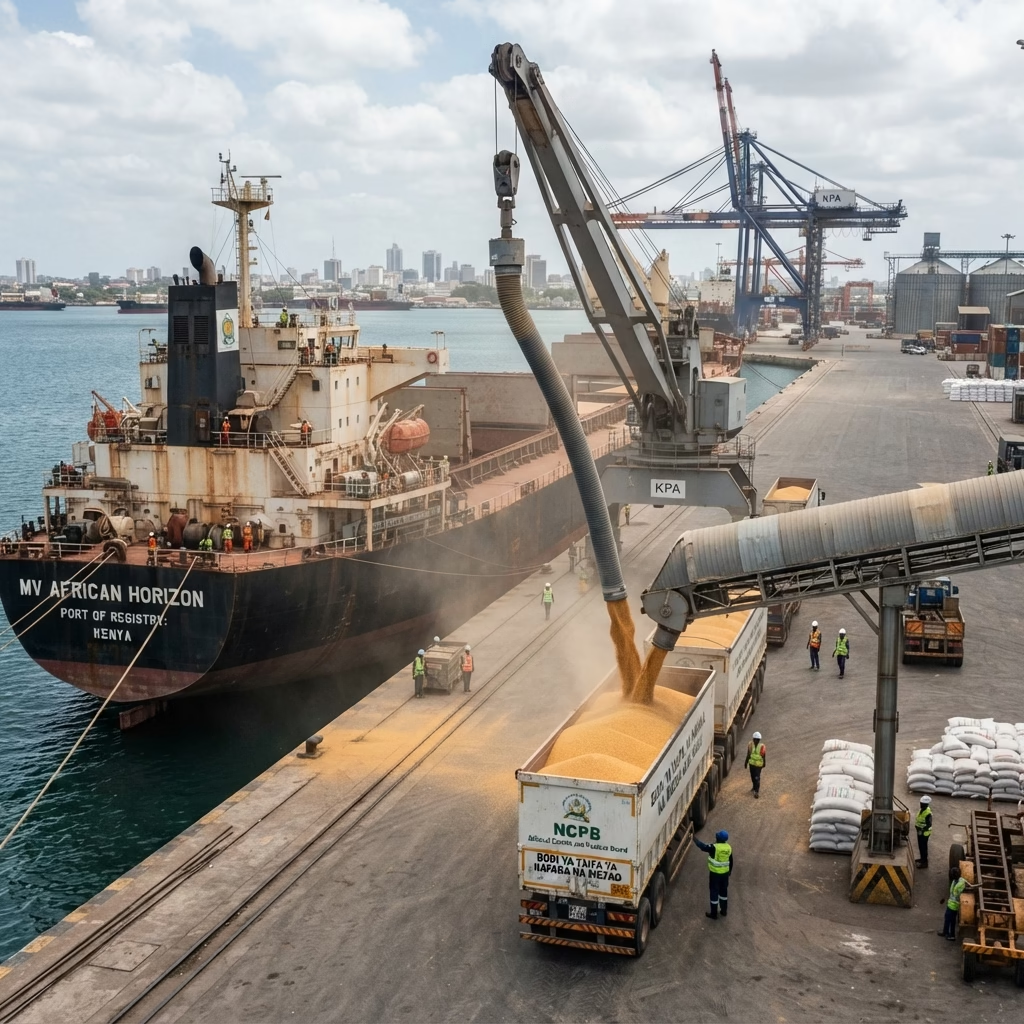
One documented example: an AfCFTA tea consignment reportedly faced delays that exposed genuine logistics gaps in practice — a reminder that preferential tariff terms alone don’t guarantee smooth trade if the underlying transport and documentation infrastructure isn’t equally ready.
How AfCFTA Differs From Kenya’s Other Trade Agreements
Kenya now sits inside a genuinely layered set of preferential trade arrangements — COMESA, the EAC, the EU and UK EPAs, AGOA, and now AfCFTA — each with its own scope and rules of origin requirements. AfCFTA’s distinguishing feature is scale: where COMESA and the EAC cover Kenya’s immediate regional neighbourhood, and AGOA and the EU/UK agreements cover specific external markets, AfCFTA is designed as the eventual continent-wide framework that regional blocs like COMESA and the EAC are meant to feed into as legal and operational building blocks, rather than compete with.
Positioning for a Framework Still Taking Shape
AfCFTA’s promise is genuinely significant, and Kenya’s leadership role gives it a real seat in shaping how implementation proceeds — but the practical reality for most traders right now is a framework still working through genuine structural barriers, not yet a smoothly functioning single market. For exporters willing to navigate the current documentation and logistics complexity, the GTI has already demonstrated the mechanism can work; for most, watching implementation mature over the coming years while building AfCFTA compliance capability now is the more realistic near-term strategy.
At Clearon Logistics, we help exporters understand how AfCFTA’s certificate of origin and rules of origin requirements apply to their specific goods, and coordinate the logistics side of trading into African markets under this framework, so early movers into AfCFTA trade aren’t held back by the same logistics gaps that have tripped up other consignments.
Exploring AfCFTA trade opportunities for your business? Talk to Clearon Logistics to understand what’s required for your specific goods and target market.
Frequently Asked Questions
Is AfCFTA the same as COMESA or the EAC? No — AfCFTA is a continent-wide framework covering all 54 African Union member states, while COMESA and the EAC are regional blocs. AfCFTA is designed to eventually build on these regional agreements rather than replace them.
When did Kenya first trade under AfCFTA terms? Kenya exported its first consignment under the AfCFTA framework to Ghana on 5 October 2022, through the Guided Trade Initiative launched that same month.
Who issues AfCFTA certificates of origin in Kenya? The Kenya Revenue Authority, through its Customs & Border Control Department, issues preferential proofs of origin including AfCFTA certificates for qualifying exports.
What’s actually slowing down AfCFTA’s benefits for Kenyan traders? Non-tariff barriers, complex rules of origin, infrastructure gaps, limited internet access in some trading regions, and difficulty accessing finance for SMEs remain genuine structural obstacles, even where tariff concessions exist on paper.
Further Reading
- Kenya Revenue Authority — AfCFTA FAQ (external, dofollow)
- AfCFTA Secretariat (external, dofollow)
- Related on our blog: COMESA and EAC Preferential Tariffs in Kenya
- Related on our blog: Kenya’s Trade Agreements with the EU and UK
- Our service: Clearing and Forwarding Services in Kenya



Leave a Reply