
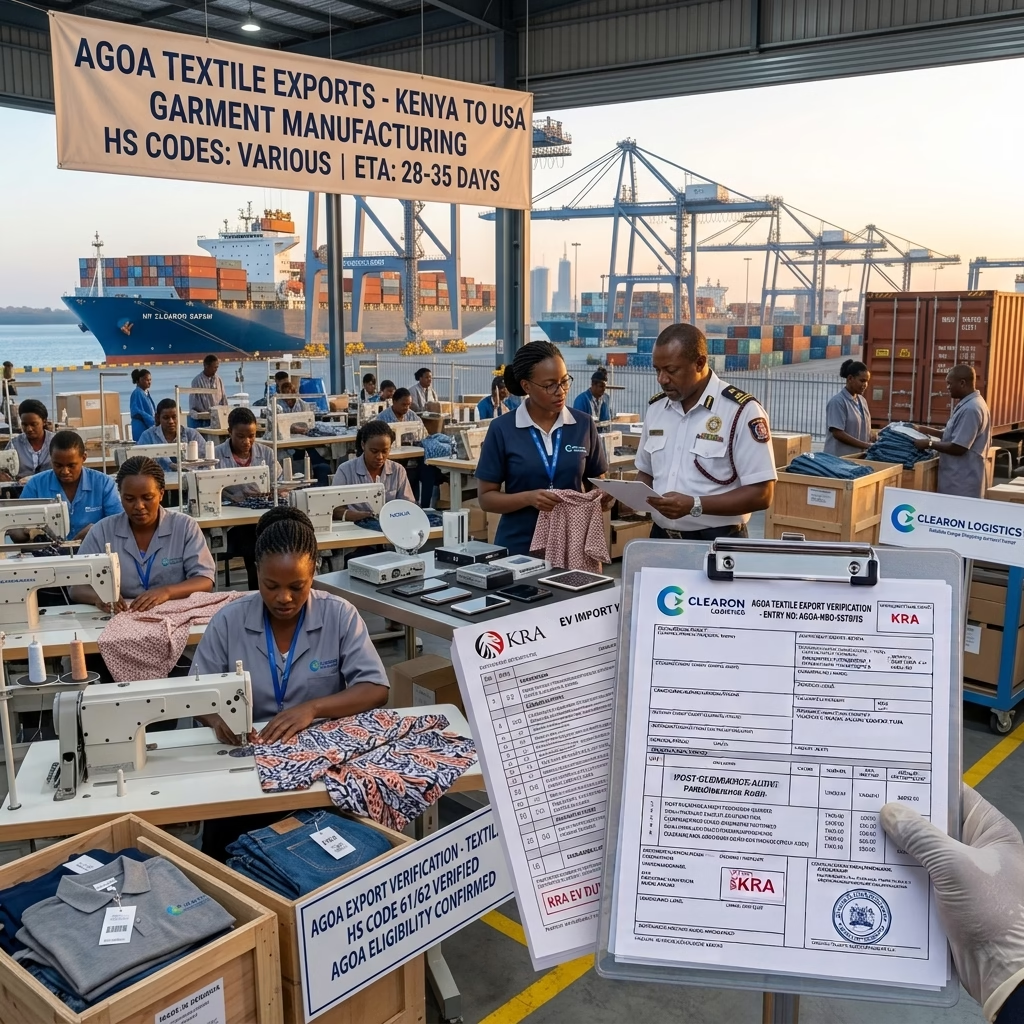
AGOA and Kenya’s textile exports have been synonymous for over two decades, and the sector just got genuinely good news: in early September 2026, the United States signed a two-year extension of the African Growth and Opportunity Act, pushing Kenya’s duty-free access to the US market through 31 December 2028. For an industry supporting tens of thousands of direct jobs and hundreds of thousands of livelihoods, this removes a real cloud of uncertainty — but the underlying data tells a more complicated story than “extension equals good news” alone.
Table of Contents
What Just Changed
AGOA had lapsed once already — the programme expired on 30 September 2025 after Congress failed to renew it on time, before a short-term extension restored benefits through the end of 2026. That stopgap has now been replaced with genuine runway: President Trump signed legislation in early September 2026 extending AGOA through 31 December 2028, giving Kenyan exporters roughly two additional years of confirmed, duty-free access to the US market rather than operating shipment to shipment under renewal uncertainty.
Kenya’s Cabinet Secretary for Investments, Trade and Industry called the extension particularly important for the textile and apparel industry specifically, which the government says supports more than 66,000 direct jobs.
Why the Third-Country Fabric Provision Matters So Much
Buried in the extension is a detail that matters more to Kenya’s competitiveness than the headline renewal itself: the third-country fabric provision was retained. This allows Kenyan garment manufacturers to source fabric from outside Kenya — commonly from Asian textile producers — while still qualifying for AGOA’s duty-free treatment on the finished garment. Without this provision, Kenya’s apparel industry would need to source fabric domestically or regionally to qualify, which the country’s textile manufacturing base isn’t currently positioned to fully support at the scale AGOA exports require. The Kenya Private Sector Alliance specifically flagged the provision’s retention as enabling manufacturers to invest with greater confidence.
The Uncomfortable Data Behind the Good News
Here’s where the story gets more nuanced. Kenya’s own Economic Survey 2026 shows a genuine volume-versus-value problem: in 2025, Kenyan factories exported a record 148 million apparel pieces to the United States, up 27.6% from 116 million pieces the year before — a substantial increase in production and shipment volume. But the value of those exports actually fell by 4.1%, dropping to KSh 58.1 billion from KSh 60.6 billion in 2024. Kenyan workers are producing and shipping more clothing than ever, while earning less per item, a combination industry analysts attribute to weakening consumer demand in Western markets, aggressive price competition from Asian textile exporters, and a shift toward lower-value, basic garment categories.
On the employment side, the picture is more straightforwardly positive — formal employment under AGOA expanded 22.8% to over 82,000 workers during the same period, making apparel one of Kenya’s largest sources of formal industrial job creation even as per-unit earnings came under pressure.
Why Kenya Keeps Winning Under AGOA When Others Haven’t
Kenya sits among a small group of countries — alongside Lesotho, Madagascar, Ethiopia, Mauritius, and Eswatini — that have genuinely built globally competitive apparel export industries under AGOA, in contrast to countries like South Africa, which never developed a comparable apparel export sector despite AGOA access. Analysts point to manufacturing foundations that were laid well before AGOA existed as the real driver of these success stories, with AGOA amplifying an existing capability rather than creating one from nothing. This context matters for anyone evaluating whether to invest in Kenyan apparel manufacturing capacity now: the trade preference alone doesn’t guarantee competitiveness, but paired with Kenya’s established manufacturing base, it’s been a genuinely effective combination.
What Exporters Should Actually Do With This Window
- Use the confirmed runway to invest, not just to maintain current output — the government has specifically urged manufacturers to expand capacity and diversify while the two-year window is locked in, rather than treating it as simply more of the same
- Push toward higher-value products, since the volume-vs-value data suggests Kenya’s current export mix is increasingly commoditised; moving toward more differentiated, higher-margin garment categories is where the real earnings opportunity sits
- Confirm your Rules of Origin compliance is current, particularly around the third-country fabric provision, since AGOA eligibility isn’t automatic and requires proper documentation the same way COMESA and EAC preferential tariffs do
- Consider diversifying beyond apparel, in line with the government’s own stated push toward value-added agricultural products, leather, pharmaceuticals, and manufactured goods, so the business isn’t entirely dependent on one trade programme’s periodic renewal cycle
How This Fits Alongside Kenya’s Other Trade Agreements
AGOA isn’t Kenya’s only preferential access to a major consumer market — it sits alongside the EU and UK Economic Partnership Agreements, both of which also offer meaningful market access for textiles and apparel. In fact, Kenya has been actively working to grow its UK textile exports specifically as a complement to AGOA, with UK-Kenya trade rising from roughly £1.4 billion in 2023 to £2.1 billion in 2025. For manufacturers, this means the smart long-term play isn’t over-relying on any single agreement, but building compliant export documentation and market relationships across all three simultaneously.
Making the Most of a Confirmed Trade Window
A two-year extension with the third-country fabric provision intact is a genuinely strong hand for Kenya’s textile sector — but the volume-vs-value data is a clear signal that simply producing more of the same isn’t where the next stage of growth comes from. For exporters, getting the compliance side right — origin documentation, correct product classification, proper certification — is what actually lets a business capture the full value of the access AGOA provides, rather than leaving margin on the table through avoidable errors.
At Clearon Logistics, we help exporters confirm their Rules of Origin documentation is properly in order for AGOA, EU, and UK preferential access alike, so market access translates into cleared, correctly documented shipments rather than compliance gaps discovered too late.
Exporting textiles or apparel from Kenya under AGOA? Talk to Clearon Logistics to confirm your documentation is fully compliant before your next shipment.
Frequently Asked Questions
How long does Kenya now have confirmed duty-free access to the US under AGOA? Through 31 December 2028, following the extension signed into law in early September 2026 — a meaningful improvement on the shorter-term extensions the programme had been operating under since it briefly lapsed in late 2025.
What is the third-country fabric provision and why does it matter for Kenya? It allows Kenyan garment manufacturers to use fabric sourced from outside Kenya (commonly Asia) while still qualifying for AGOA’s duty-free treatment on the finished garment — critical given Kenya’s textile manufacturing base doesn’t yet support fully domestic sourcing at the scale AGOA exports require.
If apparel export volumes are up, why did export value fall in 2025? A combination of weakening demand in Western markets, price competition from Asian producers, and a shift toward lower-value basic garment categories has meant Kenya is producing and shipping more while earning less per item — a volume-versus-value dynamic flagged directly in Kenya’s Economic Survey 2026.
Is AGOA Kenya’s only preferential trade access for textile exports? No — Kenya also has Economic Partnership Agreements with the EU and UK offering separate preferential market access for textiles and apparel, and is actively working to grow exports under all three simultaneously.
Further Reading
- Office of the United States Trade Representative — AGOA (external, dofollow)
- Kenya Private Sector Alliance (KEPSA) (external, dofollow)
- Related on our blog: Importing Mitumba into Kenya: 4 Urgent Facts on Rules and Tax Changes
- Related on our blog: Kenya’s Trade Agreements with the EU and UK: What Importers and Exporters Need to Know
- Our service: Clearing and Forwarding Services in Kenya




Leave a Reply