
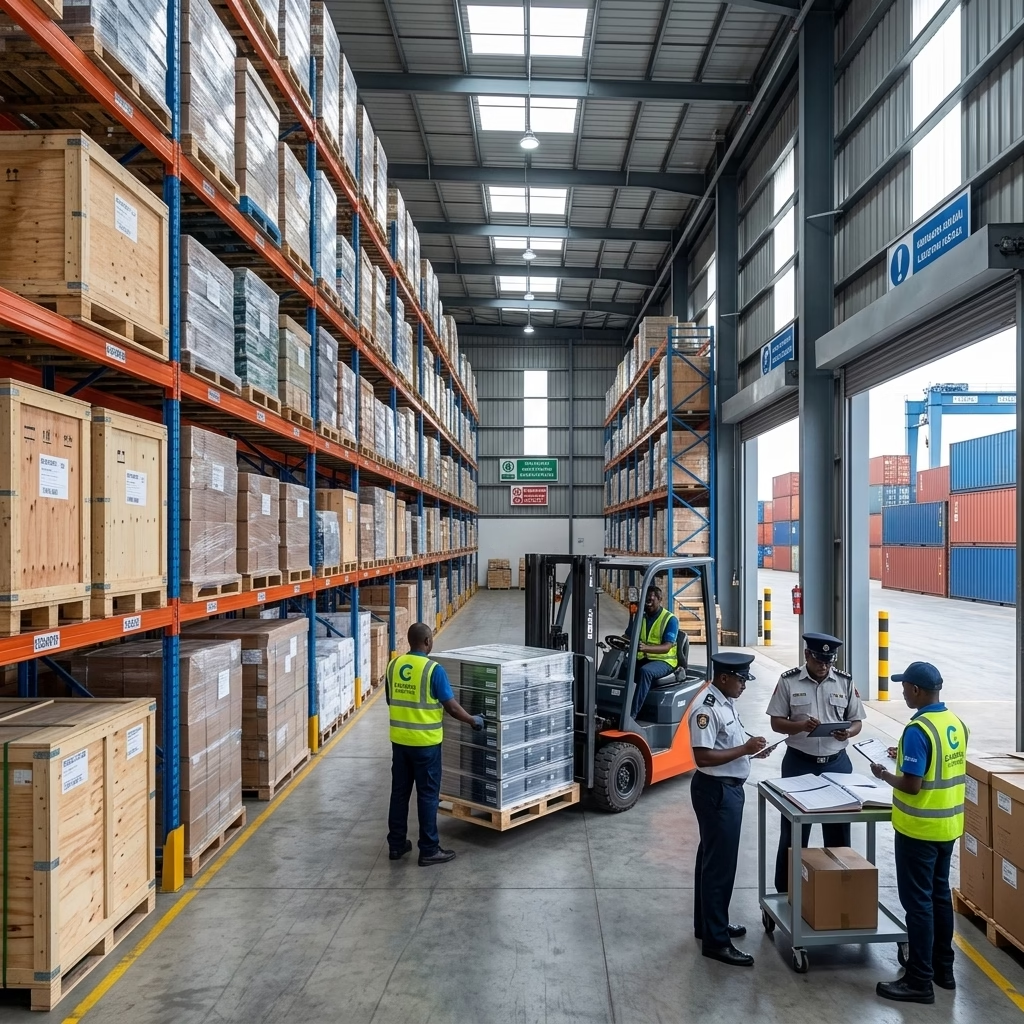
A bonded warehouse; importers can store cargo without paying import duty upfront — solving one of the biggest cash-flow problems in commercial importing. Most importers pay duty the moment their cargo clears customs, before a single unit has been sold. For a business bringing in large or bulk shipments, that means locking up significant working capital on goods that might sit in a warehouse for weeks before generating any revenue.
Table of Contents
Bonded Warehouse: What It Actually Is
A bonded warehouse is a storage facility licensed by the Kenya Revenue Authority where imported goods can be stored without paying import duty upfront. Duty is only paid once the goods are released — whether that’s for local sale, re-export, or transfer to another customs procedure. Legally, the goods sit inside Kenya physically, but remain outside the local market for duty purposes until they’re formally released from bond.
This isn’t a workaround or a grey-area tactic — it’s a formal mechanism provided for under the East African Community Customs Management Act, and KRA licenses and oversees every facility that operates one.
Why Importers Use Bonded Warehouses
- Cash flow. Duty is one of the largest upfront costs in importing. Deferring it until goods are actually sold means your capital isn’t tied up on inventory sitting in a warehouse.
- Flexible stock management. You can bring in a large shipment at favourable freight rates, then release smaller batches for sale over time — paying duty only on what you actually release.
- Market timing. Traders sometimes hold goods in bond while waiting for better market conditions before releasing and paying duty on them.
- Re-export and transit. Goods destined for neighbouring countries can be stored in bond and moved on without ever triggering Kenyan import duty, provided they’re properly bonded and not diverted into the local market.
Not All Goods Qualify
Bonded warehousing isn’t available for everything. Following a 2020 regulatory tightening aimed at closing revenue leakage and preventing hoarding of certain goods, a number of categories were excluded from bonded storage, including:
- Foodstuffs in most forms, fresh or preserved, including bulk commodities (with narrow exceptions for duty-free shops and ship stores)
- Hazardous & Flammable Materials: Explosives, fireworks, radioactive items, and loose toxic chemicals
- Other goods the Commissioner determines pose a risk to proper customs administration
This means bonded warehousing today is most relevant for durable, non-perishable goods — industrial inputs, machinery, general merchandise, and bulk non-food commodities — rather than the fast-moving consumer goods categories it was sometimes used for in the past.
Bonded Warehouse vs. Manufacture Under Bond (MUB)
These are often confused, but they serve different purposes:
- A bonded warehouse is primarily a storage facility — goods sit there duty-unpaid until released.
- Manufacture Under Bond (MUB) is a separate incentive scheme, run with the Kenya Investment Authority, that allows manufacturers to import raw materials, machinery, and inputs duty-free — on condition that the finished product is exported or supplied into another duty-exempt regime.
If you’re a manufacturer rather than a trader, MUB may be the more relevant scheme to look into alongside or instead of standard bonded warehousing.
How Goods Move Through a Bonded Warehouse
- Cargo arrives and is declared for warehousing rather than home use, under the correct customs procedure
- Goods are transferred into a KRA-licensed bonded warehouse under customs control
- Goods remain in bond — duty and taxes are not yet due
- When you’re ready to sell or move a portion of the stock, you file the release declaration and pay duty on only that portion
- Any goods destined for re-export or a neighbouring country move out under a customs bond, without triggering Kenyan duty at all
The Trade-Off: Cost vs. Cash Flow
Bonded warehousing isn’t free — you’re paying storage and handling fees for the period goods sit in bond, and licensing/compliance requirements apply to the facility itself. The calculation that matters is whether the cash-flow benefit of deferring duty outweighs the storage cost over your expected holding period. For large-value shipments with a longer sales cycle, the math is usually favourable. For fast-turnover goods that clear and sell within days, standard clearance is often simpler and cheaper.
Is This Right for Your Business?
Bonded warehousing tends to make the most sense for:
- Bulk importers with large-value shipments and longer sales cycles
- Traders who want flexibility to release stock in stages rather than all at once
- Businesses re-exporting to neighbouring EAC markets
- Manufacturers with recurring input imports (worth evaluating MUB alongside)
It’s less useful for fast-moving perishables (many of which are excluded anyway) or small, quick-turnaround shipments where the storage fees would outweigh any cash-flow benefit.
At Clearon Logistics, we don’t just tell you bonded warehousing is available — we run the actual numbers with you, honestly, including cases where it isn’t worth it for your shipment. As a licensed and experienced clearing agency, we coordinate with trusted bonded facilities, give you a transparent breakdown of storage costs against the projected duty-deferral benefit, and keep you updated at every stage of release. It’s advice from people who’ll walk the decision through with you, not a sales pitch for a service we’d earn more from.
Sitting on a large import order and wondering if bonded storage makes sense for you? Talk to Clearon Logistics about your options.
Further Reading
- KRA — Procedure for Licensing a Bonded Warehouse
- East African Community Customs Management Act, 2004 (Sections 62–69)
- Related on our blog: Why Cash Flow, Not Capital, Is the Biggest Challenge Facing Kenyan Importers
- Related on our blog: Why Successful Kenyan Importers Think About Inventory Differently
- Our service: Clearing and Forwarding Services in Kenya
Frequently Asked Questions
Do I pay duty when goods enter a bonded warehouse, or only when they leave? Only when they leave — duty is triggered at the point of release for local consumption, not at the point of storage.
Can I store food or alcohol in a bonded warehouse in Kenya? Generally no. Most foodstuffs and alcoholic beverages were excluded from bonded warehouse storage under a 2020 regulatory change, with narrow exceptions.
How is a bonded warehouse different from Manufacture Under Bond (MUB)? A bonded warehouse is a storage facility for duty-unpaid goods; MUB is a separate scheme letting manufacturers import inputs duty-free on condition the finished product is exported.
Is bonded warehousing worth it for a small shipment? Usually not — the storage and compliance costs tend to outweigh the cash-flow benefit unless the shipment is large in value or has a longer expected holding period before sale.






Leave a Reply