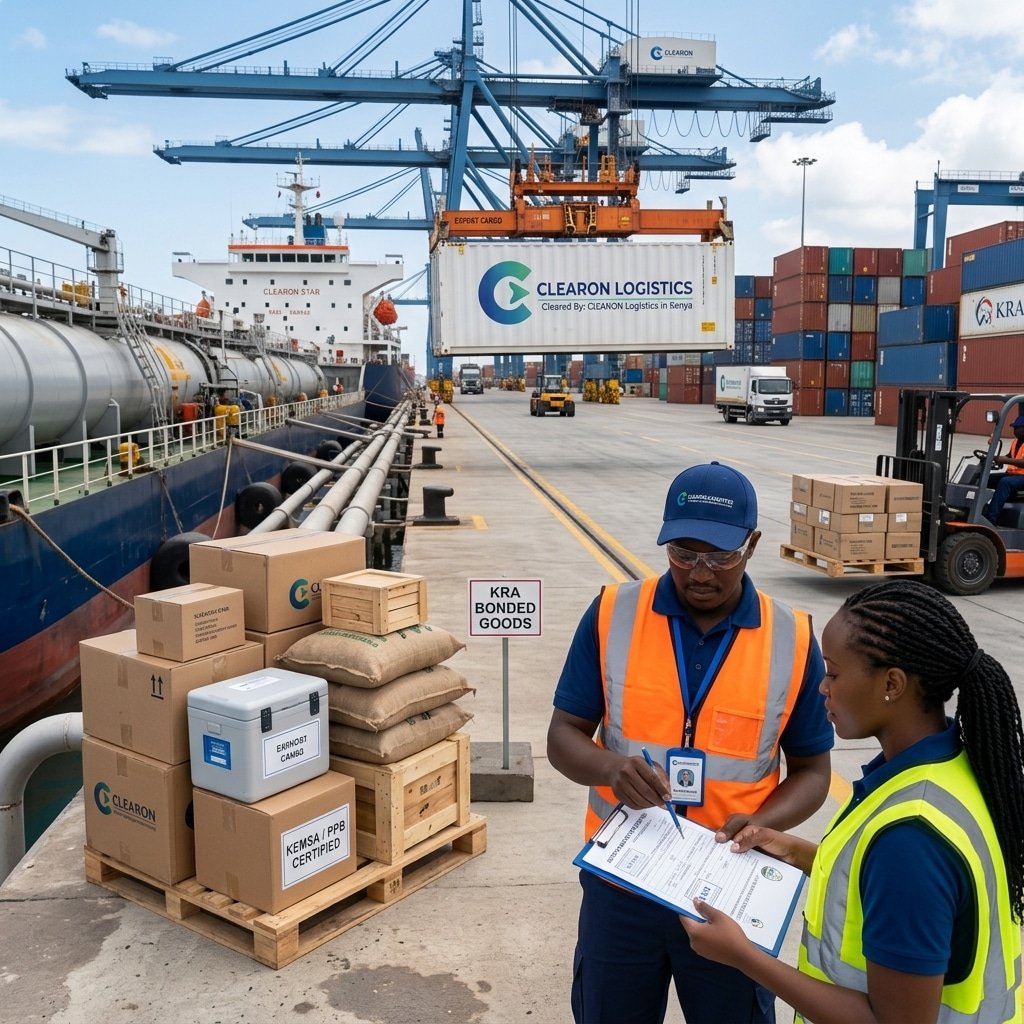
A clearing agent for exporters in Kenya handles a genuinely different set of priorities than one focused primarily on imports — Certificate of Origin preparation, destination-market documentation requirements, and coordination with sector-specific bodies like KEPHIS or the Horticultural Crops Directorate for agricultural exports. If you’re shipping goods out of Kenya and searching for the right support, here’s what actually matters.
Table of Contents
Why Export Clearance Needs Its Own Expertise
Exporting from Kenya involves a documentation burden that’s generally lighter than importing, but the specific requirements genuinely differ — and getting them wrong doesn’t block your cargo from leaving, it means your buyer pays more on the other end, or your shipment gets rejected at the destination for a certification gap. An agent experienced specifically in export clearance understands this distinction and prioritises accordingly.
The Documentation Your Buyer Actually Cares About
Beyond the basics — commercial invoice, packing list, export declaration — the document that matters most for your buyer’s bottom line is usually the correct Certificate of Origin for their specific market: a COMESA certificate, an EAC certificate, a EUR-1 form for EU-bound goods, or an AGOA certificate for US exports. An export-focused agent knows which specific document applies to which destination and ensures you’re not leaving preferential tariff treatment on the table through a missing or incorrect certificate.
Perishable and Agricultural Exports Need Extra Coordination
If you’re exporting fresh produce, flowers, coffee, or tea, your clearing agent needs to coordinate tightly with KEPHIS phytosanitary certification, cold chain logistics, and often very tight timing windows given product perishability. This is genuinely different work from general commercial export clearance, and an agent without specific experience in agricultural exports may not appreciate how time-critical and certification-heavy this category actually is.
Preferential Trade Agreement Documentation
Kenya’s exporters benefit from multiple overlapping trade agreements — COMESA and EAC, the EU and UK EPAs, and AGOA for US-bound goods. A genuinely knowledgeable export agent can help you identify which agreement applies to your specific buyer’s market and ensure the correct supporting documentation is in place, rather than defaulting to standard export treatment and leaving your buyer to pay full duty unnecessarily.
Questions to Ask an Export-Focused Agent
- “Which Certificate of Origin applies to my specific destination market?”
- “Do you coordinate directly with KEPHIS or other sector regulators for agricultural exports?”
- “How do you handle time-sensitive, perishable cargo specifically?”
- “Can you confirm what documentation my buyer will actually need on their end?”
Working With Clearon Logistics for Your Exports
We handle export clearance across general commercial goods and agricultural products alike, confirming the correct preferential trade documentation for your specific destination market and coordinating with KEPHIS and other relevant bodies where your cargo requires it.
Exporting goods from Kenya? Talk to Clearon Logistics to confirm your documentation is right for your specific destination market.
Frequently Asked Questions
Is export clearance generally easier than import clearance in Kenya? The documentation burden is often lighter, but getting it wrong still has real consequences — missing or incorrect certificates can mean your buyer pays full duty instead of a preferential rate, affecting your competitiveness on future orders.
Do I need a different Certificate of Origin for every destination market? Often yes — COMESA, EAC, EU, UK, and AGOA destinations each have their own specific certificate requirements, and an experienced export agent can confirm which applies to your buyer.
Why does agricultural export clearance need extra coordination? Perishable goods require tight timing alongside KEPHIS phytosanitary certification and cold chain logistics — genuinely different priorities from general commercial export clearance.
How do I know if my clearing agent understands preferential trade agreements? Ask them directly which Certificate of Origin applies to your specific destination market — a knowledgeable agent will answer specifically; a less experienced one will be vaguer about which agreement actually benefits your shipment.
Further Reading
- Kenya Revenue Authority — Customs & Border Control (external, dofollow)
- Kenya Export Promotion and Branding Agency (KEPROBA) (external, dofollow)
- Related on our blog: Exporting from Kenya: The Documents You Need Before Your Cargo Leaves
- Related on our blog: Exporting Fresh Produce from Kenya: 4 Requirements for 2026
- Our service: International Freight (Air & Sea)

Leave a Reply