
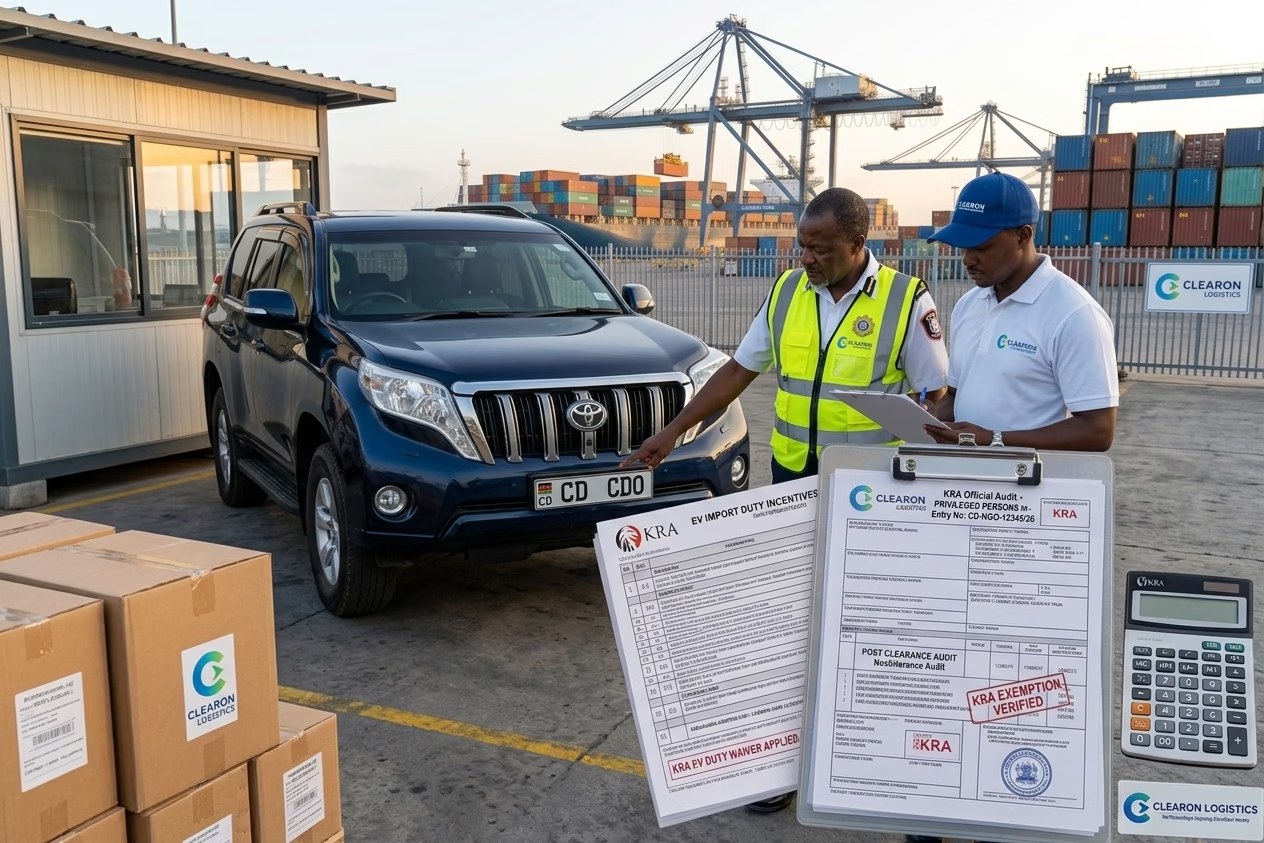
Diplomatic and NGO duty exemptions in Kenya operate under an entirely separate legal framework from standard commercial importing — one most clearing agents rarely handle, and one where getting the paperwork right depends on coordination with your embassy, the Ministry of Foreign Affairs, and KRA all at once. If you’re a diplomat, an accredited NGO worker, or a staff member of an international organisation relocating to Kenya, understanding this framework properly can mean genuinely duty-free importing — but the process runs on its own rules entirely.
Table of Contents
The Legal Basis: EACCMA’s Fifth Schedule
Diplomatic and privileged-person duty exemptions in Kenya are governed by the Fifth Schedule of the East African Community Customs Management Act, 2004 — a completely separate exemptions regime from the standard commercial import rules covered throughout the rest of our blog. Part A of the Fifth Schedule covers specific exemptions for privileged persons and institutions; Part B covers broader general exemptions for particular categories of goods. This distinction matters because it means diplomatic imports aren’t a special case of ordinary customs law — they operate under their own dedicated legal chapter.
Who Actually Qualifies
The privileged persons and institutions category is broader than “diplomats” alone. It explicitly includes:
- The President and Kenya’s Armed Forces, along with allied foreign armed forces
- Diplomatic staff of the United Nations and its specialised agencies, Commonwealth High Commissions, and foreign embassies, consulates, or diplomatic missions
- Donor agencies and international or regional organisations with diplomatic accreditation or bilateral/multilateral agreements with Kenya
- Recognised international NGOs operating under such agreements
- The disabled, blind, and physically handicapped, under a related but distinct exemption category
Organisations like UNHCR, UNEP, WHO, UNDP, the African Union, and internationally recognised NGOs such as the ICRC commonly fall within this framework, alongside embassy and consular staff from accredited foreign missions.
What Gets Exempted
For qualifying individuals arriving to take up a diplomatic post or accredited role, the exemption typically covers:
- Household and personal effects of any kind, including items imported or purchased prior to clearance
- One motor vehicle, imported or purchased within 90 days of first arrival (extendable up to 360 days in specific cases with Commissioner approval)
- Goods and equipment imported for the qualifying organisation’s official use in Kenya, or for export
For organisations themselves, exemption extends to goods or services imported or purchased locally for official use, and importantly, to exemption from prohibitions and restrictions on importation for goods directly imported for official organisational use — a genuinely broader privilege than most categories of importer receive.
The PRO 1B Form and Documentation
The core document underpinning a diplomatic exemption claim is the PRO 1B diplomatic tax exemption form, alongside:
- KRA PIN certificate
- Valid diplomatic ID or work permit
- Tax exemption approval from the Ministry of Foreign Affairs
- Commercial invoice
- Bill of Lading
- Pre-export inspection certificate, where applicable to the goods
A local agent or accredited representative typically prepares the diplomatic card and exemption paperwork with the Ministry of Foreign Affairs — importantly, this needs to begin three to four weeks before the shipment’s arrival, not once goods are already at the port. Full diplomatic shipments are generally not subject to physical inspection, though shipments belonging to international organisation staff or government members below full diplomatic status may still face inspection. One detail worth planning around: the diplomat generally needs to be physically present in Kenya when the shipment arrives for clearance to proceed smoothly.
The Vehicle Resale Trap
A detail that catches diplomats and international staff out more than almost anything else in this framework: a motor vehicle acquired duty-free under this exemption remains liable for duty on resale or disposal, even after the standard holding period has elapsed — the exemption doesn’t simply expire into a clean, duty-free asset after enough time has passed. Anyone planning to sell a diplomatically-imported vehicle, even years into a posting, needs to confirm the duty position before completing a sale, not assume the passage of time alone has resolved it.
It’s also worth noting: to qualify for this vehicle exemption, an individual must not have already benefited from an exemption under either diplomatic status or returning resident status previously — the two privileges aren’t stackable.
How This Connects to Other Import Requirements
Privileged persons and institutions occupy a genuinely distinct compliance lane compared to standard commercial importers. KRA has explicitly confirmed that goods imported by privileged persons and institutions under the Fifth Schedule are among the categories exempt from the mandatory Certificate of Origin requirement that now applies to virtually every other commercial import into Kenya — a meaningful practical difference from the compliance burden facing ordinary importers.
Navigating a Framework Most Clearing Agents Rarely Handle
Because diplomatic and NGO exemptions run through the Ministry of Foreign Affairs and specific accreditation processes rather than standard commercial customs channels, this is genuinely specialised territory — most clearing agents handle it infrequently, if at all, which means experience with the specific paperwork and timing matters more here than in standard commercial clearance.
At Clearon Logistics, we help diplomatic staff, accredited NGO personnel, and international organisation employees relocating to Kenya navigate the Fifth Schedule exemption process — coordinating the PRO 1B documentation, Ministry of Foreign Affairs approval, and customs clearance timing so your posting starts without an avoidable delay over paperwork.
Relocating to Kenya under diplomatic or NGO accreditation? Talk to Clearon Logistics at least a month before your shipment arrives to get the exemption paperwork moving.
Frequently Asked Questions
Do diplomats need a Certificate of Origin for their imported goods? No — goods imported by privileged persons and institutions under the Fifth Schedule of EACCMA are explicitly listed by KRA as exempt from the mandatory Certificate of Origin requirement that applies to standard commercial imports.
Can a diplomat sell a duty-free imported vehicle without any tax consequence? No — the vehicle remains liable for duty on resale or disposal even after the standard exemption holding period has elapsed. This obligation doesn’t simply expire with time.
How far in advance should diplomatic exemption paperwork be started? Generally three to four weeks before the shipment’s expected arrival, since the process involves coordination with the Ministry of Foreign Affairs alongside standard customs documentation.
Can someone claim both diplomatic exemption and returning resident exemption? No — an individual must not have already benefited from an exemption under either diplomatic or returning resident status to qualify for the vehicle exemption specifically; the two privileges aren’t stackable.
Further Reading
- KRA — Diplomatic and First Arrival Privileges (external, dofollow)
- East African Community Customs Management Act, 2004 — Fifth Schedule (external, dofollow)
- Related on our blog: Returning Resident Personal Effects Clearance: The Ultimate Kenya Guide
- Related on our blog: Certificate of Origin Kenya Imports: Urgent 2026 Rule Change
- Our service: Clearing and Forwarding Services in Kenya



Leave a Reply