
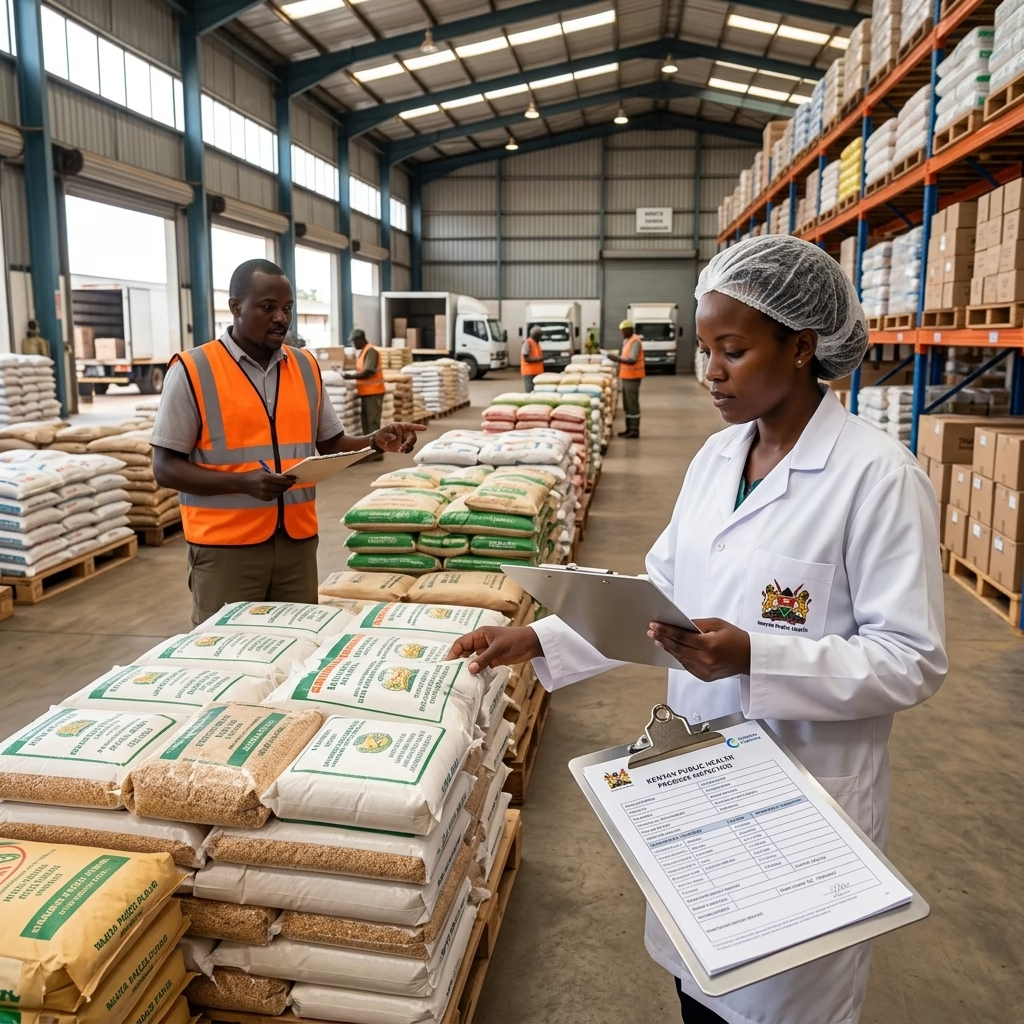
Food hygiene licensing in Kenya covers a compliance step most food importers never think about until it’s already a problem — clearing customs and passing KEBS inspection gets your product legally into the country, but it doesn’t automatically mean you’re licensed to store, distribute, or sell it. A separate, distinct regulatory framework under the Public Health Act and Food, Drugs and Chemical Substances Act governs the premises your imported food actually moves through once it’s in Kenya.
Table of Contents
Why This Is Genuinely Separate From Import Compliance
It’s easy to assume that once imported food clears customs with a valid KEBS Certificate of Conformity and any relevant phytosanitary or veterinary documentation, the compliance work is done. It isn’t. The Food, Drugs and Chemical Substances Act, Cap 254, and its associated Food Hygiene Regulations, explicitly state that premises may not be used for food purposes unless licensed — meaning any warehouse, distribution centre, wholesale outlet, or retail premises your imported food passes through in Kenya needs its own separate registration and licence, entirely apart from the import clearance that got the product into the country in the first place.
What a Food Plant Licence Actually Covers
Under the regulations, a “food plant” is defined broadly enough to capture the full chain your imported product moves through — not just manufacturing facilities, but wholesale and retail markets, supermarkets, hotels, restaurants, and other food outlets are all explicitly classified as food plants for licensing purposes. Requirements include:
- Proper layout and construction of the premises and facilities, avoiding conditions that could expose food to contamination
- Sanitary facilities and controls, including maintenance standards for equipment, utensils, and food contact surfaces
- Grounds surrounding the premises kept free from contaminating conditions
- A licence that expires annually on 31 December, requiring renewal, similar in structure to how customs agent licensing operates on an annual cycle
The Food Handler Health Certificate
This is a specific, individual-level requirement layered on top of premises licensing: every person working in direct contact with food, food ingredients, or food contact surfaces must undergo a thorough medical examination — either at a government medical institution or by a medical officer of health — before employment, and at intervals of no more than twelve months thereafter. The resulting health certificate and medical records must be kept on file at the food plant itself. This applies regardless of whether the food being handled was imported or locally produced — the personal hygiene and health status of anyone handling your imported product in Kenya is a distinct compliance layer from the product’s own import certification.
Wholesale and Distribution Premises Are Included
For importers specifically, this is the detail most worth internalising: the licensing requirement doesn’t stop at retail. Nairobi City County’s own public guidance explicitly confirms that wholesale markets, and the general handling of food during distribution and marketing, fall under the same Public Health Act framework — meaning if your import business involves a warehouse or distribution point before goods reach final retail, that facility needs its own food hygiene licence, not just the retail outlets at the end of the chain.
What an Inspector Can Actually Do
Public health officials carry real enforcement authority here. If a food plant’s condition — due to its location, construction, or disrepair — creates risk that food could become contaminated or deteriorate, an authorised officer can serve written notice requiring the premises to be cleaned, reconstructed, or repaired within a specified period, or, more seriously, prohibit use of the premises entirely until the required conditions are met. A person served such a notice has a limited window — 14 days — to appeal to the Cabinet Secretary, whose decision is final. This gives inspectors genuine power to halt operations at a distribution point, not just issue a warning.
Where Port Health Services Fits In
Kenya’s Port Health Services, operating under the Ministry of Health, plays a role specifically relevant to importers at the point of entry — issuing medical certificates to food handlers, inspecting restaurants and premises for licensing, and inspecting and certifying conveyances (the vehicles and containers food moves in). This is a distinct function from KEBS’s product-focused certification, adding another layer of health-focused oversight specifically at ports of entry, separate from the premises licensing that continues to apply once goods move inland.
Getting the Full Chain Compliant, Not Just the Import Step
For food importers, genuine compliance means thinking beyond the point of customs clearance — your warehouse, your distribution vehicles, and every premises your product passes through before reaching a final consumer all carry their own separate licensing and hygiene obligations, with real enforcement teeth behind them.
At Clearon Logistics, while food hygiene premises licensing itself sits with your own facilities and county public health office, we help food importers understand the full compliance picture — from import clearance through to the distribution-stage requirements that continue well after your goods have left the port — so a compliant import doesn’t stall at a licensing gap further down your own supply chain.
Importing food products and want to understand your full compliance obligations, not just the import stage? Talk to Clearon Logistics about the complete picture for your business.
Frequently Asked Questions
Does clearing customs with a valid KEBS certificate mean my food import is fully compliant? No — customs clearance and KEBS certification cover the product itself; any warehouse, distribution centre, or retail premises the product moves through in Kenya needs its own separate food hygiene licence under the Public Health Act framework.
How often does a food handler need a medical health certificate? At least every twelve months, following a thorough medical examination — this applies to anyone working in direct contact with food, food ingredients, or food contact surfaces, regardless of whether the food is imported or locally produced.
Does a food hygiene licence apply to my warehouse, or just my retail store? It applies broadly — wholesale markets and distribution premises are explicitly included under the same Public Health Act framework as retail outlets, not just the final point of sale.
What can happen if my food distribution premises fails a hygiene inspection? An authorised officer can require the premises to be cleaned, reconstructed, or repaired within a specified period, or prohibit its use entirely until conditions are met — with a 14-day window to appeal the decision.
Further Reading
- Ministry of Health, Kenya — Food Hygiene Licensing Checklist (external, dofollow)
- Port Health Services, Ministry of Health (external, dofollow)
- Related on our blog: Importing Food and Beverage Products into Kenya: 5 Rules to Know
- Related on our blog: What Happens If You Ship Goods to Kenya Without a Certificate of Conformity?
- Our service: Clearing and Forwarding Services in Kenya



Leave a Reply