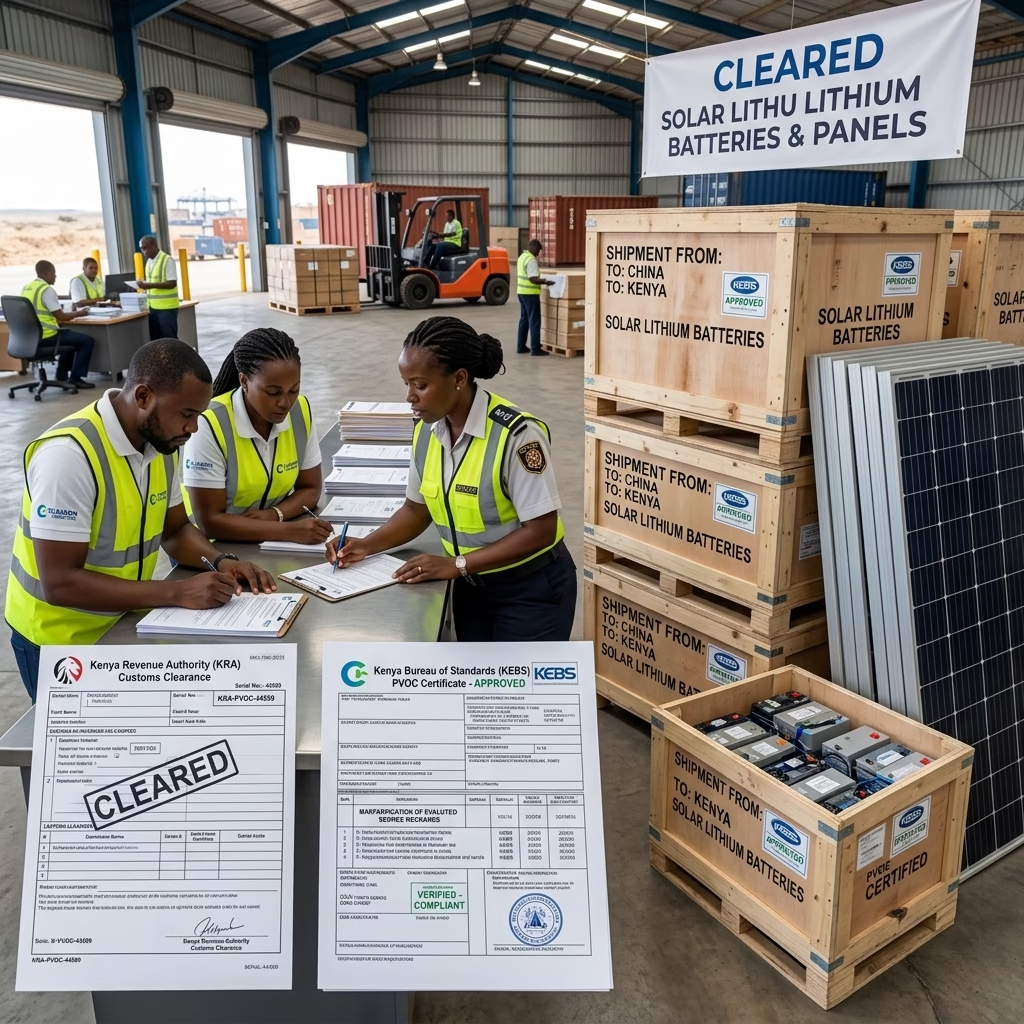
Clearing a shipment of solar lithium batteries in Kenya requires more than simply waiting for the cargo to arrive at Mombasa and then starting the customs process.
Lithium batteries are classified as dangerous goods (DG), which means delays can become expensive very quickly. In this recent shipment from China to Kenya, early engagement between the supplier and Clearon Logistics allowed the necessary compliance and customs requirements to be addressed before the cargo left China.
The shipment eventually arrived at Mombasa and was cleared without hindrance before being delivered to the client in Kiambu.
The case demonstrates an important principle for importers of solar equipment and batteries: customs clearance should begin before the cargo is shipped, not after it arrives.
The shipment: LCL solar lithium batteries from China
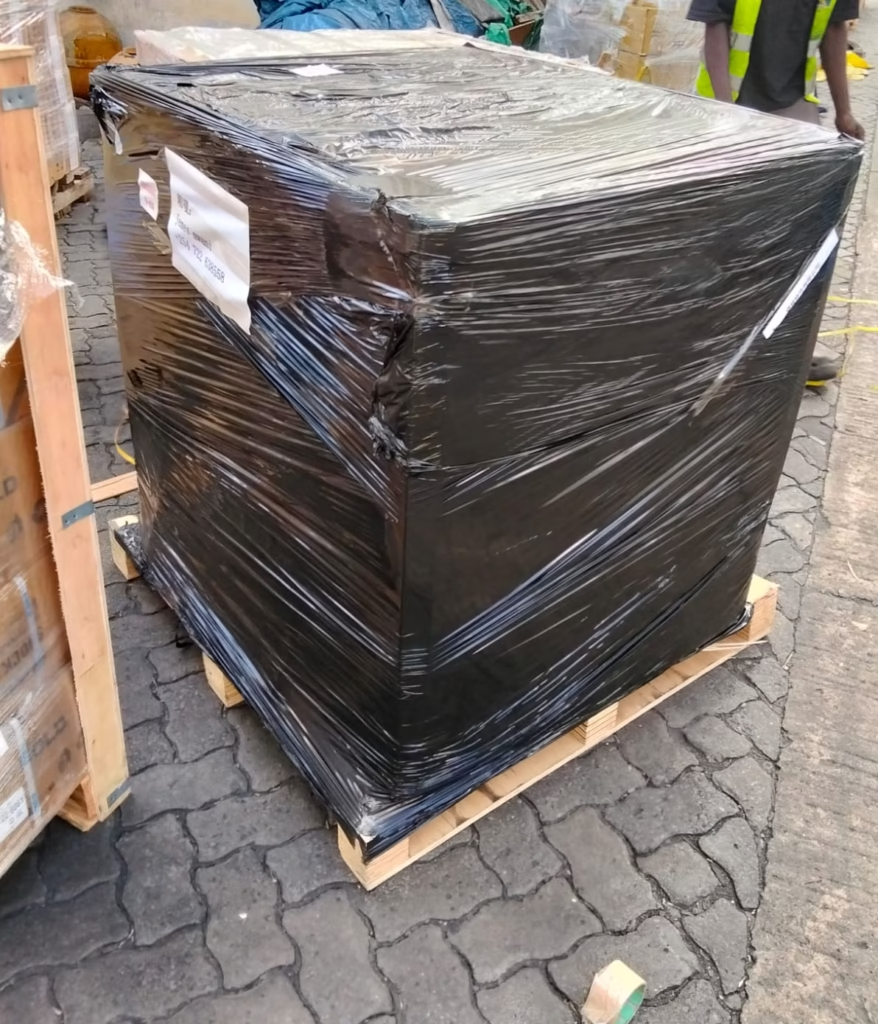
The shipment consisted of solar lithium batteries in several pallets shipped from China to Kenya.
Because the shipment was not a full container, the batteries were transported as Less than Container Load (LCL) cargo. This makes coordination particularly important because the cargo passes through several stages involving the supplier, freight forwarder, shipping line, customs, regulatory agencies and the clearing agent.
In this case, the supplier engaged us Clearon Logistics before the shipment was dispatched from China.
That early involvement gave us an opportunity to review the shipment and identify requirements that could otherwise have caused problems after arrival in Kenya.
For lithium battery shipments, this is particularly important because the cargo is treated as dangerous goods and delays at the port can have immediate financial consequences.
Why early engagement mattered
One of the biggest advantages in this shipment was that the clearing process did not start when the cargo reached Mombasa.
It started while the batteries were still with the supplier in China.
The supplier provided the relevant shipment information, allowing the requirements for importing the batteries into Kenya to be reviewed before shipping.
This gave us time to identify documentation and regulatory requirements, including EPRA Permit approval and KEBS Pre-Export Verification of Conformity (PVoC).
Had these requirements been discovered only after the cargo arrived, the importer could have faced additional procedures, delays and costs.
For importers dealing with machinery, electrical equipment, solar products or batteries, this is an important lesson: the earlier the clearing agent sees the cargo details, the more opportunities there are to solve compliance issues before shipping.
KEBS PVoC and Certificate of Conformity
A critical part of the preparation was addressing the KEBS PVoC requirement.
For the shipment, the necessary inspection was arranged and completed before the batteries left the supplier in China.
The Certificate of Conformity (CoC) was subsequently issued before the cargo was shipped.
This was significant because the CoC provided the required conformity documentation ahead of the shipment’s arrival in Kenya.
Early completion also helped avoid the complications associated with having to deal with KEBS conformity verification at Mombasa.
For an importer, the difference is substantial.
Instead of discovering a compliance issue when the shipment is already sitting at Mombasa, the requirement has already been addressed while the cargo is still at origin.
Getting the Certificate of Origin right
Documentation was another area that required attention before shipping.
Clearon also advised on the EPRA permit and Certificate of Origin (COO), which was required for the shipment.
A Certificate of Origin identifies the country in which the goods originate and forms part of the import documentation required for customs processing.
The important point is not simply having documents.
The documents need to be identified and prepared before the shipment moves.
When an importer discovers that a required document is missing after the cargo has arrived, the shipment can become unnecessarily difficult to process.
In this case, the documentation requirements were reviewed early, allowing the supplier and the clearing team to coordinate before dispatch.
IDF approved before the shipment arrived
The Import Declaration Form (IDF) was also applied for and approved before the shipment arrived in Kenya.
This was another important part of the pre-arrival preparation.
Rather than waiting for the cargo to reach Mombasa before beginning the import documentation process, the required information was submitted in advance.
This meant that when the shipment arrived, the clearance process was already further along.
Pre-arrival preparation does not eliminate every possible customs issue, but it reduces the number of things that still need to be solved when the cargo is physically sitting at the port.
The special challenge with lithium batteries: DG storage
The dangerous-goods nature of lithium batteries made timing even more important.
One of the major concerns with DG cargo is storage.
Unlike ordinary cargo where an importer may benefit from a 4-5 days free storage period, DG cargo can start attracting storage charges immediately, with no free days awarded in this case.
That changes the economics of a delay.
Every day spent resolving a documentation problem or waiting for a regulatory requirement can translate into additional costs.
This is why the preparation carried out before shipment was not merely an administrative exercise.
It was also a cost-control measure.
By addressing the PVoC inspection, CoC, COO and IDF requirements before arrival, the shipment was positioned for a much smoother clearance process once it reached Mombasa.
Arrival at Mombasa
When the shipment arrived in Kenya, the preparatory work became particularly valuable.
The required documentation was already in place, including the conformity documentation, and the IDF had already been approved.
The next stage was customs entry.
The customs entry was prepared and submitted, and the shipment proceeded through the clearance process without hindrance.
There was no need to begin solving fundamental documentation and conformity issues after the cargo had already arrived.
For DG cargo, that distinction matters.
The objective is not simply to clear cargo eventually. It is to minimize the amount of time the cargo remains exposed to port and storage-related costs while ensuring that all regulatory requirements are properly addressed.
From Mombasa to Kiambu
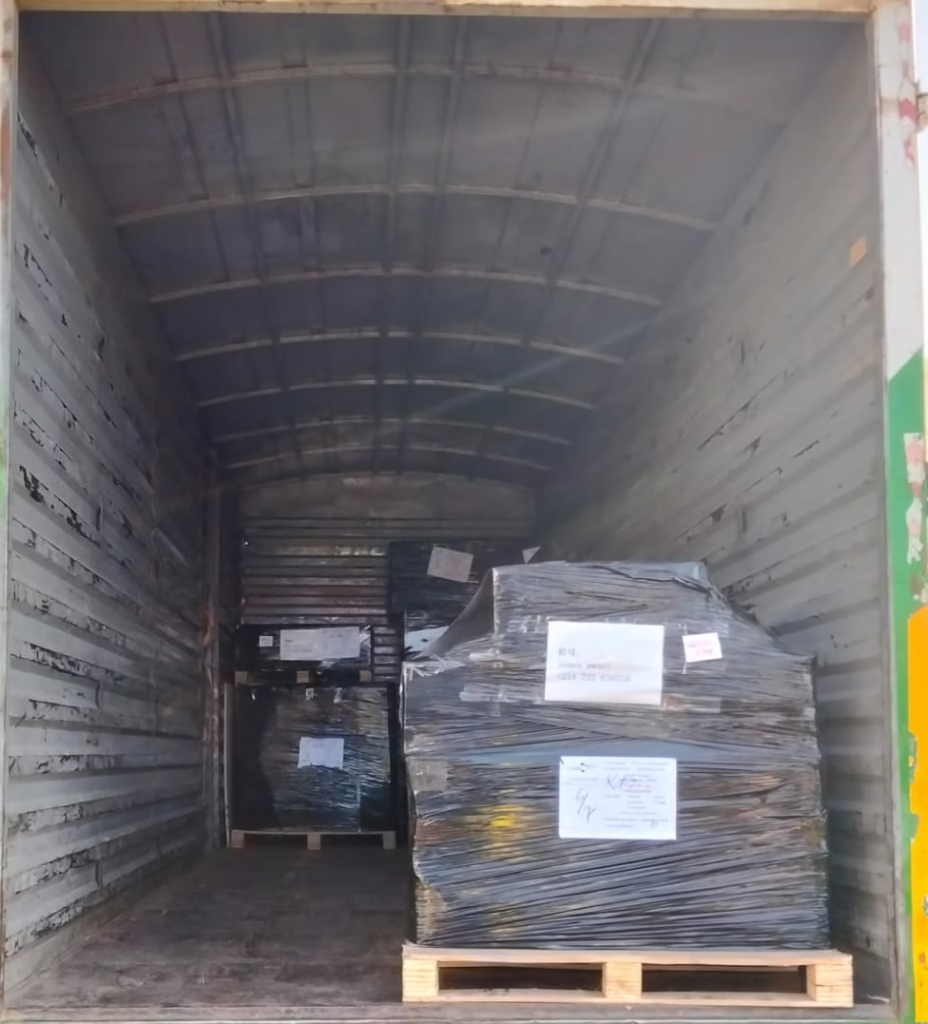
After customs clearance was completed, the shipment was released for delivery.
The solar lithium batteries were transported from Mombasa to the client’s destination in Kiambu.
The process therefore covered the entire movement:
China supplier → pre-shipment compliance → LCL shipping → Mombasa arrival → customs clearance → cargo release → delivery to Kiambu.
This is an important distinction between simply arranging freight and properly coordinating an import shipment.
The work does not end when the cargo reaches Mombasa.
The ultimate objective is to get compliant cargo cleared and delivered to the importer.
What importers of solar batteries can learn from this shipment
This shipment provides several practical lessons for businesses importing solar lithium batteries and other electrical equipment into Kenya.
1. Involve your clearing agent before shipping
One of the most useful decisions in this shipment was the supplier’s decision to engage Clearon before the cargo left China.
This provided time to examine the shipment and identify potential requirements.
For regulated or sensitive cargo, early engagement gives the clearing team a chance to review the shipment before the importer becomes exposed to destination charges.
2. Do not assume the supplier knows every Kenyan requirement
A supplier in China may understand how to export the product from China but may not necessarily know every requirement applicable to importing that product into Kenya.
The importer and clearing agent therefore need to establish what documentation and conformity requirements apply to the Kenyan destination.
3. Complete PVoC requirements before shipment where applicable
For products subject to PVoC, waiting until the cargo arrives can create unnecessary complications.
In this case, inspection was completed and the CoC issued before the batteries left the supplier.
That put the shipment in a much better position for arrival and clearance.
4. Prepare customs documentation early
The Certificate of Origin and IDF were addressed before arrival.
This illustrates an important principle in clearing and forwarding: preparation reduces the amount of work that has to happen under pressure at the port.
5. Treat DG storage as a serious cost consideration
Importers sometimes focus heavily on freight rates while overlooking what happens after arrival.
For dangerous goods, storage costs can become significant when clearance is delayed.
A small saving on freight can therefore be outweighed by unexpected storage charges if the shipment arrives without the required documentation.
6. Give your clearing agent accurate cargo information
For lithium batteries, accurate information about the cargo is particularly important.
The clearing and forwarding team needs sufficient information about the goods to determine the appropriate shipping, documentation and regulatory requirements before the cargo moves.
The bigger lesson: clearance starts before the ship sails
The smooth clearance of this LCL solar lithium battery shipment was not simply the result of what happened at Mombasa.
A significant part of the work happened before the cargo left China.
The PVoC requirement was addressed. The inspection was completed. The CoC was issued. Documentation such as the COO was reviewed. The IDF was applied for and approved before arrival.
By the time the cargo reached Mombasa, the focus could move to customs entry, clearance and release rather than trying to solve basic compliance issues from scratch.
For importers of solar lithium batteries, this is one of the most important lessons to take away.
A successful shipment is often determined by the work done before the shipment begins moving.
When the cargo is also classified as dangerous goods, early planning becomes even more important because delays can immediately create additional storage exposure.
This recent China-to-Kiambu shipment ultimately cleared without hindrance and was delivered to the client after customs release. More importantly, it demonstrates the practical value of coordinating freight, regulatory compliance and customs documentation as one process rather than treating each stage separately.
For businesses importing solar lithium batteries into Kenya, early communication with a clearing and forwarding agent can help identify requirements before the cargo leaves the supplier, giving the shipment a much clearer path from China to the final delivery point in Kenya.
Leave a Reply