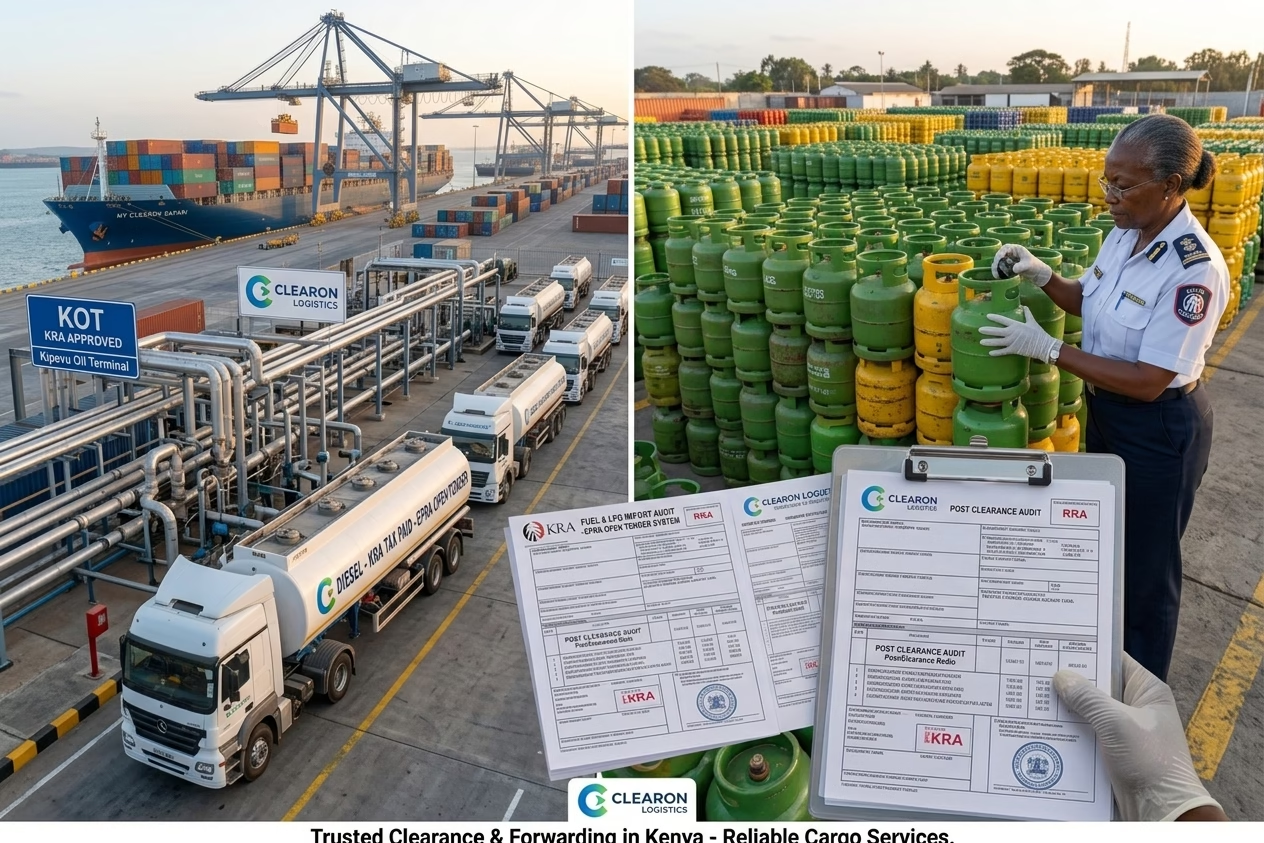
Fuel and LPG import into Kenya runs through one of the more distinctive mechanisms in Kenyan trade regulation — the Energy and Petroleum Regulatory Authority’s Open Tender System (OTS), a competitive bidding process that determines who actually imports petrol, diesel, and kerosene each month. It’s a genuinely different model from how virtually every other product category gets imported into Kenya, and it’s currently at the centre of an unresolved political fight over whether cooking gas should be brought under the same system.
Table of Contents
What the Open Tender System Actually Does
Under the Open Tender System, petroleum and its products are sourced from the open market through competitive bidding, rather than individual oil marketing companies negotiating their own separate supply deals. Because every company sources the same product at the same initial tendered price, the system is designed specifically to create genuine price competition further down the supply chain — companies compete on efficiency and margin, not on who negotiated the cheapest crude or refined product deal privately. This structure is why Kenya’s petrol, diesel, and kerosene pricing has a coordinated, centrally-published character that most other imported goods simply don’t have.
Why LPG Has Been Kept Separate
For years, Liquefied Petroleum Gas (LPG) — Kenya’s cooking gas — has been the one major petroleum product not imported through the Open Tender System, remaining instead under a more fragmented, individually-negotiated import structure. This has been a persistent point of government frustration, given that LPG demand has grown substantially — reaching 360,594 metric tonnes in 2023 alone — while consumer prices haven’t fallen in line with that growth the way OTS-driven competition might otherwise be expected to produce.
Parliament Just Rejected Bringing LPG Under OTS
This is current: in a December Cabinet meeting chaired by President Ruto, the government approved moving forward with structures to import LPG under the Open Tender System specifically to end what was described as industry monopoly and lower consumer prices — alongside a parallel move to bring heavy fuel oil and bitumen import under a centrally coordinated bulk procurement system. However, the National Assembly’s Committee on Delegated Legislation rejected the specific regulations meant to implement this — the Petroleum (Operation of Common Petroleum Facilities) Regulations, 2025 — on procedural grounds, finding they’d been tabled outside the legally required timeline and lacked adequate public participation under Kenya’s Constitution. This means, as things currently stand, the shift to OTS-based LPG importation remains unresolved rather than settled policy — worth watching closely if you’re in the LPG trade, since the underlying government intent to make this change hasn’t gone away, only the specific regulatory vehicle that was rejected.
New Draft Regulations From August 2026
Separately, EPRA has been developing its own new Petroleum (Midstream Crude Oil and Natural Gas Transport and Storage Operations) Regulations, 2026, unveiled in draft form in August 2026, proposing meaningfully stricter licensing, tighter safety standards, and tougher penalties for non-compliant fuel and gas businesses. Key proposed changes include requiring EPRA approval before constructing or operating crude oil or natural gas storage facilities and pipelines, mandatory decommissioning funds for petroleum licensees throughout a project’s operational life, a required minimum six-month advance notice to the Cabinet Secretary and EPRA before any decommissioning begins, and stricter licensing requirements — including permits for every individual road tanker — for crude oil transporters.
The Monthly Fuel Price Formula
EPRA’s monthly retail petroleum price announcements — the maximum prices Kenyan motorists and businesses pay at the pump — are calculated using a defined formula considering the landed cost of petroleum products, cargo volume, and unit-level cost components, similar in underlying logic to how LPG price controls have also been proposed to work once brought under equivalent regulation. This formula-based approach is a distinctive feature of how EPRA manages petroleum pricing compared to most product categories, where market pricing operates with considerably less direct government-set structure.
What This Means If You’re in the Fuel or Gas Business
- If you’re an established petroleum importer, the OTS structure is likely already familiar territory, but the August 2026 draft regulations’ stricter licensing and decommissioning fund requirements are worth reviewing closely for how they might affect existing operations
- If you’re in the LPG trade, the OTS question remains genuinely unresolved — the rejected 2025 regulations don’t mean the policy direction has changed, only that this specific implementation attempt failed procedurally, so continued regulatory developments in this space are likely
- If you’re considering entering fuel or gas transport, storage, or distribution, the trend across EPRA’s recent regulatory activity is unambiguously toward tighter licensing and compliance requirements, not looser ones
Navigating a Genuinely Active Regulatory Space
Kenya’s petroleum and LPG regulatory environment has been unusually active through 2025 and 2026 — a rejected regulation here, new draft rules there, ongoing tension between liberalising LPG pricing and the practical difficulty of implementing that change through proper legislative process. For anyone operating in this sector, staying current with EPRA’s evolving framework is less optional than in most other import categories, given how directly and immediately regulatory changes here affect operational licensing.
At Clearon Logistics, while EPRA licensing itself sits within the specialised energy sector regulatory space, we help businesses understand how fuel and gas sector import and logistics requirements intersect with standard customs and clearance processes for related equipment, storage infrastructure, and transport operations.
Operating in Kenya’s fuel or LPG sector and need to understand current EPRA requirements? Talk to Clearon Logistics about how these regulations affect your broader import and logistics operations.
Frequently Asked Questions
Is LPG currently imported through Kenya’s Open Tender System like petrol and diesel? No — as of the most recent developments, LPG remains outside the Open Tender System, following Parliament’s rejection of the specific 2025 regulations that would have implemented this change, on procedural grounds.
Why did Parliament reject the LPG Open Tender System regulations? The National Assembly’s Committee on Delegated Legislation found the regulations were tabled outside the legally required timeline and lacked adequate public participation, as required under Kenya’s Constitution — a procedural rejection, not necessarily a rejection of the underlying policy goal.
What do EPRA’s new August 2026 draft regulations propose? Stricter licensing for crude oil and natural gas storage and pipeline operations, mandatory decommissioning funds for petroleum licensees, advance notice requirements before decommissioning, and tighter permit requirements for crude oil transporters.
How is Kenya’s monthly fuel price actually determined? EPRA uses a defined formula considering the landed cost of petroleum products, cargo volume, and unit-level cost components to calculate the maximum retail and wholesale prices published each month.
Further Reading
- Energy and Petroleum Regulatory Authority (EPRA) (external, dofollow)
- National Assembly of Kenya — Committee on Delegated Legislation (external, dofollow)
- Related on our blog: Solar Equipment Import Kenya: Duty-Free Clearance in 2026
- Related on our blog: Kenya’s 2026 Import Compliance Overhaul: Every Change in One Place
- Our service: Clearing and Forwarding Services in Kenya






Leave a Reply