
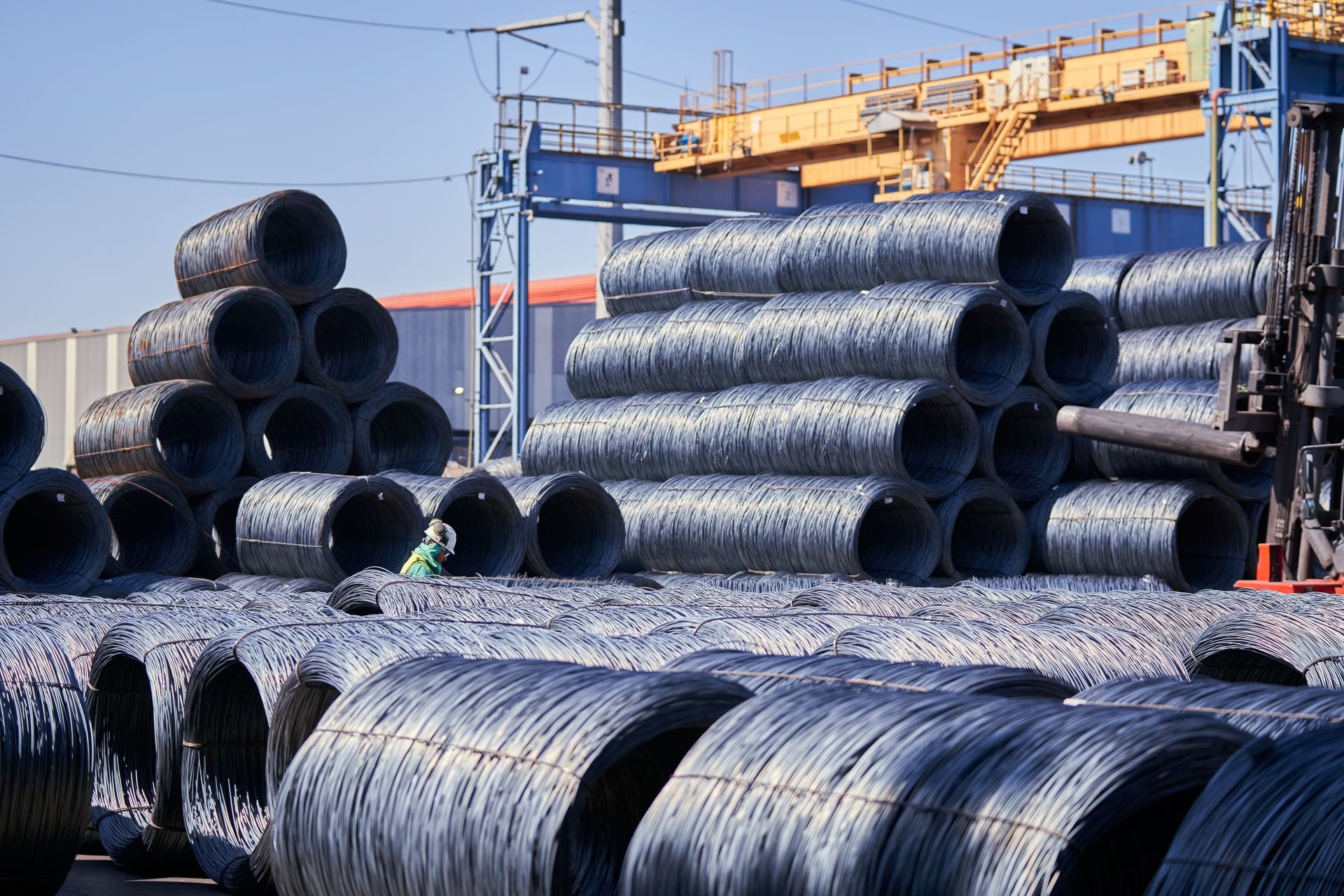
Shipping a few cartons of merchandise to Kenya is relatively straightforward.
Shipping a 500-kilogram machine is a different story.
Shipping a 5-ton industrial component, a generator, construction equipment, or an oversized piece of machinery requires an entirely different logistics strategy.
The cargo may not fit into a standard container.
It may require specialised lifting equipment.
The dimensions may affect the choice of vessel, container, or transport route.
Even moving the cargo from the port to the final destination may require special arrangements.
For Kenyan importers, one of the biggest mistakes is treating heavy or oversized cargo like ordinary commercial goods.
The logistics should be planned before the purchase is completed—not after the supplier has already manufactured the equipment.
At Clearon Logistics, we help businesses coordinate international cargo movements and customs clearance, including shipments that require more detailed planning from origin to final delivery.
Here are the most important considerations when importing heavy or oversized cargo into Kenya.
The First Question Is Not “How Much Does It Weigh?”
Weight matters.
But dimensions can be equally important.
Consider two shipments.
The first weighs 2,000 kg and fits comfortably inside a standard container.
The second weighs only 800 kg but is 7 metres long and 3 metres wide.
The second shipment may be more difficult and expensive to move.
Why?
Because logistics providers must consider:
- Length.
- Width.
- Height.
- Weight.
- Centre of gravity.
- Lifting points.
- Packaging.
- Loading requirements.
This is why importers should provide accurate cargo dimensions, not just the weight.
Cargo Dimensions Can Determine the Shipping Method
Oversized cargo may require a different solution from standard containerised freight.
Depending on the cargo, options may include:
- Standard container shipping.
- Open-top containers.
- Flat-rack containers.
- Breakbulk shipping.
- RoRo shipping for wheeled or self-propelled equipment.
- Specialised project cargo arrangements.
The appropriate option depends on the cargo itself.
A machine that cannot fit through the doors of a standard container, for example, may require a completely different approach.
Why You Should Contact Your Logistics Partner Before Buying Machinery
One of the most expensive mistakes is purchasing equipment first and asking how to ship it later.
Imagine a Kenyan company buys a machine from China.
The supplier confirms:
Weight: 8 tonnes.
The importer assumes shipping will be straightforward.
Later, they discover the machine is too wide for a standard container.
Now they must consider alternative equipment, specialised handling, different port procedures, and additional transportation requirements.
The original purchase price may have been attractive.
The logistics cost changes the economics completely.
The better approach is to ask logistics questions before committing to the purchase.
Packaging Is Critical for Heavy Cargo
Heavy cargo requires more than ordinary packaging.
The packaging must withstand:
- Lifting.
- Loading.
- Unloading.
- Vibration.
- Moisture.
- Long-distance transportation.
Wooden crates, pallets, skids, and reinforced packaging may be required depending on the cargo.
Importers should also consider how the cargo will be lifted.
A crate may weigh several tonnes, but if it has no suitable lifting points, handling becomes more difficult.
The supplier should provide accurate information about how the cargo is packed and how it can safely be handled.
The Centre of Gravity Matters
This is an area many first-time importers overlook.
A machine may weigh 3 tonnes, but that weight may not be evenly distributed.
If the centre of gravity is not properly understood, loading and lifting can become hazardous.
For heavy machinery, importers should obtain information about:
- Centre of gravity.
- Lifting points.
- Overall dimensions.
- Gross weight.
- Net weight.
- Packaging weight.
These details help logistics teams plan handling correctly.
Heavy Cargo Requires Better Documentation
For ordinary commercial cargo, documentation is already important.
For specialised cargo, accuracy becomes even more critical.
Depending on the shipment, documents may include:
- Commercial invoice.
- Packing list.
- Bill of lading or airway bill.
- Product specifications.
- Technical information.
- Serial numbers.
- Equipment details.
- Certificates where applicable.
The documentation should accurately match the physical cargo.
A mismatch between the declared information and the actual shipment can create unnecessary complications during customs processing.
Don’t Forget the Final Delivery
Many importers focus entirely on getting oversized cargo from the supplier to the Port of Mombasa.
The real challenge may begin after arrival.
Imagine importing a large industrial machine.
The cargo clears customs successfully.
Now it must travel from the port to a factory in an inland location.
Questions immediately arise.
Can the truck carry the weight?
Can the vehicle access the destination?
Are there bridges or roads with restrictions?
Will the cargo require escort arrangements?
Is there sufficient space at the destination for unloading?
Can the machine be lifted from the truck?
These questions should be answered before the shipment arrives.
The Port Is Not the Final Destination
This sounds obvious, but it is one of the most common planning mistakes.
A shipping quotation may cover the movement of cargo to Mombasa.
That does not necessarily mean the cargo has reached your business.
The complete logistics chain may involve:
Supplier → Origin transport → Export processing → International freight → Port of Mombasa → Customs clearance → Inland transport → Final destination
Each stage should be considered when calculating the total logistics cost.
Heavy Cargo Can Affect Your Choice of Transport
For some machinery and equipment, sea freight may be the most practical option.
For urgent components or smaller high-value equipment, air freight may be considered.
However, air freight for heavy cargo can become extremely expensive depending on the chargeable weight and aircraft capacity.
The decision should therefore consider:
- Urgency.
- Weight.
- Dimensions.
- Cargo value.
- Business impact of delays.
Sometimes the most economical option is not the fastest.
Sometimes the cost of waiting is greater than the additional freight cost.
The right decision depends on the business.
Don’t Forget the Unloading Plan
Imagine importing a 4-ton machine.
The cargo arrives at your premises.
Then someone asks:
“How are we getting this off the truck?”
This question should have been answered weeks earlier.
Depending on the cargo, unloading may require:
- Crane services.
- Forklifts.
- Heavy-duty lifting equipment.
- Specialised rigging.
The unloading location must also have adequate space and access.
A logistics plan that ends at the truck is incomplete.
Heavy Cargo Requires Coordination Between Multiple Parties
Large shipments rarely involve only the importer and the shipping company.
Depending on the cargo, coordination may involve:
- Overseas suppliers.
- Freight forwarders.
- Shipping lines.
- Customs professionals.
- Port authorities.
- Transport companies.
- Crane operators.
- Site teams.
The more parties involved, the more important communication becomes.
A small misunderstanding about dimensions or weight can affect the entire operation.
The Best Time to Start Planning Is Before You Buy
If you’re importing heavy machinery, industrial equipment, generators, construction equipment, or oversized components into Kenya, don’t wait until the supplier says:
“Your cargo is ready.”
Start planning when you’re still negotiating the purchase.
Provide your logistics partner with:
- Product description.
- Exact dimensions.
- Gross weight.
- Net weight.
- Packaging details.
- Origin location.
- Final delivery location.
- Expected readiness date.
This information allows the logistics process to be designed around the cargo.
How Clearon Logistics Helps With International Cargo
At Clearon Logistics, we understand that not every shipment can be handled using the same logistics model.
For standard smaller cargo, our consolidation model can be useful when customers purchase from multiple suppliers or do not have enough cargo for a dedicated container.
For larger shipments, we coordinate direct shipping arrangements with clients, including freight booking, documentation, customs clearance, cargo release, and final delivery arrangements.
For heavy or oversized cargo, early communication is particularly important because the logistics solution depends heavily on the cargo’s physical characteristics.
Whether you’re importing machinery from China, industrial equipment from the UK, specialised goods from the USA, or cargo from Dubai, we can help coordinate the logistics process around the shipment requirements.
Final Thoughts
Heavy and oversized cargo should never be treated as ordinary freight.
The weight is only one part of the equation.
Dimensions, packaging, lifting requirements, transportation equipment, customs documentation, port handling, and final delivery all need to be considered.
The biggest savings often come not from negotiating a cheaper freight rate, but from planning the shipment correctly before the cargo leaves the supplier.
If you are importing machinery, industrial equipment, generators, construction equipment, or other heavy or oversized cargo into Kenya, involve your logistics partner early.
The earlier the planning begins, the more options you have.
At Clearon Logistics, we help Kenyan businesses coordinate international freight and customs clearance with a focus on creating practical logistics solutions suited to the actual cargo being moved.
Because when cargo is heavy, oversized, expensive, or difficult to handle, the logistics plan should be designed before the shipment—not after it arrives. Get in touch with us today!

Leave a Reply