

Many importers in Kenya unknowingly pay higher import duty simply because they do not understand how preferential trade agreements work.
Kenya is part of several regional and international trade agreements that allow reduced or zero import duty — if applied correctly.
If you are importing from certain countries, this guide will show you:
- What preferential trade agreements are
- Which ones Kenya participates in
- How they reduce import duty
- Step-by-step process to claim reduced rates
- Common mistakes that cause rejection
Understanding this can significantly reduce your landed cost.
What Is a Preferential Trade Agreement?
A preferential trade agreement (PTA) is an agreement between countries that allows reduced or zero customs duty on specific goods originating from member states.
This means:
Instead of paying 25% import duty, you might pay 0% or 10% — depending on the agreement and product.
But the key word is originating.
The goods must meet specific rules of origin to qualify.
Which Trade Agreements Apply to Kenya?
Kenya benefits from several trade arrangements, including:
1️⃣ East African Community (EAC)
If goods originate from:
- Uganda
- Tanzania
- Rwanda
- Burundi
- South Sudan
- Democratic Republic of Congo
They may qualify for duty-free access within the region, provided they meet origin criteria.
2️⃣ Common Market for Eastern and Southern Africa (COMESA)
Goods from certain COMESA member countries may attract reduced duty if proper documentation is provided.
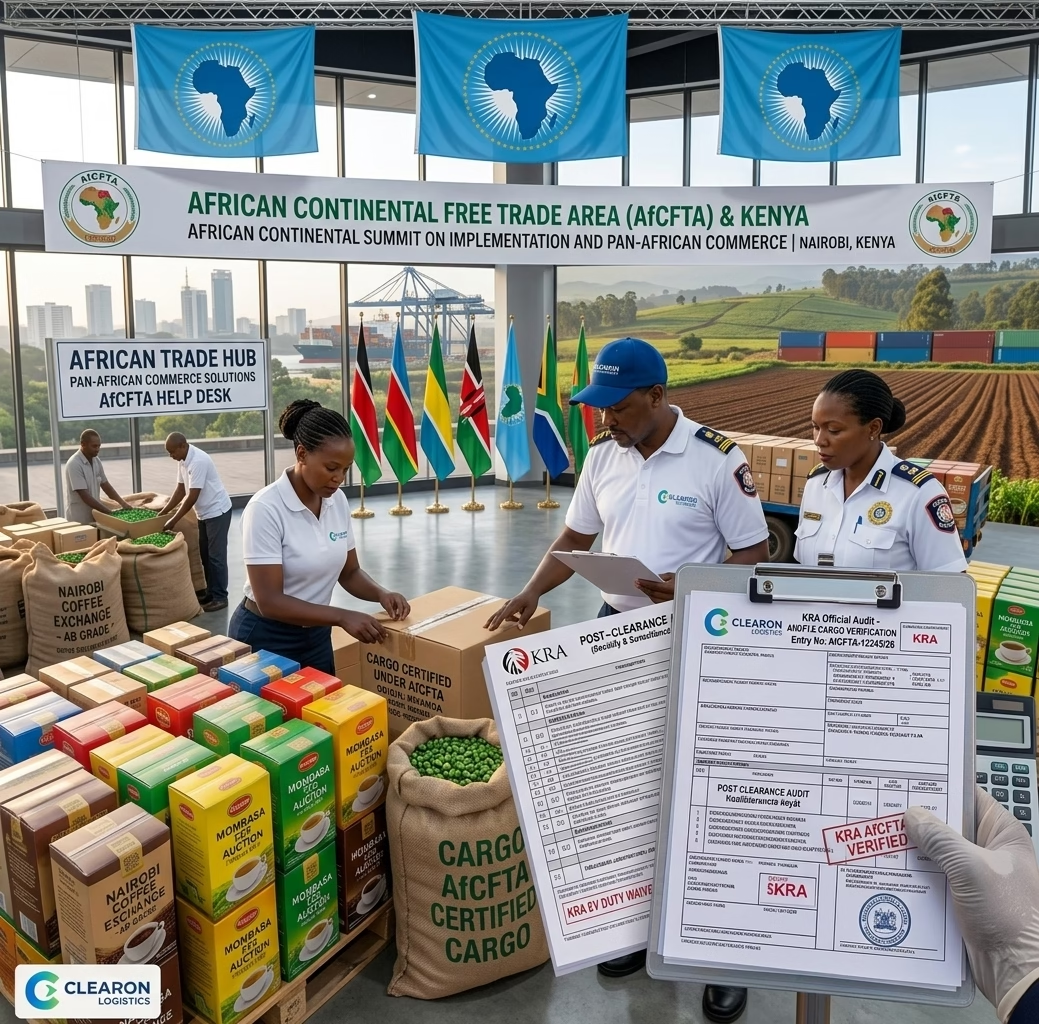
3️⃣ African Continental Free Trade Area (AfCFTA)
AfCFTA aims to gradually reduce tariffs among African countries. Implementation varies by product category, but it creates opportunities for reduced duty across Africa.
4️⃣ Economic Partnership Agreements (EPA)
Kenya has trade arrangements with certain global partners that allow preferential treatment under defined conditions.
How Preferential Duty Reduces Your Import Costs
Let’s look at an example.
You import goods worth USD 20,000.
Normal import duty = 25%
→ You would pay USD 5,000 in duty.
If the goods qualify under a preferential agreement with 0% duty:
→ You pay USD 0 import duty.
That’s a USD 5,000 saving — before calculating VAT, IDF (2.5%), and RDL (2%).
Over time, this dramatically improves your profit margins.
Step-by-Step: How to Claim Preferential Duty in Kenya
Step 1: Confirm the Country of Origin
The goods must be manufactured or sufficiently processed in the partner country.
Simply shipping goods through a member country does NOT qualify.
Step 2: Obtain a Valid Certificate of Origin
This is the most critical document.
The certificate must:
- Be issued by an authorized body in the exporting country
- Match the commercial invoice
- Clearly state qualifying origin
Without it, customs will apply full duty.
Step 3: Ensure the Product Meets Rules of Origin
Rules of origin define:
- Minimum percentage of local value addition
- Substantial transformation criteria
- Tariff heading change requirements
If the product fails origin tests, preferential duty is denied.
Step 4: Declare Correctly During Customs Processing
The clearing documentation must indicate that the goods are being claimed under the applicable trade agreement.
Incorrect declaration can lead to:
- Reassessment
- Delays
- Penalties
Common Mistakes Importers Make
- Assuming all goods from Africa are duty-free
- Using expired or incorrect Certificates of Origin
- Failing to verify rules of origin
- Incorrect HS code classification
- Not declaring preferential claim properly
These mistakes can result in:
- Full duty being charged
- Cargo delays
- Additional verification audits
Does VAT Still Apply?
Yes.
Even if import duty is reduced to 0%, you will still pay:
- VAT (16%)
- IDF (2.5%)
- RDL (2%)
Preferential agreements mainly reduce or eliminate import duty, not other taxes.
Why Many Importers Miss Out on Duty Savings
Most small and medium businesses:
- Don’t understand origin rules
- Don’t verify documentation before shipping
- Don’t structure imports strategically
This results in paying full tariff rates unnecessarily.
Strategic planning before shipment makes the difference.
How Clearon Logistics Helps Importers Benefit from Trade Agreements
Clearon Logistics supports importers by:
- Verifying product eligibility under trade agreements
- Confirming proper Certificates of Origin
- Reviewing HS codes for correct classification
- Structuring customs declarations accurately
- Preventing duty reassessment
The goal is simple:
Pay only what is legally required — not more.
Final Thoughts
Preferential trade agreements offer a powerful opportunity to reduce import costs in Kenya — but only if applied correctly.
Before shipping, ensure:
- Your goods meet rules of origin
- Certificate of Origin is valid
- Documentation is consistent
- Declaration is structured properly
When done correctly, preferential duty claims can significantly improve your margins and competitiveness.
If you are planning to import from Africa or other partner countries, professional review before shipment can help you maximize savings and avoid costly mistakes.

Leave a Reply