
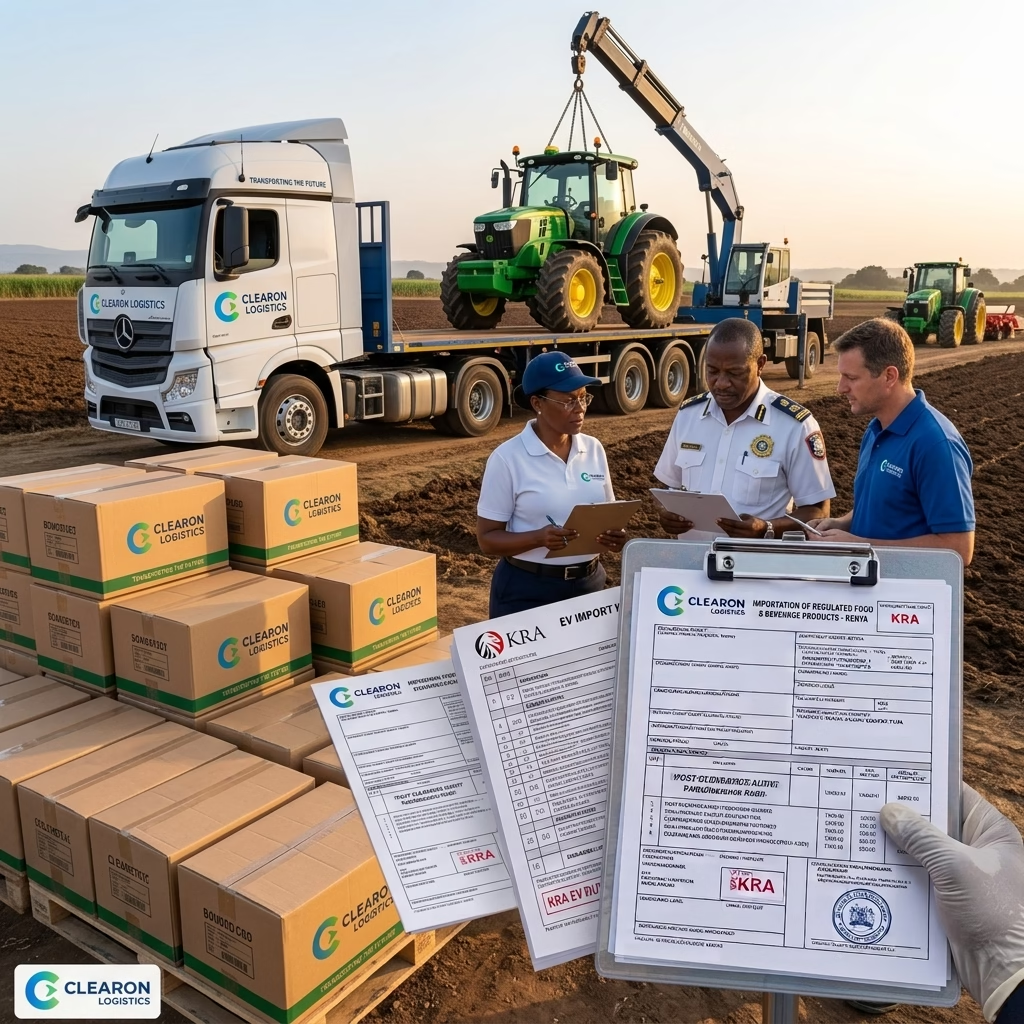
Importing agricultural machinery into Kenya comes with a genuine policy advantage most first-time farm equipment buyers don’t fully understand: tractors, plows, and harvesters are largely zero-rated for import duty under Kenya’s tariff structure, specifically to encourage mechanisation of a sector the government has prioritised for food security reasons. That doesn’t mean a tractor shipment arrives completely charge-free, though — and knowing exactly where the real costs sit before you order avoids budgeting based on “duty-free” alone.
Table of Contents
Why Farm Machinery Gets Favourable Treatment
Kenya’s customs regime for agricultural machinery is deliberately structured to lower the cost of mechanisation, since food security and agricultural productivity remain national policy priorities. Under the EAC Common External Tariff, capital goods and inputs that support production — rather than finished consumer goods — generally sit in the lower duty bands, and farm machinery specifically has been treated as a category worth actively incentivising rather than taxing at standard rates.
What’s Actually Zero-Rated
Most farm machinery is zero-rated for import duty, a category that generally includes:
- Tractors
- Ploughs and cultivation equipment
- Harvesters
This is a meaningful advantage compared to the standard 25% duty band that applies to most finished goods — but it’s specific to machinery genuinely classified as agricultural equipment under the correct HS code, not an automatic exemption for anything loosely connected to farming.
What You’ll Still Pay Regardless of Duty Exemption
This is the detail that trips up buyers who hear “duty-free” and assume the shipment is essentially free of charges. Even fully zero-rated agricultural machinery still carries the standard administrative levies that apply to virtually all commercial imports:
- Import Declaration Fee (IDF) — calculated as a percentage of CIF value, currently around 2.5%
- Railway Development Levy (RDL) — 2% of CIF value
- VAT, where applicable — though certain agricultural inputs may themselves qualify for reduced or zero VAT treatment depending on the specific classification, this needs to be confirmed for your exact equipment rather than assumed
For a high-value item like a tractor, these levies — even without duty — can still add up to a meaningful sum, and it’s worth running the full landed cost calculation rather than budgeting only for the purchase price plus freight.
Documentation You’ll Need
A standard agricultural machinery import typically requires:
- Commercial invoice specifying the equipment’s model, dimensions, and value
- Packing list
- Certificate of Origin, now mandatory for every import into Kenya regardless of tariff treatment
- KEBS Certificate of Conformity, confirming the equipment meets Kenyan standards
- Import licence, where applicable to the specific equipment type
- Pre-shipment inspection certificate, where required under the PVoC programme
Missing any of these can hold a shipment at the port even when the underlying duty treatment is fully favourable — a zero duty rate doesn’t waive the documentation requirements that apply to any other commercial import.
Importing Used Agricultural Equipment
If you’re considering a used tractor or piece of farm equipment rather than new, the same general principle covered in our used machinery guide applies here: there’s no single, published age-limit standard for agricultural equipment the way there is for vehicles, but that doesn’t mean no scrutiny applies. Age and condition can still factor into customs treatment, and valuation of used equipment tends to draw closer examination than new equipment with a clean invoice value. Confirming your specific used equipment’s compliance status — condition, documentation, and valuation approach — before committing to a purchase avoids surprises once it’s already shipped.
Getting the HS Code Right Matters More Than You’d Think
The zero-rated treatment for farm machinery is tied to correct classification under the relevant HS code — a tractor classified correctly benefits from the favourable treatment, but equipment that’s misclassified, or that falls into a related but non-agricultural category, may not. Given how much duty savings are potentially at stake, confirming the correct classification before you commit to a purchase is worth the small amount of upfront diligence, rather than discovering at clearance that your equipment was assessed under a less favourable band than expected.
Making the Most of a Genuinely Favourable Category
Agricultural machinery is one of the more importer-friendly categories in Kenya’s customs regime — but “duty-free” is only part of the real cost picture, and documentation requirements don’t relax just because duty does. Getting the classification, documentation, and full landed cost calculation right before you order is what actually lets a farmer or agribusiness capture the full benefit of this favourable treatment.
At Clearon Logistics, we help farmers and agribusinesses confirm correct classification, prepare complete documentation, and calculate the genuine total cost of an agricultural machinery import — duty exemption included — before a purchase is finalised, so the real number matches what you budgeted for.
Importing a tractor or other farm equipment into Kenya? Talk to Clearon Logistics for an accurate cost breakdown before you order.
Frequently Asked Questions
Is all farm machinery completely duty-free when imported into Kenya? Most core farm machinery — tractors, ploughs, harvesters — is zero-rated for import duty, but administrative levies like IDF and RDL still apply, and VAT treatment depends on the specific classification, so it’s not entirely charge-free.
Does a zero duty rate mean I don’t need standard import documentation? No — Certificate of Origin, KEBS certification, and other standard documentation requirements still apply regardless of the duty rate, and missing them can hold a shipment at the port even with favourable duty treatment.
Is there an age limit for importing used tractors or farm equipment into Kenya? There’s no single published age-limit standard for agricultural equipment the way there is for vehicles, but valuation and condition can still draw scrutiny — confirming compliance status before purchase is worth doing regardless.
What’s the biggest risk to losing the duty exemption on farm machinery? Incorrect HS code classification — equipment misclassified outside the genuine agricultural machinery category may not receive the zero-rated treatment, even if it’s genuinely intended for farm use.
Further Reading
- Kenya Revenue Authority — Customs & Border Control (external, dofollow)
- Ministry of Agriculture and Livestock Development, Kenya (external, dofollow)
- Related on our blog: Importing Used Machinery into Kenya: 4 Facts You Need to Verify
- Related on our blog: How to Calculate Your Landed Cost in Kenya
- Our service: Clearing and Forwarding Services in Kenya







Leave a Reply