
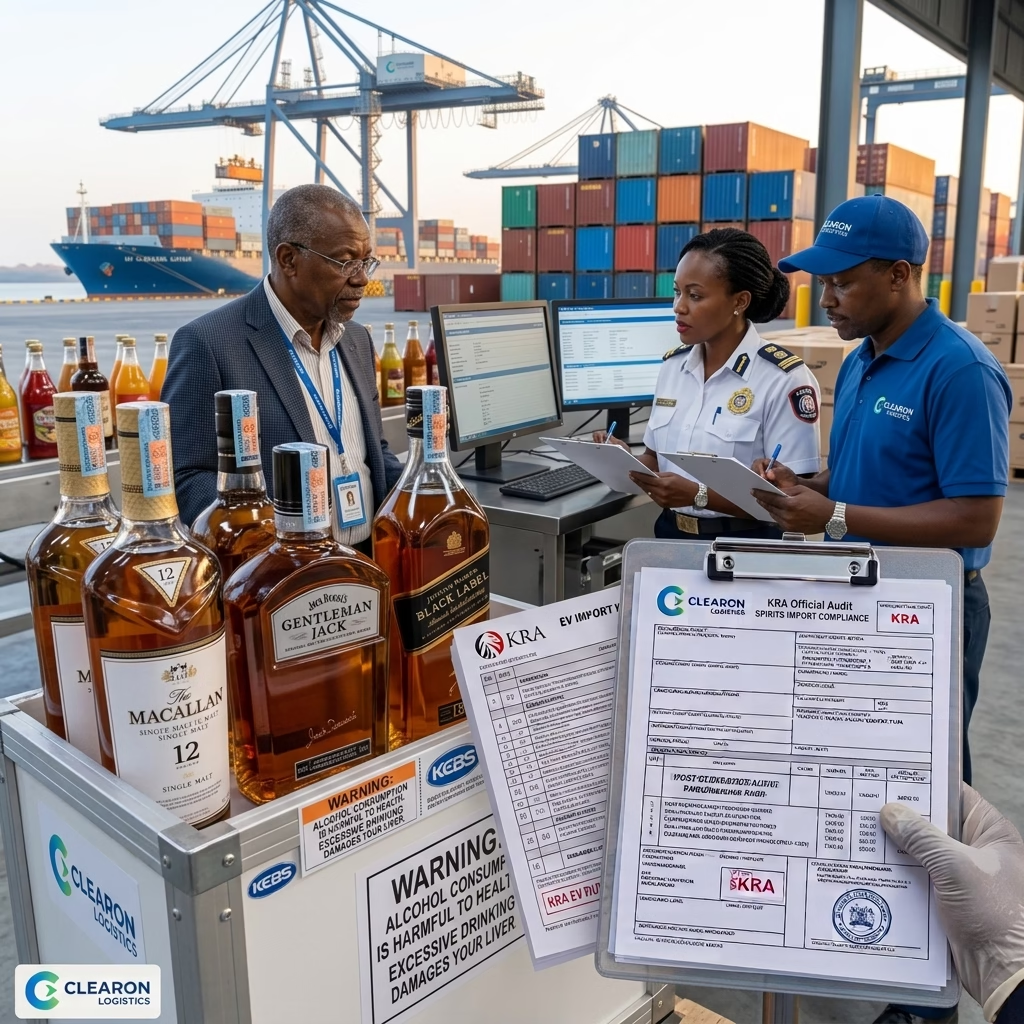
Importing alcohol and spirits into Kenya stacks together nearly every compliance layer covered elsewhere on our blog into a single category — excise stamps, KEBS standards, specific labelling rules, and its own dedicated licensing regime under the Alcoholic Drinks Control Act. If you’re entering this trade for the first time, the sheer number of moving parts can look overwhelming; laid out in the right order, it’s manageable.
Table of Contents
Registration Comes First: KenTrade and TradeNet
Before anything else, importing or exporting alcohol in Kenya requires registration with the Kenya Trade Network Agency (KenTrade) and an import/export licence from NACADA obtained through the Kenya TradeNet System. This is a distinct registration step from your general KRA PIN and importer registration, specific to the alcohol trade, and it needs to be in place before you can proceed meaningfully with the rest of the compliance sequence. You will be required to provide documentation such as certificate of incorporation/ certificate of business name registration, copy of national ID, CR12, KRA Pin, Tax compliance certificate, and product profile list among others.
Excise Duty on Alcohol: Rates Vary by Type and Change Annually
Alcohol excise duty in Kenya is charged based on beverage type and alcohol content, and — this is worth being direct about — the specific rates are adjusted annually through the Finance Act, meaning a figure that was accurate last year may already be outdated by the time you’re planning a shipment. Broadly, duty is assessed differently across spirits, beer, wine, and other spirituous beverages, generally scaled to alcohol strength (with a common threshold distinction around 6% alcohol content for certain beverage categories). Given how frequently these rates move, confirming the current applicable rate for your specific product category directly with KRA or your clearing agent — rather than relying on a figure from even a year ago — is essential for an accurate cost estimate.
Excise Stamps Are Non-Negotiable
Alcohol was among the very first categories covered when EGMS excise stamps were introduced in 2013, alongside tobacco. Every unit of imported wine, spirits, and beer needs a valid excise stamp affixed before it can legally enter circulation in Kenya — and as with other EGMS categories, only licensed importers can access the stamps in the first place, meaning your excise licensing needs to be sorted before you’re able to stamp your consignment at all.
KEBS Standards Cover the Product Itself
Beyond taxation and stamping, KEBS maintains specific quality standards covering categories including potable spirit, fortified wine, sparkling wine, whisky, vodka, brandy, neutral spirit, gin, and rum. As with other regulated categories, this generally means Pre-Export Verification of Conformity (PVoC) inspection in the country of origin, resulting in a Certificate of Conformity — arriving without one typically means a more costly destination inspection instead, calculated as a percentage of CIF value.
The Health Warning Labelling Requirement
This is a specific, measurable requirement worth getting right: every package containing an alcoholic drink must carry at least two health warning messages, in English or Kiswahili, and the health warning must cover at least 30% of the total surface area of the package. This is considerably more prescriptive than general labelling requirements for most other product categories, and packaging designed for a different market’s standards often doesn’t meet this threshold without modification — worth confirming with your supplier before finalising packaging design, not after a shipment arrives with non-compliant labels.
County Liquor Licensing for Distribution and Sale
Once alcohol has cleared customs, distribution and retail sale requires separate county-level liquor licensing, governed by the Alcoholic Drinks Control Act. Different licence categories apply depending on your role in the supply chain:
- Off-consumption (retail) licences for shops and supermarkets selling sealed products
- Wholesale licences for distributors selling in bulk to licensed retailers, generally carrying higher fees than retail licences
- Manufacturing or brewing licences, the most expensive category, for breweries, distilleries, and wineries
Processing typically takes 30 to 90 days from submission to issuance, including inspection and any objection periods, and county zoning rules can restrict where licensed premises are permitted to operate — worth factoring into your timeline well before your imported stock arrives, since a fully compliant import can still sit undistributed without the right county-level licence in place.
Bringing the Whole Chain Together
Alcohol import compliance in Kenya isn’t one process — it’s several parallel ones (KenTrade registration, NACADA, excise licensing and stamping, KEBS certification, specific labelling, and county liquor licensing) that all need to be moving in coordination, not handled as isolated steps discovered one at a time. Missing any single piece can hold otherwise fully compliant stock at the point of clearance, or leave it legally imported but unable to reach retail shelves.
At Clearon Logistics, we help alcohol importers sequence this full compliance chain correctly — confirming KenTrade registration, excise licensing, current duty rates, and labelling requirements before a shipment is placed, so your stock isn’t the one caught mid-process when it reaches Mombasa or JKIA.
Importing wine, spirits, or beer into Kenya? Talk to Clearon Logistics to get your full compliance sequence right before you order.
Frequently Asked Questions
Do alcohol excise duty rates in Kenya change frequently? Yes — rates are adjusted annually through the Finance Act and vary by beverage type and alcohol content, so confirming the current rate for your specific product before each shipment is essential rather than relying on a previous year’s figure.
Can I sell imported alcohol immediately after it clears customs? Not necessarily — distribution and retail sale require separate county-level liquor licensing under the Alcoholic Drinks Control Act, which is distinct from and in addition to import clearance.
What’s the specific labelling rule for alcohol health warnings? At least two health warning messages in English or Kiswahili, covering a minimum of 30% of the package’s total surface area — a considerably more prescriptive requirement than general product labelling.
Is alcohol import registration the same as standard KRA importer registration? No — alcohol specifically requires registration with KenTrade and an import/export licence through the Kenya TradeNet System, on top of standard KRA PIN registration.
Further Reading
- Kenya Trade Network Agency (KenTrade) (external, dofollow)
- National Authority for the Campaign Against Alcohol and Drug Abuse (NACADA) (external, dofollow)
- KRA — Excise Duty (external, dofollow)
- Related on our blog: Excise Stamps Kenya: 4 EGMS Facts Every Importer Must Know
- Related on our blog: Importing Food and Beverage Products into Kenya: 5 Rules to Know
- Our service: Clearing and Forwarding Services in Kenya






Leave a Reply