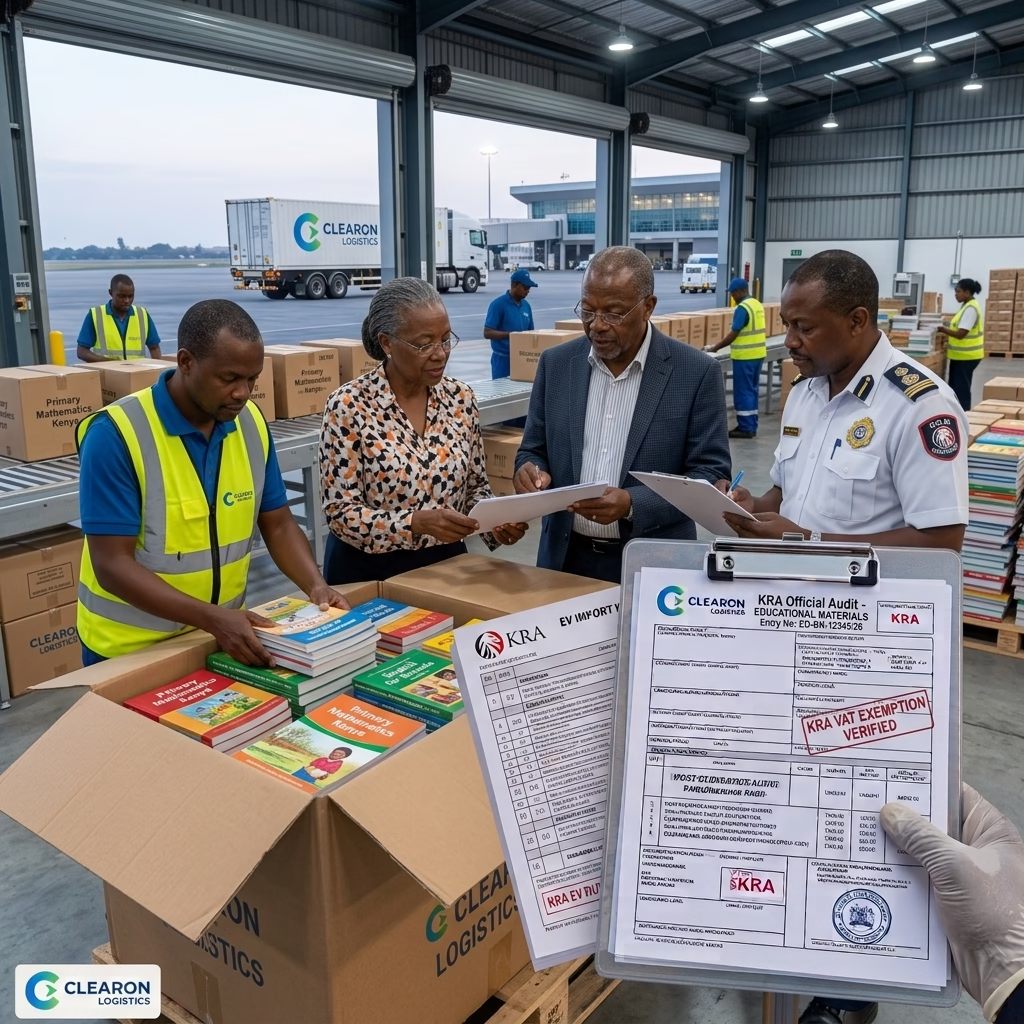
Importing books and educational materials into Kenya benefits from a tax treatment most other product categories simply don’t get: genuine VAT exemption, confirmed as recently as July 2026 in KRA’s own updated VAT schedule. For publishers, distributors, schools, and NGOs bringing in books or learning materials, understanding exactly what qualifies — and what doesn’t — can meaningfully change your landed cost calculation.
Table of Contents
What Qualifies as VAT-Exempt
Under KRA’s revised VAT schedule, published in July 2026, learning materials — including textbooks, educational publications, and specialised learning equipment for institutions serving persons with disabilities — remain VAT-exempt. This confirmation is genuinely current, and it sits within a broader schedule review that reshuffled several categories between exempt and zero-rated status, making it worth checking the current list directly rather than relying on older summaries of what qualifies.
Why This Exemption Exists
The policy rationale is straightforward and has been argued publicly for years: books are treated as a public good tied to literacy, education, and knowledge access, particularly for a population where affordability is a genuine barrier to educational materials reaching students. Advocacy for book VAT exemption in Kenya has specifically framed this as a knowledge-access issue — the case being that taxing books the same as ordinary consumer goods works against national education and literacy goals, whereas exempting them makes learning materials more accessible to schools, libraries, and individual buyers.
Exempt vs Zero-Rated: The Distinction That Matters
This is worth understanding clearly, since Kenya’s VAT system distinguishes between them in a way that affects your business economics even when the price to the end buyer looks identical:
- Exempt supplies — no VAT charged, but the importer or supplier also cannot reclaim VAT paid on their own inputs (shipping, printing costs, materials)
- Zero-rated supplies — no VAT charged to the buyer, but the supplier can reclaim VAT paid on inputs
Books and educational materials fall under the exempt category, not zero-rated — meaning if you’re a publisher or distributor importing books, you don’t charge VAT to your buyer, but you also can’t recover VAT you’ve paid elsewhere in your supply chain. This is a meaningful distinction for anyone running the actual numbers on an import business built around this category, and it’s the same technical distinction that’s been affecting solar batteries and other categories shifting between the two statuses in recent Finance Bill discussions.
What This Doesn’t Cover
The exemption is specifically framed around genuine educational and learning materials — printed books, educational publications, and specialised equipment for disability-inclusive education. It’s worth confirming your specific product actually falls within this framing rather than assuming any printed material or anything loosely “educational” automatically qualifies:
- General magazines, non-educational periodicals, and commercial publications may not carry the same exempt treatment
- Non-print educational products — software, digital learning platforms, certain electronic learning devices — may fall under entirely different VAT and duty treatment, separate from the print-focused exemption
- Stationery and school supplies, depending on the specific item, may be classified differently from the core “textbooks and educational publications” category
If you’re importing a mixed shipment of books alongside other school or office supplies, it’s worth confirming which specific items in the consignment actually qualify for the exemption, rather than assuming the whole shipment is treated uniformly.
Standard Documentation Still Applies
A VAT exemption doesn’t mean an import is free of other standard requirements. You’ll still generally need:
- Import Declaration Form, the same as any other commercial import
- Certificate of Origin, now mandatory for every shipment into Kenya regardless of tax treatment
- Commercial invoice and packing list
- Any content-related considerations, since imported publications remain subject to Kenya’s general laws on prohibited or restricted content, separate entirely from tax treatment
The VAT exemption addresses tax liability specifically — it doesn’t change the underlying documentation sequence a shipment needs to clear Kenyan customs.
Getting the Exemption Applied Correctly
Because Kenya’s VAT schedule has been actively revised, with categories moving between exempt, zero-rated, and standard treatment, claiming this exemption correctly means confirming your specific product against the current schedule, not a general assumption that “books are VAT-free in Kenya.” Given how directly this affects the landed cost of a book import — VAT is 16% where it does apply, a meaningful figure on any decent-sized shipment — getting the classification right is worth the small amount of upfront verification.
At Clearon Logistics, we help publishers, distributors, schools, and NGOs confirm current VAT treatment for their specific educational materials before a shipment ships, and handle the standard documentation sequence that still applies regardless of tax status — so the exemption translates into an actual cost saving, not just a theoretical one.
Importing books or educational materials into Kenya? Talk to Clearon Logistics to confirm your shipment’s current VAT treatment before you order.
Frequently Asked Questions
Are all books VAT-exempt when imported into Kenya? Textbooks, educational publications, and specialised learning equipment for disability-inclusive education are confirmed VAT-exempt under KRA’s current schedule — but it’s worth confirming your specific product qualifies rather than assuming any printed material automatically does.
What’s the difference between VAT-exempt and zero-rated for a book importer? Both mean no VAT is charged to the buyer, but a zero-rated importer can reclaim VAT paid on their own inputs, while an exempt importer cannot. Books fall under exempt status, not zero-rated.
Do I still need standard customs documentation if my books are VAT-exempt? Yes — the exemption addresses tax liability only. You’ll still need an Import Declaration Form, Certificate of Origin, and standard commercial documentation to clear customs.
Does the VAT exemption cover digital or electronic learning materials? Not necessarily — the exemption is specifically framed around print educational materials; digital products, software, and certain electronic learning devices may fall under different VAT and duty treatment entirely.
Further Reading
- Kenya Revenue Authority — VAT (external, dofollow)
- PwC Kenya — Tax Summaries (external, dofollow)
- Related on our blog: How to Calculate Your Landed Cost in Kenya
- Related on our blog: Import Declaration Form Kenya: What It Is and Why It Matters
- Our service: Clearing and Forwarding Services in Kenya



Leave a Reply