
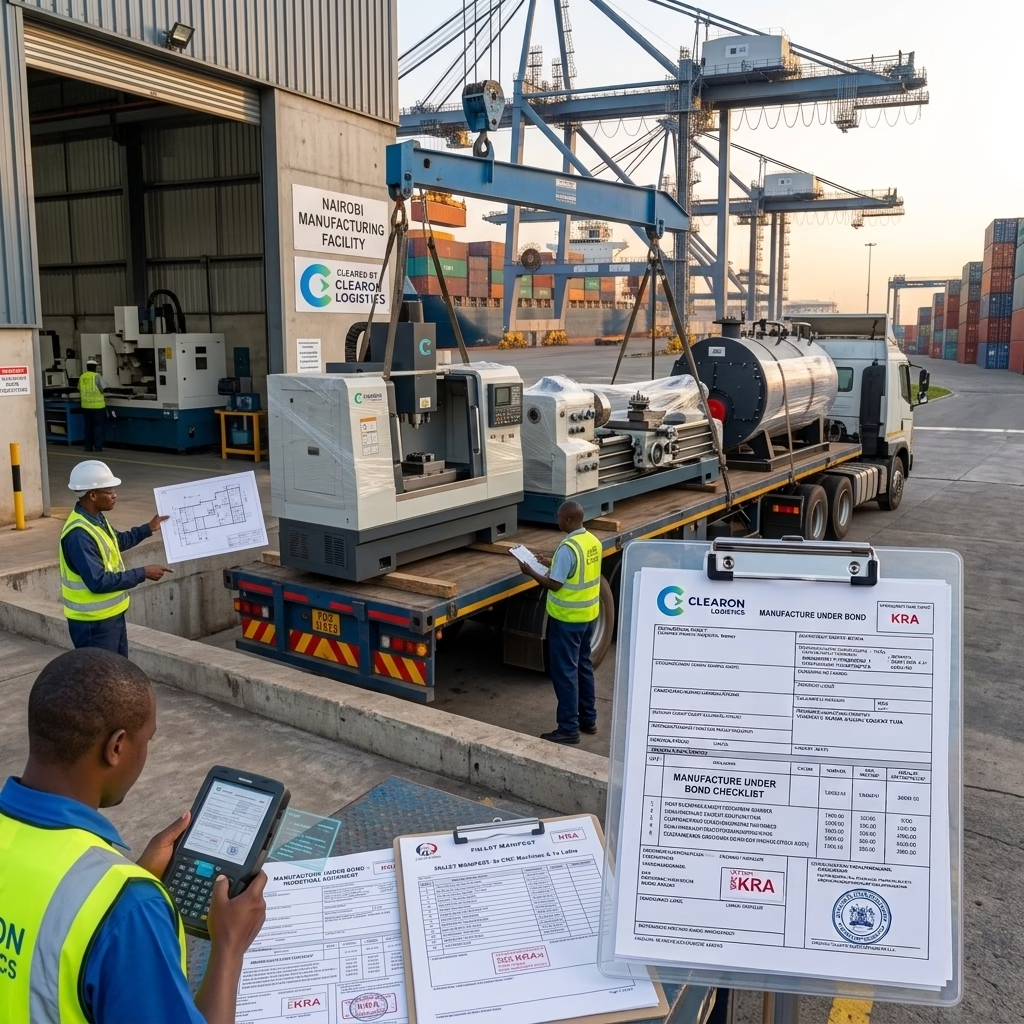
Importing machinery into Kenya for a manufacturing business doesn’t have to mean paying full duty and VAT on every piece of equipment — Kenya offers genuine, substantial incentive schemes for manufacturers, but they require upfront qualification, not just an application filed after your equipment has already landed.
Table of Contents
Manufacture Under Bond (MUB): The Core Incentive
Manufacture Under Bond is Kenya’s flagship scheme for encouraging export-oriented manufacturing, administered in partnership with the Kenya Investment Authority. It exempts enterprises operating under the programme from import duty and VAT on imported plant, machinery, equipment, raw materials, and other production inputs — a meaningful reduction in upfront capital cost for anyone setting up or expanding manufacturing operations in Kenya.
What MUB Actually Exempts
- Import duty and VAT on machinery and equipment (excluding motor vehicles)
- Import duty and VAT on raw materials and production inputs
- Stamp duty on relevant transactions
- Exemption from mandatory pre-shipment inspection requirements that apply to standard commercial imports
- A 100% investment deduction on capital expenditure, claimable over a period of years, reducing your corporate tax burden during the critical early operating period
Combined, these exemptions can meaningfully lower the initial capital outlay for setting up manufacturing machinery — freeing that capital for other priorities like staff training, quality control equipment, or a larger initial stock of production inputs.
The Trade-Off: What MUB Requires of You
MUB isn’t a no-strings exemption — it’s specifically designed to encourage manufacturing for export, and comes with conditions:
- Enterprises are generally permitted to sell up to 20% of output on the domestic Kenyan market, with the remainder intended for export
- Goods sold domestically under this allowance are liable for the full applicable taxes, plus an additional penalty (commonly cited around 2.5%)
- The scheme requires ongoing compliance — proper records, customs oversight of your bonded premises, and adherence to the terms of your specific bond
This makes MUB most suitable for manufacturers with a genuine export orientation, rather than businesses primarily producing for the domestic Kenyan market, where the 20% domestic-sale cap would be a meaningful constraint.
Duty Remission: A Related but Different Scheme
Separate from MUB, Kenya’s Duty Remission Scheme allows manufacturers to apply for remission of duty on raw materials used in manufacturing — whether the finished goods are for export or for home use within Kenya. This is administered through a formal application process requiring:
- Evidence that the applicant genuinely manufactures, or intends to manufacture, the goods for which remission is sought — supported by proof of appropriate machinery, labour, and production premises
- Proper business records
- Demonstrated manufacturing capacity
Approved remission is executed under a specific customs bond (a CB13 bond), valid for 12 months, and the specific raw materials eligible are determined by the East African Community Council of Ministers rather than set unilaterally by Kenya alone.
Unlike MUB, duty remission doesn’t require your finished goods to primarily target export markets — making it a potentially better fit for manufacturers focused on the domestic or regional EAC market rather than the export-heavy structure MUB is built around.
Sector-Specific Machinery Exemptions
Beyond the two main schemes, certain sectors have their own dedicated machinery import exemptions:
- Oil, geothermal, and gas exploration and development — machinery and inputs (excluding motor vehicles) imported by a licensed company for this purpose are exempt from import duty
- Power generation — machinery, equipment, and materials specifically for constructing a power-generating plant, which overlaps with the solar equipment exemptions available to renewable energy projects
- Special Economic Zones (SEZ) — a newer, broader framework than the older Export Processing Zone (EPZ) model, offering its own set of incentives for qualifying enterprises
Which framework fits your business depends heavily on your sector, your export orientation, and how your operation is structured — this is not a one-size-fits-all decision.
Getting Your Application Right
The single biggest risk with any of these schemes isn’t the paperwork itself — it’s importing machinery before confirming your eligibility and getting your bond or remission approval properly in place. Equipment shipped and cleared under standard commercial terms, only for the importer to discover afterward that they could have qualified for MUB or remission, generally can’t retroactively claim the exemption on duty already paid.
This is exactly the kind of decision that needs to happen at the planning stage — before you commit to a purchase order for machinery, not after it’s already at Mombasa Port.
At Clearon Logistics, we help manufacturers and investors understand which incentive scheme genuinely fits their business model before they import a single piece of equipment, and we give a transparent, honest breakdown of what qualifies, what doesn’t, and what the real cost difference looks like — so you’re making an informed investment decision, not discovering the options too late.
Setting up or expanding manufacturing in Kenya? Talk to Clearon Logistics before you order your machinery, to confirm which incentive scheme fits your operation.
Frequently Asked Questions
Can I apply for Manufacture Under Bond after my machinery has already been imported? Generally no — MUB status and the associated exemptions need to be in place before importation, since the scheme governs how the goods are imported and bonded, not a retroactive refund on duty already paid.
What’s the difference between MUB and the Duty Remission Scheme? MUB is built around export-oriented manufacturing with a domestic sales cap; Duty Remission covers raw materials for manufacturing whether the output is exported or sold domestically, and doesn’t carry the same export-focused structure.
Do I need to be a large manufacturer to qualify for these schemes? Not necessarily by size, but you do need to demonstrate genuine manufacturing intent and capacity — proper premises, machinery, records, and production plans — regardless of scale.
Are motor vehicles covered under MUB machinery exemptions? No — motor vehicles are generally excluded from the duty and VAT exemptions available under Manufacture Under Bond, even when used in a manufacturing operation.
Further Reading
- Kenya Investment Authority (KenInvest) (external, dofollow)
- KRA — Duty Remission Scheme (external, dofollow)
- Related on our blog: Bonded Warehouse Kenya: How to Defer Duty and Protect Cash Flow
- Related on our blog: COMESA and EAC Preferential Tariffs in Kenya
- Our service: Clearing and Forwarding Services in Kenya



Leave a Reply