
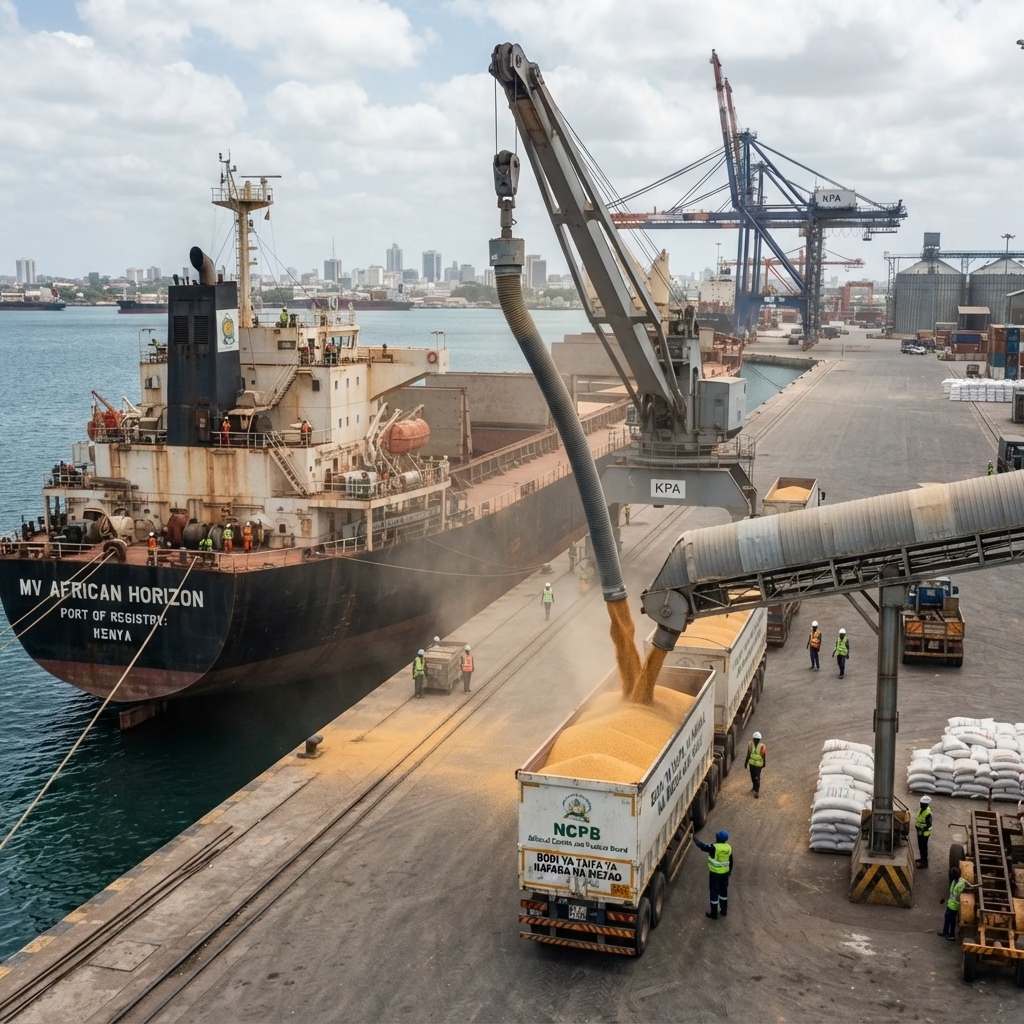
Importing maize into Kenya is, right now, the subject of an active government decision that hasn’t yet been finalised — Kenya is facing its steepest maize production decline in years, and millers are pushing for a large-scale duty-free import window to prevent a genuine shortage before it happens. If you’re in the grain trade, this is a policy area worth watching closely over the coming weeks, since the terms could shift the entire economics of importing this staple.
Table of Contents
The Scale of the Current Shortfall
Kenya’s maize production has fallen to its lowest level in roughly seven years, according to the Cereal Millers Association (CMA), with CEO Paloma Fernandes describing it as the steepest decline the sector has seen in years. This matters immensely given maize’s role as Kenya’s dominant staple — unga (maize flour) prices are directly exposed to any supply gap, and the government has been explicit that it doesn’t want to wait until stocks actually run critically low before acting.
What Millers Are Asking For
The CMA has specifically requested a nine-month duty-free window for importing up to three million metric tonnes of white maize, arguing that this length of time is genuinely needed for importers to negotiate supply contracts, secure financing, coordinate shipping logistics, and physically land adequate grain volumes — not simply a negotiating position, but a reflection of how long international grain sourcing at this scale actually takes. As of the most recent reporting, this remains a proposal the government is actively reviewing, not yet gazetted or finalised — meaning the specific terms, if and when approved, could differ from what’s currently being requested.
The Standard Duty Structure Being Waived
Under the East African Community’s Common External Tariff, Kenya normally applies a 50% ad-valorem import duty on corn (maize) sourced from outside the EAC and COMESA regions — a substantial protective tariff reflecting maize’s status as a politically sensitive staple crop. Imports from within the EAC and COMESA already benefit from duty-free access under the standard framework, which is why much of Kenya’s regional sourcing conversation has focused on Zambia and Tanzania specifically — countries with surplus maize production and existing preferential access, rather than needing a special waiver at all.
Where the Grain Would Actually Come From
Kenya’s Agriculture and Livestock Development Cabinet Secretary, Mutahi Kagwe, has confirmed the government and millers are already exploring regional procurement, with Zambia’s High Commission confirming available supply and early commitments in the range of roughly one million 90-kilogram bags (approximately 90,000 metric tonnes). This regional-first approach reflects both the existing duty-free access these countries already enjoy and a practical preference for shorter supply chains during a genuine supply crunch, even as the broader duty-free window under consideration would extend market access to a wider range of international sourcing options, including the United States.
Quality Standards Won’t Be Relaxed
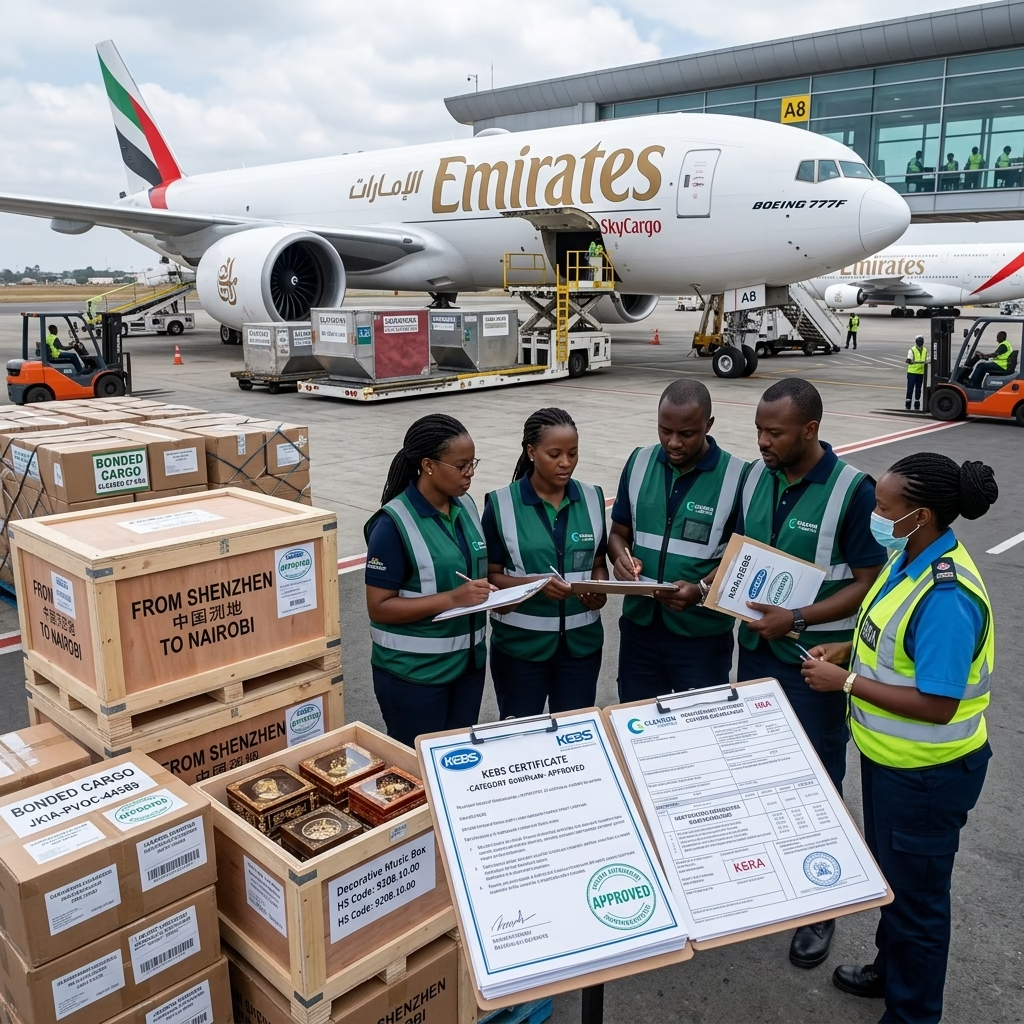
Despite the urgency, Kenyan officials have been explicit that food safety standards are non-negotiable: any imported grain must strictly meet sanitary and phytosanitary requirements, with particular attention to moisture content and aflatoxin contamination — Kagwe’s own words were direct: “Do not bring maize that is not going to pass the tests.” To avoid this creating logistical bottlenecks, the government has floated streamlined testing procedures designed to assess grain quality in minutes rather than days, alongside one-stop border clearance protocols intended to eliminate the multi-day transport delays that have historically slowed bulk grain imports at border crossings.
Wheat Is Under Similar Pressure
Kenya’s wheat sector is facing its own separate strain at the same time, leaving the country exposed on two major staple fronts simultaneously. The government’s response here has focused less on an immediate import waiver and more on longer-term domestic production improvements — the Agriculture and Food Authority is expected to hold a dedicated retreat specifically to examine mechanisation, irrigation, and productivity measures aimed at boosting local wheat output, alongside a broader look at regional sourcing options for commercial wheat supply.
What This Means If You’re in the Grain Trade
- Don’t assume the duty-free window is confirmed — as of the most recent reporting, this remains under government review, not gazetted policy
- Watch for the specific terms if and when it’s approved — volume caps, duration, and eligible sourcing countries have all been part of the active discussion and could be adjusted from what millers originally requested
- Prepare quality documentation regardless of duty treatment — moisture and aflatoxin testing requirements are being emphasised as non-negotiable, independent of whatever duty waiver terms emerge
- Consider regional sourcing (Zambia, Tanzania) as an option that doesn’t depend on the waiver being approved at all, given existing EAC/COMESA duty-free access
Tracking a Fast-Moving Food Security Decision
This is a genuinely live policy moment with real financial stakes for anyone in grain trading, milling, or related logistics — the difference between a confirmed nine-month, three-million-tonne duty-free window and no waiver at all fundamentally changes the economics of maize importing for the year ahead.
At Clearon Logistics, we track fast-moving food security policy exactly like this, helping grain importers understand current duty status, sourcing options, and quality documentation requirements as the situation develops, rather than planning around outdated assumptions.
In the grain import trade and need to track how this maize duty decision develops? Talk to Clearon Logistics to stay current as the policy is finalised.
Frequently Asked Questions
Is maize currently duty-free to import into Kenya? Only from within the EAC and COMESA regions under standard rules — a broader duty-free window for wider international sourcing was still under active government review as of the most recent reporting, not yet finalised.
What’s the standard duty rate on maize from outside the EAC and COMESA? 50% ad-valorem, under the East African Community’s Common External Tariff — the substantial rate the proposed duty-free window would temporarily waive if approved.
Will quality standards be relaxed to speed up maize imports during this shortage? No — officials have been explicit that moisture content and aflatoxin testing requirements remain non-negotiable, even as streamlined testing procedures are being considered to reduce processing time without lowering the standard itself.
Is wheat facing the same duty-free import consideration as maize? Not in the same way — the government’s response to wheat sector pressure has focused more on longer-term domestic production improvements (mechanisation, irrigation) alongside exploring regional sourcing, rather than an immediate large-scale duty waiver.
Further Reading
- National Cereals and Produce Board (NCPB) Kenya (external, dofollow)
- Cereal Millers Association (CMA) Kenya (external, dofollow)
- Related on our blog: Importing Sugar into Kenya: 4 Facts on the 2026 Policy Shift
- Related on our blog: Importing Rice into Kenya: 4 Facts on the 2026 Quota Battle
- Our service: Clearing and Forwarding Services in Kenya






Leave a Reply