
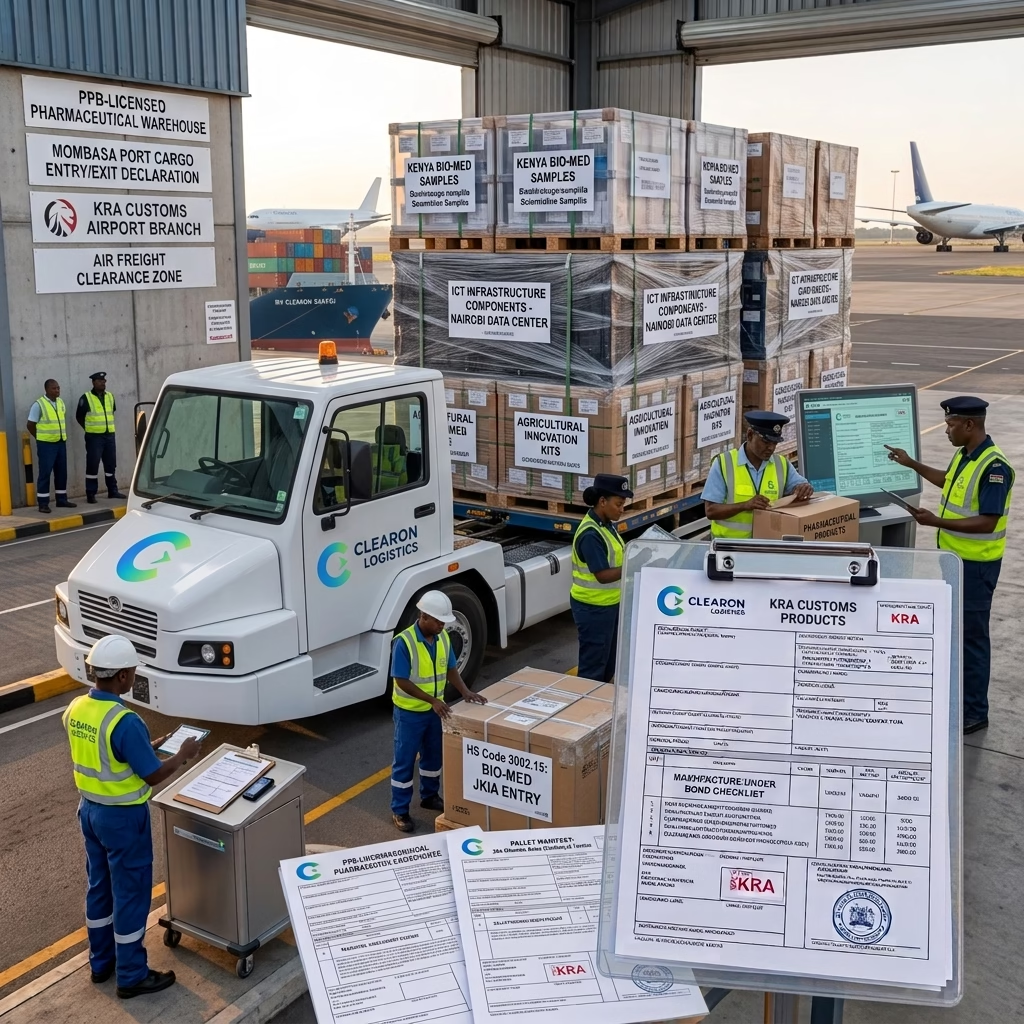
Importing pharmaceuticals into Kenya is one of the most tightly regulated import categories in the country, and for good reason — it sits at the intersection of public health, customs law, and product safety. Whether you’re a distributor, a hospital procurement team, or an NGO bringing in medical supplies, the Pharmacy and Poisons Board (PPB) sits between you and Kenyan customs at every step, and skipping or rushing this relationship is the single most common way pharmaceutical shipments end up stuck in quarantine.
Table of Contents
The Regulator: Pharmacy and Poisons Board
The PPB is Kenya’s national medicines regulatory authority, established under the Pharmacy and Poisons Act, Chapter 244 of the Laws of Kenya. Its mandate covers the regulation of pharmacy practice and the manufacture, trade, and importation of drugs, poisons, medical devices, and — notably — cosmetics as well. For pharmaceutical importers, the PPB isn’t a formality alongside KRA customs clearance; it’s the gatekeeper that determines whether your goods are even eligible to enter Kenya in the first place, well before duty and clearance become relevant.
Product Registration Comes First
Before a single unit of a medicine can be imported, distributed, or sold in Kenya, the product itself must be registered with the PPB. Registration evaluates the quality, safety, and efficacy of the specific product — not just the category it belongs to — and this process needs to happen well ahead of any planned shipment, since registration timelines can run into months, not days.
For products already authorised by a stringent reference regulatory authority — such as the US FDA, EU regulators, or the UK’s MHRA — the documentation trail from that prior approval can streamline the Kenyan registration process considerably, since it gives PPB assessors a quality and compliance record that maps onto what they’re already looking to verify.
The Import Permit: Per-Consignment, Not One-Time
Registration of the product is separate from the import permit, which is required for each individual consignment. Even a fully registered medicine still needs an import permit issued by the PPB before that specific shipment can proceed through customs — meaning an importer bringing in the same registered product multiple times a year needs to secure a fresh permit for each shipment, not just once at the point of initial registration.
This two-layer structure — product registration once, import permit per shipment — is one of the most common points of confusion for new pharmaceutical importers, who sometimes assume that having a registered product is sufficient on its own.
Medical Devices Follow a Similar but Separate Path
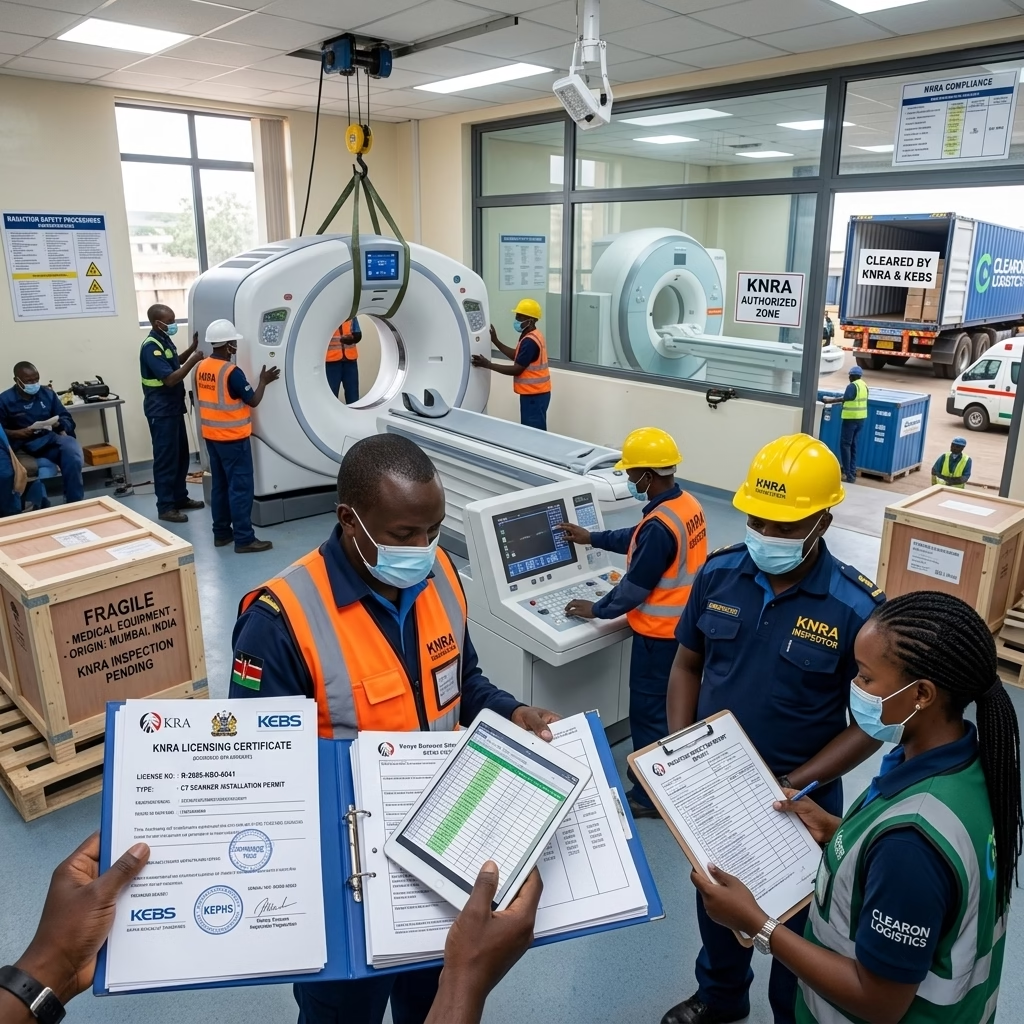
Medical devices are regulated by the PPB but follow their own distinct registration framework, separate from pharmaceuticals:
- Class A devices generally require only listing, a lighter-touch process
- Class B, C, and D devices require a fuller registration process, with pathways including First In First Out (standard review), Fast-track (for products with prior approval from a recognised reference authority), and an expedited pathway reserved for emergency use authorisation
- Import permits for medical device consignments are processed through the Kenya National Trade Net System, aligning this with the broader single-window trade documentation infrastructure used for other regulated imports
If your business imports both pharmaceuticals and medical devices, it’s worth treating these as genuinely separate compliance tracks rather than assuming one registration covers both.
The Local Representative Requirement
Foreign manufacturers and suppliers generally cannot register products directly with the PPB — they need to appoint a locally registered Kenyan representative or distributor to handle product registration and the ongoing regulatory relationship with the Board. For an overseas pharmaceutical company looking to enter the Kenyan market, this local partnership isn’t optional paperwork; it’s the mechanism through which the entire registration and import permit process actually happens.
How This Fits Alongside Customs Clearance
PPB approval and KRA customs clearance are two separate processes that need to be coordinated, not treated as sequential afterthoughts. A shipment needs, at minimum:
- A valid PPB product registration (or evidence the product qualifies for import)
- A valid PPB import permit for that specific consignment
- Standard customs documentation — Import Declaration Form, commercial invoice, and the now-mandatory Certificate of Origin
- KRA PIN and importer registration
Missing or delayed PPB documentation is one of the most common reasons pharmaceutical shipments sit at Mombasa Port or JKIA well beyond what a standard commercial shipment would take, since customs generally won’t release regulated medical goods without confirmed PPB clearance alongside the usual customs paperwork.
Getting Pharmaceutical Imports Right From the Start
Because PPB registration timelines can run long, and because a missing import permit can hold an otherwise fully compliant shipment at the port indefinitely, pharmaceutical and medical device imports are a category where planning several steps ahead of shipment is not optional — it’s the only way the timeline works at all.
At Clearon Logistics, we help pharmaceutical and medical device importers understand exactly where they stand in the PPB process before committing to a shipment date, coordinate PPB and customs documentation together rather than as separate silos, and keep clients updated at every stage of what can be a genuinely complex, multi-agency process.
Importing pharmaceuticals or medical devices into Kenya? Talk to Clearon Logistics early in your registration process, not just when your shipment is ready to move.
Frequently Asked Questions
Do I need PPB approval for every single pharmaceutical shipment, even if the product is already registered? Yes — product registration and the import permit are separate. Even a fully registered medicine requires a fresh import permit for each individual consignment.
Can a foreign pharmaceutical company register its own products directly with the PPB? Generally no — foreign manufacturers need to appoint a locally registered Kenyan representative or distributor to handle registration and the ongoing regulatory relationship.
Are medical devices regulated the same way as pharmaceuticals in Kenya? They’re regulated by the same body (PPB) but follow a separate framework, with different classes of devices (A through D) requiring different levels of registration rigour.
How long does PPB product registration typically take? Timelines vary significantly depending on the pathway and whether the product has prior approval from a recognised reference regulatory authority, but it should be planned as a months-long process, not something arranged shortly before a shipment.
Further Reading
- Pharmacy and Poisons Board Kenya (external, dofollow)
- Kenya National Trade Net System (KenTrade) (external, dofollow)
- Related on our blog: Prohibited and Restricted Goods Kenya: The Essential 2026 Import Checklist
- Related on our blog: Import Declaration Form Kenya: What It Is and Why It Matters
- Our service: Clearing and Forwarding Services in Kenya

Leave a Reply