
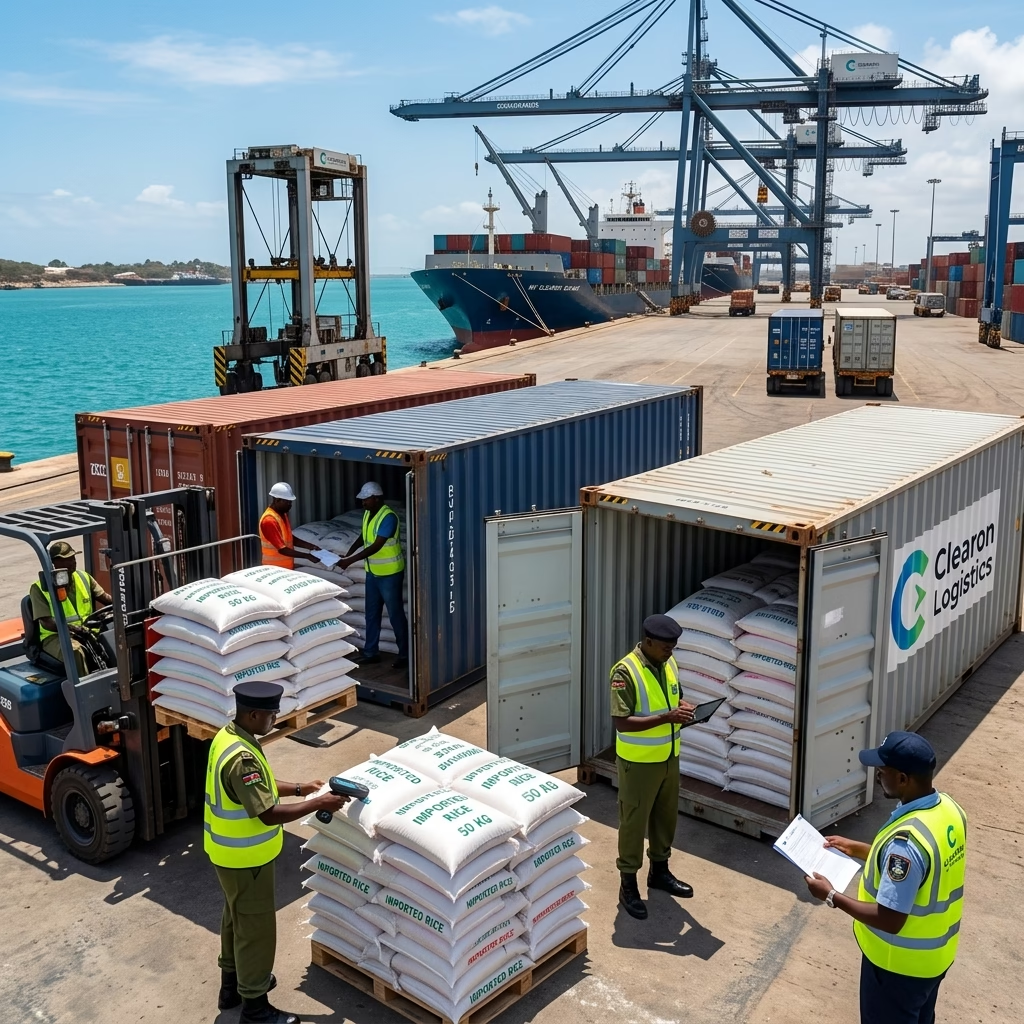
Importing rice into Kenya sits at the centre of a genuinely active legal and political fight right now — a court case questioning the transparency of a massive duty-free import quota, farmer associations demanding disclosure of who actually benefits, and a structural supply gap so wide that Kenya’s own production covers barely two months of national demand each year.
Table of Contents
Why Kenya Imports So Much Rice
Rice has been steadily displacing maize flour as a staple in Kenyan households, both urban and rural, partly because maize production has struggled with adverse weather and heavy reliance on rain-fed agriculture. The scale of the resulting gap is stark: Kenya requires roughly 100,000 metric tonnes of rice per month, but produced only around 191,000 metric tonnes of milled rice during the entire 2024/25 season — barely two months’ worth of national demand from a full year of domestic production. The Mwea irrigation scheme in Kirinyaga County, home to roughly 7,000 farmers, remains Kenya’s dominant rice-producing area, accounting for around 65% of national output, but even at full capacity it can’t come close to closing this gap alone.
The Standard Duty Structure
Rice imported from outside the East African Community generally faces a tariff structure combining a percentage rate with a minimum per-tonne floor, applied as whichever figure is higher — a structure the EAC Secretariat reviews annually, which has historically kept the effective rate relatively high to protect regional producers, including Kenya’s own Mwea growers. This baseline duty structure is what makes the periodic duty-free import waivers covered below such a significant policy lever — without one, importing rice at scale from outside the region carries a substantial cost that domestically grown or duty-relieved rice doesn’t.
The 490,000-Tonne Duty-Free Quota and the Court Case Challenging It
This is genuinely live as of the time of writing: under Gazette Notice No. 10061 of 6 July 2026, the Kenyan government authorised duty-free importation of 490,000 metric tonnes of Grade 1 milled white rice, framed as necessary to address a widening national deficit and prevent consumer price shocks — particularly relevant given recent export restrictions and steep tariffs imposed by major global rice producers like India protecting their own domestic reserves.
The Ahero Rice Farmers Association has since taken the matter to the High Court, arguing the government’s duty-free programme must comply with constitutional principles of transparency and public participation, not just food security necessity. In a ruling handed down by Justice Alfred Mabeya, the State was given seven days to produce comprehensive records — quantities allocated, import permits issued, duty exemptions granted, customs entry numbers, and the specific criteria used to allocate quotas among importers, along with the underlying Cabinet memoranda and economic assessments that justified the 490,000-tonne figure in the first place.
Why Farmers Are Fighting the Waiver
The farmers’ association’s concern isn’t abstract: they argue previous duty-free rice import programmes have depressed farm-gate prices for growers across Kenya’s rice-producing regions — Ahero, Mwea, Bunyala, Tana Delta, Hola, and Bura among them — even while acknowledging the government’s legitimate food security mandate. A separate, earlier court ruling (delivered by Justice Edward Muriithi in January 2026) had already approved a phased importation approach — three equal consignments of 85,000 metric tonnes scheduled across March, April, and May 2026 — specifically to balance import volumes against the risk of overwhelming the market during Kenya’s own harvest and marketing periods. That ruling explicitly recognised what it called a “convergence of rights” — food security, farmers’ economic interests, and consumer access to affordable food — as competing considerations the court had to weigh together.
Where Kenya’s Rice Imports Actually Come From
The bulk of Kenya’s rice imports have traditionally originated from India and Pakistan, a pattern expected to continue given established trade relationships and pricing. Within the domestic market, there’s a meaningful quality distinction worth understanding: Mwea’s premium pishori rice occupies its own niche — commanding higher prices in Nairobi’s aromatic rice market — and doesn’t directly compete with the bulk of imported rice, which serves a different, more price-sensitive segment of the market entirely.
What This Means for Importers Right Now
- If you’re importing under the current duty-free quota programme, be aware this specific allocation is under active legal scrutiny, and the disclosure requirements the court has ordered could affect how future allocations are structured or communicated
- If you’re importing outside any waiver programme, budget for the standard tariff structure, which remains a meaningful cost given how it’s calculated
- Watch for the outcome of the disclosure order and the ongoing case, since a court finding requiring greater transparency or different allocation criteria could reshape how future duty-free rice quotas are administered
- Confirm current quota and permit status directly before committing to an import plan, given how actively contested and fast-moving this specific policy area is right now
Navigating a Genuinely Unsettled Policy Moment
Rice import policy in Kenya is, right now, playing out simultaneously in Cabinet decision-making, gazette notices, and an active courtroom — a genuinely unusual level of real-time contestation for an import category. This is a case where “current policy” needs to be checked close to your actual shipment date, not assumed stable from even recent reporting.
At Clearon Logistics, we track fast-moving, politically active trade categories like this closely, helping rice importers understand current quota, permit, and duty status before committing to an import plan in a policy environment that’s genuinely still being worked out.
Importing rice into Kenya, whether under a duty-free allocation or standard terms? Talk to Clearon Logistics to confirm current status before you order.
Frequently Asked Questions
Is rice currently duty-free to import into Kenya? Only under specific, gazetted waiver programmes like the 490,000-tonne allocation authorised in July 2026 — standard imports outside such a programme face the regular EAC tariff structure, which remains substantial.
Why are Kenyan rice farmers challenging the duty-free import quota in court? The Ahero Rice Farmers Association argues the government’s import programme lacks sufficient transparency around allocation criteria and hasn’t adequately disclosed the data justifying the quota size, while also raising concern that duty-free imports have historically depressed farm-gate prices for local growers.
How much of Kenya’s rice demand does domestic production actually cover? Roughly two months’ worth — Kenya requires about 100,000 metric tonnes monthly but produced only around 191,000 metric tonnes of milled rice during the entire 2024/25 season.
Where does most of Kenya’s imported rice come from? Traditionally India and Pakistan, a pattern expected to continue based on established trade relationships and competitive pricing from those markets.
Further Reading
- Agriculture and Food Authority (AFA) Kenya (external, dofollow)
- USDA Foreign Agricultural Service — Kenya Grain and Feed Reports (external, dofollow)
- Related on our blog: Importing Sugar into Kenya: 4 Facts on the 2026 Policy Shift
- Related on our blog: Importing Food and Beverage Products into Kenya: 5 Rules to Know
- Our service: Clearing and Forwarding Services in Kenya








Leave a Reply