
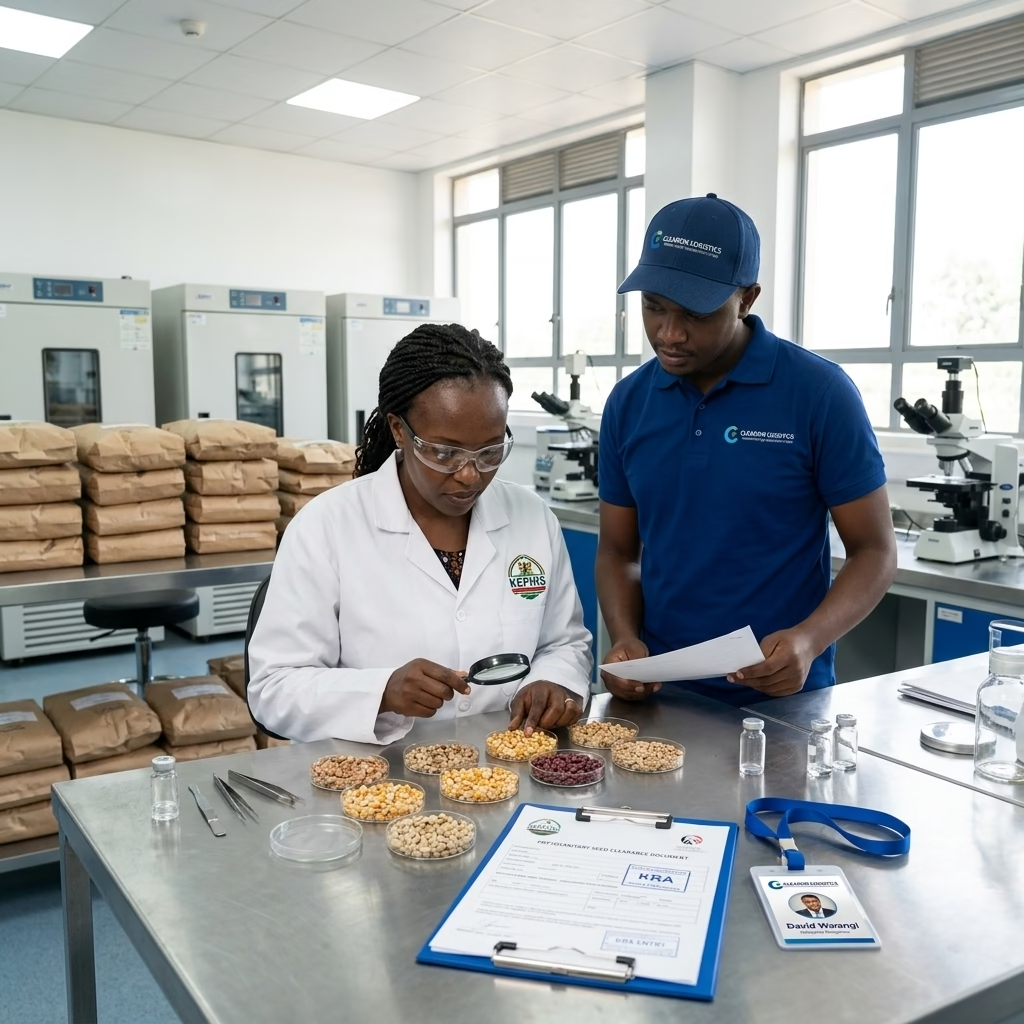
Importing seeds into Kenya runs through a genuinely distinct regulatory process from general agrochemicals — even though both ultimately fall under the same Kenya Plant Health Inspectorate Service. Seeds aren’t just inspected for pest risk; they’re evaluated for variety identity, genetic purity, and germination quality, governed by an entirely separate piece of legislation with its own registration, testing, and gazettement sequence.
Table of Contents
The Legal Basis: A Different Act Entirely
Seed importation in Kenya is governed by the Seeds and Plant Varieties Act, Chapter 326 — separate legislation from the frameworks covering agrochemicals or general food imports. Under this Act, KEPHIS holds a broad mandate: administering plant breeders’ rights, maintaining the Plant Breeders’ Rights Register, undertaking plant variety testing and description, running seed certification, and registering and licensing seed merchants, growers, and agents. The underlying goal is specific — ensuring farmers have access to seed that’s genuinely true to its stated identity, genetically pure, and capable of reliable germination, rather than mislabelled or degraded stock entering the market.
Step One: Register as a Seed Merchant
Before anything else, anyone intending to import or export seed must first register with KEPHIS as a seed merchant — importation and exportation of seed is explicitly restricted to registered merchants, not open to any general importer. Registration requires a certificate of registration from a relevant government entity as a baseline, and once approved, KEPHIS issues a certificate of registration valid for one calendar year, requiring annual renewal.
Step Two: The Plant Import Permit
Separately from merchant registration, anyone bringing plants, plant products, or regulated articles into Kenya must obtain a Plant Import Permit (PIP) before shipment leaves the country of origin — and this requirement applies regardless of whether the seed is for commercial sale, personal use, a gift, or research purposes. There’s no casual exemption based on small quantity or non-commercial intent. This is processed through KEPHIS’s Plant Import and Quarantine Regulatory System (PIQRS), a dedicated digital platform built specifically to streamline this category of regulatory interaction between importers and government.
Step Three: Documentation That Must Travel With the Seed
A compliant seed shipment needs several documents to accompany it:
- A phytosanitary certificate, original, from the country of origin
- Notice to Import, Form SR14, issued by KEPHIS
- An International Seed Testing Association (ISTA) certificate, original, from the country of origin, confirming the seed has met internationally recognised testing standards for purity and quality
The ISTA certificate specifically reflects Kenya’s alignment with international seed testing standards, alongside OECD Seed Schemes for field inspection — meaning Kenya’s seed certification framework doesn’t operate in isolation, but is built to interoperate with the global seed trade’s established quality benchmarks.
Step Four: Testing on Arrival
Even with proper documentation in hand, imported seed isn’t simply waved through on arrival. The importer must declare their consignment to a KEPHIS inspector for verification, with samples drawn for testing and analysis following ISTA regulations, before a seed testing certificate is issued. Only once seeds have cleared this process are new varieties formally listed in the Kenya Gazette — a public, official record confirming the variety’s approved status in the Kenyan market, distinct from the private commercial transaction of importing the seed itself.
The Formal vs Informal Seed System
This is a distinction worth understanding if you’re evaluating the broader Kenyan seed market context: Kenya operates two parallel seed systems. The formal system — the one covered throughout this article — involves KEPHIS-certified seed produced by registered seed companies under strict supervision, moving through the certification grades of breeder seed, foundation seed, certified seed, and standard seed. The informal system involves farmers recycling, sharing, and exchanging seed outside any certification framework — a long-standing practice with no regulations governing it directly, existing alongside rather than in competition with the formal certified system. Import compliance, naturally, only applies to seed moving through the formal, commercial channel.
Why This Framework Matters Beyond Compliance
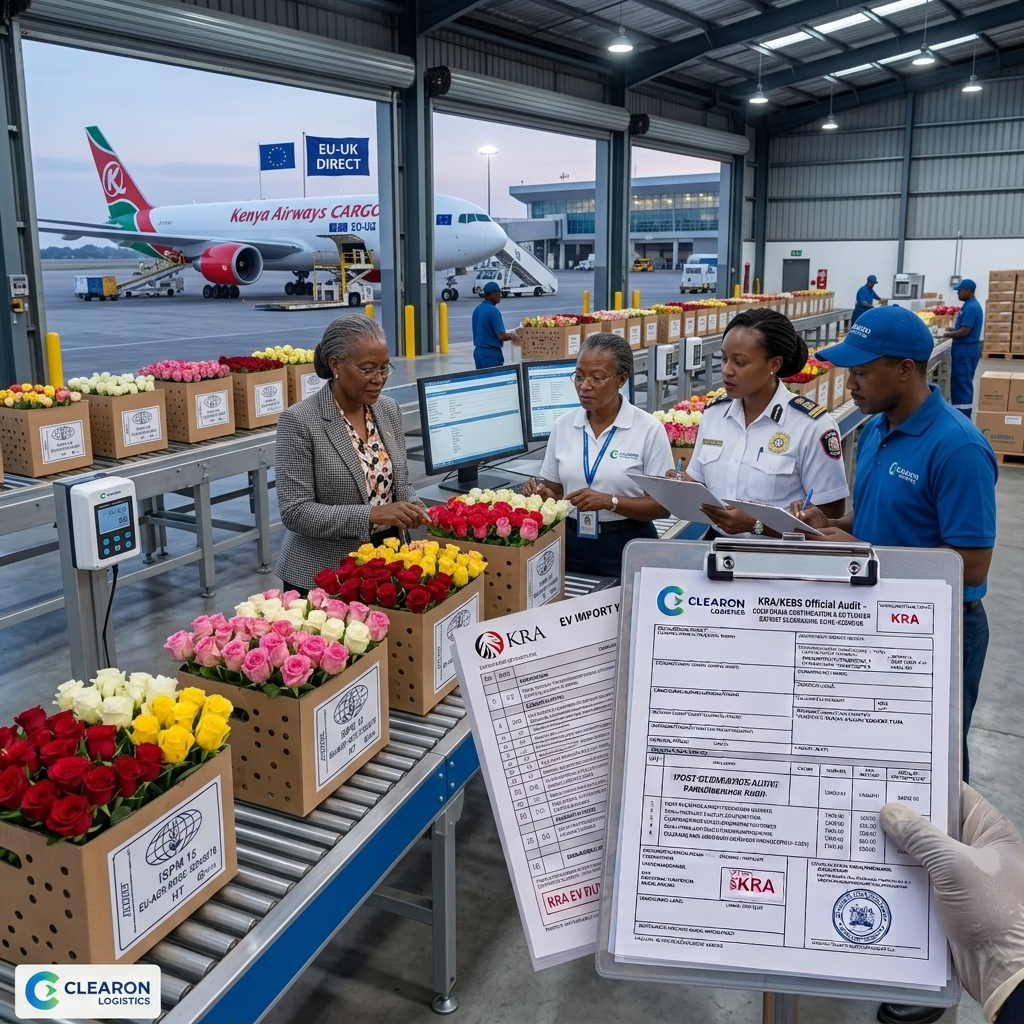
KEPHIS’s seed and phytosanitary certification isn’t just a domestic compliance hurdle — it’s directly tied to Kenya’s horticultural export success. The same certification infrastructure that governs seed imports also underpins Kenya’s cut flower, vegetable, and fruit exports, worth over USD 1.5 billion annually and dependent on KEPHIS phytosanitary credibility for market access to the EU, Gulf states, China, and the US. This context is worth knowing because it explains why Kenya’s seed import framework is genuinely rigorous rather than a bureaucratic formality — the integrity of this entire certification system is what keeps Kenya’s much larger agricultural export trade credible internationally.
Getting Seed Imports Right From the Start
Because seed merchant registration and the Plant Import Permit both need to be secured before shipment leaves the country of origin, this is a category where the compliance sequence genuinely cannot be worked backward from an already-shipped consignment — the paperwork has to lead the shipment, not follow it.
At Clearon Logistics, we help seed importers navigate KEPHIS merchant registration, the Plant Import Permit process, and the documentation chain required to accompany a compliant shipment — so your seed import is properly sequenced from the start, not discovered to be missing a step once it’s already at the border.
Importing seed for commercial planting, breeding, or trade in Kenya? Talk to Clearon Logistics to confirm your KEPHIS registration and permit status before you ship.
Frequently Asked Questions
Can I import a small quantity of seed for personal or research use without a permit? No — the Plant Import Permit is required regardless of whether the seed is for commercial, duty-free, gift, experimental, or research purposes; there’s no small-quantity or non-commercial exemption.
Who is allowed to import seed into Kenya? Only registered seed merchants — importation and exportation of seed is restricted to those who have first registered with KEPHIS, not open to general importers.
What’s the difference between formal and informal seed systems in Kenya? The formal system involves KEPHIS-certified seed from registered companies under strict quality supervision; the informal system involves farmer-to-farmer seed sharing and recycling with no governing regulations — import compliance applies only to the formal, commercial channel.
Does seed certification affect Kenya’s broader agricultural export trade? Yes — the same KEPHIS certification infrastructure underpinning seed import compliance also supports Kenya’s horticultural exports, worth over USD 1.5 billion annually, since destination markets rely on the credibility of Kenya’s overall plant health certification system.
Further Reading
- Kenya Plant Health Inspectorate Service (KEPHIS) — Seed Certification (external, dofollow)
- African Seed Trade Association (AFSTA) — Kenya Import Procedure (external, dofollow)
- Related on our blog: Importing Agrochemicals into Kenya: 4 PCPB Facts to Know First
- Related on our blog: Exporting Fresh Produce from Kenya: 4 Requirements for 2026
- Our service: Clearing and Forwarding Services in Kenya







Leave a Reply