
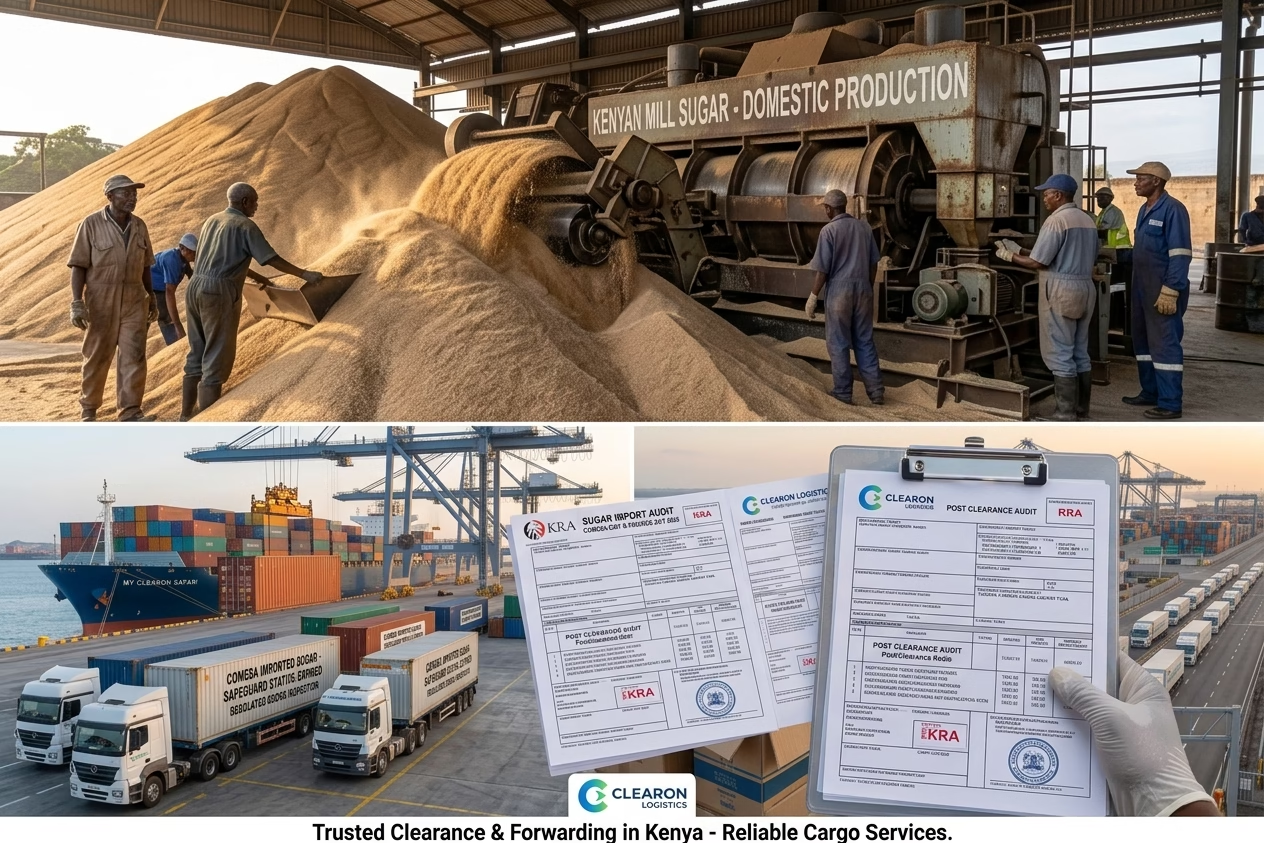
Importing sugar into Kenya currently means navigating a genuinely contradictory policy moment — in one direction, Kenya just ended 24 years of COMESA import protection, opening the door to duty-free regional sugar. In the other, the Finance Act 2026 just raised excise duty on imported sugar by more than 300%. Both things are true simultaneously, and understanding how they interact is essential for anyone actually planning a sugar import right now.
Table of Contents
Why Kenya Imports Sugar at All
Kenya’s domestic sugar production has historically fallen short of national consumption — production figures cited around 600,000 tonnes annually against consumption closer to 870,000 tonnes, leaving a structural deficit that’s been bridged through controlled imports for decades. This gap is central to why sugar has remained one of Kenya’s most politically sensitive import categories: it directly affects the cost of a genuine household staple, while import policy simultaneously shapes the livelihoods of Kenyan cane farmers and the viability of domestic sugar millers.
The End of 24 Years of COMESA Protection
This is a significant recent shift: Kenya formally exited the COMESA Sugar Safeguard regime on 30 November 2025, ending 24 years of import quotas that had capped how much sugar COMESA countries could sell into the Kenyan market. First applied for in 2001 under Article 61 of the COMESA Treaty, the safeguard was extended repeatedly — seven times by some counts — as a temporary protection measure to give Kenya’s sugar sector time to restructure and improve competitiveness. The Kenya Sugar Board framed its expiry as the “completion of a reform cycle,” reflecting government confidence that the sector is now better positioned to compete without quota protection. Under the new arrangement, there’s officially no limit on duty-free sugar imports from COMESA countries.
The practical effect was immediate and visible: retail sugar prices recorded their sharpest month-on-month drop in nearly two years in February 2026, following the market’s opening to cheaper regional supplies.
But Kenya Still Controls Volume Through Licensing
Here’s the nuance the headline “Kenya ends sugar protection” misses: even after exiting the formal COMESA safeguard, the US Foreign Agricultural Service has noted that Kenya still regulates import volumes through a licensing system, even though imports are no longer subject to formal quotas. In practice, this means the market has genuinely liberalised in terms of duty treatment, but the government retains meaningful administrative control over who can actually bring sugar in and how much — a materially different situation from a fully open, licence-free import market.
The Finance Act 2026 Excise Duty Shock
This is where the policy picture gets genuinely contradictory. Just months after ending the COMESA safeguard, Kenya’s Finance Act 2026 raised excise duty on imported sugar from KSh 7,500 per tonne to KSh 40,000 per tonne — an increase of more than 300%. Kenyan authorities have framed this specifically as necessary to protect local producers and reduce import dependence, even as the COMESA safeguard exit was simultaneously opening the market to more regional competition. Neighbouring countries and regional exporters have pushed back, arguing the sharply higher levy significantly increases the cost of accessing one of East Africa’s largest sugar markets — reigniting exactly the kind of regional trade tension the COMESA safeguard exit was meant to help move past.
For an importer, the net effect is genuinely important to understand: duty-free COMESA access doesn’t mean duty-free overall, since the new, considerably higher excise duty applies on top of the tariff treatment, regardless of origin.
The Industrial Sugar Waiver Window
Separately from the general consumer sugar market, Kenya has been running an EAC-approved duty waiver window for industrial sugar, valid through 30 June 2026, under which ten specifically authorised beverage and confectionery firms can import up to 208,600 tonnes at a reduced 10% duty rate. This is a narrow, sector-specific arrangement — relevant only to businesses using sugar as a manufacturing input rather than general importers or retailers — and it’s worth confirming whether this window has been renewed or altered beyond its stated expiry if you’re operating in this specific industrial category.
Sugar From Outside COMESA and the EAC
For sugar sourced from outside both COMESA and the EAC, the picture is considerably less favourable: a 100% tariff applies, unless the Kenyan government specifically requests and receives a waiver under the EAC customs protocol due to a documented local shortage. This waiver process isn’t something an individual importer can simply apply for — it operates at the government-to-government level, based on Kenya’s own assessed production deficit, meaning non-regional sugar sourcing generally isn’t a viable path for typical commercial importers outside of these officially sanctioned windows.
Making Sense of a Genuinely Moving Target
Sugar import policy in Kenya has shifted more in the past year than in the previous decade — a landmark COMESA liberalisation followed almost immediately by a sharp domestic excise increase, layered on top of a licensing system that never fully disappeared and a narrow industrial waiver window with its own separate rules. This is a category where “current policy” genuinely means checking status close to your specific shipment date, not relying on even recent reporting as a stable baseline.
At Clearon Logistics, we track exactly this kind of fast-moving, politically significant trade category, helping sugar importers understand the current interplay between COMESA access, licensing requirements, and excise duty treatment before committing to an import plan.
Importing sugar into Kenya, whether for retail or industrial use? Talk to Clearon Logistics to confirm current licensing, duty, and excise treatment before you order.
Frequently Asked Questions
Is sugar from COMESA countries completely duty-free in Kenya now? Import duty specifically, yes, following Kenya’s exit from the COMESA Sugar Safeguard in November 2025 — but the new, significantly higher excise duty introduced under the Finance Act 2026 still applies regardless of origin.
Can any importer bring in unlimited COMESA sugar now that the safeguard has ended? Not entirely — while the formal duty quota system has ended, Kenya still regulates import volumes through a licensing system, according to US Foreign Agricultural Service reporting.
What tariff applies to sugar from outside COMESA and the EAC? A 100% tariff applies, unless the Kenyan government specifically secures a waiver under the EAC customs protocol due to a documented domestic shortage — this isn’t something an individual importer can apply for directly.
Does the industrial sugar waiver window apply to general sugar importers? No — it’s a narrow arrangement specifically for ten authorised beverage and confectionery manufacturers using sugar as an industrial input, with its own separate quota and reduced duty rate, distinct from general consumer sugar imports.
Further Reading
- Kenya Sugar Board (external, dofollow)
- COMESA — Common Market for Eastern and Southern Africa (external, dofollow)
- Related on our blog: COMESA and EAC Preferential Tariffs in Kenya
- Related on our blog: Kenya’s 2026 Import Compliance Overhaul: Every Change in One Place
- Our service: Clearing and Forwarding Services in Kenya


Leave a Reply