
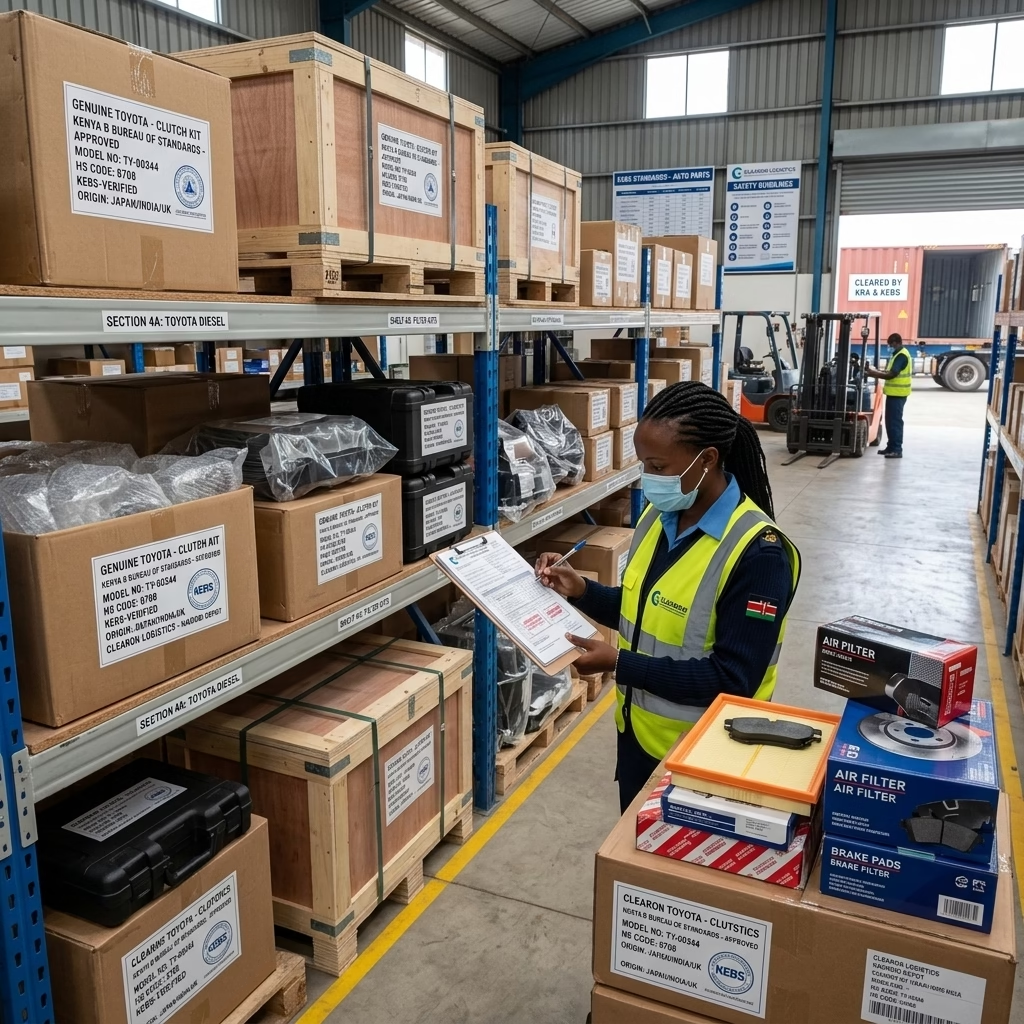
Importing used vehicle spare parts into Kenya sits in genuinely contested regulatory territory — a policy that’s been announced, clarified, disputed, and re-clarified by KEBS itself over several years, to the point where even industry participants have disagreed publicly about what’s actually banned. If you’re in this trade, this is one category where confirming the current position directly, rather than relying on any single news report, matters more than usual.
Table of Contents
The Core Policy: 17 Categories Restricted Since 2018
KEBS’s underlying policy, communicated to pre-shipment cargo inspectors and dating to a standard implementation that began in March 2018, names 17 specific categories of vehicle spare parts that are meant to be imported only in new condition, not used: tyres, tie-rod ends, bearings, spark plugs, clutch plates, brake pads, tubes, brake hose pipes, rubber bushes, filters, pressure plates, rack ends, ball joints, and brake and clutch cables, among others. According to KEBS’s own public statements, this restriction was explicitly framed as applying only to used parts, with new spare parts in the same categories facing no import barrier at all.
Where the Confusion Comes From
This is where the picture genuinely muddies, and it’s worth knowing before you assume either version is definitively correct. At different points, KEBS officials have given noticeably different public explanations of the same policy — one framing describing an outright restriction on importing these 17 categories used, full stop; another, later clarification specifically stating that KEBS had not banned all used spare parts, but only those imported in “loose form” — meaning improperly packaged, rather than banned based on used condition alone. Given that even KEBS’s own spokespeople have offered materially different explanations of the same underlying policy at different times, this is a case where relying on any single article — including general summaries of the rule — carries real risk of working from an outdated or incomplete picture.
The Underlying Goal: Phasing Out Used Vehicles
Whatever the precise current scope, the policy direction is consistent with Kenya’s broader automotive strategy: reducing the country’s dependence on used vehicles and used parts to build demand for local vehicle assembly. This connects directly to the same policy logic behind the 8-year age rule on used vehicle imports — government officials have explicitly linked the dominance of used vehicles in the Kenyan market to weak justification for domestic auto manufacturing investment, and the National Automotive Bill (NAB 2025), still being refined as of early 2026, reflects a continuing government push in this same direction across vehicles and parts alike.
New Parts Are Not Affected
Regardless of which version of the used-parts restriction currently applies, every account of this policy agrees on one point: importing new spare parts in these same categories faces no restriction. If you’re sourcing genuinely new stock — properly packaged, not used or reconditioned — this policy area isn’t a barrier to your business at all, which is worth confirming clearly with your supplier if there’s any ambiguity about a part’s actual condition or history.
The Scale of the Trade at Stake
This isn’t a small or marginal trade category. Kenyans have historically spent tens of billions of shillings annually on imported vehicle spares, much of it used stock sourced from Japan, Europe, and the UAE, supporting tens of thousands of informal dealers and their employees, largely concentrated in industrial-area stalls in cities like Nairobi. This scale is exactly why the policy has generated such public pushback and, arguably, why official messaging around it has shifted and been re-clarified more than once — a policy this economically significant to a large informal trading community tends to attract sustained scrutiny and negotiation.
What This Means Practically Right Now
Given the genuinely mixed and evolving messaging history on this specific policy:
- Don’t rely on a single source, including this article, for a final answer on current enforcement scope — confirm directly with KEBS or a clearing agent actively tracking this category
- If sourcing used parts, ask specifically whether the restriction currently in force is based on condition (used vs new) or packaging (loose vs properly packaged), since these are materially different requirements with different practical fixes
- Consider whether new parts meet your business need, since this side of the trade faces no ambiguity at all
- Watch the National Automotive Bill’s progress, since broader automotive policy reform could reshape this specific rule alongside related vehicle import requirements
Navigating a Policy Still Finding Its Final Shape
Few categories on our blog have this much genuine public confusion baked into their regulatory history — not because the underlying goal is unclear, but because official clarifications have moved the specifics more than once. This is exactly the kind of situation where a clearing agent actively tracking KEBS’s current guidance, rather than a general understanding from a past news cycle, adds real value.
At Clearon Logistics, we track exactly this kind of contested, evolving policy closely, and help vehicle parts importers confirm current KEBS guidance for their specific product category before committing to a shipment — so you’re working from today’s actual position, not a headline from several years ago.
Importing vehicle spare parts into Kenya and unsure of the current used-parts policy? Talk to Clearon Logistics to confirm the current position before you order.
Frequently Asked Questions
Are all used vehicle spare parts banned from import into Kenya? The policy history here is genuinely mixed — KEBS has at different points described the restriction as applying broadly to 17 named categories in used condition, and separately clarified it applies specifically to parts imported in improperly packaged (“loose”) form. Confirming the current position directly is essential given this history.
Does this restriction affect new vehicle spare parts? No — every account of this policy agrees new spare parts in the same categories face no import restriction, regardless of the current scope of the used-parts rule.
Why has KEBS given different explanations of this policy over time? The trade affects tens of thousands of informal dealers and represents a genuinely large import category, which has likely contributed to sustained public and industry pushback prompting repeated clarification and, at times, apparent contradiction in official messaging.
Is this policy connected to Kenya’s used vehicle age rules? Yes — both reflect the same broader government strategy of reducing dependence on used vehicles and parts to build demand for local vehicle assembly, reinforced by the still-developing National Automotive Bill.
Further Reading
- Kenya Bureau of Standards (KEBS) (external, dofollow)
- Kenya Association of Manufacturers (external, dofollow)
- Related on our blog: Importing a Used Car to Kenya: The 8-Year Rule Explained
- Related on our blog: Importing Used Machinery into Kenya: 4 Facts You Need to Verify
- Our service: Clearing and Forwarding Services in Kenya







Leave a Reply