
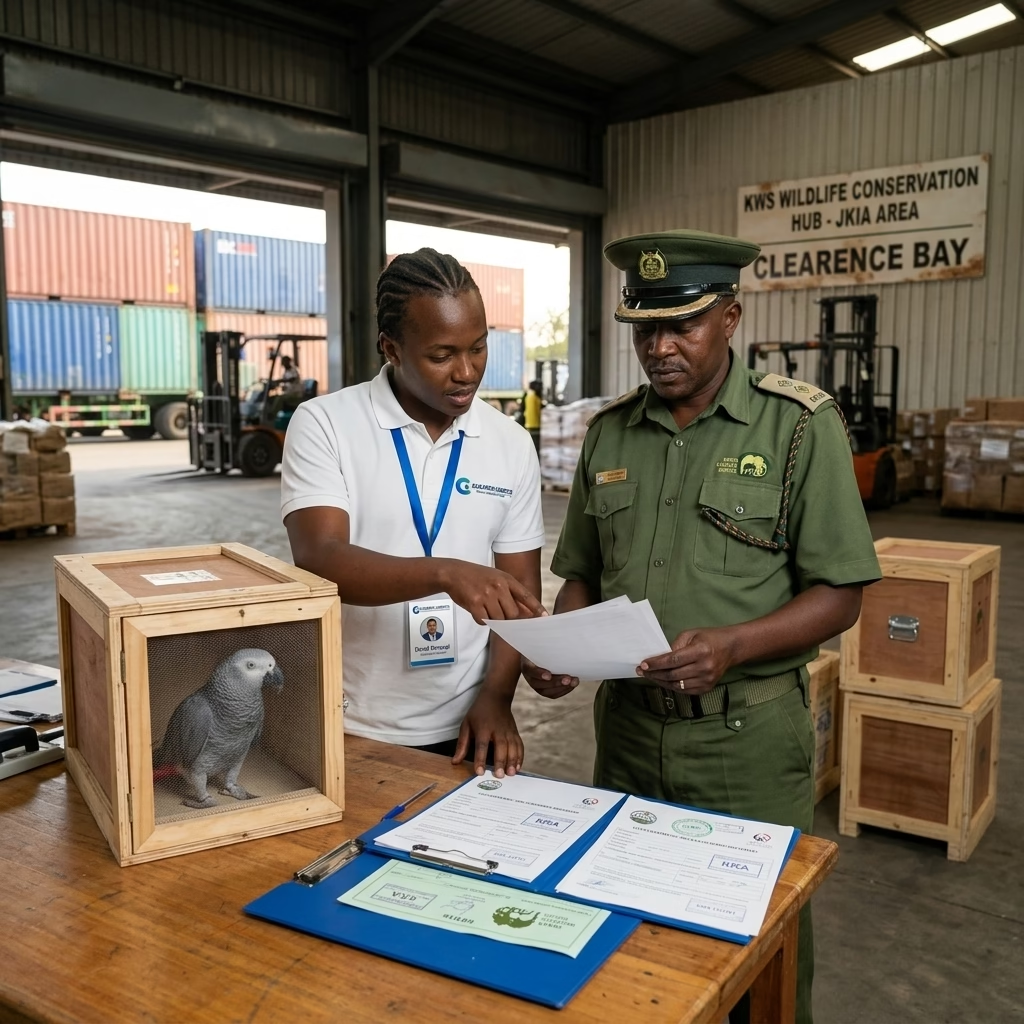
Importing or exporting wildlife specimens in Kenya runs through a regulatory framework unlike anything else covered on our blog — not KRA, not KEBS, but the Kenya Wildlife Service (KWS), operating under both Kenyan law and an international treaty most other trade categories never touch: the Convention on International Trade in Endangered Species (CITES). If your goods involve any wildlife specimen — a hunting trophy, a scientific research sample, a live animal, or even certain plant products — this is the framework that governs whether it can legally cross Kenya’s border at all.
Table of Contents
What Counts as a “Wildlife Specimen”
CITES, and Kenya’s own domestic framework implementing it, cover a considerably broader category than the word “wildlife” might initially suggest — live animals, hunting trophies, biological research samples, and readily recognisable parts, products, or derivatives of listed species, including many plant species, not just animals. This means the framework can apply to categories that don’t immediately register as “wildlife trade” to someone outside the sector — certain traditional medicine ingredients, specific timber species, or scientific specimens intended for research all potentially fall within scope, depending on the specific species involved.
The Legal Foundation: Domestic Law and International Treaty, Together
Every KWS permit application — whether for import, export, or re-export — is processed against two layers simultaneously: Kenya’s own Wildlife (Conservation and Management) Act, and, where applicable, CITES itself, the international agreement between governments specifically designed to ensure international trade in wild animal and plant specimens doesn’t threaten species survival. This dual-layer review is why wildlife specimen permitting tends to involve more scrutiny and take longer than a typical customs or product-standards process — your application isn’t just being checked against Kenyan domestic rules, but against Kenya’s international treaty obligations as a CITES signatory state.
The 21-Day Rule
This is a specific, practical timing requirement worth building into any plan involving wildlife specimen movement: applications for both import and re-export permits must be submitted at least 21 days prior to the intended date of importation or re-exportation. This isn’t a suggested buffer — it’s the stated minimum processing window, and given how involved the underlying review can be (covered below), treating 21 days as an absolute floor rather than a comfortable planning margin is the safer approach.
Why Applications Can Involve More Than One Review
KWS’s Regulatory, Enforcement and Compliance Affairs Department holds overall responsibility for administering and coordinating all wildlife and wildlife-product transactions, but depending on the specific nature of an application, it can be directed to the Scientific Authority — both within KWS and, where relevant, external scientific bodies — for inspection, investigation, consultation, and recommendation before a decision is made. Applications frequently involve a field inspection by KWS officers and the Scientific Authority together, meaning this isn’t a purely desk-based document review process for many applications — physical verification of the specimen and the circumstances of its origin can be part of the approval sequence.
Import, Export, and Re-Export Are Three Separate Permits
This is worth understanding clearly, since these aren’t interchangeable: an import permit covers specimens entering Kenya, an export permit covers specimens leaving Kenya that originated there, and a re-export permit covers specimens leaving Kenya that were themselves previously imported from elsewhere — each with its own application process and its own review against the Wildlife Act and CITES. It is explicitly illegal to import or re-export a wildlife specimen from or through Kenya without the corresponding KWS-issued permit — there’s no informal pathway or exemption based on the specimen’s apparent value or intended use.
Why This Matters Even If You Don’t Think of Your Goods as “Wildlife”
Given how broadly “wildlife specimen” is defined under this framework, it’s worth a deliberate check if your business involves any product with an animal or plant origin that isn’t obviously a standard agricultural commodity — certain leather goods, traditional or alternative medicine ingredients, decorative items incorporating animal parts, specific timber or plant-derived products, or scientific and research materials. A product that seems purely commercial on the surface can still fall under CITES scope if the underlying species is listed, regardless of how far removed the finished product feels from its biological origin.
Planning Around a Genuinely International Framework
Because wildlife specimen trade sits at the intersection of Kenyan domestic law and an international conservation treaty, this is a category where the compliance timeline, documentation depth, and review process are all more involved than most standard import or export categories — and the 21-day minimum application window makes early planning essential rather than optional.
At Clearon Logistics, while KWS permit applications themselves require direct engagement with the Kenya Wildlife Service and its Scientific Authority, we help coordinate the customs and logistics side of shipments involving wildlife specimens once the underlying CITES and KWS authorisation is in place.
Involved in the import, export, or re-export of a wildlife specimen through Kenya? Talk to Clearon Logistics about coordinating the logistics alongside your KWS permit process.
Frequently Asked Questions
How far in advance do I need to apply for a KWS wildlife import or re-export permit? At least 21 days before your intended import or re-export date — this is a stated minimum, not a comfortable buffer, given how involved the underlying review process can be.
Does a KWS wildlife permit application always involve a physical inspection? Often, yes — many applications involve field inspection by KWS officers and the Scientific Authority together, in addition to document review, particularly depending on the nature and species involved.
Are import, export, and re-export permits the same thing? No — they’re three separate permit categories, each covering a different movement scenario (specimens entering Kenya, specimens leaving Kenya that originated there, and specimens leaving Kenya that were previously imported), each requiring its own application.
Could my product fall under CITES even if it doesn’t look like “wildlife”? Potentially, yes — the framework covers readily recognisable parts, products, and derivatives of listed species broadly, which can include certain leather goods, traditional medicine ingredients, or plant-derived products that don’t immediately register as wildlife trade.
Further Reading
- Kenya Wildlife Service (KWS) — Licensing (external, dofollow)
- CITES — Convention on International Trade in Endangered Species (external, dofollow)
- Related on our blog: Importing Live Animals into Kenya: 4 Facts on Pets and Livestock
- Related on our blog: Prohibited and Restricted Goods Kenya: The Essential 2026 Import Checklist
- Our service: Clearing and Forwarding Services in Kenya








Leave a Reply