
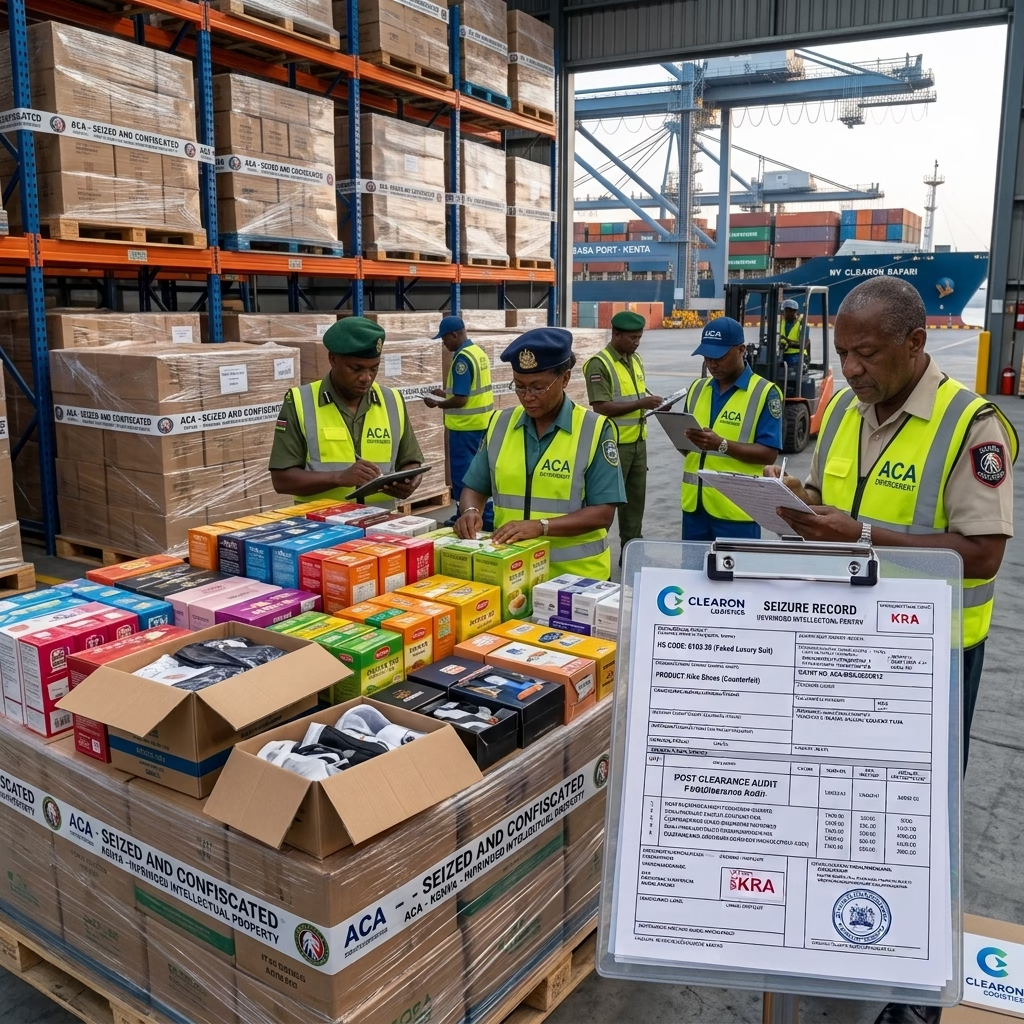
Kenya’s Anti-Counterfeit Authority just had its enforcement powers significantly strengthened by the courts, and its enforcement activity has been genuinely relentless throughout 2026 — counterfeit lubricants seized in Western Kenya, fake Nike sneakers and Casio calculators pulled from Eldoret shops, KSh 7.6 million in counterfeit alcohol confiscated. For legitimate importers, understanding how ACA operates, and specifically how to protect your own brand’s intellectual property through its recordation system, matters considerably more than most import guides suggest.
Table of Contents
What ACA Actually Is
The Anti-Counterfeit Authority was established under the Anti-Counterfeit Act No. 13 of 2008, operating under the Ministry of Investments, Trade, and Industry, with a distinct and focused mandate: to prohibit, prevent, and combat the manufacturing, importation, and distribution of counterfeit goods within Kenya. Unlike general regulatory bodies, ACA inspectors carry statutory powers closer to traditional law enforcement — including the authority to enter and search premises, vessels, or vehicles without a warrant under reasonable suspicion, seize suspected counterfeit goods, and arrest suspects.
The Court Ruling That Just Strengthened ACA’s Powers
This is genuinely fresh: on 28 July 2026, Kenya’s Court of Appeal delivered a landmark judgment reinforcing ACA’s authority, ruling that the agency can lawfully search business premises, seize suspected counterfeit goods, and arrest suspects without automatically infringing constitutional rights, provided officers act within the law. The ruling specifically overturned an earlier High Court decision that had awarded a trader KSh 500,000 in damages after an ACA raid confiscated goods and led to an arrest before formal charges were filed. For businesses navigating potential ACA scrutiny, this ruling meaningfully raises the bar for successfully challenging an enforcement action after the fact, provided ACA’s officers followed proper procedure during it.
IPR Recordation: The System Every Brand Owner Should Know
This is the mechanism most importers — even legitimate ones — have never heard of, and it works in both directions. Intellectual Property Rights (IPR) Recordation is the process by which rights holders enter their registered IPRs, regardless of where those rights were originally registered, into ACA’s electronic database, known as AIMS (ACA Integrated IPR Management System). Once recorded, this database allows ACA officials to verify whether an imported product genuinely belongs to a legitimate rights holder before it enters the Kenyan market at all — shifting enforcement toward prevention at the border, rather than chasing counterfeit goods once they’re already circulating domestically.
Critically, under the Anti-Counterfeit Act, it is an offence to import goods that have not been recorded with ACA, and importers are specifically required to declare the intellectual property rights attached to goods they’re bringing into Kenya. Kenya was the fourth African country to adopt this recordation approach, following South Africa, Algeria, and Mauritius — a practice internationally recognised as effective, also used in the US, China, Japan, the UAE, and UK.
Why 80% of the Problem Is Imports, Not Local Manufacturing
ACA’s own analysis of seized counterfeit products over the years found that 80% of IP-infringing products were imported into Kenya, with only 20% locally manufactured — a finding that directly shaped the Authority’s strategic shift toward targeting the importation stage specifically, rather than concentrating primarily on domestic market sweeps. This matters for two audiences simultaneously: genuine brand owners have real incentive to record their IPRs and help ACA intercept counterfeit versions of their products at entry, while legitimate importers of authentic goods need to be able to clearly demonstrate their supply chain’s legitimacy, given how much enforcement attention is now focused on the import stage.
What This Means If You’re a Legitimate Importer
- If you own a brand being counterfeited, IPR recordation with ACA is one of the most effective tools available to intercept fakes before they ever reach Kenyan shelves, rather than relying solely on after-the-fact market enforcement
- If you’re importing genuine, authorised stock, maintaining clear documentation of your supply chain’s legitimacy — authorised distributor agreements, genuine invoices, verifiable sourcing — protects you if a shipment is ever flagged for inspection, since ACA’s enforcement activity spans an enormous range of categories, from lubricants and alcohol to electronics, footwear, and cooking oil
- If you’re a distributor or retailer, ACA’s enforcement doesn’t stop at the border — market sweeps of shops and premises are a continuing, active enforcement pattern throughout 2026, meaning downstream sellers of counterfeit stock face real seizure risk even after goods have cleared customs
The Multi-Agency Enforcement Ecosystem
ACA doesn’t operate in isolation — its Executive Director has publicly confirmed close collaboration with the National Police Service, KEBS, and KRA, alongside international partners including Interpol, specifically to counter counterfeiting at the source and reduce the resources spent chasing already-imported counterfeit goods domestically. This means a counterfeit-goods issue can surface through multiple enforcement channels simultaneously — a KEBS inspection, a KRA customs flag, or a direct ACA operation — rather than being confined to a single agency’s oversight.
Protecting Your Business in a Genuinely Active Enforcement Environment
Whether you’re protecting your own brand from counterfeiters or simply importing legitimate goods that could be mistaken for counterfeit without clear documentation, ACA’s current enforcement posture — now backed by a stronger legal mandate following the July 2026 ruling — makes this a genuinely important compliance area to understand, not a background regulatory detail.
At Clearon Logistics, we help importers maintain the kind of clear supply chain documentation that protects legitimate goods from enforcement complications, and can advise brand owners on how IPR recordation with ACA fits into a broader import compliance strategy.
Concerned about counterfeit risk in your supply chain, or want to understand ACA’s IPR recordation system for your brand? Talk to Clearon Logistics about protecting your imports.
Frequently Asked Questions
Can ACA search my business premises without a warrant? Yes — under the Anti-Counterfeit Act, ACA officers have statutory authority to enter and search premises, vessels, or vehicles without a warrant under reasonable suspicion, and a July 2026 Court of Appeal ruling reinforced this power provided officers act within the law.
What is IPR Recordation and do I need it as a brand owner? It’s the process of registering your intellectual property rights in ACA’s electronic database (AIMS), allowing customs to verify legitimate products before counterfeit versions enter Kenya. It’s a genuinely effective tool for brand owners facing counterfeiting of their products in the Kenyan market.
Is it illegal to import goods without recording their IP rights with ACA? Yes — under the Anti-Counterfeit Act, importing goods that haven’t been recorded with ACA is itself an offence, and importers are required to declare the intellectual property rights of goods they bring into Kenya.
Why does ACA focus so much enforcement on imports specifically? ACA’s own analysis found 80% of seized counterfeit products were imported rather than locally manufactured, prompting a strategic shift toward intercepting counterfeit goods at the point of entry rather than relying primarily on domestic market sweeps.
Further Reading
- Anti-Counterfeit Authority (ACA) Kenya (external, dofollow)
- Anti-Counterfeit Act No. 13 of 2008 (external, dofollow)
- Related on our blog: Prohibited and Restricted Goods Kenya: The Essential 2026 Import Checklist
- Related on our blog: Certificate of Origin Kenya Imports: Urgent 2026 Rule Change
- Our service: Clearing and Forwarding Services in Kenya











Leave a Reply