
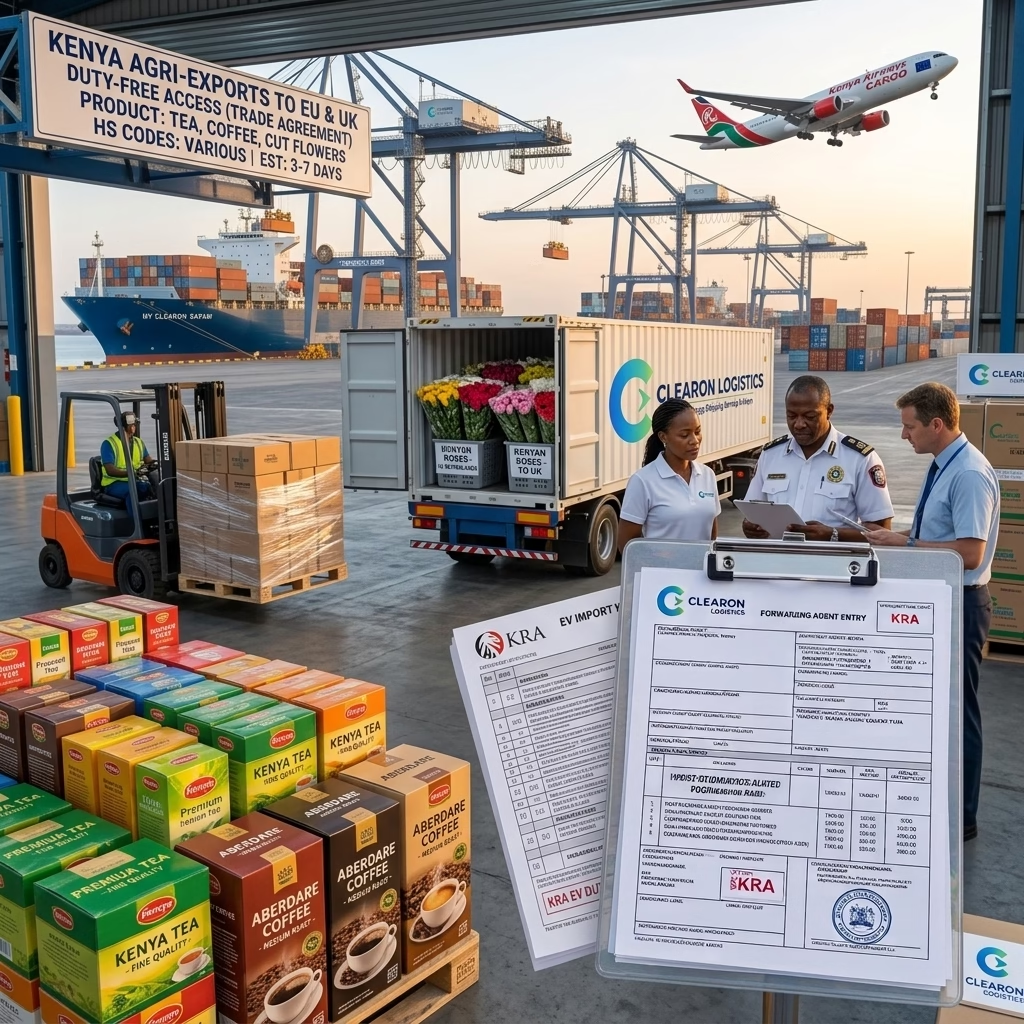
Kenya’s trade agreements with the EU and UK operate on a genuinely lopsided basis, and understanding that asymmetry is the key to using them well. Both Economic Partnership Agreements (EPAs) give Kenyan exports immediate, duty-free, quota-free access to European and British markets — while Kenya itself only gradually opens its own market to European and British goods, over a schedule stretching decades, not months.
Table of Contents
The EU-Kenya EPA: What Took Effect in 2024
The Economic Partnership Agreement between the EU and Kenya entered into force on 1 July 2024. Under its terms, the EU grants Kenya immediate and permanent duty-free, quota-free access for all products except arms and ammunition — a significant, unconditional benefit for Kenyan exporters of tea, coffee, cut flowers, fresh produce, and other goods that make up the bulk of EU-bound trade. In exchange, Kenya commits to progressively liberalising its own tariffs on EU imports over a schedule of up to 25 years, with the ability to permanently exclude certain sensitive categories — including specific agricultural products, wines and spirits, chemicals, plastics, wood and paper products, textiles and clothing, footwear, ceramics, glassware, and vehicles — from liberalisation entirely.
After full implementation, roughly 82.6% of Kenya’s imports from the EU are expected to be liberalised, with the remainder staying protected under the sensitive-goods carve-out.
The UK-Kenya EPA: A Separate but Related Agreement
Following Brexit, the UK negotiated its own bilateral EPA with Kenya, since the EU-EAC agreement no longer applied to UK trade once the UK left the bloc. The UK-Kenya EPA closely mirrors the terms of the EU-EAC arrangement, largely to avoid disrupting a trading relationship Kenya had already built around the EU version. Under it, the UK provides immediate duty-free, quota-free access to Kenyan goods, while Kenya progressively reduces tariffs on UK goods over a phased schedule ranging from roughly seven to twenty-five years, depending on the specific product category. Kenya remains, notably, the only EAC partner state to have signed and ratified the UK EPA.
Why the Asymmetry Exists
This isn’t an oversight — it’s a deliberate design feature of EPAs generally, intended to support development in the lower-income trading partner. The idea is straightforward: Kenyan producers get immediate, unconditional access to two of the world’s largest consumer markets, while Kenyan industries get a long runway to adjust to increased competition from European and British imports before full liberalisation takes effect. For Kenyan exporters, this structure is unambiguously favourable. For Kenyan businesses competing with EU or UK imports domestically, it means the protective tariff structure they’re used to will gradually erode over the coming decades.
What Kenyan Exporters Should Actually Do
- Confirm your product qualifies under the applicable Rules of Origin — preferential access isn’t automatic; it requires proof that your goods genuinely originate in Kenya under the agreement’s specific criteria, similar in principle to the Certificate of Origin requirements that apply more broadly to Kenyan exports
- Use the correct proof of origin document for your specific market — EU-bound goods and UK-bound goods may require different origin documentation, since the agreements, while similar, aren’t identical
- Don’t assume duty-free access is automatic just because a trade deal exists — the paperwork still needs to be right, or your buyer ends up paying standard tariffs anyway, the same risk that applies to COMESA and EAC preferential tariffs
What This Means for Importers Bringing in EU or UK Goods
If you’re importing machinery, electronics, technical equipment, pharmaceuticals, or other goods from the EU or UK, it’s worth checking where your specific product category sits on Kenya’s liberalisation schedule. Some goods may already be benefiting from reduced tariffs under the phased implementation; others — particularly in the sensitive categories like vehicles, textiles, and certain chemicals — may remain at standard rates for years yet. This is a case where “the trade agreement covers it” isn’t automatically true for every product, and confirming your specific category’s current tariff status avoids budgeting on an assumption that turns out to be wrong.
The Kenya-EAC Tension Worth Knowing About
An underappreciated wrinkle: Kenya is currently the only EAC partner state to have ratified the UK EPA, and progressively eliminating Kenyan tariffs on UK goods under the agreement has potential implications for the EAC’s shared Common External Tariff and regional trade coherence more broadly. If your business operates across EAC borders, not just within Kenya, this is a dynamic worth being aware of, since it touches on broader questions about how individual EAC member states’ bilateral trade deals interact with the bloc’s collective tariff structure.
Using These Agreements Well
The EU and UK EPAs represent genuine, valuable market access for Kenyan exporters — but genuine value only gets realised when the origin documentation and product classification are handled correctly. An exporter who assumes duty-free access without confirming Rules of Origin compliance is leaving the actual benefit of the agreement on the table.
At Clearon Logistics, we help Kenyan exporters confirm origin qualification and prepare the correct documentation for EU- and UK-bound shipments, and help importers understand where their specific product sits on Kenya’s tariff liberalisation schedule — so preferential trade agreements translate into real savings, not just theoretical ones.
Exporting to the EU or UK, or importing goods from either market? Talk to Clearon Logistics to confirm how these agreements apply to your specific goods.
Frequently Asked Questions
Do Kenyan exports automatically get duty-free access to the EU and UK? Access is duty-free and quota-free under both agreements, but it’s not automatic in practice — exporters need to meet the applicable Rules of Origin and provide correct proof of origin documentation for their shipment.
Are the EU-Kenya and UK-Kenya agreements the same? They’re closely related — the UK-Kenya EPA largely mirrors the EU-EAC agreement’s structure — but they’re separate agreements with their own specific documentation requirements and implementation timelines.
How long does Kenya have to fully open its market to EU and UK goods? Up to 25 years for EU goods, and roughly 7 to 25 years depending on product category for UK goods, with certain sensitive categories permanently excludable from liberalisation.
Is Kenya the only East African country with these agreements? For the UK EPA specifically, yes — Kenya is currently the only EAC partner state to have signed and ratified it, which has raised questions about regional tariff coherence within the EAC bloc.
Further Reading
- European Commission — EU-Kenya Economic Partnership Agreement (external, dofollow)
- UK Government — Summary of the UK-Kenya Economic Partnership Agreement (external, dofollow)
- Related on our blog: COMESA and EAC Preferential Tariffs in Kenya
- Related on our blog: Exporting from Kenya: The Documents You Need Before Your Cargo Leaves
- Our service: International Freight (Air & Sea)


Leave a Reply