Letters of credit for Kenyan importers solve a problem that trips up almost every business sourcing internationally for the first time: how do you pay a supplier you’ve never met, in a country you’ve never visited, without either risking your full payment upfront or asking them to ship on trust alone? A letter of credit is the financial industry’s long-standing answer to exactly this problem, and understanding how it works can be the difference between a smooth transaction and a costly dispute with no real recourse.
Table of Contents
What a Letter of Credit Actually Does
A letter of credit (LC) is a written undertaking issued by a bank, at the request of the importer, guaranteeing payment to the overseas supplier — but only once the supplier presents documents proving they’ve met specific, agreed conditions, typically including proof of shipment. In plain terms: your bank tells the supplier’s bank “we will pay, once you prove you’ve shipped exactly what was agreed.” This protects both sides — the supplier gets a credible payment guarantee before shipping, and you, the importer, only release payment once there’s documented proof the goods are actually on their way.
This matters enormously when you’re dealing with a new supplier, a large order, or a country where legal recourse for a dispute would be difficult and expensive to pursue.
How the Process Works, Step by Step
- You and your supplier agree terms, including that payment will be via letter of credit
- You apply to your bank for the LC, specifying the exact conditions the supplier must meet (shipment deadline, required documents, product specifications)
- Your bank issues the LC to the supplier’s bank, formalising the payment guarantee
- The supplier ships the goods and submits the required documents — typically including the Bill of Lading — to their own bank
- The documents are verified against the LC’s exact terms and forwarded to your bank
- Payment is released to the supplier once the documents match what was agreed, and you become liable to settle with your bank
The precision of step 5 is where LCs earn their reputation for both security and occasional frustration — banks work strictly against the documents presented, meaning even a minor discrepancy between the LC’s terms and the submitted paperwork can delay payment until it’s resolved.
Types of Letters of Credit Worth Knowing
- Irrevocable LC — cannot be changed or cancelled without agreement from all parties, the standard baseline for genuine payment security
- Confirmed LC — a second bank (often in the supplier’s country) adds its own guarantee on top of your bank’s commitment, which resolves not just commercial risk but also political or transfer risk — useful when dealing with suppliers in markets where currency transfer restrictions are a concern
- Revolving LC — automatically renews for repeat orders with the same supplier, useful for an ongoing sourcing relationship rather than a one-off purchase
- Transferable LC — allows the beneficiary to transfer some or all of the credit to a second party, relevant when your supplier is actually a trading intermediary rather than the original manufacturer
- Back-to-back LC — one LC used to support the issuance of a related second LC, common in more complex international trade chains
For most Kenyan importers dealing directly with a manufacturer or established trading company, a standard irrevocable LC covers the core need; the more specialised variants become relevant as your sourcing relationships grow more complex.
Other Trade Finance Tools Beyond the LC
Kenyan banks generally offer a broader suite of trade finance tools alongside letters of credit, worth knowing about even if an LC isn’t the right fit for a specific transaction:
- Documentary collections — a lighter-weight alternative where your bank handles document exchange without a full payment guarantee, generally suited to transactions with an established, trusted supplier relationship
- Bank guarantees — including customs and transit bonds, relevant to the temporary importation and bonded arrangements covered elsewhere on our blog
- Post-import finance facilities — bridging finance that covers the gap between paying your supplier and collecting from your own buyers
- LPO financing — financing against a confirmed purchase order, useful when cash flow is the constraint rather than supplier trust
When an LC Is Worth the Cost — and When It Isn’t
Letters of credit come with real bank fees, and they’re not the right tool for every transaction. They tend to make the most sense when:
- You’re dealing with a new supplier you haven’t built a payment history with
- The order value is significant enough that the fee is worth the security
- You’re sourcing from a market where dispute resolution would be difficult if something went wrong
For smaller, lower-risk orders — particularly with an established supplier relationship, or platforms offering their own buyer protection like Alibaba’s Trade Assurance — the cost and process overhead of a full LC may not be justified, and a documentary collection or even direct payment with appropriate deposit structuring may be more practical.
How This Connects to Your Customs Documentation
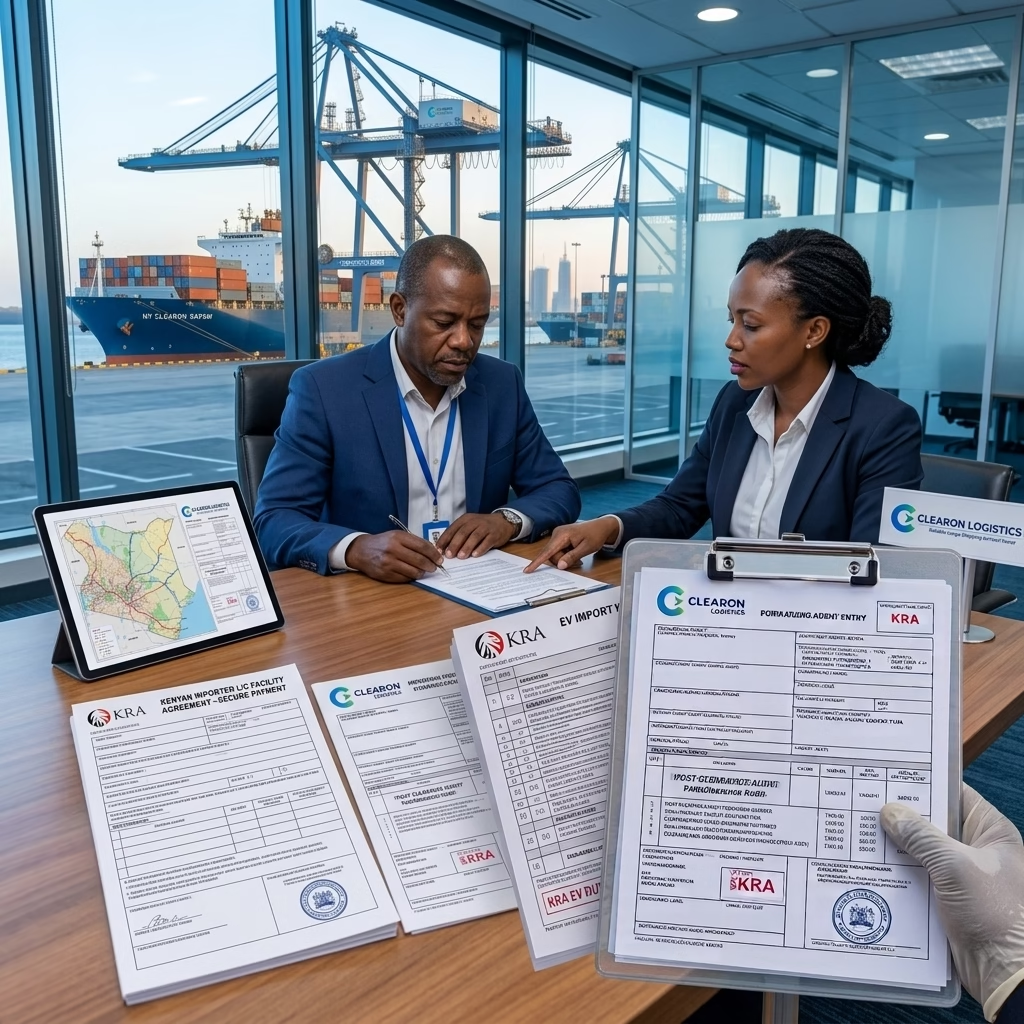
The documents an LC requires — commercial invoice, packing list, Bill of Lading, and increasingly the Certificate of Origin and export declaration document now mandatory for Kenyan imports — overlap substantially with what you need for customs clearance anyway. Coordinating your LC documentation requirements with your clearing agent’s needs from the outset avoids duplicated effort and ensures the paperwork that unlocks your payment also satisfies what KRA expects at the border.
Making Trade Finance Work Alongside Your Import Process
An LC or other trade finance tool protects your payment; it doesn’t replace the need for your goods to actually clear Kenyan customs cleanly. The two processes work best when planned together — knowing what documents your LC requires, and what your clearing agent needs for compliant entry, before your supplier ever ships.
At Clearon Logistics, while the trade finance arrangement itself sits with your bank, we help importers make sure their LC documentation requirements and customs clearance documentation are aligned from the start — so you’re not caught between a bank waiting on one version of a document and KRA expecting another.
Structuring payment for your next overseas order? Talk to Clearon Logistics about aligning your trade finance documentation with your customs clearance requirements.
Frequently Asked Questions
Is a letter of credit necessary for every import transaction? No — LCs make the most sense for new suppliers, significant order values, or markets where dispute resolution is difficult. For smaller or lower-risk orders with an established supplier, documentary collections or platform-based buyer protection may be more practical.
What happens if the documents my supplier submits don’t exactly match the LC terms? Banks work strictly against the presented documents — even minor discrepancies can delay payment release until resolved, which is why precise, clear LC terms agreed upfront matter considerably.
What’s the difference between a confirmed and unconfirmed letter of credit? A confirmed LC has a second bank (often local to the supplier) adding its own payment guarantee, covering political or currency-transfer risk in addition to standard commercial risk — an unconfirmed LC relies solely on the issuing bank’s commitment.
Do the documents required for a letter of credit overlap with customs clearance documents? Significantly, yes — commercial invoice, packing list, Bill of Lading, and Certificate of Origin are typically required for both, making it worth coordinating your LC and customs documentation requirements together.
Further Reading
- International Chamber of Commerce — Trade Finance and Letters of Credit (external, dofollow)
- Central Bank of Kenya — Banking Sector (external, dofollow)
- Related on our blog: Incoterms Explained: How They Affect Your Import Costs and Risk in Kenya
- Related on our blog: Certificate of Origin Kenya Imports: Urgent 2026 Rule Change
- Our service: Clearing and Forwarding Services in Kenya

Leave a Reply