
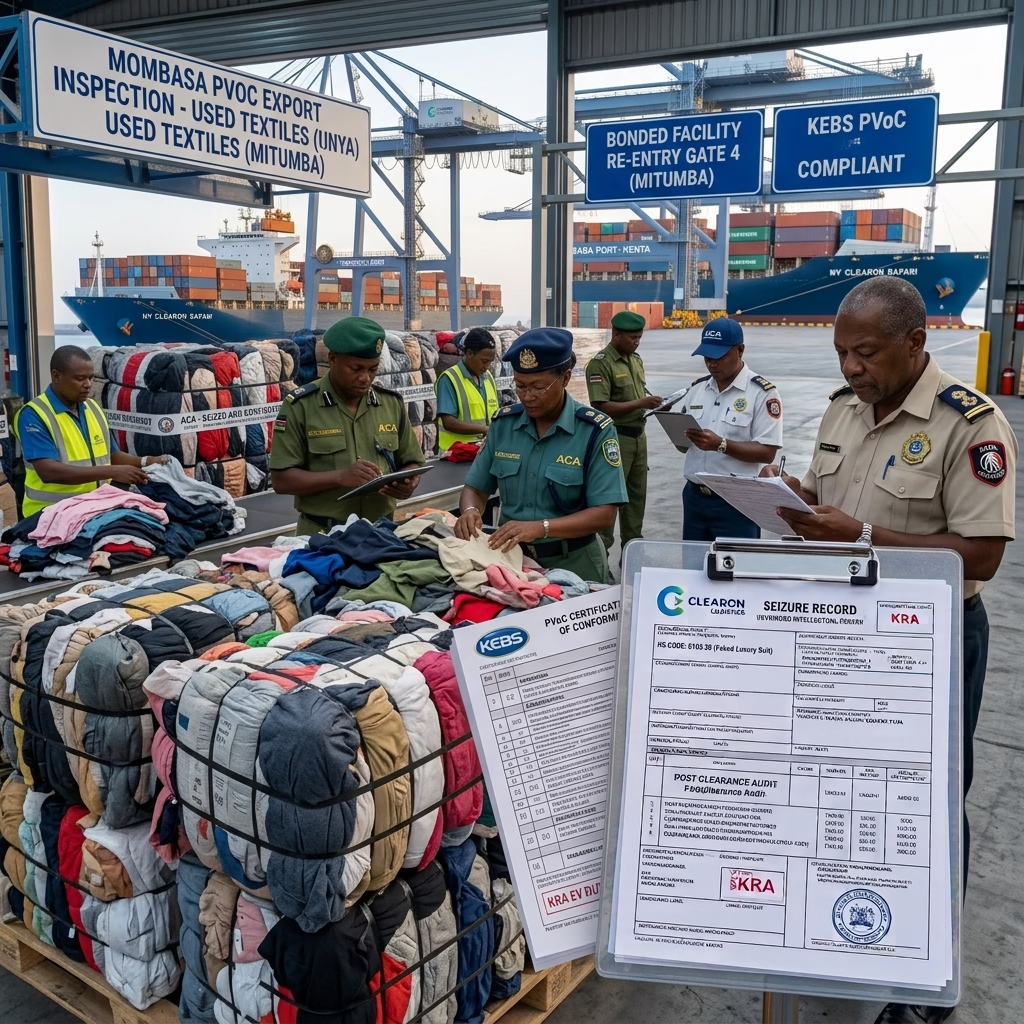
Mitumba PVoC compliance is a layer of regulation that sits entirely separate from the duty and tax questions most people associate with importing second-hand clothing into Kenya. While our earlier guide to mitumba covered current duty rates and the political debate over taxation, this piece covers something different: the actual quality and conformity certification chain that KEBS requires before a bale of used clothing or footwear can legally enter Kenya at all.
Table of Contents
Why Used Textiles Get Their Own PVoC Category
Given the sheer scale of Kenya’s second-hand clothing trade — Africa’s largest importer of mitumba, moving goods worth tens of billions of shillings annually — KEBS treats used textiles and footwear as a distinct category within its broader Pre-Export Verification of Conformity (PVoC) framework, with its own specific manual guidance rather than being folded generically into standard consumer goods PVoC rules. The most recent version of KEBS’s PVoC Manual, dated February 2026, dedicates a specific section entirely to used textiles and footwear — reflecting how significant and closely monitored this trade category has become.
Registration Is Required on Both Ends
This is the detail that distinguishes mitumba compliance from most other product categories: both the importer in Kenya and the baling facility at origin need to be properly registered and accredited for a shipment to clear compliantly.
- Importers of used textiles and used footwear must be registered with KEBS specifically for this trade category, separate from general importer registration
- The exporter’s baling facility must be accredited by the relevant PVoC contractor in the country of origin — the facility where bales are sorted and prepared for export needs its own certification, not just the goods themselves
This dual-sided registration requirement means a compliant mitumba supply chain depends on both your own registration status in Kenya and your specific overseas supplier’s facility accreditation — a gap on either side can compromise the whole shipment’s compliance, regardless of how sound the other side is.
The Specific Standards That Apply
Used textiles and footwear imported into Kenya are assessed against dedicated Kenya Standards, specifically KS EAS 356:2019 and KS 1533:1999 — standards developed specifically for this product category, distinct from the general product standards that apply to new consumer goods. Inspection to confirm compliance with these standards is carried out by the PVoC contractor at the baling facility in the country of origin, before the goods ever ship — the same underlying pre-shipment inspection principle that applies across other regulated categories, but with standards specifically calibrated for used, rather than new, textile and footwear products.
The RFC Requirement
For a used textiles or footwear importer to be accepted into this compliance framework, KEBS requires registration for what the current PVoC Manual refers to as an RFC — issued once KEBS has confirmed the importer’s registration is in order and the corresponding exporter baling facility carries proper PVoC contractor accreditation. This creates a closed-loop verification system: KEBS isn’t simply checking the goods on arrival, but confirming that both the receiving importer and the originating facility are known, registered participants in the compliance framework before the shipment is even inspected.
What Happens Without Proper Accreditation
If either side of this registration chain is missing — an unregistered importer, or a baling facility without proper PVoC contractor accreditation — the shipment doesn’t have a clean path through Kenya’s standard compliance process. Given how the general PVoC framework treats goods arriving without proper certification elsewhere (typically routing to a costly destination inspection, at a penalty equivalent to a meaningful percentage of customs value), the practical risk of skipping registration on either side is a genuinely expensive, slower path to clearance, if the shipment can proceed compliantly at all.
The Waiver Process for Edge Cases
KEBS’s framework also accounts for imports from countries where PVoC contractors simply aren’t present — recognising that mitumba sourcing isn’t always concentrated in markets with established inspection infrastructure. In these cases, importers can apply to KEBS for a waiver, following the criteria set by the Waivers Evaluation Technical Committee (WETC), under provisions in Legal Notice No. 78 of 28th April 2020. This isn’t an automatic exemption — it requires a formal written application demonstrating the specific circumstances justifying the waiver, evaluated against defined committee criteria, rather than simply being unavailable to source from a country without a KEBS-appointed inspection presence.
Getting Mitumba Compliance Right on Both Ends
Because mitumba compliance genuinely depends on registration and accreditation status at both ends of the supply chain, this is a category where verifying your supplier’s baling facility credentials matters just as much as sorting out your own KEBS importer registration — neither side alone is sufficient.
At Clearon Logistics, we help mitumba importers confirm their own KEBS registration status and verify that their sourcing baling facilities carry proper PVoC contractor accreditation, so shipments move through the standard compliance pathway rather than risking a costly destination inspection or waiver application after the fact.
Importing used textiles or footwear into Kenya? Talk to Clearon Logistics to confirm both your registration and your supplier’s baling facility accreditation before your next shipment.
Frequently Asked Questions
Do I need to register with KEBS specifically for mitumba, separate from general importer registration? Yes — importers of used textiles and used footwear need specific registration with KEBS for this category, distinct from standard general importer registration.
Is it enough for my supplier’s baling facility to just be a reputable, established operation? Not for compliance purposes — the baling facility specifically needs accreditation from the relevant PVoC contractor in its country, regardless of the facility’s general reputation or scale.
What standards do used textiles and footwear get inspected against? KS EAS 356:2019 and KS 1533:1999 — Kenya Standards developed specifically for used textile and footwear products, distinct from standards applied to new consumer goods.
What if I’m sourcing mitumba from a country with no PVoC contractor present? You can apply to KEBS for a waiver under Legal Notice No. 78 of 2020, evaluated against Waivers Evaluation Technical Committee criteria — this requires a formal application, not an automatic exemption.
Further Reading
- Kenya Bureau of Standards (KEBS) — PVoC Programme (external, dofollow)
- Mitumba Consortium Association of Kenya (MCAK) (external, dofollow)
- Related on our blog: Importing Mitumba into Kenya: 4 Urgent Facts on Rules and Tax Changes
- Related on our blog: What Happens If You Ship Goods to Kenya Without a Certificate of Conformity?
- Our service: Clearing and Forwarding Services in Kenya






Leave a Reply