
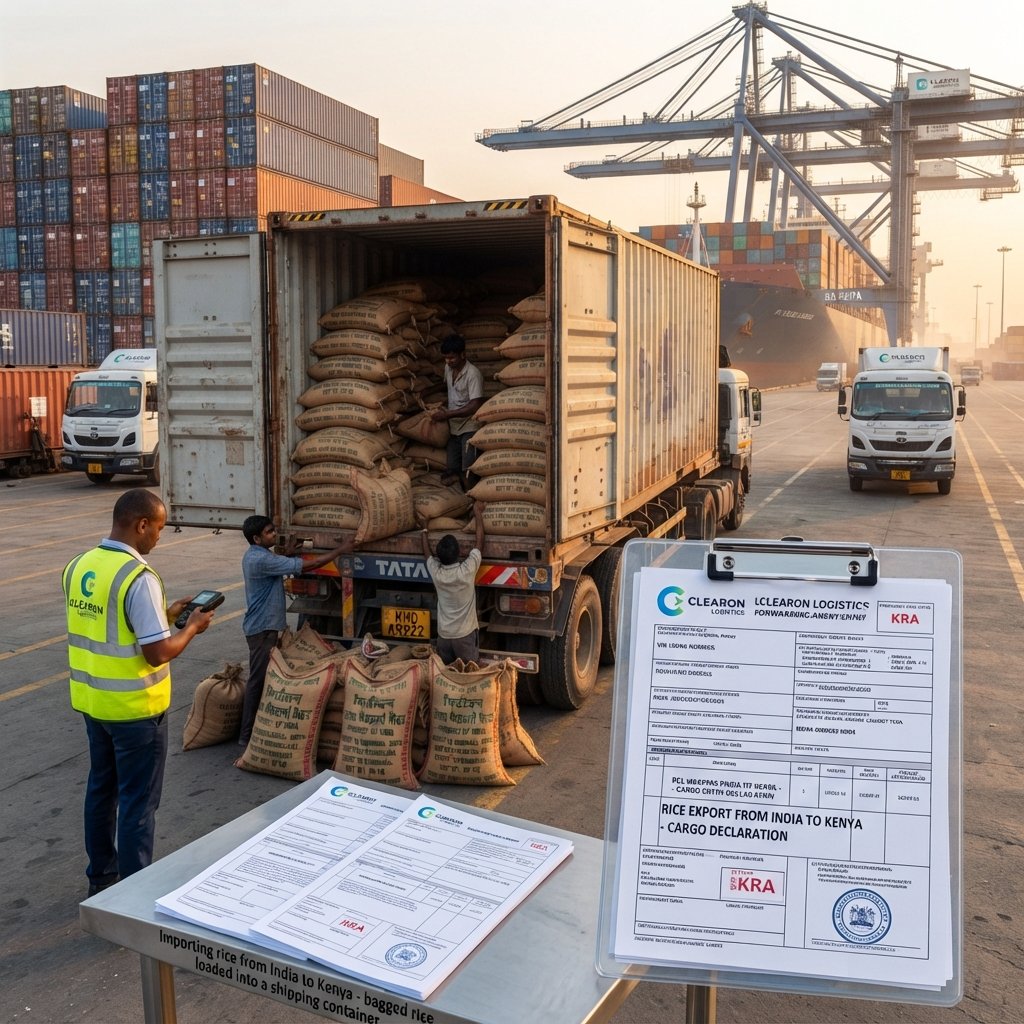
Importing rice from India to Kenya can look simple: buy bagged rice, book a container, clear at Mombasa. In practice the cost swings on duty rules that have changed repeatedly, and a missed document can leave a container sitting in the port or CFS while storage charges build. This guide covers what to check before you commit to an order. We handle FCL, LCL and air freight from India, including Nhava Sheva, Mundra, Mumbai and other ports, on EXW and FOB terms.
Table of Contents
Importing Rice from India to Kenya: The Duty Position
The standard EAC Common External Tariff on rice is 75% or US$345 per tonne, whichever is higher. Kenya has been allowed to apply a lower rate: 35% or US$200 per tonne, whichever is higher. The most recent EAC Gazette, published on 30 June 2026, renewed this stay of application for one year.
On top of duty, the usual Kenyan charges apply: IDF at 2.5% of CIF, RDL at 2% and VAT at 16%. Whether VAT applies to your rice depends on the product and its classification, so confirm your HS code with us before pricing. Duty rules for staples move often, so confirm the current position before you place an order.
The Duty-Free Quota: Check the Dates
In July 2026 Kenya’s Agriculture Cabinet Secretary reportedly allowed 490,000 tonnes of Grade 1 milled white rice to be imported duty-free, with a deadline of 30 November. Reports suggested this would increase demand for Indian rice.
We cannot tell you whether the quota is still open, has been used up, or will be extended. Ask us to confirm the current position, including whether it is the shipping date, arrival date or clearance date that counts. A container that arrives a few days late can fall on the wrong side of a duty change.
Documents and Approvals
Ask your supplier for a clear commercial invoice, packing list, bill of lading and a Certificate of Origin, which is mandatory for every Kenyan import from 1 October 2025. Our Indian export documents guide lists the rest.
Food products can also carry plant-health and standards requirements, including a phytosanitary certificate from India and checks by Kenyan agencies such as KEPHIS and KEBS. Which ones apply to your rice depends on the type and how it is packed, so confirm this before shipping. See our prohibited and restricted goods guide to start.
India’s own export policy on rice has changed several times in recent years. Ask your supplier to confirm that your grade can be exported when your cargo is ready.
Choosing the Port and Container Plan
Choose the port nearest your supplier or mill with a good sailing to Mombasa. Our FCL guide for Indian ports and Mundra vs Nhava Sheva guide cover the choice. Direct services have been quoted at roughly 8 to 14 days port to port, though sources vary, so ask us for current sailings.
For containerised cargo, the Advance Cargo Declaration reference must be on the Bill of Lading before loading, or the container can be refused. Smaller buyers can look at LCL from India, though rice is heavy and cost per tonne usually favours a full container.
Packaging and Weight
Rice is dense, so containers often reach their weight limit before they fill. Stay within legal weight limits in India and Kenya, and see our axle load guide. If you use wooden pallets, they must meet ISPM 15 rules.
Arrival in Mombasa
Your container needs a nominated container freight station, local marine insurance from a Kenya-licensed insurer (required from 1 July 2026) and prompt clearance. Read what to expect in clearing at Mombasa Port.
What We Need to Quote Your Rice Shipment
- Your commercial invoice
- Your packing list
Our team reviews them and advises on the duties, taxes and any permits required. If you haven’t ordered yet, tell us what you plan to import and your supplier’s location, and we’ll point you in the right direction before you ship.
Planning a rice import from India? Send us your invoice and packing list and our team will review them and advise on duties, taxes and any permits required.
Frequently Asked Questions
What is the import duty on rice in Kenya? The EAC rate is 75% or US$345 per tonne, whichever is higher. Kenya has applied 35% or US$200 per tonne for a further year from July 2026. Confirm the current rate before ordering.
Is there duty-free rice import into Kenya? A quota of 490,000 tonnes of Grade 1 milled white rice was reported with a 30 November deadline. Check whether it is still open.
Do I need a Certificate of Origin for rice from India? Yes. It is mandatory for every import into Kenya from 1 October 2025.
Which Indian ports can you ship from? Nhava Sheva, Mundra, Mumbai and other ports. Tell us your supplier’s location and we’ll confirm.
Further Reading
- Kenya Revenue Authority (external, dofollow)
- KEPHIS: Kenya Plant Health Inspectorate Service (external, dofollow)
- Related on our blog: Shipping from India to Kenya: FCL, LCL and Air Compared
- Related on our blog: FCL Shipping from India to Kenya
- Related on our blog: Indian Export Documents for Kenyan Importers
- Related on our blog: How to Verify an Indian Supplier Before You Pay
- Our service: China to Kenya Shipping Service


Leave a Reply