
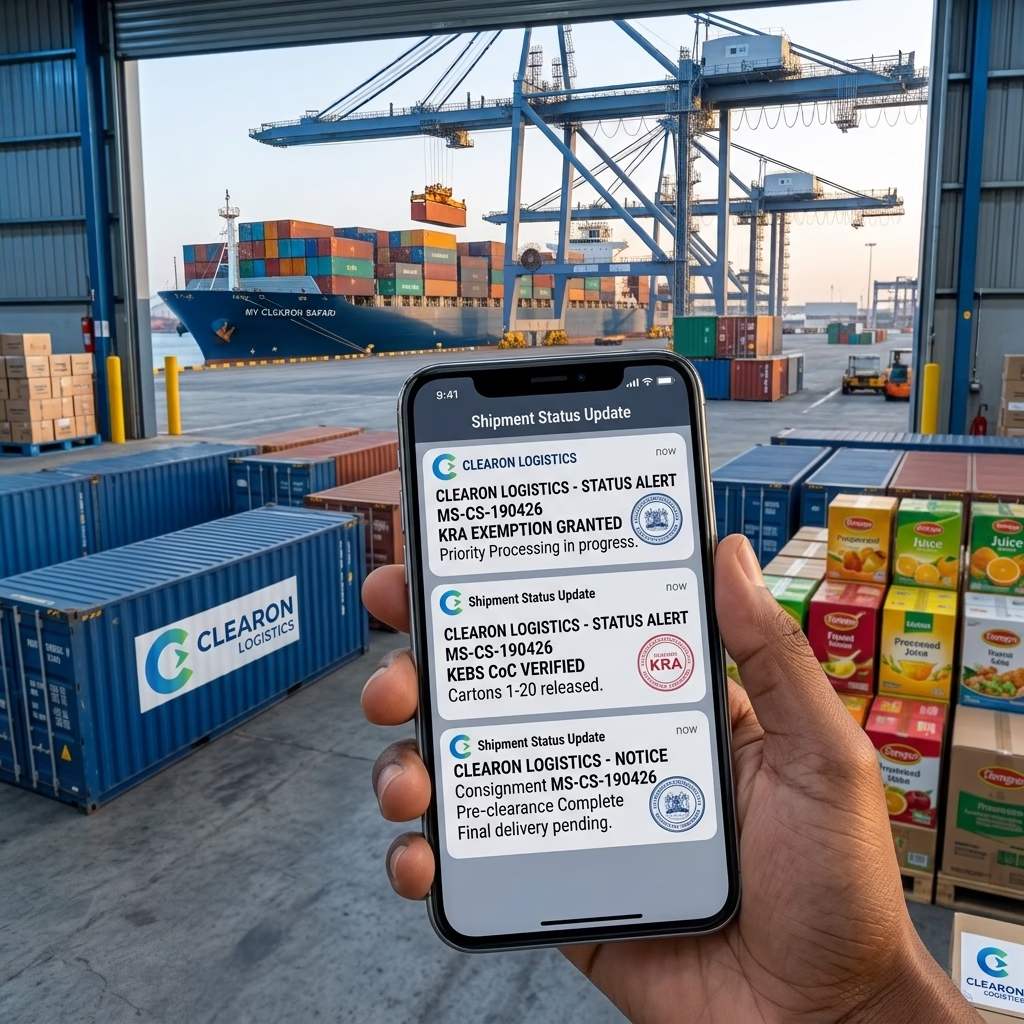
What regular shipment updates should actually look like is something most importers have never had a clear standard for — they just know the difference between an agent who kept them informed and one who left them guessing, usually after experiencing both. “We’ll keep you updated” is a promise every clearing agent makes. Very few define what it actually means in practice, which is exactly why it’s worth knowing what a genuinely well-communicated shipment looks like before you’re relying on one.
Table of Contents
Why “We’ll Keep You Updated” Isn’t a Standard
Every clearing agent says some version of this during the sales conversation. Almost none of them define what it actually means — how often, in what format, triggered by what events, through what channel. Without a concrete standard, “we’ll keep you updated” can mean anything from a genuinely proactive stream of status information to a single message once your cargo is already sitting in your warehouse. The gap between those two experiences is enormous, and it’s entirely invisible until you’ve already committed to working with someone.
What Should Trigger an Update, Not Just a Check-In
A genuinely well-communicated shipment isn’t updated on a fixed schedule regardless of what’s happening — it’s updated when something actually changes. That means you should hear from your agent at meaningful points:
- Confirmation your documentation and permits are in order, before your goods ship
- Vessel departure confirmation, once your cargo is actually en route
- Arrival notification, as soon as your cargo reaches port
- Any query or issue raised by customs, as it happens — not after it’s been resolved or has become a bigger problem
- Clearance confirmation, once your declaration has been processed
- Release and dispatch for inland delivery, so you know your goods are physically moving toward you
Each of these is a genuine milestone, not an arbitrary check-in — which is exactly why event-triggered updates tend to feel more useful and less like noise than a rigid “every Monday” status email regardless of whether anything’s actually changed.
The Silence That Should Worry You
If your agent goes quiet specifically after your cargo has shipped and money has changed hands, that’s a pattern worth paying close attention to — not because occasional quiet periods are inherently suspicious (sometimes there genuinely isn’t new information yet), but because a sudden shift from responsive to unreachable, right when you have the least leverage to do anything about it, is one of the most consistently reported warning signs among importers who’ve had a bad experience with a clearing agent. If you’re not sure whether the silence is normal or concerning, the simple test is: can you reach them when you initiate contact? If messages go unanswered for days during an active shipment, that’s your answer.
What a Good Update Actually Contains
Not all updates are equally useful. A message that just says “still working on it” tells you nothing actionable. A genuinely useful update includes:
- Where your cargo currently is in the process, specifically
- What’s happening next, and roughly when
- Whether anything requires action from you, and what that action is
- Any change to your expected cost or timeline, flagged as soon as it’s known, not discovered later
The difference between a vague reassurance and a genuinely informative update is specificity — and specificity is usually a sign the agent actually knows exactly where your shipment stands, rather than giving a generic response because they’re not entirely sure themselves.
Proactive vs Reactive Communication
The single clearest signal of communication quality is whether you’re the one initiating most contact, or whether updates arrive before you’ve had to ask. A reactive agent answers your questions when you send them. A proactive agent tells you things before you knew to ask — flagging a potential delay before it happens, mentioning a documentation gap before it becomes urgent, letting you know a cost is coming in differently than estimated as soon as that becomes clear, not once the final invoice arrives. This distinction matters considerably more during the parts of a shipment where something has genuinely gone sideways, since that’s exactly when a reactive agent tends to go quiet.
What to Ask About Communication Before You Commit
Before hiring an agent, it’s worth asking directly:
- “How will I hear about my shipment’s progress — proactively, or only if I ask?”
- “What’s your typical response time if I reach out with a question?”
- “What happens if something goes wrong — do I hear about it immediately, or once it’s already resolved?”
- “Can I speak to a specific person handling my shipment, or is it whoever picks up?”
Answers to these questions tend to reveal a lot about how the agent actually operates day to day, well beyond whatever their marketing materials say about “excellent communication.”
Making Communication a Genuine Standard, Not a Promise
At Clearon Logistics, we treat communication as something structured around your shipment’s actual milestones, not a vague commitment — you hear from us when something genuinely changes, and you can reach us during the parts of the process where other agents tend to go quiet. We’d rather set this expectation clearly upfront than have you discover, mid-shipment, what our communication actually looks like.
Want to know exactly what communication looks like before your cargo ships? Talk to Clearon Logistics — we’ll walk you through it before you commit to anything.
Frequently Asked Questions
How often should a clearing agent update me during a shipment? Rather than a fixed schedule, updates should be triggered by genuine milestones — documentation confirmation, departure, arrival, any customs query, clearance, and dispatch — so you’re informed when something actually changes, not on an arbitrary timer.
Is it normal for a clearing agent to go quiet for a few days during a shipment? Occasional quiet periods can be normal if there’s genuinely nothing new to report, but the real test is whether they respond promptly when you reach out — persistent unresponsiveness, especially right after payment, is a genuine warning sign.
What’s the difference between proactive and reactive communication from a clearing agent? A proactive agent tells you about changes, delays, or issues before you ask; a reactive agent only responds once you’ve reached out — the gap between the two matters most exactly when something has gone wrong.
What should I ask about communication before hiring a clearing agent? Ask how updates will be delivered, typical response times, what happens specifically when something goes wrong, and whether you have a specific point of contact — the answers reveal more than general reassurances about “good communication.”
Further Reading
- Kenya Revenue Authority — Customs & Border Control (external, dofollow)
- Kenya International Freight and Warehousing Association (KIFWA) (external, dofollow)
- Related on our blog: What a Clearing Agent Does: 5 Stages of Your Shipment Explained
- Related on our blog: Clearing Agent Red Flags Kenya: 6 Warning Signs to Watch For
- Our service: Clearing and Forwarding Services in Kenya









Leave a Reply