
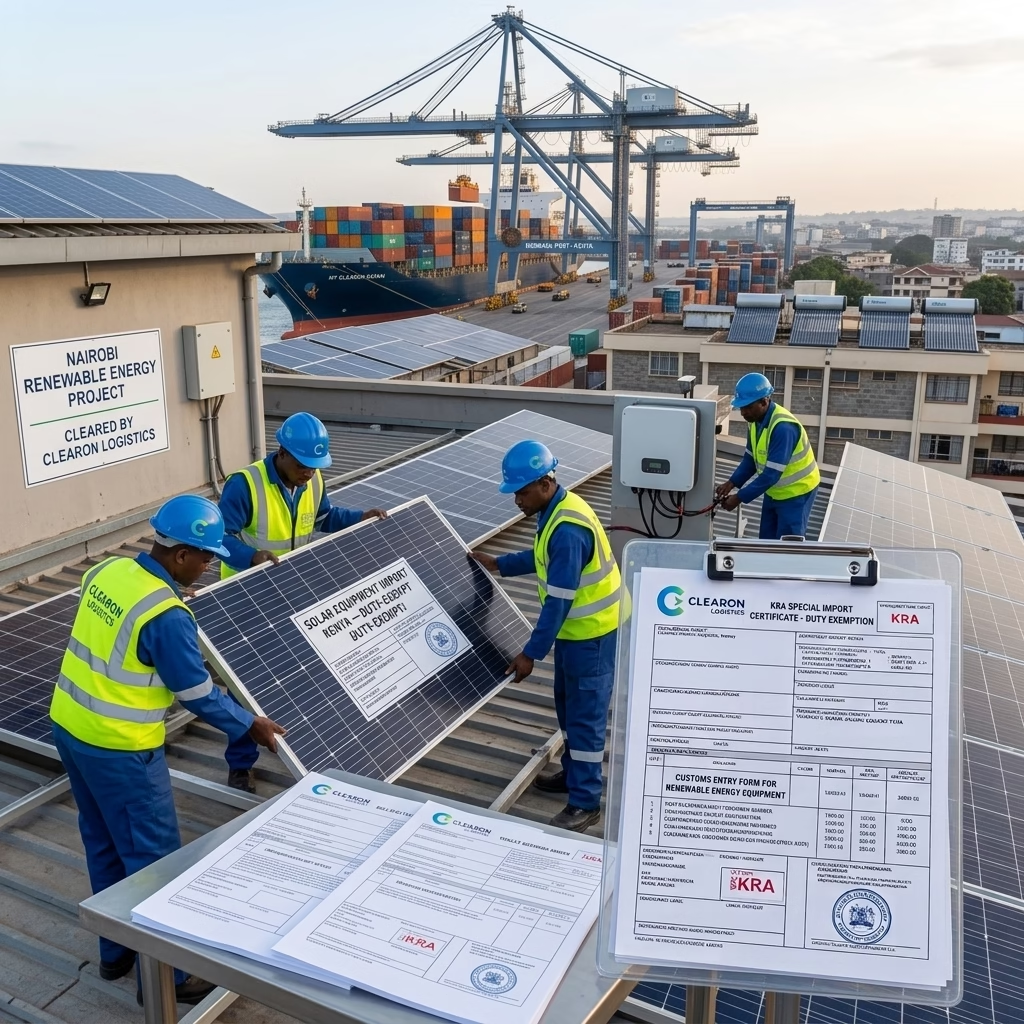
Solar equipment import into Kenya comes with genuinely favourable tax treatment — panels and lithium-ion batteries currently clear duty-free and VAT-exempt — making renewable energy meaningfully cheaper to bring in than most other categories of goods. That said, getting the classification right across a mixed solar system still matters, and the rules have shifted before.
Table of Contents
What’s Actually Exempt
Solar equipment enjoys some of the most favourable import treatment of any product category in Kenya. Under the VAT Act and the EAC Customs Management Act, the core components of a solar system are currently duty-free and VAT-exempt at import:
- Solar cells and modules (panels)
- Solar lithium-ion batteries — following changes carried through the Finance Act 2025 and reaffirmed into 2026, lithium-ion batteries used in solar systems now clear without import duty or VAT
- Wind engines (wind mills), exempt from both duty and VAT
This isn’t theoretical — we’ve cleared this ourselves. A recent consignment of solar lithium batteries we brought in from China via Mombasa Port confirmed the current practical position directly: the only statutory charges applied were the Import Declaration Fee (IDF), the Railway Development Levy (RDL), and the applicable MSS levy — no import duty, no VAT. For an importer budgeting a shipment, this is a meaningfully lower landed cost than the general goods categories most people are used to costing out.
Statutory Levies You Should Still Budget For
Even with duty and VAT out of the picture for qualifying solar components, a shipment isn’t entirely charge-free. Based on current clearance practice, expect:
- Import Declaration Fee (IDF) — the standard processing fee applied to virtually every import 2.5%
- Railway Development Levy (RDL) — a standard levy applied broadly across imports 2%
- MSS levy — applicable to this category as part of standard statutory charges
None of these are large relative to duty and VAT on a non-exempt category, but they should still be factored into your landed cost calculation rather than assumed away entirely.
Where Importers Still Get Caught Out: Inverters and Charge Controllers
Batteries and panels are now on solid duty-free, VAT-free footing — but that doesn’t mean every component in a solar system is automatically treated the same way. Inverters and charge controllers have historically been assessed differently in some cases, and classification rules in this sector have shifted more than once in recent years. Shipping a complete system — panels, battery, inverter, charge controller — under a single blended declaration rather than classifying each component correctly is still the most common way importers end up with an unexpected reassessment, even when the bulk of the shipment genuinely qualifies for exemption.
Careful, itemised documentation from the outset — the same discipline that matters for general shipping and customs documentation — is what prevents this, and it’s exactly why we confirm the current classification for each component before a client’s solar shipment leaves origin, rather than assuming last year’s treatment still applies to this year’s shipment.
The EPRA Licence You’ll Need
Anyone importing solar PV products commercially into Kenya needs an EPRA Solar PV Vendor licence under the Energy (Solar Photovoltaic Systems) Regulations, applied for through the Energy and Petroleum Regulatory Authority’s online portal. This is separate from your standard KRA PIN and customs documentation — operating without it exposes you to penalties and potential seizure of goods, regardless of whether the goods themselves would otherwise have qualified for duty exemption.
The KEBS Certificate of Conformity Requirement
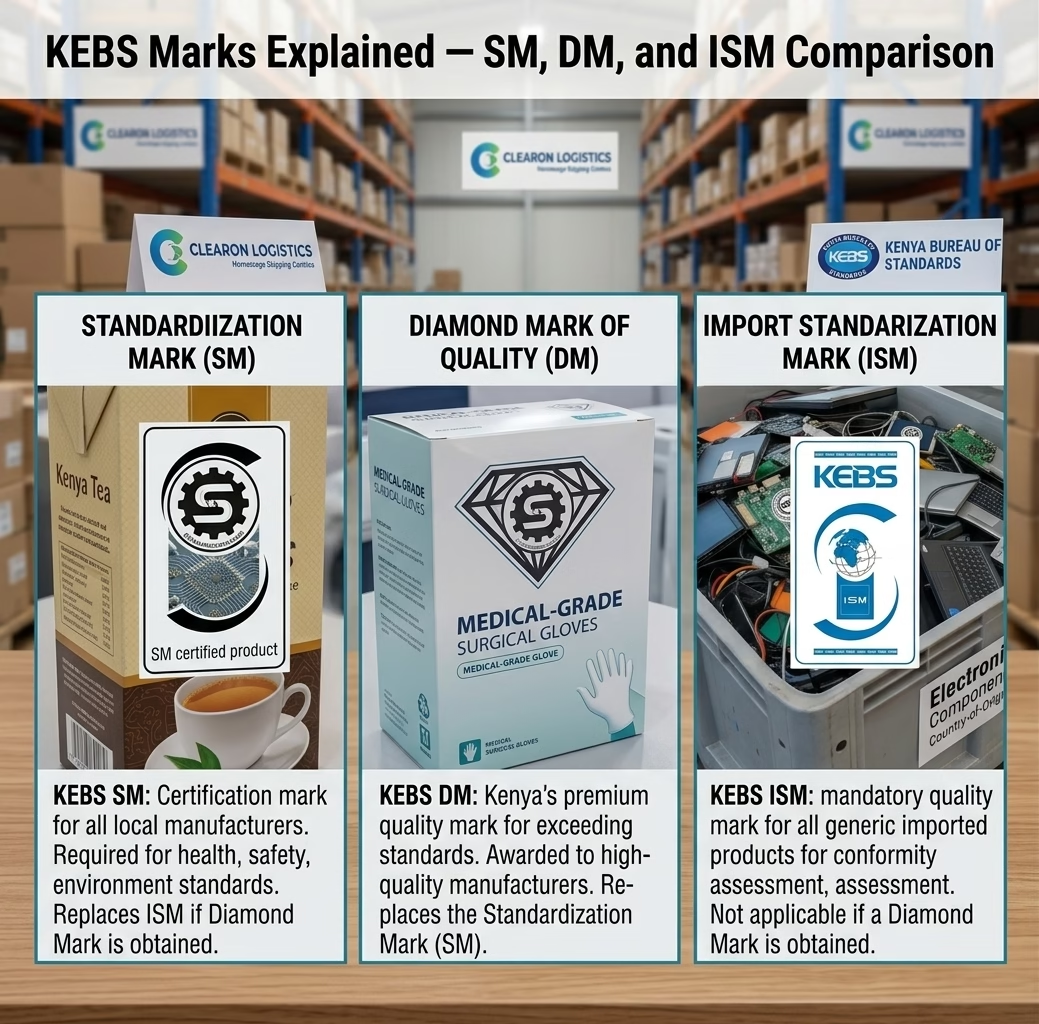
Every solar consignment needs a Certificate of Conformity issued by a KEBS-appointed inspection body in the country of origin before shipment — this is a standard part of Kenya’s Pre-Export Verification of Conformity (PVoC) programme, but it’s especially important to get right for solar equipment given the value and technical specifications involved. Shipments arriving without a valid certificate face destination inspection at a percentage of customs value, adding cost and delay that a pre-arranged certificate avoids entirely.
Is This Treatment Guaranteed to Last?
Worth flagging honestly, because this sector has real regulatory history: VAT treatment on solar products has changed direction more than once. Exemptions were withdrawn in 2020-2021 and the off-grid solar sector reportedly contracted sharply as a result, before exemptions were reinstated. More recently, the Finance Act 2025 moved lithium-ion batteries and solar components to zero-rated VAT status, and a subsequent Finance Bill proposed shifting some of these same items from zero-rated to exempt — a technical distinction that doesn’t change what you pay at the till, but does affect suppliers’ ability to reclaim input VAT further up the chain, which can feed into pricing over time.
None of this changes the current position confirmed by our own recent clearance — duty-free, VAT-free at import, with only standard statutory levies applying. But given how often this category has shifted, it’s worth confirming current treatment close to your shipment date rather than assuming it’s permanently settled.
Planning a Solar Import the Right Way
Between the genuinely favourable duty and VAT treatment, the classification nuances between components, the EPRA licensing requirement, and a regulatory history that’s shifted more than once, solar equipment is a category where getting expert guidance before you ship pays for itself many times over — even when the underlying news, as it currently stands, is good.
At Clearon Logistics, we’ve cleared solar shipments — including lithium battery consignments — under the current framework ourselves, so we can confirm exactly what applies to your specific components before you order, not after your container has landed. We give a clear, honest breakdown of what’s exempt, what statutory levies still apply, and what to watch for if regulations shift again.
Importing solar panels, inverters, or a full system into Kenya? Talk to Clearon Logistics for an accurate cost breakdown before you order.
Frequently Asked Questions
Are solar panels and batteries duty-free in Kenya? Yes — currently, solar cells and modules (panels) and solar lithium-ion batteries clear without import duty or VAT.
Do I need a special licence to import solar equipment commercially? Yes — an EPRA Solar PV Vendor licence is required for anyone commercially importing solar PV products into Kenya, separate from standard customs documentation.
If duty and VAT don’t apply, are there any charges at all? Yes — statutory charges still apply even to exempt goods, including the Import Declaration Fee (IDF), the Railway Development Levy (RDL), and the applicable MSS levy. These are comparatively small next to duty and VAT, but should still be included in your landed cost.
Could this duty-free and VAT-exempt treatment change in the future? It’s possible — this category has shifted direction more than once in recent years, including a prior withdrawal and reinstatement of VAT exemptions, and ongoing technical adjustments through recent Finance Acts and Bills. It’s worth confirming current treatment close to your shipment date.
Further Reading
- Energy and Petroleum Regulatory Authority (EPRA) (external, dofollow)
- Kenya Renewable Energy Association (KEREA) (external, dofollow)
- Related on our blog: What Happens If You Ship Goods to Kenya Without a Certificate of Conformity?
- Related on our blog: HS Codes Explained: Why They Matter for Imports and Exports
- Our service: Clearing and Forwarding Services in Kenya





Leave a Reply