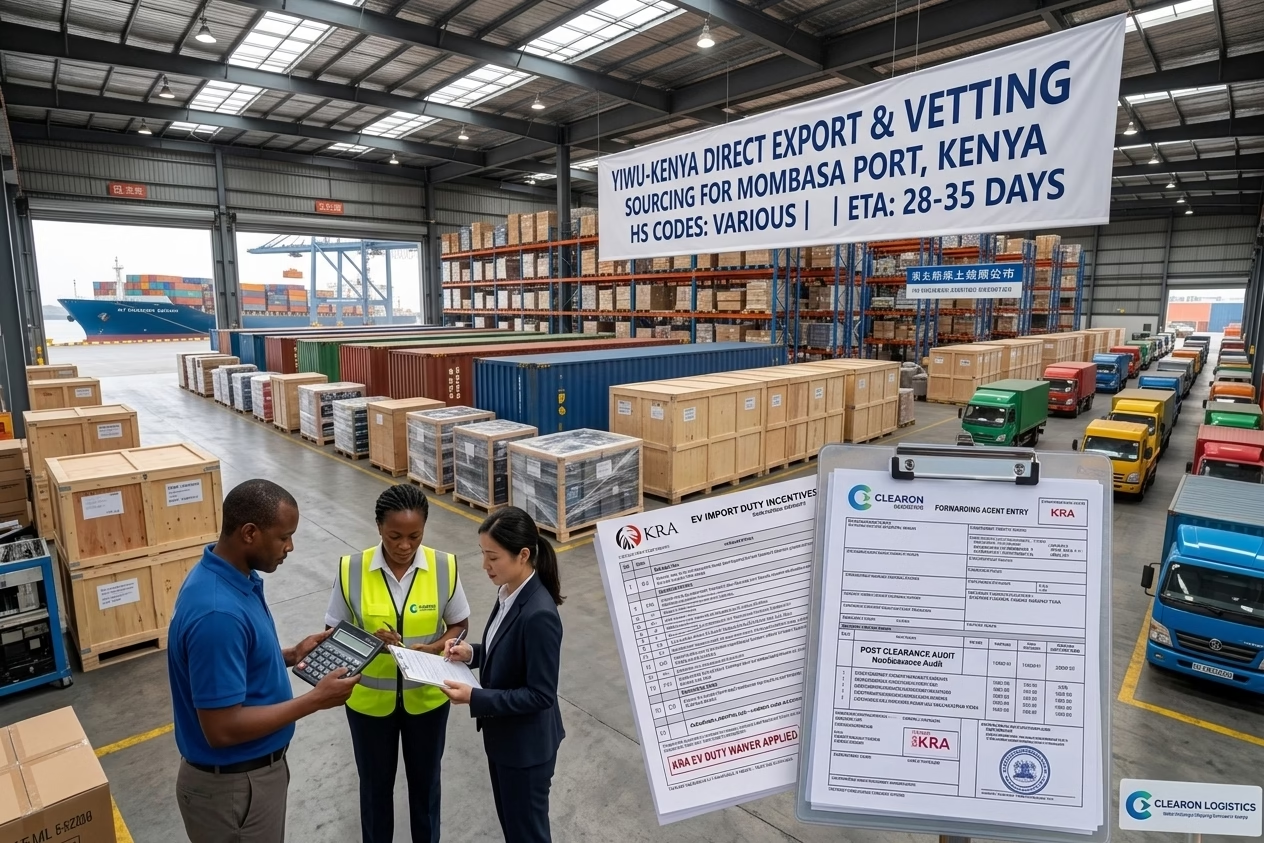
Sourcing from China has become the default starting point for a huge share of Kenyan importers, and for good reason — China-Kenya trade has been setting new quarterly records, and platforms like Alibaba have made it genuinely possible for a small business owner in Nairobi to deal directly with a factory in Shenzhen. The opportunity is real. So is the number of ways a first sourcing trip can go wrong before your goods ever reach Mombasa.
Table of Contents
Why So Many Kenyan Importers Start in China
China-Kenya bilateral trade has been growing consistently, driven by competitive manufacturing costs, improving logistics infrastructure between the two countries, and e-commerce platforms that let even first-time entrepreneurs connect directly with factories rather than going through layers of intermediaries. For product categories from electronics to solar equipment to consumer goods, China genuinely offers pricing and variety that’s hard to match elsewhere — but accessing it well requires more than just browsing a marketplace and clicking “order.”
Choosing the Right Platform for Your Order
Not every Chinese sourcing platform suits every buyer:
- Alibaba — the most accessible starting point for first-time Kenyan importers: English interface, Trade Assurance buyer protection, no need for a Chinese phone number or bank account. Best for general consumer goods, electronics, and fashion, particularly for a first order.
- 1688 — China’s domestic wholesale platform, offering meaningfully lower factory pricing than Alibaba’s export-facing prices, but generally requiring a Mandarin-speaking sourcing agent to access effectively, since it’s built for the domestic Chinese market rather than international buyers.
- Made-in-China — a stronger fit for industrial and manufacturing-focused sourcing than general consumer goods.
- Global Sources — another established B2B option worth comparing alongside Alibaba for certain product categories.
For a first order, most guidance converges on the same advice: start with Alibaba, since the payment protection and accessibility reduce your risk while you’re still learning what good supplier signals actually look like.
Vetting a Supplier Before You Pay Anything
- Filter for Trade Assurance and Verified Supplier badges — these aren’t guarantees, but they meaningfully reduce risk compared to an unverified listing
- Check response rate and communication quality before committing — a supplier who’s slow or vague at the inquiry stage tends to stay that way through the transaction
- Request real product photos, not just catalogue images — catalogue photos can be reused across multiple sellers regardless of actual product quality
- Document everything — chats, contracts, and payment records matter considerably if a dispute arises later
Never Skip the Sample Stage
Ordering a sample before committing to a bulk order feels like an unnecessary delay when you’re eager to get moving — but skipping it is one of the most consistently cited mistakes among experienced Kenyan importers. A sample confirms quality, specification accuracy, and supplier reliability at a fraction of the cost of discovering a problem after a full container has already shipped. For custom, branded, or high-value first orders in particular, the sample cost is small insurance against a much larger loss.
Structure Your Payment to Protect Yourself
A commonly recommended structure is a 30% deposit with the 70% balance paid on confirmed shipment or delivery, rather than paying in full upfront. For orders placed through Alibaba specifically, using Trade Assurance holds your payment in escrow until you confirm the goods meet agreed terms — a meaningful layer of protection that a direct bank transfer to an unverified supplier doesn’t offer.
Confirm Kenyan Compliance Before You Order, Not After
This is where sourcing decisions and Kenyan customs compliance need to meet, and where a lot of first-time importers get caught out — checking product compliance only after goods have already shipped:
- Electrical appliances need to meet KEBS standards and, for many appliance categories, energy performance requirements
- Correct HS code classification should be confirmed before you finalise an order, not discovered at clearance — this determines your actual duty rate and landed cost
- PVoC pre-shipment inspection requirements apply to many categories sourced from China, and need to be arranged before the goods leave the supplier’s premises
- Realistic timelines — sea freight from China typically runs in the range of several weeks, not days, and building this into customer or business expectations avoids disappointment down the line
Getting From “Found a Supplier” to “Cleared My Goods”
The gap between finding a good product on Alibaba and having it legally, compliantly sitting in your Kenyan warehouse is where most of the real risk in China sourcing actually lives — supplier vetting solves one part of that risk, but Kenyan customs compliance solves the other, and both need attention before you place the order, not after.
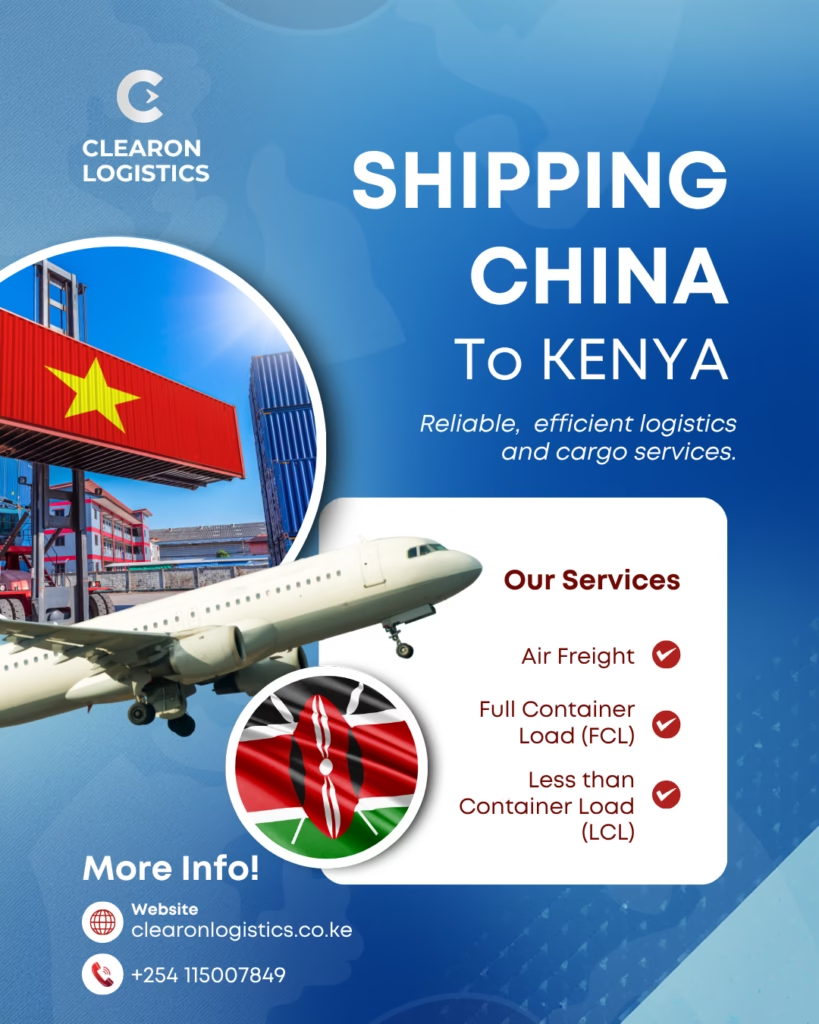
At Clearon Logistics, we help Kenyan importers confirm the compliance side of China sourcing — correct HS codes, required permits, PVoC arrangements — before goods ship, so a great supplier find doesn’t turn into a customs delay once your container reaches Mombasa.
Sourcing your next shipment from China? Talk to Clearon Logistics to confirm the Kenyan compliance side before you place your order.
Frequently Asked Questions
Which China sourcing platform should a first-time Kenyan importer use? Alibaba is generally the recommended starting point, given its accessibility, English interface, and Trade Assurance buyer protection — better suited to a first-time importer than platforms like 1688 that typically require a Mandarin-speaking sourcing agent.
Is it really necessary to order a sample before a bulk order? Yes — for custom, branded, or high-value first orders especially, a sample is one of the most cost-effective ways to catch quality or specification problems before committing significant capital to a full shipment.
How should I structure payment to a Chinese supplier? A commonly recommended approach is a partial deposit (often around 30%) with the balance paid on confirmed shipment, and using Alibaba’s Trade Assurance escrow protection where available, rather than paying the full amount upfront via direct transfer.
Do I need to check Kenyan compliance before I place my order, or can I sort it out once goods arrive? Before — confirming HS code classification, KEBS requirements, and any needed PVoC inspection before shipping avoids costly delays and reassessments once your goods reach Kenyan customs.
Further Reading
- Alibaba — Trade Assurance Buyer Protection (external, dofollow)
- Kenya Bureau of Standards (KEBS) (external, dofollow)
- Related on our blog: How to Calculate Your Landed Cost in Kenya
- Related on our blog: HS Codes Explained: Why They Matter for Imports and Exports
- Our service: Shipping from China to Kenya
Leave a Reply