
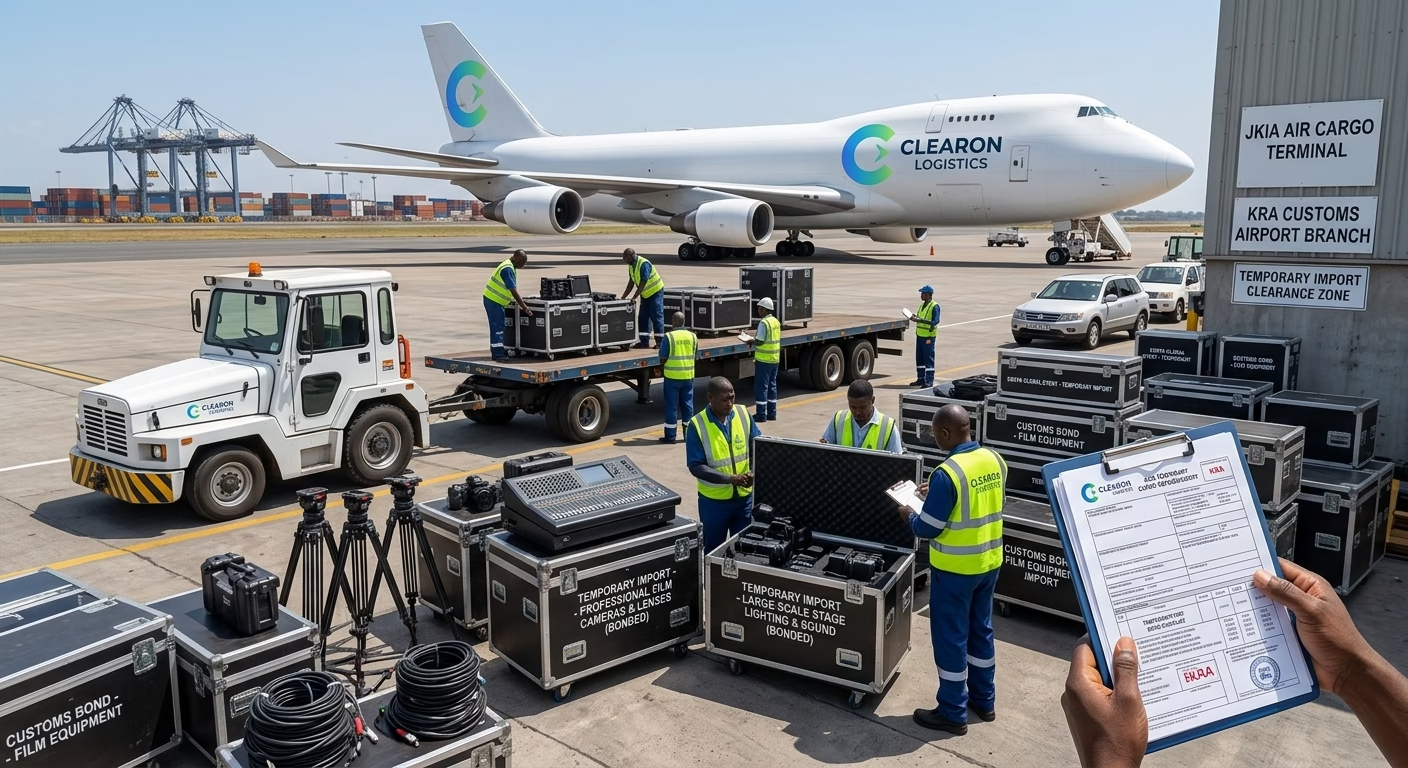
Temporary importation into Kenya works differently from what many international businesses assume. If you’ve handled temporary imports in Europe, North America, or several other African countries, you may be used to the ATA Carnet system — a single document that lets goods cross borders duty-free for exhibitions, trade shows, or professional equipment. Kenya is not currently part of that system, and assuming it applies here is one of the more common and avoidable mistakes for foreign businesses, film crews, exhibitors, and contractors bringing equipment into the country temporarily.
Table of Contents
Why the ATA Carnet Doesn’t Apply in Kenya
The ATA Carnet — sometimes called a “merchandise passport” — is accepted in roughly 80-90 countries and territories worldwide, including several African nations such as Morocco, Algeria, Botswana, Madagascar, Mauritius, and Senegal. Kenya’s national chamber of commerce publicly expressed interest in joining the system some years ago, working with international partners toward eventual participation. As things currently stand, however, Kenya is not listed among active ATA Carnet countries — meaning a carnet issued elsewhere will not be recognised for temporary importation into Kenya.
For a business used to carnets elsewhere, this is worth confirming directly before planning a Kenya shipment around one, since assuming carnet coverage where it doesn’t apply can mean arriving at the border with a document Kenyan customs has no obligation to honour.
What Kenya Uses Instead
In place of a carnet, Kenya handles temporary importation through a customs bond guarantee, provided for under the East African Community Customs Management Act. A bond guarantee applies specifically to goods meant for warehousing, temporary importation, transit, and duty remission or exemption arrangements — with no bond required where duty has simply been paid in full at the point of entry instead.
In practice, this means an importer bringing in equipment temporarily needs to secure a bond — typically arranged with the help of a clearing agent and a bond provider — guaranteeing that duty will be paid if the goods aren’t properly re-exported within the agreed period, rather than presenting a single pre-arranged international document.
What Qualifies for Temporary Importation
Kenya’s temporary importation provisions are generally aimed at the same broad categories carnets cover elsewhere, even though the mechanism differs:
- Professional equipment — film and photography equipment, broadcast gear, technical tools brought in for a specific job or production
- Exhibition and trade show goods — display items, samples, and equipment for a defined event
- Commercial samples — products brought in for demonstration rather than sale
- Goods for testing, repair, or demonstration, intended to leave Kenya again within a defined period
The common thread is genuine, verifiable intent to re-export — goods brought in with the intention of eventually leaving Kenya again, rather than being sold or consumed locally.
How the Bond Process Works
- Identify the goods and confirm the case genuinely qualifies for temporary importation rather than standard commercial entry
- Arrange a customs bond through a licensed bond provider, guaranteeing the duty that would otherwise be payable
- Declare the goods for temporary importation at the point of entry, supported by documentation showing the intended re-export
- Use the goods for their stated purpose within Kenya during the agreed period
- Re-export the goods within the agreed timeframe, at which point the bond is discharged and no duty becomes payable
Throughout this process, having a clearing agent who understands temporary importation specifically — as opposed to standard commercial clearance — matters considerably, since the bond arrangement, documentation, and re-export tracking are all distinct from a typical import transaction.
What Happens If Goods Aren’t Re-Exported
This is the critical trade-off of the bond system compared to a carnet: if the goods aren’t re-exported within the agreed period, the bond is called upon, and duty becomes payable in full — effectively converting what was meant to be a temporary, duty-free entry into a standard dutiable import after the fact. This makes accurate planning of your actual timeline in Kenya essential before you commit to the bond arrangement, since underestimating how long you’ll need the equipment in-country can turn a straightforward temporary import into an expensive surprise.
Planning Ahead for Temporary Imports
Because Kenya’s system runs on a bond rather than an internationally pre-arranged document, temporary importation here requires more direct local coordination than a business used to carnets might expect. This isn’t something that can be arranged the way a carnet application works from abroad — it needs a Kenya-side bond provider and clearing agent involved before your equipment ships, not after it arrives.
At Clearon Logistics, we help businesses, production crews, and exhibitors understand exactly what Kenya’s temporary importation process requires — arranging the bond, confirming your goods genuinely qualify, and tracking the re-export timeline so the bond is properly discharged rather than triggered. We walk clients through this before shipping, since a bond arrangement is not something to figure out after your equipment has already landed.
Bringing equipment into Kenya temporarily for an event, production, or project? Talk to Clearon Logistics before you ship, to get the bond arrangement right from the start.
Frequently Asked Questions
Can I use an ATA Carnet issued in another country to bring equipment into Kenya? No — Kenya is not currently part of the ATA Carnet system, so a carnet issued elsewhere will not be recognised for temporary importation into Kenya. A customs bond arrangement is required instead.
What happens if I don’t re-export my temporarily imported goods on time? The customs bond is called upon, and you become liable for the full duty that would have applied to a standard commercial import — the temporary, duty-free status is lost.
Do I need a clearing agent to arrange a temporary import bond? It’s strongly advisable — the bond arrangement, qualifying documentation, and re-export tracking are specialised processes distinct from standard commercial clearance, and getting them wrong can mean losing the duty-free benefit entirely.
What kinds of goods typically qualify for temporary importation into Kenya? Professional equipment, exhibition and trade show goods, commercial samples, and items for testing, repair, or demonstration — generally anything genuinely intended to leave Kenya again within a defined period, rather than be sold or consumed locally.
Further Reading
- East African Community Customs Management Act (external, dofollow)
- ATA Carnet — list of participating countries (external, dofollow)
- Related on our blog: Freight Forwarder vs Clearing Agent Kenya: 5 Critical Differences
- Related on our blog: Bonded Warehouse Kenya: How to Defer Duty and Protect Cash Flow
- Our service: Clearing and Forwarding Services in Kenya
Leave a Reply