
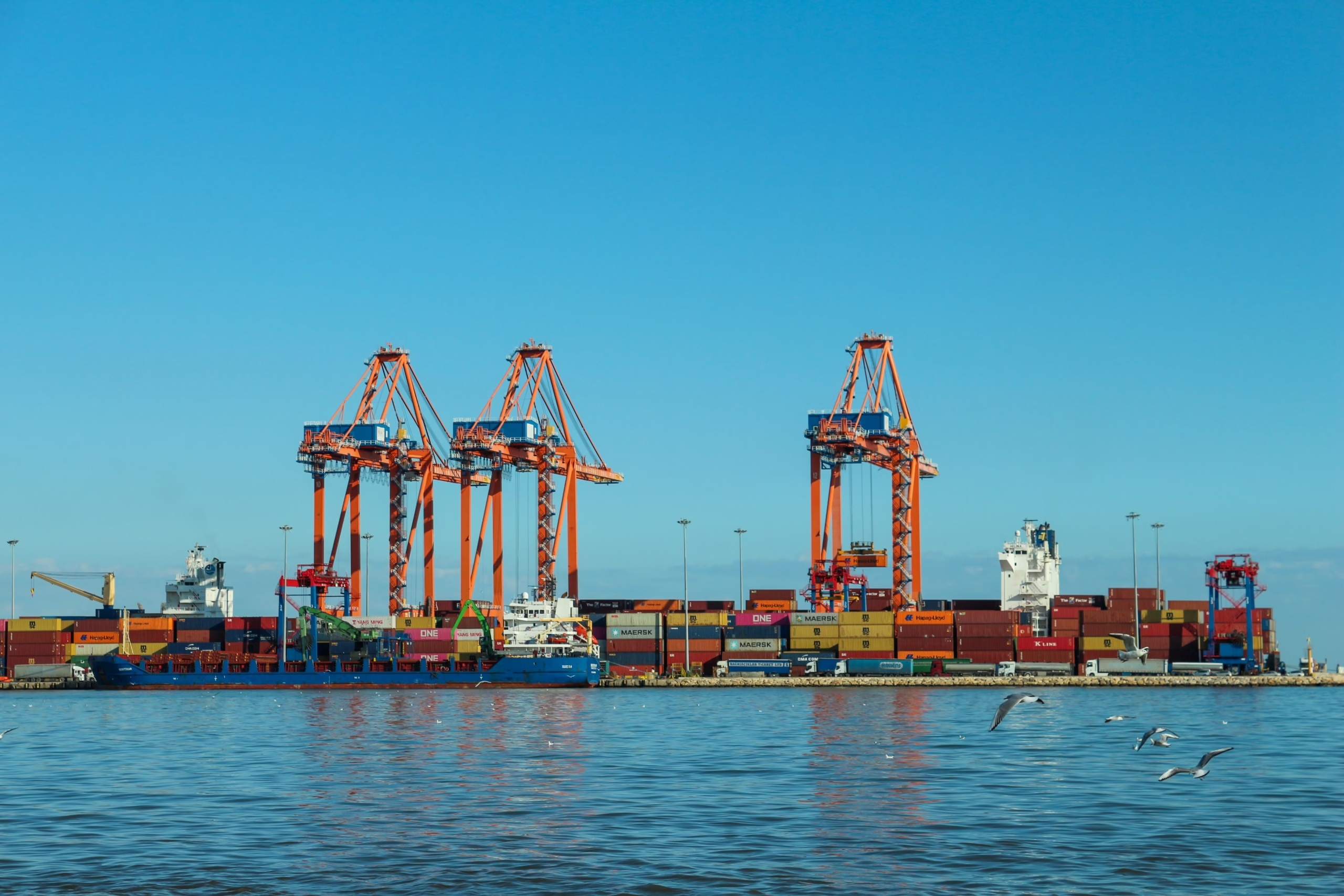
Every year, thousands of containers arrive at Kenya’s ports and airports carrying everything from consumer electronics and construction materials to industrial machinery and medical equipment.
Behind every shipment is a business making decisions about procurement, inventory, logistics, pricing, and customer demand.
Yet many companies still manage imports using methods that were effective ten years ago.
Global trade has changed.
Supply chains have changed.
Customer expectations have changed.
Businesses that continue importing the same way they always have will increasingly find themselves at a competitive disadvantage.
The companies that succeed over the next decade will not necessarily be those importing the most products.
They will be the businesses making the smartest supply chain decisions.
Based on emerging global logistics practices, procurement trends, and the realities faced by Kenyan importers, here are fifteen trends that every importer should understand.
Trend 1: Supply Chains Are Becoming a Competitive Advantage
For many years, logistics was viewed primarily as a support function.
Today, it has become a source of competitive advantage.
Businesses with reliable supply chains can:
- Launch products faster.
- Maintain better inventory availability.
- Respond to customer demand more quickly.
- Reduce operational disruptions.
Increasingly, customers judge businesses not only by price, but also by reliability.
Trend 2: Procurement Is Becoming More Strategic
Procurement teams are moving beyond purchasing products at the lowest possible price.
Leading businesses evaluate suppliers based on:
- Consistency.
- Quality.
- Lead time reliability.
- Communication.
- Long-term partnership potential.
Strategic sourcing reduces risk throughout the supply chain.
Trend 3: Visibility Is Replacing Guesswork
Modern businesses expect greater visibility across their supply chains.
Business leaders increasingly want answers to questions such as:
- Has production started?
- Has the supplier dispatched the goods?
- Has the shipment departed?
- Is customs processing complete?
- When will final delivery occur?
Better visibility leads to better planning.
Trend 4: Inventory Is Being Managed More Carefully
Holding excessive inventory ties up capital.
Holding too little inventory leads to stock shortages.
Businesses are increasingly seeking a balance between resilience and efficiency.
Inventory planning is becoming a boardroom discussion rather than simply a warehouse responsibility.
Trend 5: Risk Diversification Is Increasing
Businesses are becoming more conscious of supply chain risk.
Many importers now:
- Develop alternative suppliers.
- Spread sourcing across regions where appropriate.
- Build contingency plans.
- Review critical dependencies.
Supply chain resilience is becoming just as important as supply chain efficiency.
Trend 6: Data Is Driving Better Decisions
Importers are increasingly analysing:
- Sales patterns.
- Inventory turnover.
- Lead times.
- Procurement cycles.
- Supplier performance.
Businesses that measure performance consistently make better long-term decisions than those relying on assumptions.
Trend 7: Collaboration Is Becoming More Important Than Control
Successful supply chains depend on collaboration between:
- Suppliers.
- Freight partners.
- Warehouses.
- Customs professionals.
- Transport providers.
- Customers.
Information sharing often solves problems before they become disruptions.
Trend 8: Cash Flow Is Receiving More Executive Attention
Business leaders increasingly recognise that inventory decisions influence working capital.
Supply chain planning and financial planning are becoming more closely integrated.
The objective is no longer simply importing efficiently.
It is importing sustainably.
Trend 9: Reliability Is Becoming More Valuable Than Speed
Fast deliveries are valuable.
Predictable deliveries are often even more valuable.
Businesses can plan around consistency.
Uncertainty is much harder to manage.
Reliable lead times improve forecasting throughout the organisation.
Trend 10: Customer Expectations Continue to Rise
Customers increasingly expect:
- Product availability.
- Shorter delivery times.
- Accurate order fulfilment.
- Better communication.
These expectations place additional pressure on supply chains.
Trend 11: Sustainability Is Becoming a Procurement Consideration
Environmental considerations are gradually becoming part of supplier evaluations.
Businesses are beginning to examine:
- Packaging efficiency.
- Shipment consolidation.
- Resource utilisation.
- Waste reduction.
While cost remains important, sustainability is becoming an additional decision factor.
Trend 12: Supply Chain Skills Are Becoming More Valuable
Importing is no longer just about knowing customs procedures.
Businesses increasingly require expertise in:
- Forecasting.
- Procurement.
- Inventory planning.
- Risk management.
- International logistics.
Knowledge itself is becoming a competitive advantage.
Trend 13: Digital Documentation Continues to Expand
The movement toward digital documentation improves efficiency by:
- Reducing paperwork.
- Improving document accessibility.
- Supporting faster coordination.
- Enhancing record management.
Businesses that embrace digital processes often experience smoother operations.
Trend 14: Long-Term Supplier Relationships Are Becoming More Valuable
Short-term price negotiations remain important.
However, businesses increasingly benefit from suppliers who understand their long-term requirements.
Partnerships often produce greater value than isolated transactions.
Trend 15: The Most Successful Importers Think Beyond Individual Shipments
Perhaps the biggest trend of all is mindset.
Leading businesses no longer evaluate shipments individually.
They evaluate the performance of their entire supply chain.
Every procurement decision influences:
- Inventory.
- Cash flow.
- Customer satisfaction.
- Growth.
- Profitability.
Businesses that understand these connections will be better positioned to compete in the years ahead.
What These Trends Mean for Kenyan Businesses
The Kenyan market continues to become more competitive.
Customers expect greater reliability.
Projects operate on tighter schedules.
Working capital is increasingly valuable.
Businesses that continue managing imports transaction by transaction may struggle to keep pace.
Those that adopt integrated supply chain thinking will likely achieve stronger long-term performance.
How Clearon Logistics Supports Forward-Thinking Businesses
At Clearon Logistics, we believe logistics should support business strategy rather than simply transport cargo.
Whether assisting businesses importing through cargo consolidation, full container loads, air freight, or customs clearance, our objective is to help clients build more predictable and resilient supply chains.
Every shipment represents more than freight.
It represents future revenue, customer commitments, and business growth.
That perspective shapes how we work with every client.
Final Thoughts
Importing into Kenya is becoming increasingly sophisticated.
Success will depend less on finding the cheapest supplier or the lowest freight quotation and more on building resilient systems that consistently deliver value.
The businesses that thrive over the coming years will be those that invest in planning, visibility, collaboration, and long-term supply chain performance.
International trade will continue to evolve.
The question is not whether businesses will adapt.
It is how quickly they will.
Clearon Logistics remains committed to helping Kenyan businesses navigate that future with confidence through practical logistics expertise, strategic planning, and end-to-end freight solutions.




Leave a Reply