
If you are importing goods into Kenya, especially electronics, machinery, or consumer products, you have probably heard of a Certificate of Conformity (CoC).
Many shipments get delayed at the port simply because the importer did not understand this requirement.
In this detailed guide, you’ll learn:
- What a Certificate of Conformity (CoC) is
- Why it is required for imports into Kenya
- Which goods require it
- How to obtain it
- What happens if you don’t have it
- How to avoid costly delays
Understanding CoC requirements can save you time, money, and unnecessary stress.
What Is a Certificate of Conformity (CoC)?
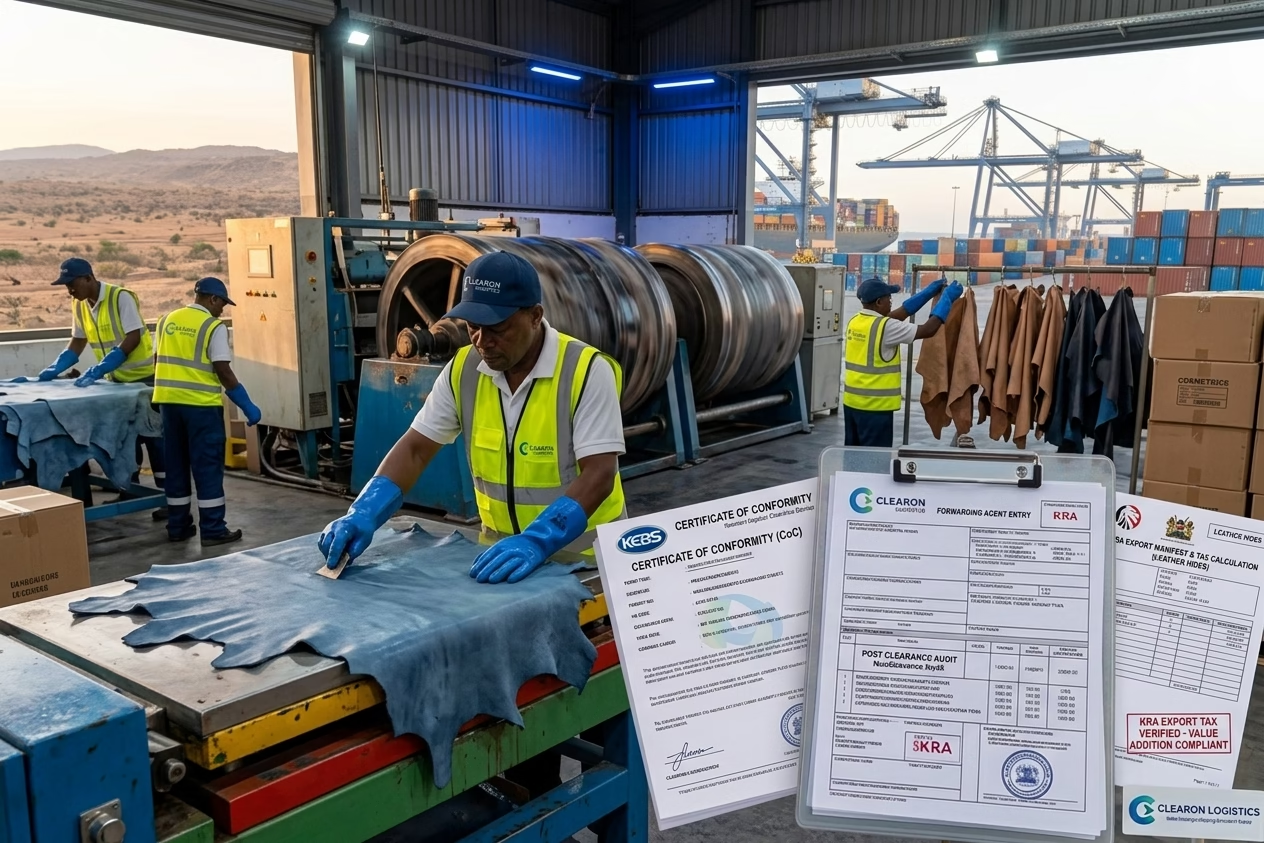
A Certificate of Conformity (CoC) is a document issued to confirm that imported goods meet Kenyan standards and technical regulations before shipment.
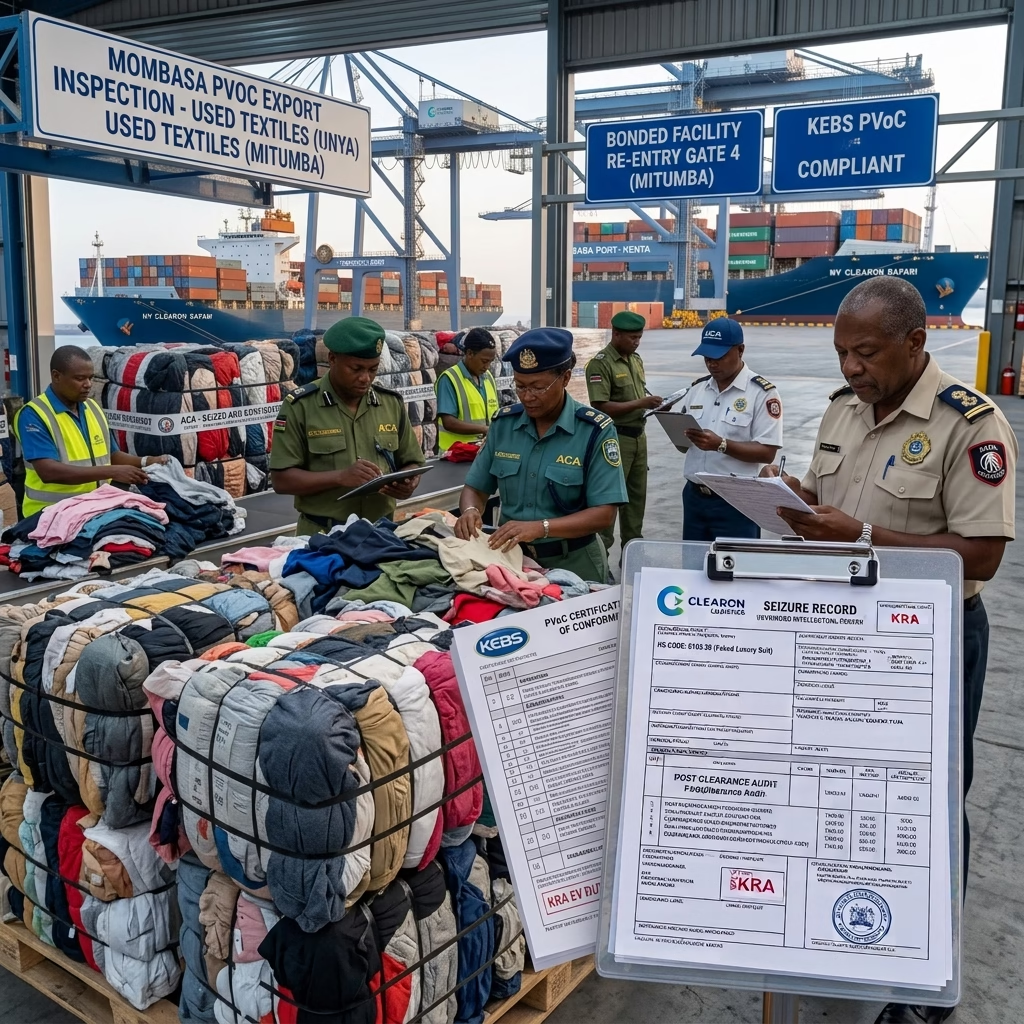
It is part of Kenya’s Pre-Export Verification of Conformity (PVoC) program.
The purpose is to ensure:
- Product safety
- Consumer protection
- Environmental protection
- Compliance with Kenyan standards
Without a valid CoC, your cargo may not be cleared.
Why Is a Certificate of Conformity Required in Kenya?
Kenya requires CoC to:
- Prevent substandard or counterfeit goods
- Protect consumers from unsafe products
- Ensure fair competition for compliant businesses
- Maintain quality standards in the market
For example:
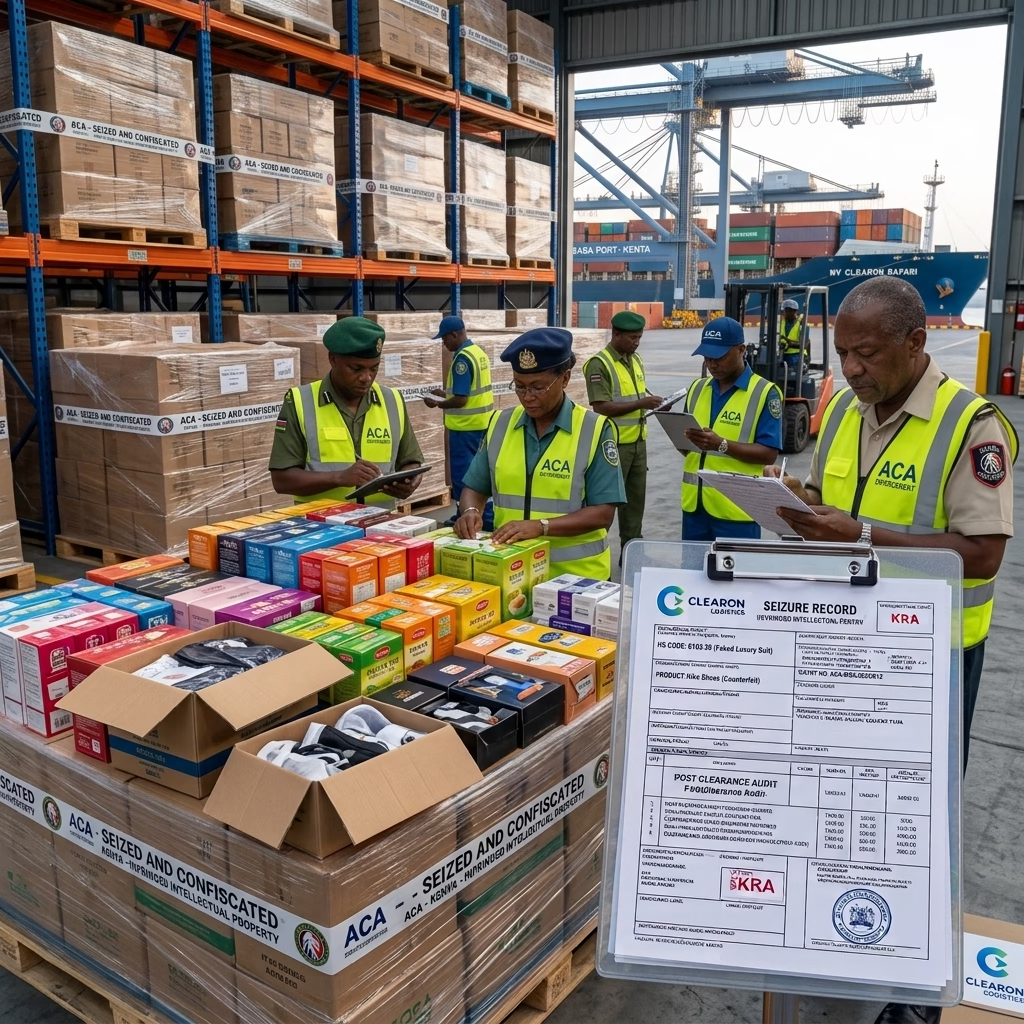
If you import electrical appliances without proper verification, customs may hold the cargo until compliance is confirmed.
This can result in:
- Delays
- Storage charges
- Additional inspection costs
Which Goods Require a Certificate of Conformity?
Not all goods require CoC, but many regulated products do.
Common categories include:
1️⃣ Electrical and Electronic Products
- Televisions
- Mobile phones
- Power cables
- Home appliances
2️⃣ Automotive Products
- Car batteries
- Tires
- Spare parts
3️⃣ Construction Materials
- Cement
- Steel products
- Tiles
4️⃣ Chemicals and Cosmetics
- Cleaning agents
- Beauty products
5️⃣ Toys and Consumer Goods
- Children’s toys
- Household items
If your product falls under regulated categories, CoC is mandatory before shipment.
How to Obtain a Certificate of Conformity
Here is the step-by-step process:
Step 1: Contact an Approved Inspection Body
Before shipping, you must apply for inspection through a KEBS authorized verification agency in the exporting country.
list of authorized companies in 2026-2029 include:
–Quality Inspection Services Inc. Japan (QISJ)
–China Hanson Inspection and Certification Co., Ltd.
–Asia Pacific Testingtech Tech. (Hangzhou) Co. Ltd.
–China Certification and Inspection Group Inspection —Company Limited
–Intertek International Limited
–Cotecna Verification SA
–TÜV Rheinland Middle East FZE
–Bureau Veritas Kenya Limited
–Société Générale de Surveillance (SGS) SA
| Zone No. | Countries in the Zones | Contractor responsible |
| 1 | China, Hong Kong, Taiwan, Mongolia | CCIC, CHIC, QISJ, ASTC, INTERTEK, COTECNA,TUV Rheinland & BV |
| 2 | India, Pakistan, Sri Lanka | SGS, INTERTEK, TUV Rheinland & BV |
| 3 | Japan, South Korea | SGS & QISJ |
| 4 | Indonesia, Malaysia, Philippines, Thailand, Singapore, Vietnam, Cambodia | SGS, INTERTEK, TUV Rheinland & BV |
| 5 | Mexico, Guatemala, El Salvador, Honduras, Nicaragua, Costa Rica, Panama, Venezuela, Colombia, Brazil, Ecuador, Peru, Bolivia, Paraguay, Uruguay, Argentina, Chile, Cuba, Jamaica, Guyana, Dominican Republic | SGS |
| 6 | Belarus, Ukraine, Georgia, Armenia, Azerbaijan, Turkmenistan, Uzbekistan, Kazakhstan, Kyrgyzstan, Tajikistan, Russia, Turkistan | SGS |
| 7 | Turkey, Iran, Iraq, Syria, Jordan | SGS, INTERTEK, TUV Rheinland & BV |
| 8 | Saudi Arabia, Oman, Lebanon, Yemen, Bahrain, Qatar, Kuwait, United Arab Emirates | SGS, INTERTEK, TUV Rheinland & BV |
Step 2: Submit Required Documents
Typically required:
- Commercial invoice
- Packing list
- Product specifications
- Test reports (if available)
Step 3: Product Inspection
The inspection body verifies:
- Product labeling
- Quality standards
- Technical compliance
They may conduct physical inspection or laboratory testing.
Step 4: Issuance of CoC
If goods meet standards, a Certificate of Conformity is issued.
This document must accompany your shipping documents.
PVoC charges: 0.60% of the FOB value subject to a minimum of USD 300 and the
maximum is USD 2,700.
What Happens If You Ship Without a CoC?
If goods arrive in Kenya without a valid CoC:
- Customs may delay clearance
- Goods may be subjected to destination inspection
- Penalties may apply usually 5% of customs value
- In extreme cases, goods may be rejected or destroyed
Additionally, destination inspection is often more expensive than pre-export verification.
Planning ahead avoids these risks.
Does CoC Replace Import Duty or Taxes?
No.
Even with a valid CoC, you will still pay:
- Import duty (depending on HS code)
- VAT (16%)
- IDF (2.5%)
- RDL (2%)
CoC ensures product compliance — it does not eliminate taxes.
Common Mistakes Importers Make
- Applying for CoC after shipment has already left
- Using outdated test reports
- Failing to verify whether goods fall under regulated categories
- Assuming all suppliers handle compliance automatically
These mistakes lead to delays and financial losses.
How Clearon Logistics Helps Prevent CoC-Related Delays
Clearon Logistics supports importers by:
- Confirming whether your product requires CoC
- Advising before shipment leaves origin
- Reviewing documentation for compliance
- Coordinating smooth customs processing
- Preventing unnecessary inspection costs
The key is pre-shipment planning.
When compliance is handled early, clearance becomes predictable.
Real-World Example
An importer shipped lighting fixtures without verifying CoC requirements.
Upon arrival:
- Cargo was flagged
- Additional inspection was required
- Storage charges accumulated for several days
With proper guidance beforehand, this delay could have been avoided entirely.
Final Thoughts
A Certificate of Conformity (CoC) is not just paperwork — it is a mandatory compliance document for many imports into Kenya.
Before shipping, ensure:
- Your goods fall under compliant standards
- Inspection is completed
- CoC is issued before departure
- Documentation matches your invoice and packing list
Taking these steps protects your cargo, reduces clearance delays, and safeguards your business reputation.
If you are unsure whether your goods require CoC, early verification makes all the difference. Contact us for assistance in acquiring CoC for your imports to Kenya.
Leave a Reply