
When importing goods into Kenya, many businesses look at one number first.
The supplier’s invoice price.
If a machine costs $20,000, the importer naturally assumes that customs will calculate taxes based on the $20,000 purchase price.
Sometimes that may be broadly relevant.
But customs valuation is not always as simple as looking at the amount written on a commercial invoice.
For importers, understanding how customs value works can make a significant difference when estimating the total cost of bringing goods into Kenya.
This becomes especially important when importing high-value machinery, industrial equipment, vehicles, electronics, construction materials, and commercial cargo.
A misunderstanding about customs valuation can lead to unexpected tax assessments, delays, documentation questions, or significant differences between the importer’s expected landed cost and the actual amount required to clear the shipment.
At Clearon Logistics, we regularly work with businesses importing commercial cargo into Kenya. One of the most important lessons we have learned is that import planning should begin with a realistic understanding of the shipment’s potential customs and landed costs—not simply the supplier’s selling price.
What Is Customs Value?
In simple terms, customs value is the value used by customs authorities as the basis for determining certain import taxes and duties.
The exact calculation depends on the applicable customs valuation rules and the specific circumstances of the shipment.
For many imports, the transaction value—the price actually paid or payable for the goods—may form the starting point.
However, customs valuation can involve more than simply taking the number shown on an invoice and applying a tax rate.
Depending on the circumstances, certain costs associated with bringing the goods to the place of importation may need to be considered under the applicable valuation rules.
This is why importers should avoid assuming:
“My invoice says $20,000, therefore customs value must automatically be $20,000.”
The actual assessment depends on the applicable customs valuation framework and the supporting documentation available.
Why This Matters to Importers
Imagine a business purchasing industrial machinery from China.
The supplier’s invoice states:
Purchase price: $50,000
The importer calculates their expected costs based only on this figure.
They then arrange shipping.
The cargo arrives in Kenya.
During the clearance process, customs valuation and applicable taxes are assessed.
The importer discovers that the final tax calculation by KRA is different from what they expected.
The problem is not necessarily that customs has made a mistake.
The problem may simply be that the importer calculated the expected landed cost using an incomplete understanding of customs valuation.
This can create a cash flow problem.
The importer may have already spent most of their available capital on:
- Supplier payment
- International freight
- Insurance
- Other pre-shipment costs
They now need additional funds to complete clearance.
The cargo cannot simply be released because the importer did not budget correctly.
Customs Value and Landed Cost Are Not the Same Thing
This distinction is extremely important.
Customs value is used for customs assessment purposes.
Landed cost represents the broader cost of getting goods from the supplier to their final destination.
A simplified landed cost calculation might look like:
Product Cost + Freight + Insurance + Import Taxes and Duties + Regulatory Charges + Port Costs + Clearance + Inland Transport
The exact components vary depending on the shipment.
For example, an importer bringing a machine from China to Nairobi may have costs associated with:
- The machine itself
- Transportation from the Chinese supplier
- International sea freight
- Marine insurance
- Customs duties where applicable
- Import VAT where applicable
- Other applicable levies or taxes
- Port-related charges
- Customs clearance
- Container transportation from Mombasa to Nairobi
The supplier’s invoice only represents one part of the financial picture.
A Simple Example
Suppose a Kenyan business purchases machinery with an invoice value of $30,000.
The business also pays international freight and other costs associated with transporting the cargo to Kenya.
The importer should not automatically assume that the final cost of getting the machine operational in Nairobi is simply:
$30,000
The actual landed cost could be significantly higher once all applicable expenses are included.
This is why professional import planning should consider the entire journey.
Why Undervaluing Goods Can Create Serious Problems
Some importers are tempted to ask suppliers to declare a lower value on commercial documents.
The reasoning is usually simple:
“If the declared value is lower, the taxes will be lower.”
This approach can create serious consequences.
Customs authorities may review whether the declared transaction value is credible and adequately supported.
If the declared value appears inconsistent with the goods, documentation, or available information, customs may question the valuation.
This can result in:
- Additional scrutiny
- Requests for supporting documents
- Reassessment
- Delays
- Additional costs
- Potential penalties and fines depending on the circumstances
The short-term desire to reduce taxes can therefore create a much larger problem.
For legitimate importers, accurate documentation is usually the safer strategy.
The Importance of the Commercial Invoice
The commercial invoice is one of the most important documents in international trade.
It provides information about:
- Seller
- Buyer
- Description of goods
- Quantity
- Unit price
- Total value
- Currency
- Terms of sale
However, the invoice must accurately represent the transaction.
A vague description such as:
“Machine – 1 unit”
may not provide enough useful information for a complex industrial shipment.
A more detailed description can make the nature of the cargo clearer.
For example:
“Fiber Laser Cutting Machine, 3015 model, 3kW, CNC controlled, for industrial metal fabrication.”
The exact description should accurately reflect the product.
Good documentation helps customs professionals understand what is being imported and supports a smoother clearance process.
Why HS Codes Matter
The Harmonized System, commonly referred to as the HS code system, is used to classify traded goods.
Correct classification matters because the HS code can influence:
- Import duty
- Applicable taxes
- Regulatory requirements
- KEBS requirements
- Permits
- Other customs procedures
An importer should never assume that two machines with similar names necessarily have the same tariff classification.
For example, industrial machinery can vary significantly in:
- Function
- Capacity
- Technology
- Intended use
- Technical specifications
These differences may influence classification.
Why Tax Planning Should Happen Before the Purchase
Imagine a business has $100,000 available for an imported production machine.
The business spends $80,000 on the machine.
It then assumes the remaining $20,000 is more than enough to cover everything else.
But after considering:
- International freight
- Insurance
- Taxes
- Port costs
- Clearance
- Inland transportation
- Installation
the remaining capital may not be sufficient.
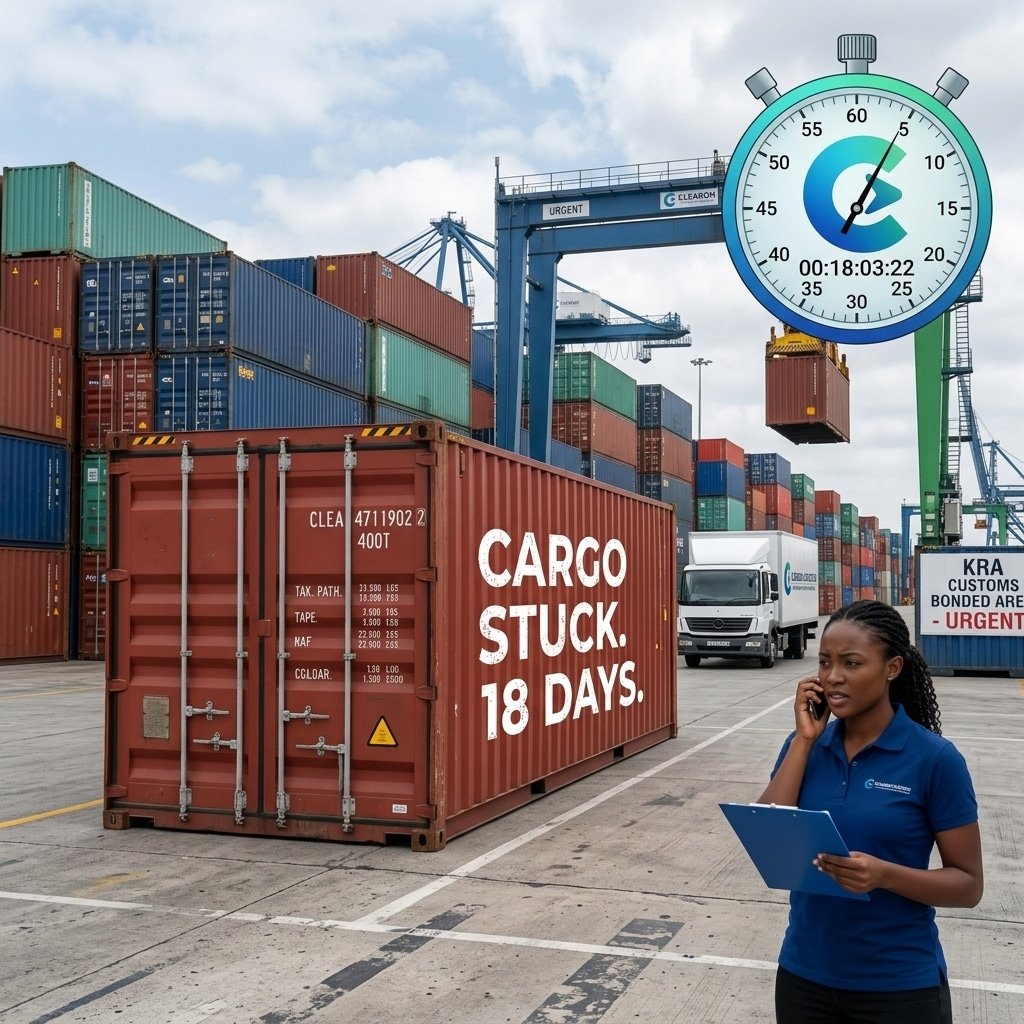
The machine arrives at Mombasa, but the business is not financially prepared to complete the importation.
The equipment is now sitting at the port while the company searches for additional funding.
This is a classic example of why procurement and logistics should be planned together.
Why Importers Should Request a Landed Cost Estimate
Before purchasing expensive goods, businesses should try to estimate the total cost of getting those goods to their final destination.
For a machine destined for Nairobi, the calculation should consider more than the supplier’s quotation.
A simplified planning model might be:
Supplier Price
Origin Transportation
International Freight
Insurance
Applicable Import Taxes and Duties
Port and Regulatory Charges
Customs Clearance
Inland Transport
=
Estimated Landed Cost
This estimate allows businesses to determine whether the purchase makes financial sense before committing capital.
Landed Cost Can Change the Supplier You Choose
Consider two suppliers.
Supplier A
Machine price: $50,000
Supplier B
Machine price: $55,000
At first glance, Supplier A appears to be the obvious choice.
But suppose Supplier A:
- Uses inefficient packaging
- Has a longer production lead time
- Requires expensive freight
- Has limited documentation
- Creates additional compliance complications
Supplier B, despite having a higher purchase price, may ultimately produce a lower total landed cost.
This is why professional procurement teams evaluate total cost, not just purchase price.
Why Clearon Logistics Should Be Involved Before You Buy
Many importers contact their clearing agent only after placing an order.
For small, straightforward shipments, this may sometimes be manageable.
For high-value or specialised cargo, earlier involvement can be extremely beneficial.
Before purchasing, Clearon Logistics can help clients think through questions such as:
- How should the shipment be transported?
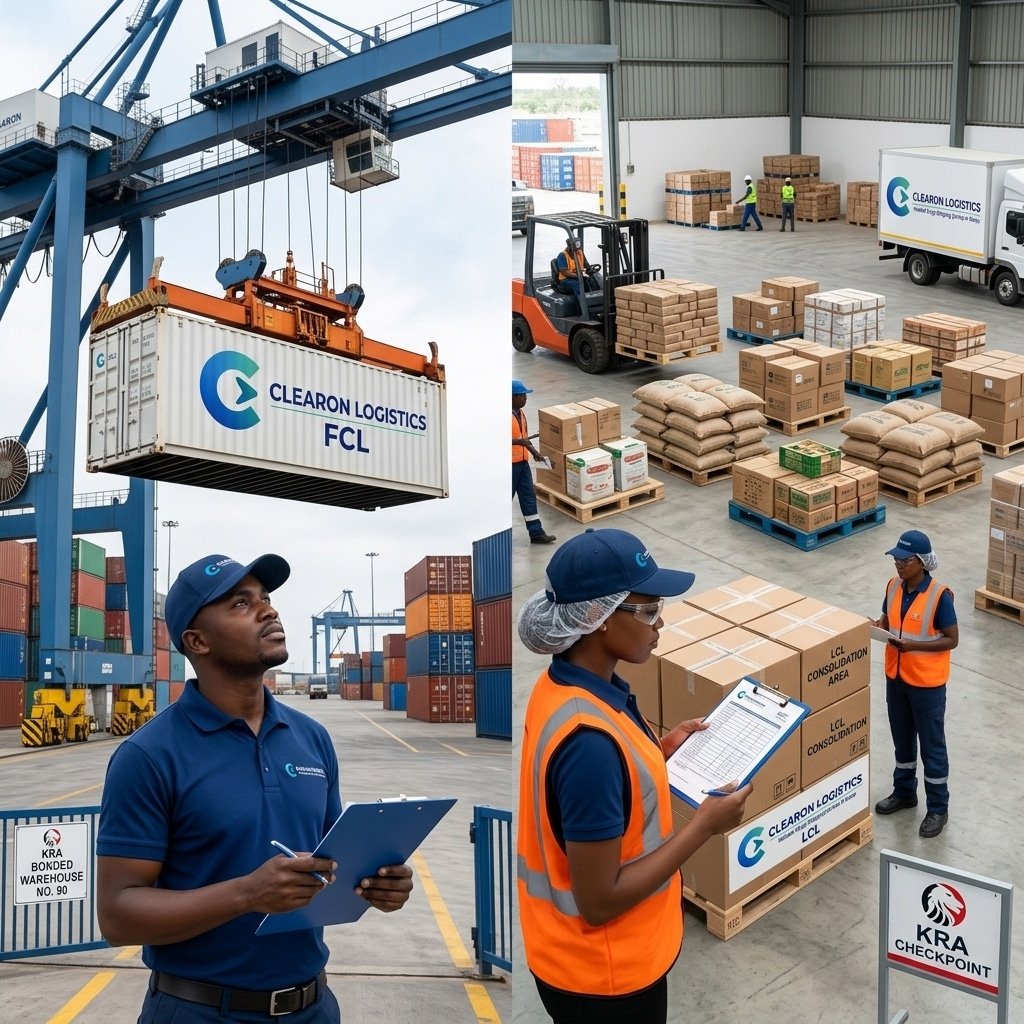
- Is consolidation appropriate?
- Would FCL be more suitable?
- What documentation may be required?
- Are there potential regulatory requirements?
- What factors could affect customs clearance?
- What inland transportation arrangements will be needed?
This doesn’t replace professional advice from the relevant authorities or tax specialists where required.
However, early logistics planning can help businesses identify potential issues before they become expensive.
The Importance of Preparing for Customs Before the Vessel Arrives
One of the biggest advantages of early engagement is preparation.
The objective should always be:
Prepare before arrival process immediately when cargo becomes available.
This approach is particularly important for high-value cargo.
What Importers Should Keep in Their Records
Businesses should maintain complete documentation relating to their imports.
Depending on the shipment, this may include:
- Commercial invoices
- Packing lists
- Bills of lading
- Purchase agreements
- Payment records
- Freight documents
- Insurance documents
- Product specifications
- Certificates
- Import permits
- Customs documentation
Good records help demonstrate the legitimacy of the transaction and make future audits or document reviews easier to manage.
The Biggest Mistake: Calculating Profit Before Calculating Landed Cost
Some businesses determine their selling price based on the supplier’s invoice.
For example:
Purchase price: $10,000
Selling price: $15,000
Expected profit: $5,000
But what if the true landed cost is $13,500?
The real gross margin is now only $1,500.
And that is before considering:
- Warehouse costs
- Staff
- Marketing
- Financing
- Damaged stock
- Local distribution
The business may believe it has a 50% markup while actually operating on a much smaller margin.
For importers, landed cost is therefore not merely a logistics calculation.
It is a pricing calculation.
It is a profitability calculation.
It is a business survival calculation.
How Clearon Logistics Helps Importers Build Better Cost Visibility
At Clearon Logistics, our goal is to help importers understand the logistics journey before their cargo arrives.
We assist businesses with the practical aspects of international freight and importation, including:
- Shipping from China to Kenya
- Shipping from the UK to Kenya
- Shipping from the USA to Kenya
- Shipping from Dubai to Kenya
- Cargo consolidation
- FCL shipments
- Air freight
- Import documentation
- IDF processing
- Customs clearance
- Port clearance
- Inland transportation
For businesses importing regularly, building a consistent process around these activities can improve cost visibility and reduce unexpected surprises.
Final Thoughts
The price your supplier gives you is only the beginning of the import calculation.
Successful importers think beyond the invoice.
They consider customs valuation.
They understand tariff classification.
They estimate taxes.
They account for logistics.
They plan for clearance.
They calculate inland transportation.
And most importantly, they understand their total landed cost before committing to a purchase.
The businesses that master this process are better positioned to price products accurately, protect profit margins, manage cash flow, and make smarter purchasing decisions.
If you are importing commercial goods into Kenya—especially high-value machinery, equipment, or large consignments—consider involving your clearing and forwarding partner before the shipment leaves the country of origin.
At Clearon Logistics, we help businesses navigate the journey from international supplier to final destination, with a focus on practical planning, documentation, customs clearance, and reliable cargo delivery.
Because the best import decisions are made before the container reaches Mombasa.

Leave a Reply