
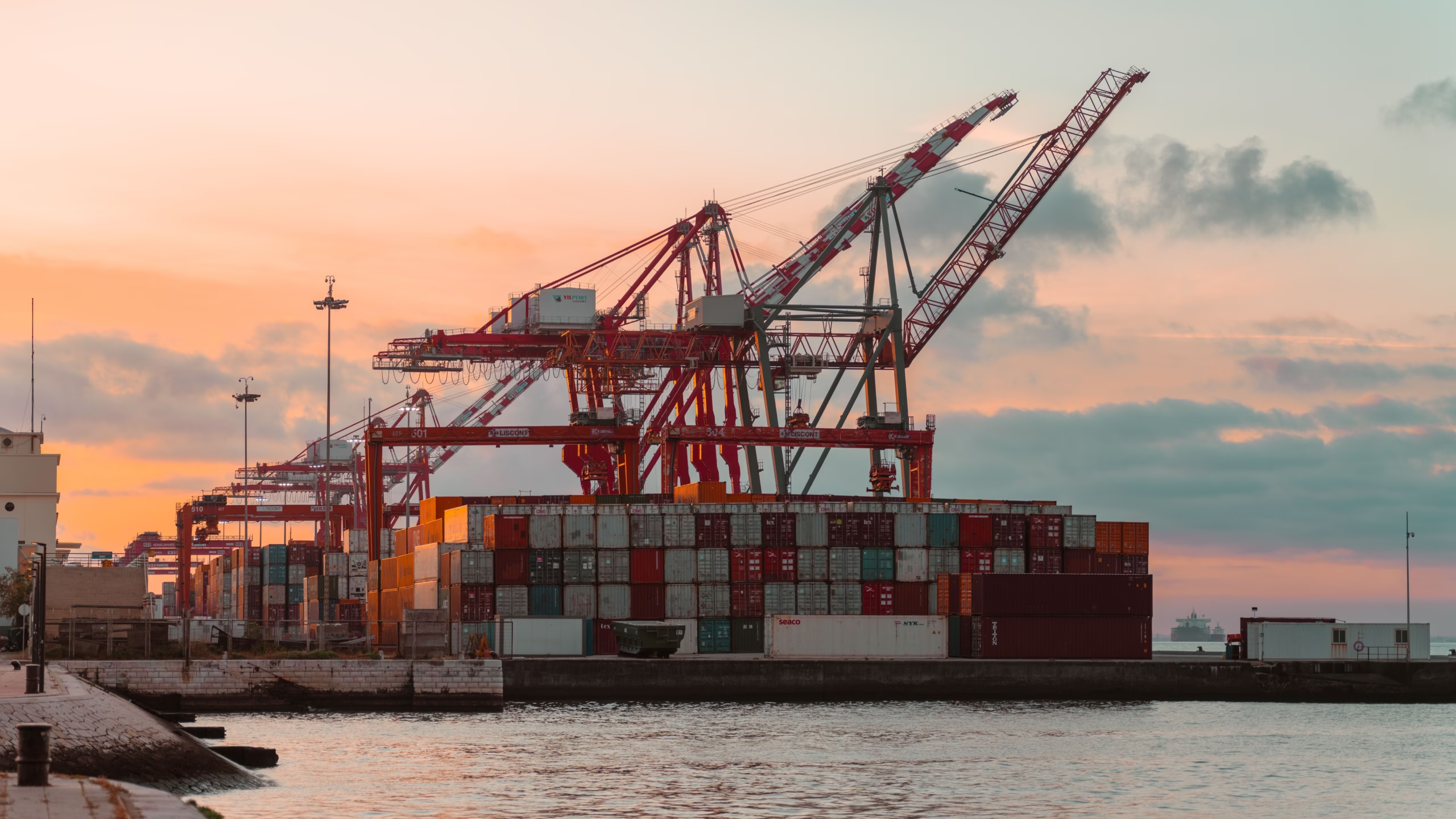
Most people believe importing is about finding products at the lowest possible price.
Successful importers know better.
The real game is inventory.
Two businesses can import the exact same products from the same supplier in China, pay similar shipping costs, and sell to the same market. Yet one grows steadily year after year while the other constantly struggles with cash flow, stock shortages, and inconsistent profits.
The difference is rarely the supplier.
The difference is usually inventory management.
The most successful importers in Kenya do not think of inventory as products sitting in a warehouse. They view inventory as a strategic business asset that directly influences profitability, customer satisfaction, growth, and competitiveness.
At Clearon Logistics, we interact with businesses at different stages of growth. One pattern becomes clear very quickly: businesses that understand inventory planning tend to experience smoother operations, lower logistics costs, and stronger long-term growth.
Inventory Is Not Stock. Inventory Is Money
One of the biggest mindset shifts successful importers make is understanding that inventory is cash in another form.
Every carton in a warehouse represents capital that has already been spent.
That capital has gone through multiple stages:
- Supplier payments
- Production costs
- Freight costs
- Customs charges
- Transportation costs
Until the products are sold, that money remains tied up.
This means inventory decisions are fundamentally financial decisions.
Businesses that fail to understand this often face two problems:
Too Much Inventory
Excess stock occupies storage space and ties up working capital.
The business may have products but lack cash for:
- New orders
- Expansion
- Marketing
- Operations
Too Little Inventory
Insufficient stock creates an entirely different problem.
The business loses sales opportunities because products are unavailable when customers want them.
Successful importers aim for balance.
The Hidden Cost of Running Out of Stock
Many business owners focus heavily on reducing inventory.
On the surface, this seems logical.
Less inventory means less money tied up in stock.
However, there is another side to the equation.
Example
A retailer imports home appliances from China.
Monthly sales average:
500 units
Lead time from supplier to Kenya:
60 days
To reduce costs, the retailer decides to order less inventory.
Initially, cash flow improves.
However, demand exceeds expectations.
Stock runs out after three weeks.
The next shipment is still six weeks away.
For six weeks, customers walk into the store ready to buy but leave empty-handed.
The business saves money on inventory but loses far more in missed sales.
This is a mistake many importers make repeatedly.
The Most Expensive Inventory Is the Inventory You Don’t Have
Many businesses focus on warehousing costs while ignoring the cost of stockouts.
Stockouts can result in:
- Lost sales
- Lost customers
- Damaged reputation
- Reduced market share
A customer who cannot find your product today may buy from a competitor and never return.
The financial impact extends far beyond the immediate sale.
This is why successful importers rarely wait until inventory is almost finished before reordering.
Understanding Lead Time Is a Competitive Advantage
One of the biggest differences between experienced importers and beginners is how they think about lead times.
New importers often think:
“I’ll order when stock starts running low.”
Experienced importers think:
“I’ll order based on future demand.”
These are completely different approaches.
Example
A shipment from China may involve:
Factory production: 14–30 days
Supplier delivery to warehouse: 2–5 days
Cargo consolidation: several days
Sea freight: 25–40 days
Customs clearance and delivery: several additional days
By the time stock arrives, two months or more may have passed.
Businesses that wait until shelves are nearly empty are already late.
Why Forecasting Matters More Than Most Importers Realize
Forecasting does not require sophisticated software.
It simply means understanding expected future demand.
Questions successful importers ask include:
- How much stock do we sell monthly?
- Are sales increasing?
- Are there seasonal trends?
- Are there upcoming promotions?
- Are there industry-specific demand spikes?
These questions help determine when to reorder.
Businesses that forecast effectively tend to experience fewer inventory crises.
Seasonality Can Make or Break Importers
Many products experience predictable demand fluctuations.
Examples include:
Construction Materials
Demand may increase during periods of strong building activity.
School Supplies
Demand often rises before school opening periods.
Consumer Electronics
Certain seasons may generate higher sales volumes.
Household Goods
Holiday periods can influence purchasing behavior.
Importers who anticipate seasonal demand often outperform competitors who react after demand has already increased.
Why Large Businesses Rarely Chase the Cheapest Product
Many new importers spend enormous amounts of time negotiating product prices.
Experienced importers understand that inventory availability is often more important than saving a small amount per unit.
Consider two scenarios.
Scenario A
Product cost reduced by 5%.
Stock runs out twice per year.
Scenario B
Product cost remains unchanged.
Inventory remains consistently available.
In many cases, Scenario B produces higher annual profits despite the higher purchase price.
Consistency often beats small cost savings.
The Relationship Between Inventory and Logistics
Inventory planning and logistics planning are closely connected.
Businesses with poor inventory planning often experience:
- Emergency shipments
- Expensive air freight
- Last-minute sourcing decisions
- Supply disruptions
Businesses with strong inventory planning can:
- Consolidate shipments
- Use more cost-effective freight options
- Coordinate suppliers efficiently
- Reduce logistics pressure
This is one reason why logistics should be viewed as a business strategy rather than simply a transportation function.
Why Growing Businesses Need Different Inventory Strategies
The inventory strategy that works for a small business may not work for a growing company.
As businesses expand, they typically experience:
Increased Product Variety
More products require more planning.
Higher Sales Volumes
Faster-moving inventory creates greater replenishment pressure.
More Suppliers
Supplier coordination becomes increasingly important.
Greater Cash Flow Complexity
Inventory decisions have larger financial implications.
Successful businesses adapt their inventory strategies as they grow.
How Clearon Logistics Supports Smarter Inventory Planning
At Clearon Logistics, we frequently work with businesses importing from China, the United Kingdom, the United States, Dubai, and other international markets.
One observation remains consistent:
Businesses that plan inventory effectively tend to experience smoother shipping operations.
By understanding lead times, shipment schedules, supplier coordination, and cargo movement timelines, importers can make better purchasing decisions and reduce supply chain disruptions.
Logistics is not just about moving cargo.
It is about helping businesses maintain continuity, predictability, and growth.
The Businesses That Win Think Long-Term
The most successful importers do not focus exclusively on today’s shipment.
They think about:
- The next quarter
- The next six months
- The next year
They understand that inventory decisions made today influence future sales, cash flow, and customer satisfaction.
This long-term perspective allows them to remain competitive even when market conditions change.
Final Thoughts
Many businesses believe importing success comes from finding the cheapest supplier or negotiating lower freight rates.
While those factors matter, inventory management often has a far greater impact on profitability.
Businesses that consistently maintain the right inventory levels are better positioned to capture sales, satisfy customers, and grow sustainably.
The most successful importers understand that inventory is not simply stock on shelves.
It is one of the most powerful tools for building a resilient and profitable business.
At Clearon Logistics, we help businesses coordinate international shipping and supply chain activities more effectively, enabling smarter planning and more predictable inventory management. Get in touch with us today!


Leave a Reply