
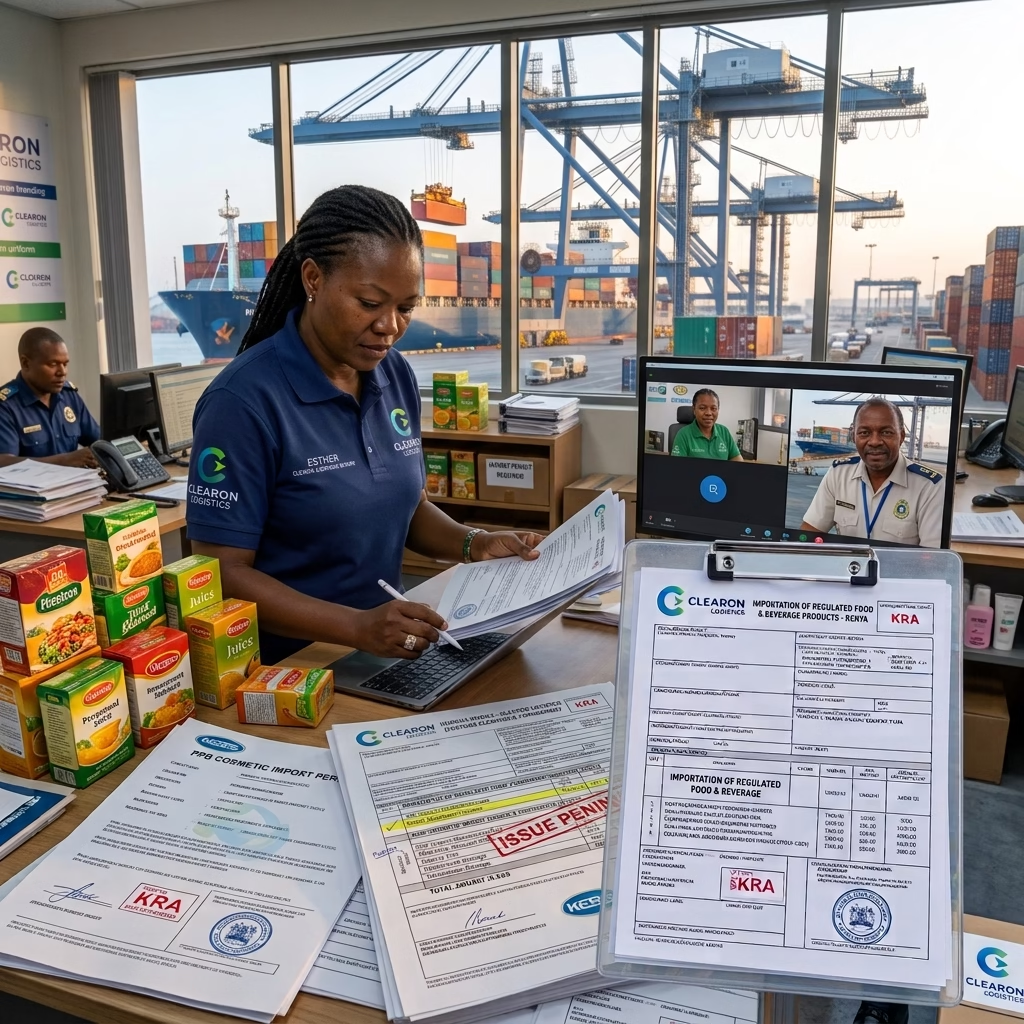
Your first conversation with a clearing agent sets the tone for everything that follows, yet most importers walk into it without knowing what a genuinely thorough consultation should actually include. If that first call is rushed, vague, or focused entirely on getting you to commit rather than understanding your actual shipment, that’s information worth paying attention to — because it’s usually a preview of how the rest of the relationship will go.
Table of Contents
Why This Conversation Matters More Than It Seems
For a first-time importer especially, the initial conversation with a clearing agent is often the moment that determines whether the whole process feels manageable or overwhelming. A genuinely good agent uses this conversation to actually understand your specific situation — not just to close the deal quickly. Since so much of what happens later depends on decisions made early (correct HS classification, permit checks, realistic cost expectations), a rushed or superficial first conversation tends to set up exactly the kind of gaps that cause problems down the line.
What a Thorough Agent Should Ask You
A genuinely useful consultation isn’t a monologue from the agent — it’s built around specific questions about your actual shipment:
- What exactly are you importing? Not just a general category, but enough detail to start thinking about correct HS classification
- Where is it coming from, and under what terms? Your Incoterm affects cost, risk, and what’s already arranged versus what still needs sorting
- What’s your timeline? Whether this is urgent or has flexibility changes what options are worth discussing
- Is this your first import, or do you have experience with this specific category? The level of hand-holding genuinely useful to you depends on this
- What’s the intended use? Personal, resale, manufacturing input — this can affect permit requirements and available exemptions or incentive schemes
If an agent moves straight to a price quote without asking anything like this, they’re either already very familiar with your exact situation from a prior conversation, or they’re quoting blind — which tends to mean the number you’re given isn’t actually grounded in your specific shipment.
What You Should Be Told, Unprompted
Beyond answering your questions, a thorough agent should proactively raise things you might not know to ask about:
- Whether your specific goods need any permits or certifications you may not be aware of
- A realistic cost range, even if a precise figure isn’t possible yet, rather than an artificially low number designed to get you to commit
- A realistic timeline, including any factors — like peak season congestion or a specific regulatory requirement — that could affect it
- What they’ll need from you, and when, so you know what to prepare rather than discovering requirements piecemeal
The Difference Between a Sales Pitch and a Consultation
A sales pitch is built to get you to say yes quickly — general reassurance, an appealing price, pressure to commit before you’ve had time to compare or think it through. A consultation is built to genuinely understand whether and how the agent can help with your specific situation, even if that means telling you something you didn’t want to hear — a cost higher than you hoped, a timeline longer than you expected, or a permit requirement you hadn’t planned for. An agent willing to give you accurate, sometimes less convenient information upfront is showing you they’re oriented toward getting your shipment right, not just getting your business.
Questions Worth Asking Yourself
After the conversation, it’s worth reflecting honestly:
- Did they ask enough about my specific situation to actually understand it, or did they treat this like a generic transaction?
- Did anything about the pricing or timeline feel too good to be true?
- Did they raise anything I hadn’t thought of, or did I have to lead the entire conversation?
- Do I feel like I understand what happens next, or am I still unclear on the process?
If the honest answers to these leave you uneasy, that discomfort is worth taking seriously before committing, not dismissing as nerves about a new process.
What Should Happen After the Call
A genuinely thorough first conversation should be followed by something concrete — a written cost estimate, a documentation checklist, or a clear next-step outline — not just a verbal promise to “get back to you.” If nothing follows the conversation in writing, that’s worth asking about directly before you commit to anything further.
Setting the Standard From the First Call
The quality of a first conversation is a genuinely useful, low-cost way to evaluate a clearing agent before you’ve committed anything — it costs you nothing but time, and it tends to reveal more about how the agent actually operates than any marketing material could.
At Clearon Logistics, our first conversation with any prospective client is built around actually understanding your specific shipment — what you’re importing, from where, on what terms, and what you need from us — followed by a written breakdown you can review and compare, not a rushed pitch designed to get a quick yes.
Ready to have that first conversation? Talk to Clearon Logistics — we’ll ask the questions that actually matter for your specific shipment.
Frequently Asked Questions
What should a clearing agent ask me during our first conversation? Specifics about what you’re importing, where from, under what terms, your timeline, and your experience level — enough detail to actually understand your situation, not just enough to quote a generic price.
Is it a bad sign if an agent quotes a price without asking many questions? It’s worth being cautious — a genuinely accurate quote depends on specifics about your goods and shipment terms, so a fast, generic quote with minimal questions often means the figure isn’t actually grounded in your situation.
Should I expect anything in writing after my first conversation with a clearing agent? Yes — a thorough agent should follow up with a written cost estimate or documentation checklist, not just a verbal summary, so you have something concrete to review and compare.
What if the first conversation leaves me feeling unclear about the process? Take that feeling seriously — a genuinely thorough consultation should leave you with a reasonably clear sense of what happens next, and persistent confusion after the call is worth addressing before committing further.
Further Reading
- Kenya Revenue Authority — Customs & Border Control (external, dofollow)
- Kenya International Freight and Warehousing Association (KIFWA) (external, dofollow)
- Related on our blog: First-Time Importer in Kenya: The 6 Steps Before Your First Shipment
- Related on our blog: Reading a Clearing Agent Quote: 4 Line Items to Check
- Our service: Clearing and Forwarding Services in Kenya






Leave a Reply