
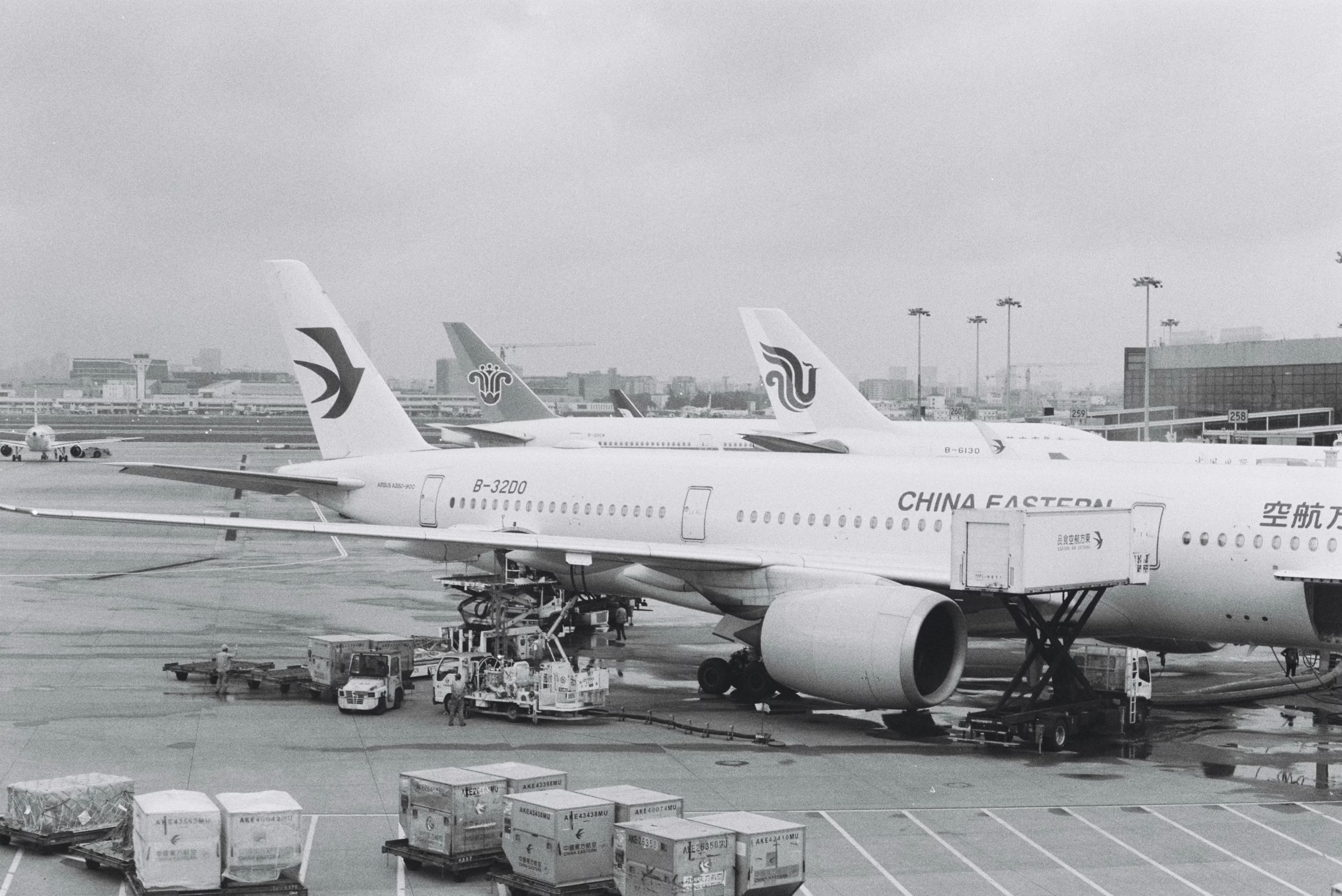
Importing goods into Kenya involves more than shipping cargo from one country to another.
Before goods can be legally released and delivered, they must go through the customs clearance process.
For many importers, customs clearance feels confusing because it involves:
- Documentation
- Tax assessment
- Cargo verification
- Regulatory compliance
- Final cargo release
A small error at any stage can lead to:
- Delays
- Additional charges
- Storage fees
- Clearance complications
At Clearon Logistics, we help businesses and individuals navigate customs clearance more efficiently through proper documentation support, logistics coordination, and process management.
This guide explains exactly how customs clearance works in Kenya step by step.
What Is Customs Clearance?
Customs clearance is the legal process of declaring imported goods to customs authorities so they can:
- Verify cargo details
- Assess taxes and duties
- Check compliance requirements
- Approve cargo release
In Kenya, this process is critical for all imports.
Without proper customs clearance:
- Cargo cannot be legally released.
When Does Customs Clearance Start?
Many people assume customs begins after cargo arrives.
Not exactly.
In reality, customs preparation should begin before shipment arrives.
This includes:
- Documentation preparation
- Cargo classification
- Tax estimation
- Regulatory checks
Early preparation reduces delays significantly.
Step 1: Supplier Documentation Preparation
Before shipping, your supplier prepares shipping documents.
Common documents include:
- Commercial invoice
- Packing list
- Bill of lading or airway bill
- Certificate of origin
- Insurance documents
These documents form the foundation of clearance.
Why This Step Matters
Errors here create downstream problems.
Example:
- Invoice mismatch
- Wrong quantities
- Missing information
These can delay the entire process.
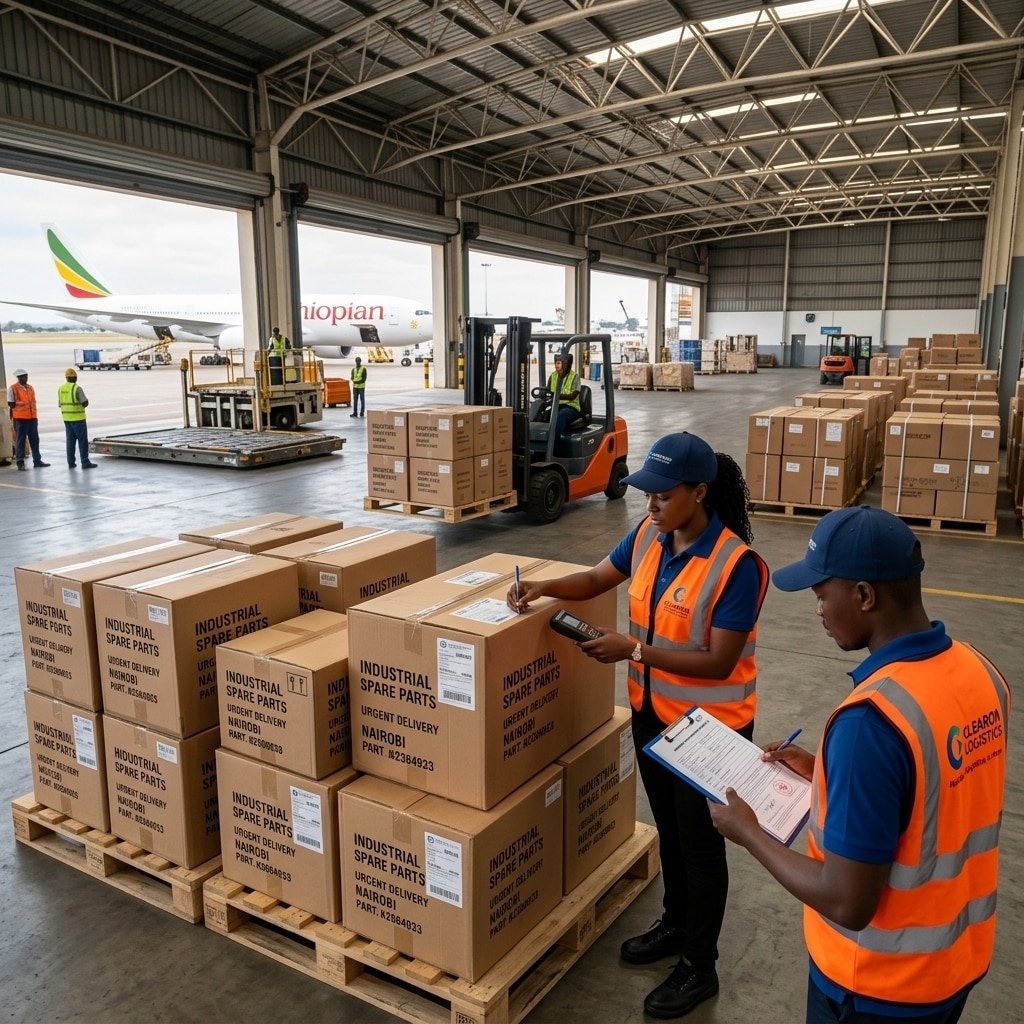
Step 2: Cargo Arrival in Kenya
Cargo arrives through:
Sea Freight
Usually via:
- Mombasa Port
Air Freight
Usually via:
- Jomo Kenyatta International Airport (JKIA)
Cargo is logged into the system for customs processing.
Step 3: Import Declaration
Imported goods must be declared.
This includes submitting:
- Cargo information
- Import details
- Documentation records
Key declaration information includes:
- Importer details
- Product descriptions
- Customs value
- Classification data
Why Declaration Matters
Declaration allows customs to:
- Begin tax assessment
- Validate shipment legitimacy
Step 4: Customs Value Assessment
Customs calculates taxes using:
CIF Value
CIF means:
- Cost
- Insurance
- Freight
Formula:
CIF = Product Cost + Insurance + Freight
Example:
Product cost:
USD 2,000
Freight:
USD 300
Insurance:
USD 20
CIF:
USD 2,320
Taxes are calculated from this figure.
Step 5: Duty and Tax Calculation
Applicable charges may include:
Import Duty
Depends on product category.
VAT
Usually:
- 16%
IDF
Usually:
- 2.5%
RDL
Usually:
- 2%
Other taxes
If applicable.
Example Tax Calculation
CIF:
KES 300,000
Potential charges:
- Import duty
- VAT
- IDF
- RDL
Total taxes determined before release.
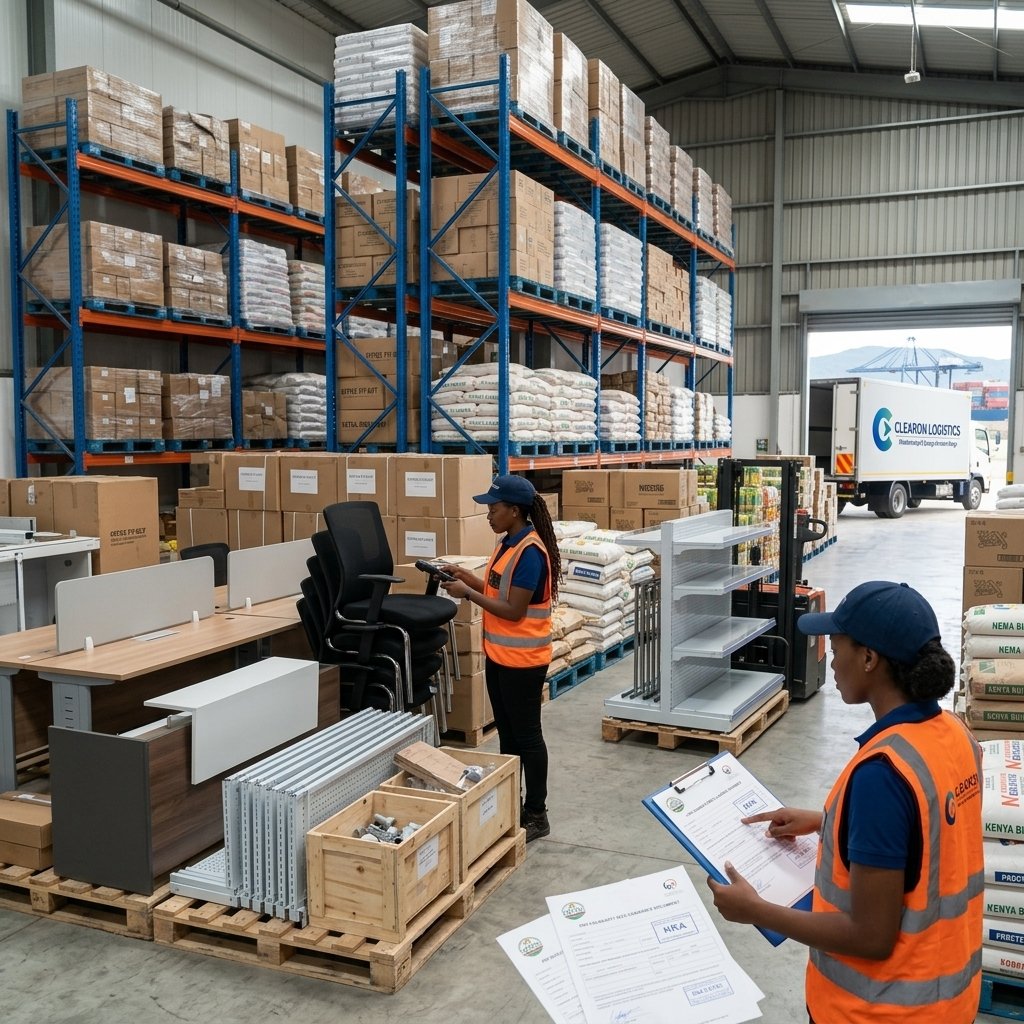
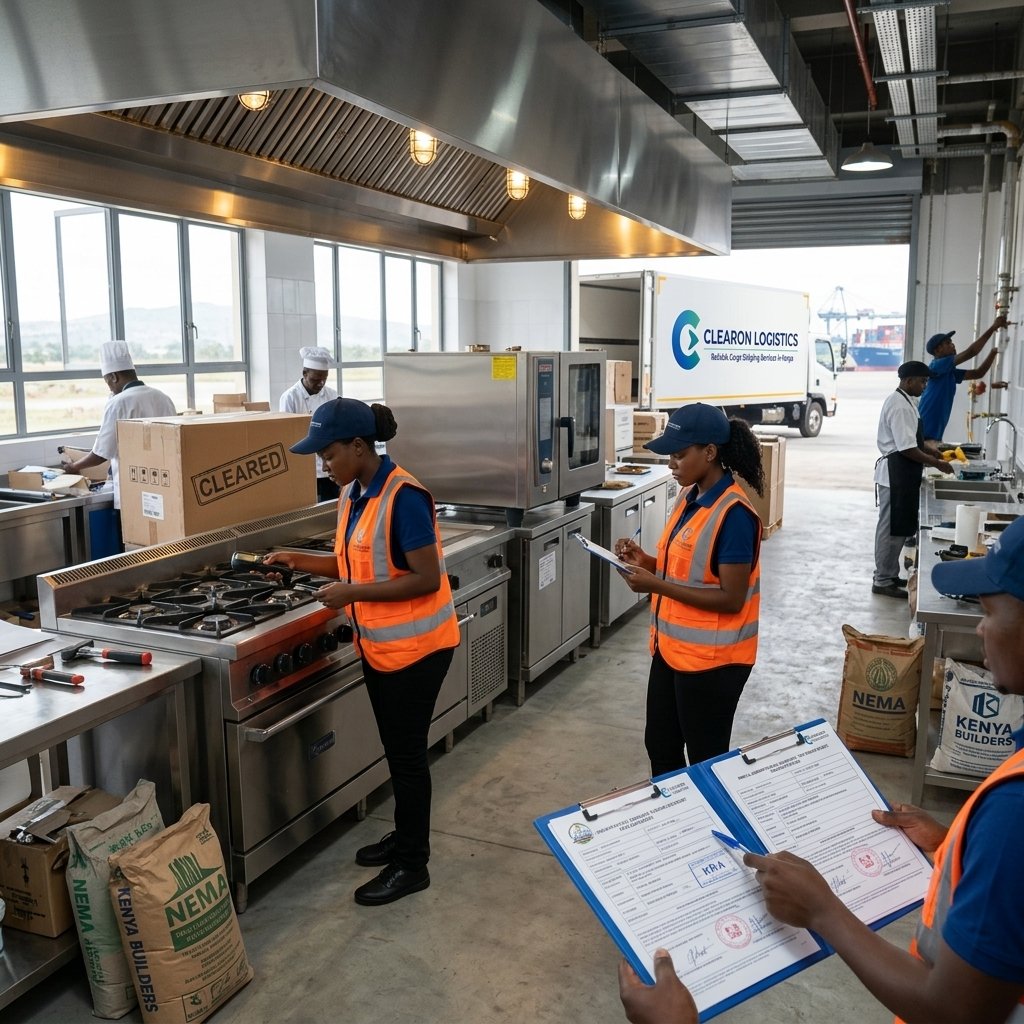
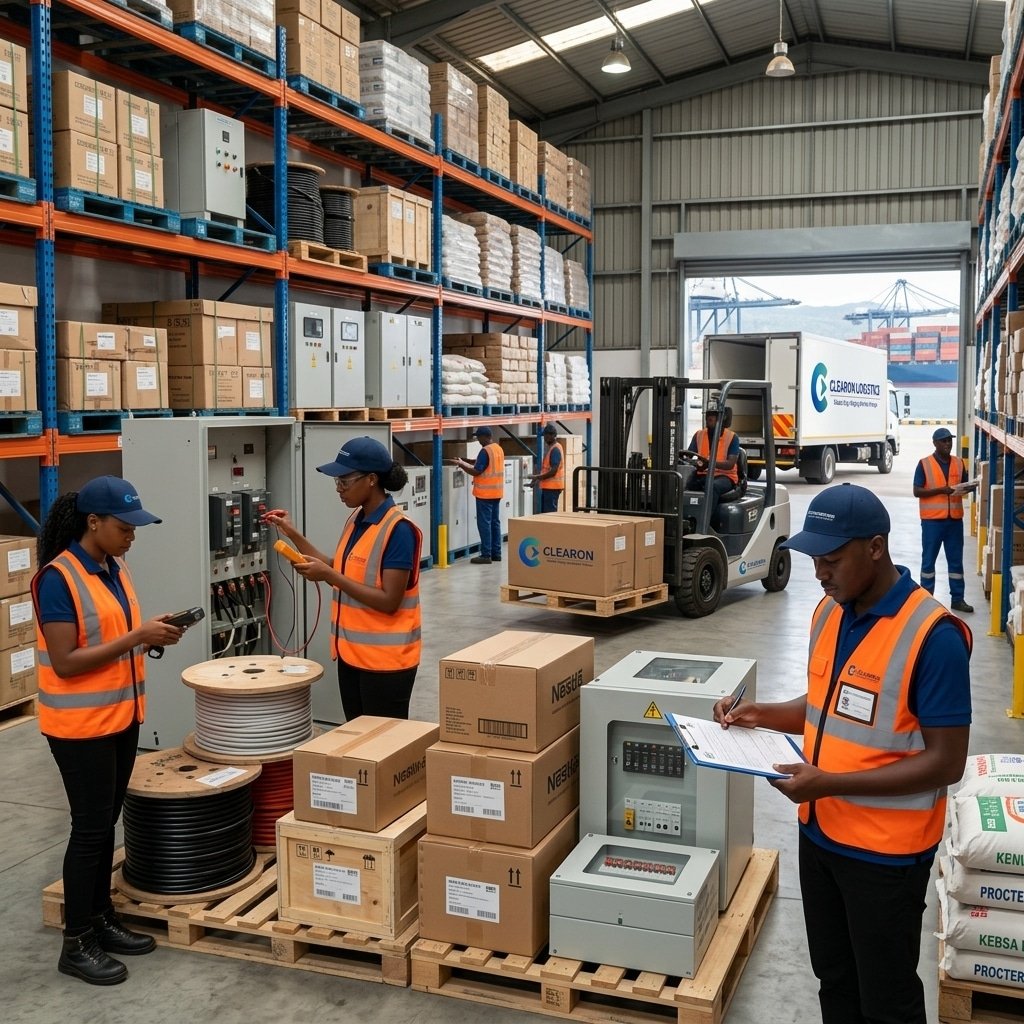
Step 6: Cargo Verification or Inspection (If Required)
Some cargo may be flagged for review.
Reasons include:
- Documentation inconsistencies
- Value concerns
- Regulatory requirements
- Random checks
Verification may include:
- Physical inspection
- Documentation review
Example:
Declared:
50 units
Inspection finds:
70 units
Outcome:
- Discrepancy investigation
- Clearance delay
Step 7: Payment of Duties and Taxes
Before cargo release:
all assessed charges must be settled.
This may include:
- Import duty
- VAT
- IDF
- RDL
- Other applicable charges
Without payment:
cargo remains uncleared.
Step 8: Customs Release Approval
After:
✔ Documentation accepted
✔ Taxes paid
✔ Compliance satisfied
Customs approves cargo release.
This authorizes cargo exit from customs control.
Step 9: Cargo Collection or Delivery
After release:
Cargo can be:
- Collected
OR - Delivered to final destination
This may include:
- Nairobi deliveries
- Upcountry logistics
Common Causes of Customs Delays
Customs delays often result from:
❌ Missing documents
❌ Incorrect invoice values
❌ Wrong HS codes
❌ Unpaid taxes
❌ Missing approvals
Best Practices for Faster Customs Clearance
To improve clearance speed:
✔ Prepare documents early
✔ Verify all paperwork
✔ Budget taxes beforehand
✔ Use correct product classification
✔ Work with experienced logistics support
How Clearon Logistics Supports Customs Clearance
At Clearon Logistics, we help clients through:
✔ Documentation review
✔ Import process coordination
✔ Freight support
✔ Tax estimation guidance
✔ Clearance process support
✔ Cargo release coordination
✔ Final delivery logistics
This improves import efficiency and reduces avoidable delays.
Final Thoughts
Customs clearance is one of the most important stages of importing into Kenya.
Understanding how the process works helps businesses:
- Reduce delays
- Avoid extra charges
- Improve cargo planning
- Import more efficiently
At Clearon Logistics, we help simplify customs processes through better logistics coordination and practical import support. Get in touch with us!
Leave a Reply