
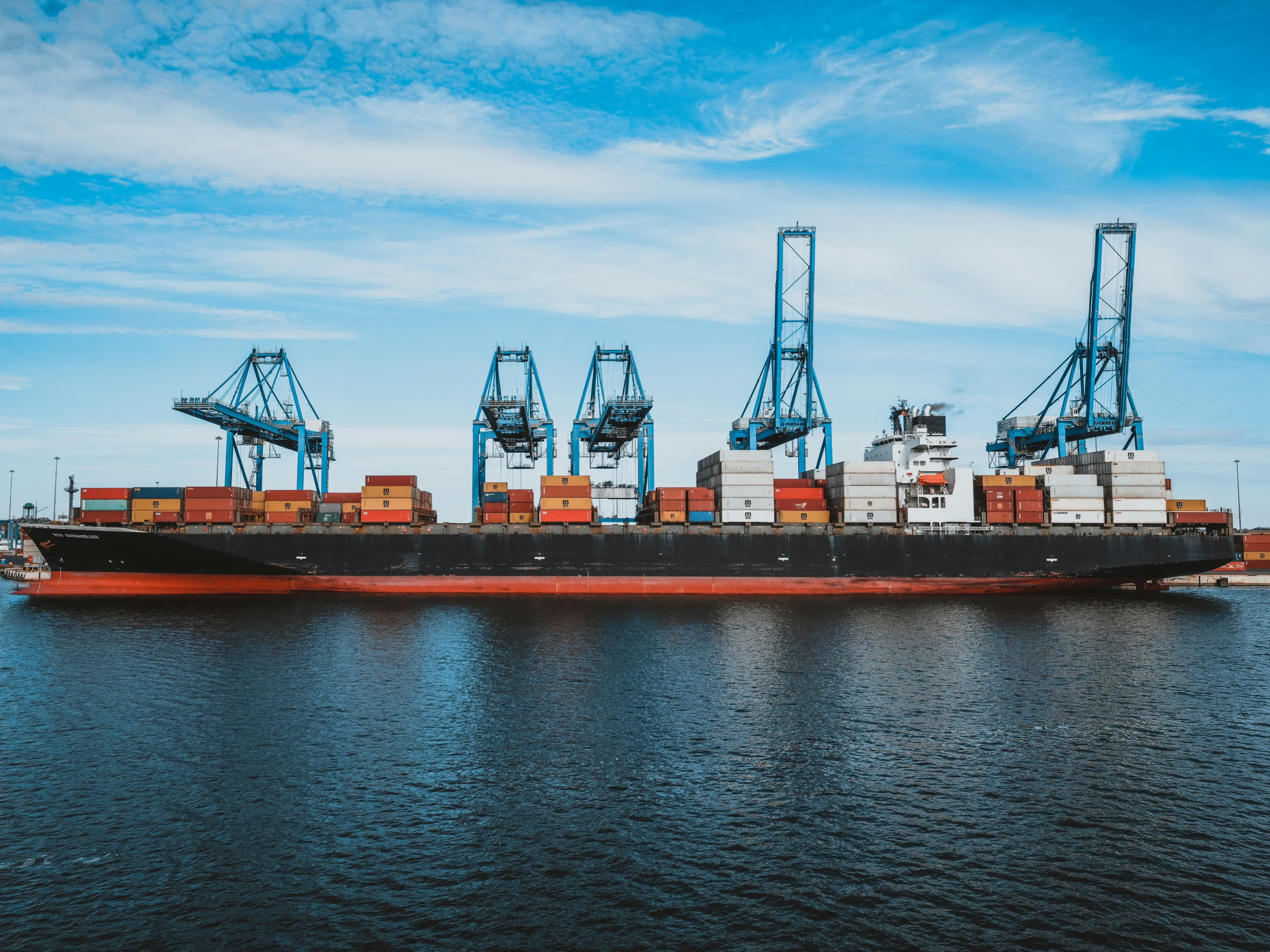
For many businesses in Kenya, importing is essential.
Whether you import:
- Retail stock
- Electronics
- Machinery
- Packaging materials
- Fashion products
- Spare parts
…the difference between a profitable import and a costly mistake often comes down to one thing:
👉 Cost control
Many businesses focus heavily on supplier negotiation but ignore logistics inefficiencies that quietly increase total landed cost.
At Clearon Logistics, we regularly help businesses identify unnecessary logistics costs and optimize their import process.
This guide explains practical ways businesses in Kenya can reduce import costs while improving profitability.
Why Import Costs Matter More Than Product Price
Many importers negotiate aggressively on product cost.
Example:
Supplier discount:
- Saves KES 20,000
But poor logistics decisions may create:
- Higher freight cost
- Delays
- Storage fees
- Excess taxes
- Poor inventory timing
Losses can exceed supplier savings.
True Profit Depends on Landed Cost
Real import cost includes:
- Product cost
- Freight
- Insurance
- Import duty
- VAT
- IDF
- RDL
- Clearance support
- Delivery costs
This is called:
👉 Landed Cost
Businesses that understand landed cost make better pricing decisions.
1. Consolidate Shipments Whenever Possible
One of the best ways to reduce shipping costs is cargo consolidation.
Instead of shipping multiple small consignments separately:
- Combine cargo into fewer shipments.
Benefits:
- Lower freight cost
- Lower handling fees
- Better customs efficiency
Example:
Without consolidation:
5 small shipments.
Costs:
- Multiple freight charges
- Multiple documentation cycles
With consolidation:
1 combined shipment.
Benefits:
- Lower total cost
Especially Useful For:
- China imports
- UK imports
- USA imports
- Mixed supplier orders
2. Choose the Right Freight Method
Many businesses overpay by choosing the wrong transport mode.
Air Freight
Best for:
- Urgent cargo
- Small high-value goods
Advantages:
- Fast
Disadvantage:
- Higher cost
Sea Freight
Best for:
- Bulk shipments
- Heavy cargo
Advantages:
- Lower cost per unit
Disadvantage:
- Longer transit time
Common Mistake
Using air freight for non-urgent bulk cargo.
This unnecessarily inflates landed cost.
3. Improve Import Planning and Scheduling
Poor planning increases costs.
Example:
Late inventory reorder creates urgency.
Business forced to:
- Use expensive air freight
Instead of:
- Lower-cost sea freight
Better Strategy
Forecast demand earlier.
Benefits:
- Lower freight costs
- Better inventory stability
4. Calculate Duties Before Shipping
Many businesses fail to estimate taxes early.
This causes:
- Cash flow stress
- Clearance delays
- Pricing errors
Before shipping, estimate:
✔ Import duty
✔ VAT
✔ IDF
✔ RDL
Example
Business budgets:
KES 300,000
Actual taxes:
KES 95,000
Budget gap:
Creates clearance delays.
5. Use Correct HS Codes
Wrong classification can cause:
- Overpayment
- Penalties
- Delays
Proper classification helps optimize duty accuracy.
Example:
Product incorrectly classified under higher-duty category.
Result:
Unnecessary tax burden.
6. Reduce Storage and Delay Costs
Delays are expensive.
Potential extra costs:
- Storage fees
- Demurrage
- Inspection delays
Common causes:
- Documentation issues
- Payment delays
- Poor coordination
Prevention
Better preparation reduces avoidable costs.
7. Optimize Packaging
Poor packaging can increase:
- Volumetric charges
- Cargo damage risk
Especially relevant for air freight.
Better Packaging Improves:
- Space efficiency
- Freight cost efficiency
8. Work with Integrated Logistics Support
Using too many disconnected providers creates inefficiency.
Example:
Separate:
- Supplier
- Freight provider
- Clearing agent
- Delivery company
Problems:
- Communication gaps
- Delays
- Process fragmentation
Integrated Logistics Advantages
A more coordinated process improves:
✔ Visibility
✔ Efficiency
✔ Cost control
9. Plan for Currency Fluctuations
International trade exposes businesses to exchange risk.
Currencies:
- USD
- GBP
- EUR
- CNY
Exchange movement affects:
- Product cost
- Freight cost
- Total budget
Example
Budget:
USD at KES 130
Actual payment:
KES 136
Unexpected increase affects margins.
10. Analyze Total Supplier + Logistics Cost
Cheapest supplier is not always cheapest overall.
Example:
Supplier A:
Cheap products, expensive logistics.
Supplier B:
Higher product price, lower logistics complexity.
Net landed cost may favor Supplier B.
How Clearon Logistics Helps Businesses Reduce Import Costs
At Clearon Logistics, we support businesses through:
✔ Freight planning
✔ Cargo consolidation
✔ Customs support
✔ Documentation coordination
✔ Cost visibility
✔ Final delivery logistics
This helps businesses import more efficiently and predictably.
Benefits of Better Import Cost Management
Businesses that optimize logistics enjoy:
✔ Higher margins
✔ Better cash flow
✔ Lower operational risk
✔ More predictable pricing
✔ Better inventory management
Final Thoughts
Reducing import costs is not just about negotiating supplier prices.
Businesses that optimize logistics, taxes, freight choices, and cargo planning improve profitability significantly.
In Kenya’s competitive business environment, efficient importing is a strategic advantage.
At Clearon Logistics, we help businesses improve import efficiency through better logistics planning and cargo support. Get in touch with us!
Leave a Reply