
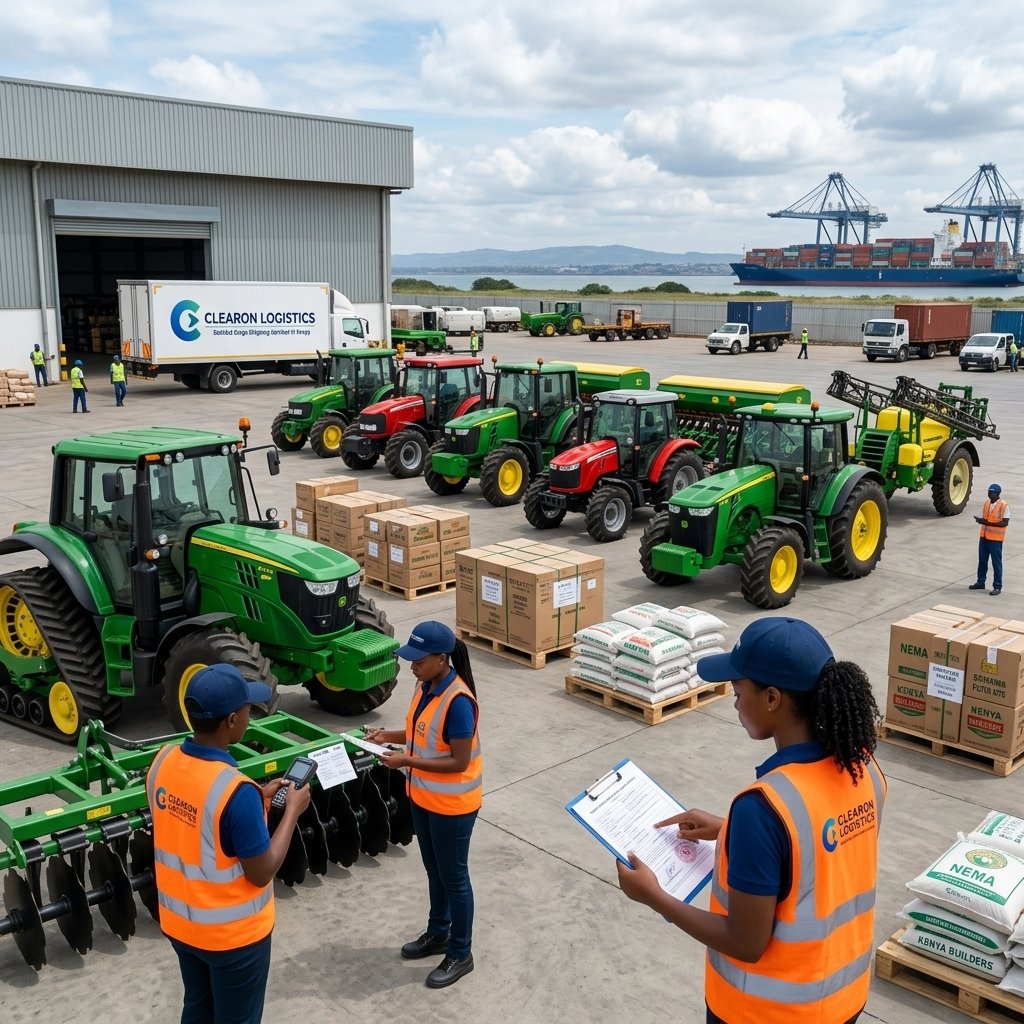
A clearing agent for agricultural equipment serves one of the most favourably treated import categories in Kenya, and one of the most seasonal. Tractors, implements, irrigation systems and processing machines generally enjoy low or zero duty, but a machine that arrives after the planting window is worth far less to a farmer than one that arrives before it. Whether you’re a dealer, an agribusiness or a large farm, here’s how to make the clearance side work for the calendar.
Table of Contents
A Favourable Category With Fine Print
Core farm machinery such as tractors, ploughs and harvesters is generally zero-rated for import duty to encourage mechanisation, but the Import Declaration Fee (currently 2.5% of CIF) and Railway Development Levy (2%) still apply, and VAT treatment depends on the specific classification. Our agricultural machinery guide explains the full picture. The fine print is classification: equipment that sits outside the genuine agricultural machinery headings may not receive the same treatment.
Tractors, Implements, Irrigation and Processing Equipment
These sub-categories behave differently. Tractors and primary implements are the most straightforward. Irrigation equipment and pumps depend on the exact product, and solar-powered pumping systems must be assessed against the solar rules in our solar equipment guide. Post-harvest processing machines such as mills, dryers and sorters may fall under general machinery classification rather than agricultural headings. Confirm the classification of each line before you price.
Drones and Precision Agriculture
Spraying and mapping drones are increasingly common on farms but are regulated as aircraft, needing KCAA authorisation and Ministry of Defence security clearance. Read our drone import guide and start that process months before you intend to use the equipment.
Respect the Season
Agricultural demand is seasonal, and equipment that clears after the planting or harvest window may sit in a dealer’s yard for months. Work backwards from the season: order early, secure documentation before shipping, and avoid shipping into peak congestion periods without a buffer. If dealers are importing ahead of the season, consider staged shipments so cash isn’t tied up in stock too long.
Dealers, Cooperatives and Farms Have Different Needs
A dealer importing for resale needs consistent, repeatable processes and clean records; a cooperative or large farm importing for own use may be able to coordinate with funders or government programmes that have their own documentation requirements. Tell your agent which you are, because the documents, cost planning and sometimes the available relief differ.
Documentation Pack for Agricultural Equipment
- Itemised commercial invoice with model and serial numbers
- Packing list with dimensions and weights
- Bill of Lading and Advance Cargo Declaration reference
- Certificate of Origin and export declaration document
- Certificate of Conformity where applicable
- Technical specifications supporting agricultural classification
- Local marine cargo insurance certificate
- For used equipment, condition report and valuation support, as in our used machinery guide
Working With Clearon Logistics on Farm Equipment
We plan agricultural imports around your season: classification checked up front, levies explained clearly, and delivery arranged so equipment reaches dealers and farms before it’s needed.
Importing tractors, implements or irrigation equipment? Talk to Clearon Logistics with your target delivery date, and we’ll plan the clearance backwards from it.
Frequently Asked Questions
Is farm machinery duty-free in Kenya? Core farm machinery is generally zero-rated for import duty, but IDF and RDL still apply and VAT depends on classification. Confirm at HS level.
Do agricultural drones need special permission? Yes. They require KCAA authorisation and security clearance, which should be started months ahead.
Are solar water pumps treated as agricultural machinery? Not necessarily. They may be assessed under the solar equipment rules, so classification should be confirmed per product.
Why does timing matter so much for farm equipment? Because equipment arriving after the planting or harvest window loses much of its value for the season.
Further Reading
- Ministry of Agriculture and Livestock Development (external, dofollow)
- Kenya Civil Aviation Authority (external, dofollow)
- Related on our blog: Importing Agricultural Machinery into Kenya
- Related on our blog: Importing Drones into Kenya
- Related on our blog: Solar Equipment Import Kenya
- Related on our blog: Clearing Agent for Industrial Machinery Importers
- Related on our blog: Clearing Agent for Solar and Energy Equipment Importers
- Related on our blog: Clearing Agent for Industrial Spare Parts
- Our service: Clearing and Forwarding Services in Kenya







Leave a Reply