
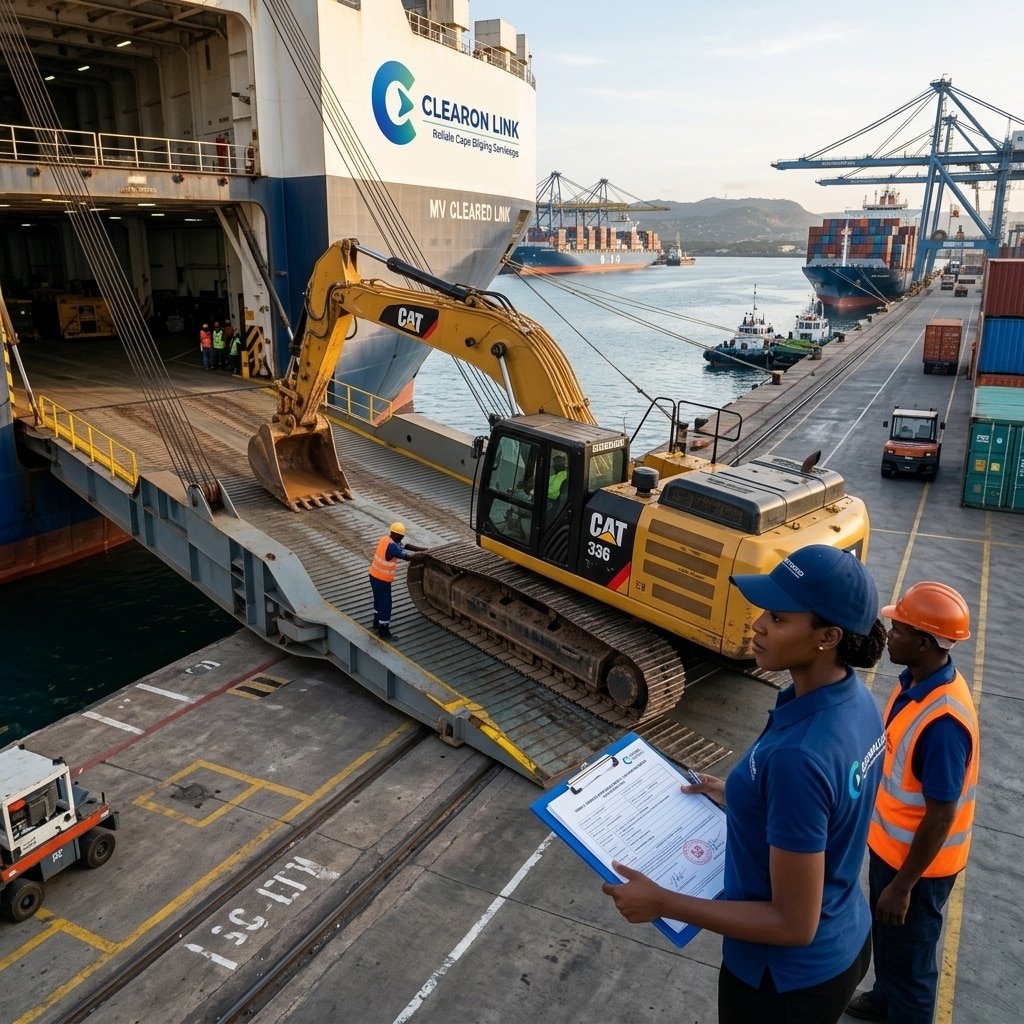
A clearing agent for construction equipment needs to understand a category where each machine is individually valuable, individually classified and, often, individually awkward to move. Excavators, loaders, graders, cranes, compactors and concrete plant all clear differently from boxed cargo. If you’re a contractor, plant-hire company or dealer importing equipment into Kenya, here is what matters.
Table of Contents
Why Heavy Plant Is Its Own Discipline
Construction equipment is imported unit by unit, and each unit carries its own invoice value, specification and serial number. Customs scrutiny follows value: a single excavator or mobile crane can be worth more than an entire container of general goods. Trade-database figures put Kenya’s annual imports of excavators and similar earth-moving machinery, and of cranes, in the tens of millions of US dollars, which is why accurate valuation and classification attract attention.
Classification: Machine, Attachment or Part?
A machine, its attachments (buckets, breakers, augers) and its spare parts may each classify differently, and shipping them together under one vague line risks reassessment. Get itemised invoices from your supplier, with model numbers and values per item, and agree the classification with your agent before shipping. Our guide to HS code classification explains why this single step drives duty, permits and speed.
New vs Used Equipment
Unlike road vehicles, Kenya has no published blanket age limit for used industrial machinery, but that doesn’t mean used plant is lightly treated. Valuation is where used equipment gets scrutinised, so you need a credible condition report, purchase records and, where relevant, an independent valuation. Our used machinery guide covers this in detail. Equipment that is registered for road use, or mounted on a truck chassis, can raise additional classification and registration questions, so confirm these before you buy.
Bringing Equipment in Temporarily for a Project
Contractors often import plant for a specific project and plan to re-export it afterwards. Kenya does not accept ATA Carnets, so this runs through a customs bond arrangement under temporary importation rules. Timeline discipline matters: if the equipment isn’t re-exported within the agreed period, duty becomes payable. See our guide to temporary importation and plan the bond before the equipment ships.
Moving It: Flat-Racks, RoRo and Low-Loaders
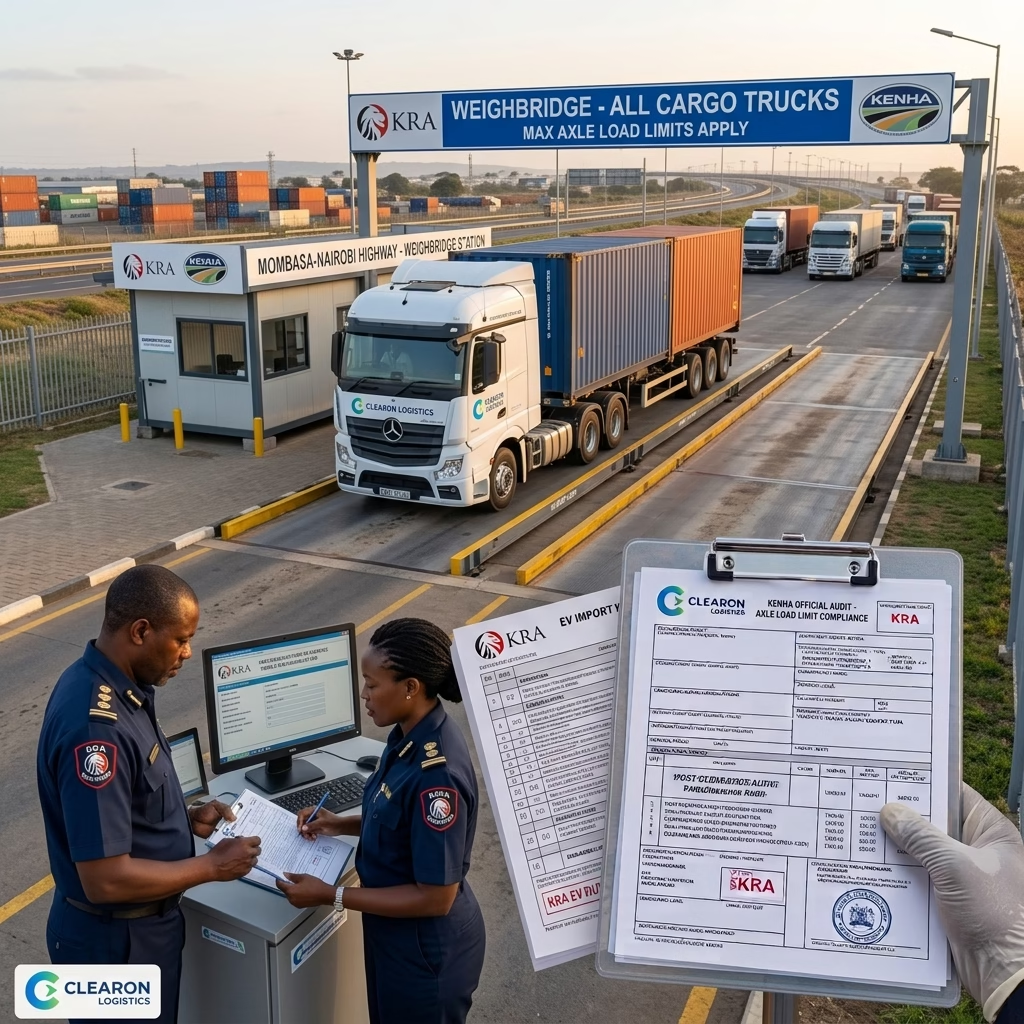
Self-propelled equipment may travel roll-on/roll-off or on flat-racks; non-driveable plant needs lifting and a low-loader at destination. Each option has different port handling and cost. The road leg must also respect axle load limits, because a clean customs release can still be held at a weighbridge. For the logistics side, read our guide to bulk and breakbulk cargo.
Documentation Pack for Construction Equipment
- Itemised commercial invoice (machine, attachments, parts) with serial numbers
- Packing list with dimensions and weights per unit
- Bill of Lading, Advance Cargo Declaration reference and Certificate of Origin
- Export declaration document from the country of origin
- Certificate of Conformity or exemption letter where applicable
- For used units: condition report, purchase records, valuation support
- For project equipment: bond arrangements and re-export plan
- Local marine cargo insurance certificate
Working With Clearon Logistics on Heavy Equipment
We plan equipment clearance around the physical move: classification and valuation agreed early, bond or incentive routes arranged before shipping, and port-to-site logistics coordinated so the machine arrives where and when your project needs it.
Importing construction equipment into Kenya? Talk to Clearon Logistics before you finalise the purchase, so we can confirm classification, valuation and logistics up front.
Frequently Asked Questions
Is there an age limit for used construction equipment in Kenya? There is no published blanket age rule for general machinery like the 8-year vehicle rule, but valuation and condition documentation still attract scrutiny. Confirm the position for your specific unit before buying.
Can I import equipment temporarily for a project? Yes, through a customs bond under temporary importation rules. Kenya does not accept ATA Carnets, and duty becomes payable if the equipment isn’t re-exported on time.
Why does classification matter for attachments and parts? Because machines, attachments and parts can classify differently, and bundling them vaguely can trigger reassessment or delays.
What causes delays after customs release? Often the road leg: heavy equipment that isn’t loaded and routed to meet axle load limits can be held at a weighbridge.
Further Reading
- Kenya Revenue Authority (external, dofollow)
- Kenya National Highways Authority (KeNHA) (external, dofollow)
- Related on our blog: Importing Used Machinery into Kenya
- Related on our blog: Temporary Importation into Kenya
- Related on our blog: Weighbridges and Axle Load Limits
- Our service: Clearing and Forwarding Services in Kenya



Leave a Reply